
Janice Hadlow
Author of The Other Bennet Sister
Works by Janice Hadlow
Tagged
Common Knowledge
- Birthdate
- 1957
- Gender
- female
- Occupations
- BBC Executive
- Agent
- Caroline Michel
- Nationality
- UK
- Birthplace
- Lewisham, London, England, UK
- Associated Place (for map)
- England, UK
Members
Reviews
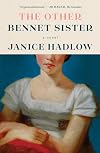
This book is marketed as Pride and Prejudice through Mary’s eyes. I made it to chapter 39, and couldn’t finish. There were too many fundamental disagreements between Jane Austen’s representation of the characters and this book, making it a complete reimagining. Note: There is nothing wrong with reimagining a story; I accept such cases when they’re clearly presented, as opposed to “forget what you thought you knew”.
The eponymous character departs from “observations of threadbare show more morality” and is presented as a thoughtful and empathetic protagonist. Elizabeth is a brash, cackling jester, and Charlotte is the opportunist that Mrs Bennet assumes her to be, rather than an aromantic, eldest sibling who “asks only for a comfortable home” and has many siblings whose position in life will be advanced by her marrying well.
Jane Austen is recognized as a pioneer of free indirect discourse (aka: free indirect speech), “a style of third-person narration which uses some of the characteristics of third-person along with the essence of first-person direct speech” (definition courtesy Wikipedia). It can also blend the author’s voice with the characters’, without betraying knowledge held by an unreliable narrator, such as in the case of Elizabeth Bennet at the beginning of the novel.
Elizabeth’s opinion of Mr Darcy is consistent with her character development throughout Pride & Prejudice, without retconning her early conversation with Mr Wickham regarding his old childhood companion, or Darcy’s behavior at the first Meryton ball. When Elizabeth learns more about both men, her understanding changes accordingly; Austen does not introduce a line of dialogue that Elizabeth failed to hear at the beginning of the story (a la Sherlock Holmes and some maguffin Watson never noticed) that changes everything by the end of the story.
The scene at the end of chapter 18 of P&P pivots to Mrs Bennet’s point of view, and we learn that “Elizabeth was the least dear to her of all her children”. We can trust this information as coming from a reliable narrator, because every point affirms her desires and preferences, from Jane marrying Mr Bingley to marrying Elizabeth off to Mr Collins. “The Other Bennet Sister” contradicts the source material and unaccountably moves Mary into the least dear position.
Mary Bennet has plenty of latitude for her own story, even within the established narrative. Described as “plain” among stunning sisters, she works diligently to establish her own distinguishable accomplishments in music and philosophy, and receives compliments from their society. Unfortunately, “Mary had neither genius nor taste; and though vanity had given her application, it had given her likewise a pedantic air and conceited manner, which would have injured a higher degree of excellence than she had reached”.
While the narrative voice speaks directly to her musical skills, it alludes to her general understanding of the world, as she herself had stated a few pages prior that, “Vanity and pride are different things, though the words are often used synonymously. A person may be proud without being vain. Pride relates more to our opinion of ourselves, vanity to what we would have others think of us.” Within those few pages, we are shown that Mary is both proud and vain, and I would have liked to see her believably evolve past those shortcomings.
Around the age of 19, by the end of P&P, Mary was obliged to mix more with the world, after her older sisters left home and took charge of Kitty’s education. As she was no longer mortified by comparisons between her sisters’ beauty and her own, the narrative suggests that she enjoyed a better relationship with their mother, and had more practical experience to philosophize over. There is a story in here worth exploring. show less
The eponymous character departs from “observations of threadbare show more morality” and is presented as a thoughtful and empathetic protagonist. Elizabeth is a brash, cackling jester, and Charlotte is the opportunist that Mrs Bennet assumes her to be, rather than an aromantic, eldest sibling who “asks only for a comfortable home” and has many siblings whose position in life will be advanced by her marrying well.
I am not romantic, you know; I never was.
– Charlotte Lucas
Jane Austen is recognized as a pioneer of free indirect discourse (aka: free indirect speech), “a style of third-person narration which uses some of the characteristics of third-person along with the essence of first-person direct speech” (definition courtesy Wikipedia). It can also blend the author’s voice with the characters’, without betraying knowledge held by an unreliable narrator, such as in the case of Elizabeth Bennet at the beginning of the novel.
Elizabeth’s opinion of Mr Darcy is consistent with her character development throughout Pride & Prejudice, without retconning her early conversation with Mr Wickham regarding his old childhood companion, or Darcy’s behavior at the first Meryton ball. When Elizabeth learns more about both men, her understanding changes accordingly; Austen does not introduce a line of dialogue that Elizabeth failed to hear at the beginning of the story (a la Sherlock Holmes and some maguffin Watson never noticed) that changes everything by the end of the story.
The scene at the end of chapter 18 of P&P pivots to Mrs Bennet’s point of view, and we learn that “Elizabeth was the least dear to her of all her children”. We can trust this information as coming from a reliable narrator, because every point affirms her desires and preferences, from Jane marrying Mr Bingley to marrying Elizabeth off to Mr Collins. “The Other Bennet Sister” contradicts the source material and unaccountably moves Mary into the least dear position.
Mary Bennet has plenty of latitude for her own story, even within the established narrative. Described as “plain” among stunning sisters, she works diligently to establish her own distinguishable accomplishments in music and philosophy, and receives compliments from their society. Unfortunately, “Mary had neither genius nor taste; and though vanity had given her application, it had given her likewise a pedantic air and conceited manner, which would have injured a higher degree of excellence than she had reached”.
While the narrative voice speaks directly to her musical skills, it alludes to her general understanding of the world, as she herself had stated a few pages prior that, “Vanity and pride are different things, though the words are often used synonymously. A person may be proud without being vain. Pride relates more to our opinion of ourselves, vanity to what we would have others think of us.” Within those few pages, we are shown that Mary is both proud and vain, and I would have liked to see her believably evolve past those shortcomings.
Around the age of 19, by the end of P&P, Mary was obliged to mix more with the world, after her older sisters left home and took charge of Kitty’s education. As she was no longer mortified by comparisons between her sisters’ beauty and her own, the narrative suggests that she enjoyed a better relationship with their mother, and had more practical experience to philosophize over. There is a story in here worth exploring. show less
Blessed with neither good looks, wit or vivacity Mary Bennet was the invisible one of the five daughters of Mr and Mrs Bennet of Meryton. When she realises that she needs to wear spectacles her mother despairs of her ever marrying and when she attempts to draw attention to herself at the ball she is humiliated. After her sisters marry and her father dies Mary is dependent on the kindness of family as she has no permanent home and she becomes more introverted as she feels she is a burden. show more Finally she goes to stay with her uncle and aunt in London and things start to change but will there be a happy ending for the other Bennet sister?
This book is fabulous. Often when sequels of greatly loved novels are produced they are a disappointment and tampering with Pride and Prejudice is a notorious trap. Here, however, Hadlow takes one of the lesser characters and builds a novel around her which tangentially overlaps with events in the original but also explores a completely different life. I love the fact that Mary is not a beauty and is introvert and awkward in society, her naivety is innocent and yet her depression very heartfelt. There were many woman like Mary in the 18th and 19th century, daughters without riches or beauty yet too gentile to work and here their lives are considered. There is an overwhelming sadness about Mary's life for the first half of the book and although the romance feels a little forced it is also exactly what the reader wishes for an honest heroine. show less
This book is fabulous. Often when sequels of greatly loved novels are produced they are a disappointment and tampering with Pride and Prejudice is a notorious trap. Here, however, Hadlow takes one of the lesser characters and builds a novel around her which tangentially overlaps with events in the original but also explores a completely different life. I love the fact that Mary is not a beauty and is introvert and awkward in society, her naivety is innocent and yet her depression very heartfelt. There were many woman like Mary in the 18th and 19th century, daughters without riches or beauty yet too gentile to work and here their lives are considered. There is an overwhelming sadness about Mary's life for the first half of the book and although the romance feels a little forced it is also exactly what the reader wishes for an honest heroine. show less
First sentence: It is a sad fact of life that if a young woman is unlucky enough to come into the world without expectations, she had better do all she can to ensure she is born beautiful. To be poor and handsome is misfortune enough; but to be penniless and plain is a hard fate indeed.
Premise/plot: The Other Bennet Sister is a spin-off of Jane Austen's Pride and Prejudice. The first bit of the book is a prequel. Readers meet Mary Bennet as a young girl. Before Mary overheard her mother show more talking about her unfortunate looks, her ugly plainness, she was content and happy enough to hang out with her older sisters, Jane and Elizabeth. The more self-conscious she becomes of everyone thinking she is 'different' (and really this is more her parents fault--her father ignores EVERYONE except Lizzy and her mother has no use for her at all), the more distance is created between her and her sisters. She soon finds herself seeking ONLY the companionship of books. Books--religious texts included--become her refuge. She seeks religion and philosophy and other more nonfiction-y books. Perhaps if she'd read novels she'd have still 'fit in' with her sisters.
The second bit of the novel is the first part of Pride and Prejudice seen through the eyes of Mary Bennet. Not the whole novel, mind you, but the part Mary witnessed at the start. Mary is also friends with Charlotte Lucas which does make sense. Here we see Mr. Collins through her eyes. And the DISASTROUS party where Mary is humiliated.
The third bit of the novel is by far the largest part. Readers see what happens next--a year or two after the conclusion of Pride and Prejudice. We see what happens after the death of her father, Mr. Bennet, and how she tries and tries to find a place to settle. This was the coming of age bit of the novel. Will Mary Bennet find her happily ever after????
My thoughts: I loved, loved, loved this one!!!! It was SO good. I loved her character throughout. Mary Bennet has always been misunderstood. And I loved seeing these familiar characters THROUGH her eyes. A reminder that there's more than one side to any story. show less
Premise/plot: The Other Bennet Sister is a spin-off of Jane Austen's Pride and Prejudice. The first bit of the book is a prequel. Readers meet Mary Bennet as a young girl. Before Mary overheard her mother show more talking about her unfortunate looks, her ugly plainness, she was content and happy enough to hang out with her older sisters, Jane and Elizabeth. The more self-conscious she becomes of everyone thinking she is 'different' (and really this is more her parents fault--her father ignores EVERYONE except Lizzy and her mother has no use for her at all), the more distance is created between her and her sisters. She soon finds herself seeking ONLY the companionship of books. Books--religious texts included--become her refuge. She seeks religion and philosophy and other more nonfiction-y books. Perhaps if she'd read novels she'd have still 'fit in' with her sisters.
The second bit of the novel is the first part of Pride and Prejudice seen through the eyes of Mary Bennet. Not the whole novel, mind you, but the part Mary witnessed at the start. Mary is also friends with Charlotte Lucas which does make sense. Here we see Mr. Collins through her eyes. And the DISASTROUS party where Mary is humiliated.
The third bit of the novel is by far the largest part. Readers see what happens next--a year or two after the conclusion of Pride and Prejudice. We see what happens after the death of her father, Mr. Bennet, and how she tries and tries to find a place to settle. This was the coming of age bit of the novel. Will Mary Bennet find her happily ever after????
My thoughts: I loved, loved, loved this one!!!! It was SO good. I loved her character throughout. Mary Bennet has always been misunderstood. And I loved seeing these familiar characters THROUGH her eyes. A reminder that there's more than one side to any story. show less
A stunning read! Admittedly, I was initially taken aback by how lengthy the novel is; it is not a short read and is quite detailed. However, once I really got started (say, roughly page 35?) the book flew by! It was quite moving on all counts. While the affair between Harriet and Granville is, of course, the main meat of the story so to speak, there is so much in the novel—and deftly woven in, at that—that readers learn and surely feel so much about the social and cultural expectations show more of the time, and how they have ultimately informed our present day. I grew to greatly admire Harriet, despite her shortcomings, our different personalities, etc., and was pleased to subsequently read the author’s note wherein she expressed her desire that others would like her just as she did. The writing is stellar; evocative and flowing and leaves you wanting more. I also enjoyed the short “chapters” if that’s what they can be called, and was genuinely surprised every time I looked at where I was in the book, reaching the halfway point way sooner than I had anticipated. Will absolutely be reading more of Janice’s work, particularly The Other Bennet Sister. She is one of those writers who can suspend time in a way that makes readers feel completely invested in a story and that they can trust that she, as the author, has full control over every aspect of the story, including timing, pacing, information (when it’s doled out and how), characters, and more. Superbly crafted novel and one I’d recommend to romance readers as well as anyone looking for a solid novel that will leave them glad to have spent their time reading this story. show less
 This review was written for LibraryThing Early Reviewers.
Lists
Awards


You May Also Like


Associated Authors
Statistics
- Works
- 3
- Members
- 1,255
- Popularity
- #20,438
- Rating
- 4.0
- Reviews
- 96
- ISBNs
- 35
- Languages
- 4
- Favorited
- 1
