
Monique Truong
Author of The Book of Salt
About the Author
Works by Monique Truong
Watermark: Vietnamese American Poetry and Prose (Asian American Writers Worksh) (1998) — Editor; Contributor — 22 copies
Associated Works
A Fork in the Road: Tales of Food, Pleasure, and Discovery on the Road (2013) — Contributor — 116 copies, 2 reviews
Charlie Chan Is Dead 2: At Home in the World: An Anthology of Contemporary Asian-American Fiction (2004) — Contributor — 98 copies, 1 review
Pretty Bitches: On Being Called Crazy, Angry, Bossy, Frumpy, Feisty, and All the Other Words That Are Used to Undermine Women (2020) — Contributor — 83 copies, 2 reviews
Tagged
Common Knowledge
- Birthdate
- 1968-05-13
- Gender
- female
- Education
- Yale University
Columbia Law School - Occupations
- writer
editor
librettist
intellectual property attorney - Organizations
- Authors Registry
Authors Guild
PEN America - Awards and honors
- John Dos Passos Prize (2021)
- Nationality
- USA
- Birthplace
- Saigon, South Vietnam
- Places of residence
- Brooklyn, New York, USA
Houston, Texas, USA - Associated Place (for map)
- USA
Members
Reviews
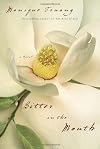
This is a book whose beginning came for me about 2/3 of the way through the book. The actual first section of “Bitter in the Mouth” left me very sad and very removed from the main character. I felt like I was being held at arm’s length – that there was a very substantial wall between the truths of the family of the main character, Linda, and me, the reader.
“The truth about my family was that we disappointed one another. When I heard the word “disappoint,” I tasted toast, show more slightly burned. But when I saw the word written, I thought of it first and foremost as the combining or the collapsing together of the words disappear and point, as in how something in us ceased to exist the moment someone let us down.”
Mentioned in the quote above is the fact that Linda experiences tastes for certain words. This is actually one of the things that first drew me to the book – this idea that words evoked an unexpected sense…and yet after a while – some sentences became nearly impossible to read. Each word is combined with the flavor that Linda experiences – and I found myself trying to decipher many sentences while squinting. I think if only certain words evoked tastes – it might have had more impact and would have been less distracting. I understand that there is an actual disease that causes this – but it was very irritating after a while as a reader.
And then – midway through – a veil is lifted. Things start to make much more sense in the context of Linda’s family and aspects of her personality and life choices. I became much more engaged as the pieces started to fall into place. Prior to this – the sense of the book is something like this:
“There were no photographs and no history, official or anecdotal. There was only my memory: coffee left too long on the burner, an uncoated aspirin caught in the throat, how a drop of mercury might taste on the tip of the tongue. I have come close to identifying the taste of bitter, but close isn’t good enough for mnemonic device. As for the word that triggered it, the usual trailhead of my memories, it remains lost to me.”
And then, once the reader finally starts to see what has been hidden, the puzzle starts to hold more interest than despair, becomes compelling instead of depressing. A bit of humor showed up as well. I was drawn in and started turning pages faster.
“My grandmother Iris was an overweight, vengeful diabetic with a taste for fire, and one of those traits would surely make her the next in our family to die.” And after Iris does die – “A small clutch purse lay on its side by her gloved left hand. I remember thinking, What do you need up in Heaven, Iris? A mirror, lipstick and a twenty?”
Linda starts seeing other members of her family through new eyes, eyes that may not be completely forgiving, but at least eyes that are more empathetic than before she left her small Southern hometown.
There were times during the first third of the book that I thought of putting the book down. Now that I have finished it, I’m very glad I stayed with it. Once some of the barriers fell – the beauty, the bittersweet love and fragile delicacy of the lives described in “Bitter in the Mouth” were well worth the time it took to reach them. show less
“The truth about my family was that we disappointed one another. When I heard the word “disappoint,” I tasted toast, show more slightly burned. But when I saw the word written, I thought of it first and foremost as the combining or the collapsing together of the words disappear and point, as in how something in us ceased to exist the moment someone let us down.”
Mentioned in the quote above is the fact that Linda experiences tastes for certain words. This is actually one of the things that first drew me to the book – this idea that words evoked an unexpected sense…and yet after a while – some sentences became nearly impossible to read. Each word is combined with the flavor that Linda experiences – and I found myself trying to decipher many sentences while squinting. I think if only certain words evoked tastes – it might have had more impact and would have been less distracting. I understand that there is an actual disease that causes this – but it was very irritating after a while as a reader.
And then – midway through – a veil is lifted. Things start to make much more sense in the context of Linda’s family and aspects of her personality and life choices. I became much more engaged as the pieces started to fall into place. Prior to this – the sense of the book is something like this:
“There were no photographs and no history, official or anecdotal. There was only my memory: coffee left too long on the burner, an uncoated aspirin caught in the throat, how a drop of mercury might taste on the tip of the tongue. I have come close to identifying the taste of bitter, but close isn’t good enough for mnemonic device. As for the word that triggered it, the usual trailhead of my memories, it remains lost to me.”
And then, once the reader finally starts to see what has been hidden, the puzzle starts to hold more interest than despair, becomes compelling instead of depressing. A bit of humor showed up as well. I was drawn in and started turning pages faster.
“My grandmother Iris was an overweight, vengeful diabetic with a taste for fire, and one of those traits would surely make her the next in our family to die.” And after Iris does die – “A small clutch purse lay on its side by her gloved left hand. I remember thinking, What do you need up in Heaven, Iris? A mirror, lipstick and a twenty?”
Linda starts seeing other members of her family through new eyes, eyes that may not be completely forgiving, but at least eyes that are more empathetic than before she left her small Southern hometown.
There were times during the first third of the book that I thought of putting the book down. Now that I have finished it, I’m very glad I stayed with it. Once some of the barriers fell – the beauty, the bittersweet love and fragile delicacy of the lives described in “Bitter in the Mouth” were well worth the time it took to reach them. show less
Set in the 1920s and 1930s, protagonist and narrator Binh is a young gay Vietnamese cook living in Paris and working as personal chef for Gertrude Stein and her partner, Alice B. Toklas. He had to leave French Indochina due to a failed relationship and his father’s disapproval. He tells of his life and loves in Saigon and Paris, as he observes the interactions between Stein and Toklas.
This story is told in stream-of-consciousness in a non-linear timeline with frequent unannounced shifts. show more There is not much of a plot here, but there are two stories – one of Binh and his travails, and the other of the Stein-Toklas relationship. The writing is evocative and there are several emotionally moving scenes.
The portrayal of Binh as a voice of a marginalized person works particularly well. Binh knows about French cuisine, and this knowledge of food helps him break through some of the traditional stereotypes he often encounters. I liked the elegant writing and storylines, but the structure did not work all that well for me. I think this is a case where the style occasionally gets in the way. Still, I found it well worth reading. show less
This story is told in stream-of-consciousness in a non-linear timeline with frequent unannounced shifts. show more There is not much of a plot here, but there are two stories – one of Binh and his travails, and the other of the Stein-Toklas relationship. The writing is evocative and there are several emotionally moving scenes.
The portrayal of Binh as a voice of a marginalized person works particularly well. Binh knows about French cuisine, and this knowledge of food helps him break through some of the traditional stereotypes he often encounters. I liked the elegant writing and storylines, but the structure did not work all that well for me. I think this is a case where the style occasionally gets in the way. Still, I found it well worth reading. show less
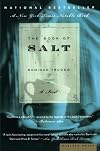
Lovely-amazing! Fictional memoir of a gay Vietnamese cook employed by Gertrude Stein and Alice B. Toklas in Paris. The prose is beautiful; the storytelling richly woven back upon itself. As a narrator, Binh is scythingly perceptive, with a Parker-esque edge to his tongue. Class and power and empire and racism and sex and food and language and gender and family and--! The book narrates Binh's lifelong quest for love, both at home in Vietnam and as an exile. The book is full of walls -- show more language, class, race, expectations, shame -- and navigates the maze with a sense of bittersweet, painfully aware of the maze and separation created by these walls. show less
Set in the 1920s and 1930s, protagonist and narrator Binh is a young gay Vietnamese cook living in Paris and working as personal chef for Gertrude Stein and her partner, Alice B. Toklas. He had to leave French Indochina due to a failed relationship and his father’s disapproval. He tells of his life and loves in Saigon and Paris, as he observes the interactions between Stein and Toklas.
This story is told in stream-of-consciousness in a non-linear timeline with frequent unannounced shifts. show more There is not much of a plot here, but there are two stories – one of Binh and his travails, and the other of the Stein-Toklas relationship. The writing is evocative and there are several emotionally moving scenes.
The portrayal of Binh as a voice of a marginalized person works particularly well. Binh knows about French cuisine, and this knowledge of food helps him break through some of the traditional stereotypes he often encounters. I liked the elegant writing and storylines, but the structure did not work all that well for me. I think this is a case where the style occasionally gets in the way. Still, I found it well worth reading. show less
This story is told in stream-of-consciousness in a non-linear timeline with frequent unannounced shifts. show more There is not much of a plot here, but there are two stories – one of Binh and his travails, and the other of the Stein-Toklas relationship. The writing is evocative and there are several emotionally moving scenes.
The portrayal of Binh as a voice of a marginalized person works particularly well. Binh knows about French cuisine, and this knowledge of food helps him break through some of the traditional stereotypes he often encounters. I liked the elegant writing and storylines, but the structure did not work all that well for me. I think this is a case where the style occasionally gets in the way. Still, I found it well worth reading. show less
Lists
Awards


You May Also Like


Associated Authors
Statistics
- Works
- 6
- Also by
- 8
- Members
- 1,794
- Popularity
- #14,341
- Rating
- 3.5
- Reviews
- 61
- ISBNs
- 51
- Languages
- 7
- Favorited
- 1