
David Shariatmadari
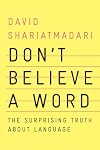
Author of Don't Believe a Word: The Surprising Truth About Language
Works by David Shariatmadari
Tagged
Common Knowledge
- Gender
- male
- Education
- University of Cambridge
School of Oriental and African Studies - Occupations
- writer
editor - Organizations
- Guardian [newspaper]
- Agent
- Wellbelove, Chris
Members
Reviews
*E-ARC received from Edelweiss Plus with the understanding that I would post an honest review. No money or other goods were exchanged, and all views are my own.*
We hear a lot about languages:
"Kids these days don't know how to talk anymore, the language is going downhill!"
"German is such an ugly, guttural language."
"These words are untranslatable."
You may even think some of it is true. Even I, a proclaimed word nerd, have been taken in (though I will argue 'til I'm blue in the face that show more language just changes, doesn't deteriorate) by lists of "untranslatable" foreign words and the like. In Don't Believe a Word, linguist David Shariatmadari dismantles the myths we've all heard - maybe even believed - and shows us ways in which language is much more complicated than we think. Using accessible language to explain complicated ideas, he covers a lot of ground that will be useful for any language lover whether they've had any previous experience with linguistics or not. show less
We hear a lot about languages:
"Kids these days don't know how to talk anymore, the language is going downhill!"
"German is such an ugly, guttural language."
"These words are untranslatable."
You may even think some of it is true. Even I, a proclaimed word nerd, have been taken in (though I will argue 'til I'm blue in the face that show more language just changes, doesn't deteriorate) by lists of "untranslatable" foreign words and the like. In Don't Believe a Word, linguist David Shariatmadari dismantles the myths we've all heard - maybe even believed - and shows us ways in which language is much more complicated than we think. Using accessible language to explain complicated ideas, he covers a lot of ground that will be useful for any language lover whether they've had any previous experience with linguistics or not. show less
I think this book could pose as a textbook for linguistics. It well put together and found I wanted read more as I progressed through the book. It has a fair-minded description of the Chomsky ideas about language. I did not pursue career in linguistics as I didn't want to churn back his bias when taking classes.
Shariatmadari, David. Don’t Believe a Word: The Surprising Truth about Language. Norton, 2020.
Guardian editor David Shariatmadari says that as his interest in language was sparked in childhood by listening to his Iranian farther speaking on the phone in Farsi to relatives in Tehran. He did not understand what was being said, but he could detect some of the language’s repeated phrases. That interest led him to study linguistics, the scientific study of language on its most general level. show more In Don’t Believe a Word he offers a refreshingly almost jargon-free introduction to the field. He debunks a number of commonly held beliefs about language, such as that some languages are innately superior to others, that the “true” meaning of a word is found in its etymology, and that there is a clear distinction between dialect and language. Along the way, he offers some interesting perspectives on why it is so difficult to program computers to pass the Turing test and, a bit more arcanely, on the evolution of Noam Chomsky’s ideas about language development and what features of human language are difficult for animals. I do wish he paid just a little attention to philology, the general study of written language. Don’t Believe a Word is as gentle an introduction to linguistics as you will ever find. show less
Guardian editor David Shariatmadari says that as his interest in language was sparked in childhood by listening to his Iranian farther speaking on the phone in Farsi to relatives in Tehran. He did not understand what was being said, but he could detect some of the language’s repeated phrases. That interest led him to study linguistics, the scientific study of language on its most general level. show more In Don’t Believe a Word he offers a refreshingly almost jargon-free introduction to the field. He debunks a number of commonly held beliefs about language, such as that some languages are innately superior to others, that the “true” meaning of a word is found in its etymology, and that there is a clear distinction between dialect and language. Along the way, he offers some interesting perspectives on why it is so difficult to program computers to pass the Turing test and, a bit more arcanely, on the evolution of Noam Chomsky’s ideas about language development and what features of human language are difficult for animals. I do wish he paid just a little attention to philology, the general study of written language. Don’t Believe a Word is as gentle an introduction to linguistics as you will ever find. show less
Usually I love books about language, but this one fell a little flat. It includes lots of interesting material. The "mythbusting" approach gets a bit tiresome, however.
Lists
Career (1)
Awards


You May Also Like


Statistics
- Works
- 1
- Members
- 204
- Popularity
- #108,206
- Rating
- 3.8
- Reviews
- 5
- ISBNs
- 8