
Pearl S. Buck (1892–1973)
Author of The Good Earth
About the Author
Pearl S. Buck, June 26, 1892 - March 6, 1973 Pearl Sydenstricker Buck was an American author, best know for her novels about China. Buck was born on June 26, 1892, in Hillsboro, West Virginia, but as the daughter of Presbyterian missionaries she was taken to China in infancy. She received her early show more education in Shanghai, but returned to the United States to attend college, and graduated from Randolph-Macon Woman's College in Virginia in 1914. Buck became a university teacher there and married John Lossing Buck, an agricultural economist, in 1917. Buck and her husband both taught in China, and she published magazine articles about life there. Her first novel East Wind, West Wind was published in 1930. Buck achieved international success with The Good Earth, which won the Pulitzer Prize in 1932. This story of a Chinese peasant family's struggle for survival was later made into a MGM film. Buck resigned from the Presbyterian Board of Foreign Missions after publishing an article that was critical of missionaries. She returned to the United States because of political unrest in China. Buck's novels during this period include Sons, A House Divided, and The Mother. She also wrote biographies of her father (Fighting Angel) and her mother (The Exile). She won the Nobel Prize for Literature in 1938. During her career, Buck published over 70 books: novels, nonfiction, story collections, children's books, and translations from the Chinese. She also wrote under the pseudonym John Sedges. In the United States, Buck was active in the civil rights and women's rights movements. In 1942 she founded the East and West Association to promote understanding between Asia and the West. In 1949, Buck established Welcome House, the first international interracial adoption agency. In 1964, she established the Pearl S. Buck foundation to sponsor support for Amerasian children who were not considered adoptable. Pearl Buck died in Danbury, Vermont, on March 6, 1973. (Bowker Author Biography) show less
Series
Works by Pearl S. Buck
American Triptych: Three John Sedges Novels: The Long Love ; The Townsman; Voices in the House (1958) 79 copies
The Complete Woman: Selections from the Writings of Pearl S. Buck, Winner of the Nobel Prize for Literature (1971) 30 copies
The Big Wave by Buck, Pearl S. (1986) Paperback — Author — 18 copies
Omnibus 11 copies
Eine kleine Weihnachtsgeschichte (5915 430) und andere Erzählungen um die Heilige Nacht. (1981) 7 copies
Novelas. V 4 copies
Novelas II 4 copies
Imperial Woman | Pavilion of Women 4 copies
Imperial Woman (excerpt) Published in Omnibook Best-Seller Magazine October 1956 Issue (1956) 3 copies
The Big Wave 3 copies
All Men Are Brothers Vol. 1 3 copies
Kinfolk, Part 1 3 copies
Priče za malu djecu 3 copies
Orhideja 2 copies
Los premios Nobel de Literatura III 2 copies
Altri Dei 2 copies
My Several Worlds 2 copies
Pearl S. Buck 2 copies
Of men and women / by Pearl S. Buck 2 copies
Mis diversos mundos. 2 copies
KIRIK ÜMİTLER 2 copies
Novelas. III 2 copies
℗La ℗famiglia dispersa: romanzo 2 copies
The Time is Noon / Peony / Imperial Woman / Dragon Seed / The Exile / Fighting Angel (1961) 2 copies
Portrait of a Marriage / The Promise 2 copies
Moja svetova moje življenje 1 copy
Ženski paviljon 1 copy
The Decameron 1 copy
Velka ljubezen 1 copy
Opere 1 copy
Buck Pearl (Pearl Walsh) 1 copy
Casa de lut vol. I Tarina 1 copy
Orkide 1 copy
Sons / A House Divided / The Exile / The Patriot / Dragon Seed / Portrait of a Marriage / The Promise (1939) 1 copy
The Hidden Flower [abridged] 1 copy
By Pearl S. Buck - Kinfolk: A Novel of China (Oriental Novels of Pearl S. Buck) (New Ed) (1996) 1 copy
Moren 1 copy
I fjr̃ran land 1 copy
Paviljon žena 1 copy
Muerte en el castillo 1 copy
Az ősi föld hazahív regény 1 copy
Peonía Novela 1 copy
Jezna žena 1 copy
A széthulló család regény 1 copy
El año nuevo 1 copy
HLe Iragazze di Madame Liang 1 copy
Reader's Digest Auswahlbücher 57 - Das neue Jahr. Abgekartetes Spiel. Dr. Moores Krankenhaus. Die Brücke am Kwai (1969) 1 copy
Imperial Woman, Part 1 1 copy
Glasovi v hiši 1 copy
Sous le même ciel 1 copy
Vzhodni zahodnik 1 copy
The Long Love, Part 2 1 copy
OBRAS SELECTAS PEARL S. BUCK 1 copy
BUC Puente de paso 1 copy
Vento Leste e Vento Oeste 1 copy
Para minhas filhas, com amor, Conselhos de mãe adotiva que toda mãe verdadeira gostaria de dar 1 copy
Der Drachenfisch Die berühmte Schriftstellerin erzählt die Geschichte einer Kinderfreunschaft 1 copy
A PRIMEIRA ESPOSA 1 copy
HIJOS La familia Wang 1 copy
Christmas Miniature 1 copy
The Long Love, Part 1 1 copy
La lettre de Pekin 1 copy
Ponosno srce 1 copy
Le Roi fantôme 1 copy
Preconceito Racial 1 copy
Time is Noon 1 copy
The First wife 1 copy
The Good Earth, Part 1 1 copy
The Good Earth, Part 2 1 copy
Pearl Buck. Impératrice de Chine : 'Imperial woman', traduit de l'américain par Lola Tranec. 19e édition (1956) 1 copy
La Vie n'attend pas 1 copy
Es-tu le maître de l'aube ? 1 copy
Terre coréenne 1 copy
Le Peuple du Japon 1 copy
Novelas 1 copy
The CHINESE NOVEL. Nobel Lecture Delivered Before the Swedish Adacemy at Stockholm December 12, 1938. (1939) 1 copy
Maintenant et à jamais 1 copy
Mathew, Mark, Luke and John 1 copy
Un'eterna meraviglia 1 copy
The Exhile 1 copy
Mãe 1 copy
Pearl S. Buck,... La Terre chinoise. 3. La Famille dispersée : Roman traduit par S. Campaux (1950) 1 copy
Østenvind ... Vestenvind 1 copy
Cinque romanzi per ragazzi 1 copy
Mis mejores novelas cortas (Antiguos y modernos / Revolución / Inundación / A lo lejos y de cerca 1 copy
La promesa Otros dioses 1 copy
The Missionary's Wife 1 copy
Cloak and Dagger 1 copy
La Primera mujer de Se Yuan 1 copy
LOS PREMIOS NOBEL 1 copy
Den Gode Jord VIII 1 copy
[Title missing] 1 copy
සරුබිමේ පෙරළිය 1 copy
පීකිං පෙම් පත 1 copy
පියොනි 1 copy
සරුබිමේ පුත්තු 1 copy
Pearl S. Buck - Novelas 1 copy
De Chinese roman 1 copy
Vlastenec 1 copy
Ludzie w rozterce 1 copy
Buck, Pearl S. Archive 1 copy
Kinfolk, Part 2 1 copy
Noe å leve for 1 copy
His Own Country 1 copy
Sølvsommerfuglen 1 copy
ÄITI 1 copy
The New Year 1 copy
Can the Church Lead? 1 copy
Det bästas bokval: Flygplatsen / Målaren från Kreta / Det nya året / På västfronten intet nytt 1 copy
What America Means to Me 1 copy
O Patríota 1 copy
الأم 1 copy
THE EXILE. 1 copy
Bambuskottet 1 copy
Bambú 1 copy
Sh̲ne Roman 1 copy
Une femme qui avait change 1 copy
L'amour demeure 1 copy
Synir trúboðanna 1 copy
Í huliðsbæ 1 copy
Gersemi 1 copy
Sons House of Earth #2 1 copy
Fiabe orientali 1 copy
The House of Earth Trilogy 1 copy
Orgullo de corazón novela 1 copy
සෙනෙහෙබර රූත් 1 copy
Pearl Buck. La Mère : Traduit de l'anglais par Germaine Delamain. Préface de Louis Gillet,... 287e édition (1948) 1 copy
Pavillon des femmes 1 copy
My Chinese childhood 1 copy
La gran dama Novela 1 copy
Mujeres sin cielo 1 copy
Mándalá 1 copy
A grande luta, Pearl S. Buck 1 copy
Le opere 1 copy
A Bridge for Passing 1 copy
Essay on myself 1 copy
Aún es mediodía 1 copy
Mandala 1 copy
Associated Works
The Young Folks' Shelf of Books, Volume 04: Just Around the Corner (1962) — Contributor — 175 copies
An American Album: One Hundred and Fifty Years of Harper's Magazine (2000) — Contributor — 145 copies, 1 review
101 Years' Entertainment: The Great Detective Stories 1841-1941 (1941) — Contributor — 111 copies, 1 review
Women's Magazines, 1940-1960: Gender Roles and the Popular Press (1998) — Contributor — 95 copies, 1 review
Reader's Digest Condensed Books 1955 v01: The Reason Why / "The China I Knew" / My Brother's Keeper / Good Morning, Miss Dove / The Darby Trial (1955) — Contributor — 32 copies, 1 review
Reader's Digest Condensed Books 1957 v03: The Lady / A Houseful of Love / The Three Faces of Eve / Letter from Peking / The FBI Story / Mission to Borneo (1957) — Author — 32 copies
The Best of Both Worlds: An Anthology of Stories for All Ages (1968) — Contributor — 25 copies, 1 review
Reader's Digest Best Sellers 1970: Death Committee | Three Daughters of Madame Liang | Once Upon an Island | The Wine and the Music (1970) — Author — 20 copies
My Most Inspiring Moment: Encounters with Destiny Relived by Thirty-Eight Best-Selling Authors (1965) 12 copies
Great American Short Stories: O. Henry Memorial Prize Winning Stories, 1919-1934 (1935) — Contributor — 11 copies, 1 review
Reader's Digest Auswahlbucher 172 : Der Unterhändler. Ostwind-Westwind. Gefährliches Erbe. Manchmal geschehen noch Wunder (1990) 6 copies
Voiceless India — Introduction — 5 copies
Reader's Digest Condensed Books: Lobo / The Century of the Surgeon / Letter from Peking / Bon Voyage / The Nymph and the Lamp (1950) — Author — 3 copies
RDCBLP v048 Polsinney Harbour | Christmas Day in the Morning | The Whale of the Victoria Cross | Winter Night (1985) — Author — 2 copies
Reader's Digest Condensed Books: Farewell to the King • The Thirteenth Moon • The Three Daughters of Madame Liang • Florence Nightingale • The Witness (1971) — Author — 2 copies
Mia cugina Rachele - Il cavallo di legno - Vita meravigliosa delle foche - Il fiore nascosto — Contributor — 2 copies
The Big Wave [1961 film] — Original novel — 2 copies
Good Children Don't Kill, A Place In The Woods, A Town Like Alice, Snatch, The New Year (1969) 2 copies
Det Bästas Bokval (1958) vol 010 : Ingen tid att älska, Evas tre ansikten; Mina skilda världar; Arvtagaren — Contributor — 2 copies
Het Beste Boek 44: Het nieuwe jaar / De wortels van het kwaad / Scotts laatste expeditie / De zondebok / Broeders van de zee (1969) — Author — 1 copy, 1 review
Mine Verdener / To Soldater / Digby / Pashaen på Gudindeøen / Det Store X — Contributor — 1 copy
Coronet, April 1941 — Contributor — 1 copy
Het Beste Boek 55: Het kind van de rekening / De zomer van de rode wolf / De drie dochters van Madame Liang / Geen leven zonder droom (1972) 1 copy, 1 review
Los premios Nobel de literatura. Los padres prodigos / Voces secretas / La senhorita Smith-Tellefsen — Contributor — 1 copy
Die Töchter der Madame Liang, Der geschenkte Gaul, Die blauen Blumen der Catstreet, Papillon (1972) — Contributor — 1 copy
Reader's Digest 4 in 1 The New Year etc. — Contributor — 1 copy
Biblioteca de Selecciones. CARTA DE PEKIN-HISTORIA DEL FBI-ANNAPURNA-LA SEÑORA DE ANDRES JACKSON. 1 copy
The Ethnic Image in Modern American Literature, 1900-1950, Volumes 1-2 (1984) — Contributor — 1 copy
Tagged
Common Knowledge
- Canonical name
- Buck, Pearl S.
- Legal name
- Buck, Pearl Sydenstricker
- Other names
- Zhenzhu,Sai
Sedges, John
Sydenstricker, Pearl Comfort (birth name) - Birthdate
- 1892-06-26
- Date of death
- 1973-03-06
- Gender
- female
- Education
- Randolph-Macon Woman's College (AB|1914 ∙ Classics)
Cornell University (MA|1926) - Occupations
- novelist
teacher - Organizations
- American Academy of Arts and Letters (1936)
Presbyterian Church in the United States
Kappa Delta
Founder East and West Association (1942)
Founder Welcome House (1949)
Founder Pearl S. Buck Foundation (1964) - Awards and honors
- Nobel Prize (Literature, 1938)
Pulitzer Prize (1932) - Relationships
- Spurling, Hilary (biographer)
- Short biography
- Pearl Sydenstricker was the daughter of Southern Presbyterian missionaries. She spent much of her life in China, though she graduated from Randolph-Macon Woman's College in Lynchburg, Virginia. From childhood she was bilingual in English and Chinese. She married an agricultural economist named John Lossing Buck in 1917, and together they lived in rural Anhwei province, an impoverished area. Her Pulitzer Prize-winning novel The Good Earth, and other stories set in China are based on what she learned while living there. In 1935, after divorcing John Buck, Pearl married publisher Richard Walsh. In 1938, Buck became the first American woman to win the Nobel Prize in literature. She is buried at Green Hills Farm, in Bucks County, Pennsylvania.
- Cause of death
- cancer (lung)
- Nationality
- USA
- Birthplace
- Hillsboro, West Virginia, USA
- Places of residence
- Zhenjiang, China
Nanjing, China
Bucks County, Pennsylvania, USA
Ithaca, New York, USA - Place of death
- Danby, Vermont, USA
- Burial location
- Green Hills Farm, Perkasie, Pennsylvania, USA
- Associated Place (for map)
- USA
Members
Discussions
March 2025: Pearl S. Buck in Monthly Author Reads (March 2025)
Found: Children's Book about Giant Wave in Japan in Name that Book (December 2022)
Reviews
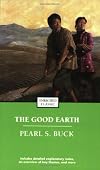
And when he was weary he lay down upon his land and he slept and the health of the earth spread into his flesh and he was healed of his sickness.
The Good Earth follows Wang Lung from his wedding day to his death, as he goes from a poor farmer to a rich patriarch. But is he happier at the end? (That's basically the point of what I found to be an interesting novel, albeit a depressing one.)
At different times, The Good Earth reminded me of [b:The Grapes of Wrath|18114322|The Grapes of show more Wrath|John Steinbeck|https://i.gr-assets.com/images/S/compressed.photo.goodreads.com/books/1375670575l/18114322._SY75_.jpg|2931549] and [b:East of Eden|4406|East of Eden|John Steinbeck|https://i.gr-assets.com/images/S/compressed.photo.goodreads.com/books/1544744853l/4406._SY75_.jpg|2574991] (both of which were written later). Ms. Buck's goal was to write a family saga featuring well-rounded Chinese characters, not the stereotypes that had previously peopled western literature about the Chinese. (She was a fascinating person -- so far ahead of her time when it comes to equality issues. If you don't know anything about Ms. Buck, look her up.)
Excerpts from various literary critiques were included at the end of edition I read. Two criticisms that I found interesting were (a) cultural corrections made by Chinese-American critics and (b) protests about her featuring mostly poor, uneducated characters. Ms. Buck's response to these issues were basically that China is a huge country with diverse culture and she was accurately depicting the area where she lived, and that the characters she featured represent people who aren't going to write about themselves.
*As part of my classic-of-the-month project, this summer is devoted to white people (two British men & an American woman) writing about Asia: ([b:A Passage to India|45195|A Passage to India|E.M. Forster|https://i.gr-assets.com/images/S/compressed.photo.goodreads.com/books/1421883612l/45195._SY75_.jpg|4574850], this book, and [b:The Painted Veil|99664|The Painted Veil|W. Somerset Maugham|https://i.gr-assets.com/images/S/compressed.photo.goodreads.com/books/1320421719l/99664._SY75_.jpg|1069201]. I've purposely picked books that (hopefully) aren't ragingly racist. show less
The Good Earth follows Wang Lung from his wedding day to his death, as he goes from a poor farmer to a rich patriarch. But is he happier at the end? (That's basically the point of what I found to be an interesting novel, albeit a depressing one.)
At different times, The Good Earth reminded me of [b:The Grapes of Wrath|18114322|The Grapes of show more Wrath|John Steinbeck|https://i.gr-assets.com/images/S/compressed.photo.goodreads.com/books/1375670575l/18114322._SY75_.jpg|2931549] and [b:East of Eden|4406|East of Eden|John Steinbeck|https://i.gr-assets.com/images/S/compressed.photo.goodreads.com/books/1544744853l/4406._SY75_.jpg|2574991] (both of which were written later). Ms. Buck's goal was to write a family saga featuring well-rounded Chinese characters, not the stereotypes that had previously peopled western literature about the Chinese. (She was a fascinating person -- so far ahead of her time when it comes to equality issues. If you don't know anything about Ms. Buck, look her up.)
Excerpts from various literary critiques were included at the end of edition I read. Two criticisms that I found interesting were (a) cultural corrections made by Chinese-American critics and (b) protests about her featuring mostly poor, uneducated characters. Ms. Buck's response to these issues were basically that China is a huge country with diverse culture and she was accurately depicting the area where she lived, and that the characters she featured represent people who aren't going to write about themselves.
*As part of my classic-of-the-month project, this summer is devoted to white people (two British men & an American woman) writing about Asia: ([b:A Passage to India|45195|A Passage to India|E.M. Forster|https://i.gr-assets.com/images/S/compressed.photo.goodreads.com/books/1421883612l/45195._SY75_.jpg|4574850], this book, and [b:The Painted Veil|99664|The Painted Veil|W. Somerset Maugham|https://i.gr-assets.com/images/S/compressed.photo.goodreads.com/books/1320421719l/99664._SY75_.jpg|1069201]. I've purposely picked books that (hopefully) aren't ragingly racist. show less
Imperial Woman: The Story of the Last Empress of China (Oriental Novels of Pearl S. Buck) by Pearl S. Buck
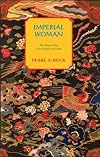
As a work of historical fiction, Imperial Woman follows the political history, as well as the gossipy side of that history, pretty well. And as is usually the case with Buck's fiction, her storytelling skills immediately bring the reader into the novel. For what is the fourth or fifth time, I began reading a Buck novel with only the intent to look at the first few pages and quickly found myself some ninety pages in.
I am not sure about Buck's accuracy in detailing actual Chinese beliefs and show more cultural attitudes--she often seems to read her own values into theirs, whether they be Chinese peasants or aristocrats. But Buck does manage to pull off quite a feat in making Western readers side almost entirely with the Chinese view of Western inroads into China. More than that, Buck can cock a snook better than anyone when criticizing Western missionaries, ambassadors, their wives, and merchants.
Against this grand context of China versus the West during the last half of the nineteenth century, there is also the personal story of the Empress Tzu Hsi (Cixi). Quite a story it is, of a concubine who works her way to the throne and ultimate power, dispensing with three emperors along the way and a host of princes, generals, retainers, and imperial eunuchs. Always a reactionary, Tzu Hsi nevertheless generates sympathy all the while. And even when Buck ends the novel, the reader finds Tzu Hsi plotting to control yet a fourth emperor, the boy emperor Puyi. Then, Buck chooses to close her book before that equally tragic tale can begin in full--which would come on the very deathbed of Tzu Hsi. show less
I am not sure about Buck's accuracy in detailing actual Chinese beliefs and show more cultural attitudes--she often seems to read her own values into theirs, whether they be Chinese peasants or aristocrats. But Buck does manage to pull off quite a feat in making Western readers side almost entirely with the Chinese view of Western inroads into China. More than that, Buck can cock a snook better than anyone when criticizing Western missionaries, ambassadors, their wives, and merchants.
Against this grand context of China versus the West during the last half of the nineteenth century, there is also the personal story of the Empress Tzu Hsi (Cixi). Quite a story it is, of a concubine who works her way to the throne and ultimate power, dispensing with three emperors along the way and a host of princes, generals, retainers, and imperial eunuchs. Always a reactionary, Tzu Hsi nevertheless generates sympathy all the while. And even when Buck ends the novel, the reader finds Tzu Hsi plotting to control yet a fourth emperor, the boy emperor Puyi. Then, Buck chooses to close her book before that equally tragic tale can begin in full--which would come on the very deathbed of Tzu Hsi. show less

One thing I could not understand and do not yet and this was the apparent lack of interest or curiosity in Americans about other countries and peoples. I remember my wonder that my college mates never asked me about China, or what the people there ate and how the lived and whether China was like our country. So far as I can remember, no one ever asked me a question about the vast humanity on the other side of the globe.
Pearl Buck is the woman whose name is trotted out to show the folly of show more the Nobel Prize. No Joyce. No Proust. No Tolstoy or Rilke. But Pearl Buck, right there, 1938. Even at the time it was considered a poor choice, and she knew it.
The award came, as I have before, at a time when I needed it most. I had met that difficult period of a writer’s life, when the reaction, which the American public invariably bestows upon anyone whom it has discovered and praised, has set in. Since the praise is always too much and too indiscriminate the opposing criticism and contempt are also too much and too indiscriminate.
Yet I grew up reading Pearl Buck’s novels: along with Jack London and Poe they’re among the first serious bits of literature I can recall reading. As early as I can remember I had an insatiable interest in Asia, and I devoured a number of volumes from my small school library, including the series that began with The Good Earth. It’s been so long since I read those, and I’ve heard the scorn that has been heaped on her, and I thought: Well, probably a middle school kid doesn’t know much. But just by chance I walked into a bookstore and looked around for a long time before deciding I really wasn’t interested in buying anything, but as the bookshop owner didn’t seem to be getting much business and looked so hopeful I felt bad about leaving empty-handed, so I grabbed a dusty, cheap paperback copy of Pearl Buck’s autobiography for a dollar (35 Thai baht), not even really intending to read it. I went from there immediately to lunch, and opened the book to find one of the most awkward opening sentences in history:
This morning I rose early, as is my habit, and as usual I went to the open window and looked out over the land that is to me the fairest I know.
Why the “to me?” Why not just “the land that is the fairest I know?” Things did not immediately bode well for My Several Worlds. And yet lunch continued, as it must, and I trudged on. And I started to like it. Then I really started to like it. Yes, it was quaint and sort of brittle, and there were some unfortunate choices of phrasing, and there were entire sections that I could have done without, but finally it was of enormous interest, and I thought: this woman is spat upon why? Not counting a recent boost from Oprah (naturally), Buck has remained in critical neglect and forgotten by readers for some time. My Several Worlds is long out-of-print. But I’ll wager that few autobiographies are as interesting or as rewarding as this. The woman lived a hell of a life, and it’s amazing to see so many of the events, the trials, and, most of all perhaps, the interior battles that are there on the page and even seem barely realized by the author – and it is these inner conflicts that make the book fascinating. She was raised by missionaries, which is enough to automatically discount most people as worthless, and yet, while she loved her parents, there is also a sad acknowledgment of the futility, and even the potential harm, of the missions:
But somewhere I learned from Thoreau, who doubtless learned it from Confucius, that if a man comes to do his own good for you, then you must flee that man and save yourself.
Not to mention that she was one of the more notable divorcees of the 1930s.
Buck has a knee-jerk loathing of anything associated with “Communism, ” yet she admits that the Chinese merely chose the best of a couple of awful options available to them, and says that the Russian peasants were the lowest of the low, and so it was no wonder they latched onto Communism:
I had seen poverty in China and starvation in famine times and I was later to see poverty in my own country in city slums and in southern towns, but never had I, nor have I since, seen poverty equal to pre-revolutionary Russia.
This, it should be added, includes a later trip to India.
The descriptions of Chinese life are detailed and fascinating (Buck learned Chinese fluently before English), as are the descriptions of the tumultuous times that would eventually drive her out of China forever. Buck got to know a wide cross-section of Chinese society, from the peasants to the intellectuals, who would quickly evolve from the traditional Confucian intellectuals of empirical times to the “Westernized intellectuals” who Buck all but blames for driving the country to disaster. And perhaps she’s right. She reproduces an exchange in the New York Times: a Chinese professor living in the States takes Buck to task for the depictions in The Good Earth as not being true-to-life, and she responds by very carefully and methodically pointing out that the gentleman, despite being Chinese, has no idea what he’s talking about. I’m inclined to side with Pearl.
Pearl Buck can seem naïve. She did not live in the United States and barely knew the country until she was in her twenties, and holds it up on a pedestal as being mostly saintly, and entirely innocent of the sort of crass acts of the British, Germans, and other white folk in China, which certainly isn’t true, even if the U. S. was less blatantly obvious about their thieving. She also likes to use the term “we Americans, ” as if to convince herself that she is fully American, as apple pie, like everyone else. But this is undermined time and again by statements she makes, in which she bemoans American insularity, or unfavorably compares the American family system with the Chinese (in which it is very rare that unfortunates like the elderly or orphans are simply left to fend for themselves), and feels American children to be among the unhappiest on earth, or when she finally discovers, in an exhibition of paintings by black painters in New York, the “sad dark faces… dead bodies swinging from trees… charred remains of houses and tragic children” and the disgusting racism of the time: “It was a blow from which I could not recover.”
Yet Mrs. Buck is not exempt from a woefully tin-eared attempt at dialect, either, right out of the Stepin’ Fetchit handbook:
“Whyn’t you tell me you was comin’ to see Mist’ Billy Phelps, lady?” he demanded. “I always tends to his company first.”
I find the author’s contradictions and uncertainties fascinating. She doesn’t hold herself up as an ideal, and her autobiography is thankfully free of self-congratulation. I’m willing to forgive her missteps because overall this is a valuable and illuminating book. We meet figures from her past, like her Confucian tutor (But the important lesson he taught me was that if one would be happy he must not raise his head above his neighbor’s. “He who raises his head above the heads of others, ” Mr. Kung said, “will sooner or later be decapitated.”). We witness a massive nation in the early stages of titanic change. The turmoil that was gripping China in Buck’s time was comparable to that bubbling up in Russia and Europe. There was constant government instability after the end of the imperial dynasty – at one point Buck and her family barely escaped being massacred by a mob through the grace of a servant who was able to hide them – and the country went from empress to child emperor to warlords to Nationalists to Japanese to Communists in a relatively short period of time. Though eventually she finds peace in America – and it here, later in the book, that the focus shifts to America and thus, for me, loses much interest – she remains haunted by the ghosts of her Chinese past.
I doubt that America is any less insular now than it was in Buck’s time, and what she feared would eventually happen - that ignorance would lead America to unnecessary wars in Asia - has occurred a few times over. Perhaps now is a worthwhile time to reevaluate Pearl Buck. show less
Pearl Buck is the woman whose name is trotted out to show the folly of show more the Nobel Prize. No Joyce. No Proust. No Tolstoy or Rilke. But Pearl Buck, right there, 1938. Even at the time it was considered a poor choice, and she knew it.
The award came, as I have before, at a time when I needed it most. I had met that difficult period of a writer’s life, when the reaction, which the American public invariably bestows upon anyone whom it has discovered and praised, has set in. Since the praise is always too much and too indiscriminate the opposing criticism and contempt are also too much and too indiscriminate.
Yet I grew up reading Pearl Buck’s novels: along with Jack London and Poe they’re among the first serious bits of literature I can recall reading. As early as I can remember I had an insatiable interest in Asia, and I devoured a number of volumes from my small school library, including the series that began with The Good Earth. It’s been so long since I read those, and I’ve heard the scorn that has been heaped on her, and I thought: Well, probably a middle school kid doesn’t know much. But just by chance I walked into a bookstore and looked around for a long time before deciding I really wasn’t interested in buying anything, but as the bookshop owner didn’t seem to be getting much business and looked so hopeful I felt bad about leaving empty-handed, so I grabbed a dusty, cheap paperback copy of Pearl Buck’s autobiography for a dollar (35 Thai baht), not even really intending to read it. I went from there immediately to lunch, and opened the book to find one of the most awkward opening sentences in history:
This morning I rose early, as is my habit, and as usual I went to the open window and looked out over the land that is to me the fairest I know.
Why the “to me?” Why not just “the land that is the fairest I know?” Things did not immediately bode well for My Several Worlds. And yet lunch continued, as it must, and I trudged on. And I started to like it. Then I really started to like it. Yes, it was quaint and sort of brittle, and there were some unfortunate choices of phrasing, and there were entire sections that I could have done without, but finally it was of enormous interest, and I thought: this woman is spat upon why? Not counting a recent boost from Oprah (naturally), Buck has remained in critical neglect and forgotten by readers for some time. My Several Worlds is long out-of-print. But I’ll wager that few autobiographies are as interesting or as rewarding as this. The woman lived a hell of a life, and it’s amazing to see so many of the events, the trials, and, most of all perhaps, the interior battles that are there on the page and even seem barely realized by the author – and it is these inner conflicts that make the book fascinating. She was raised by missionaries, which is enough to automatically discount most people as worthless, and yet, while she loved her parents, there is also a sad acknowledgment of the futility, and even the potential harm, of the missions:
But somewhere I learned from Thoreau, who doubtless learned it from Confucius, that if a man comes to do his own good for you, then you must flee that man and save yourself.
Not to mention that she was one of the more notable divorcees of the 1930s.
Buck has a knee-jerk loathing of anything associated with “Communism, ” yet she admits that the Chinese merely chose the best of a couple of awful options available to them, and says that the Russian peasants were the lowest of the low, and so it was no wonder they latched onto Communism:
I had seen poverty in China and starvation in famine times and I was later to see poverty in my own country in city slums and in southern towns, but never had I, nor have I since, seen poverty equal to pre-revolutionary Russia.
This, it should be added, includes a later trip to India.
The descriptions of Chinese life are detailed and fascinating (Buck learned Chinese fluently before English), as are the descriptions of the tumultuous times that would eventually drive her out of China forever. Buck got to know a wide cross-section of Chinese society, from the peasants to the intellectuals, who would quickly evolve from the traditional Confucian intellectuals of empirical times to the “Westernized intellectuals” who Buck all but blames for driving the country to disaster. And perhaps she’s right. She reproduces an exchange in the New York Times: a Chinese professor living in the States takes Buck to task for the depictions in The Good Earth as not being true-to-life, and she responds by very carefully and methodically pointing out that the gentleman, despite being Chinese, has no idea what he’s talking about. I’m inclined to side with Pearl.
Pearl Buck can seem naïve. She did not live in the United States and barely knew the country until she was in her twenties, and holds it up on a pedestal as being mostly saintly, and entirely innocent of the sort of crass acts of the British, Germans, and other white folk in China, which certainly isn’t true, even if the U. S. was less blatantly obvious about their thieving. She also likes to use the term “we Americans, ” as if to convince herself that she is fully American, as apple pie, like everyone else. But this is undermined time and again by statements she makes, in which she bemoans American insularity, or unfavorably compares the American family system with the Chinese (in which it is very rare that unfortunates like the elderly or orphans are simply left to fend for themselves), and feels American children to be among the unhappiest on earth, or when she finally discovers, in an exhibition of paintings by black painters in New York, the “sad dark faces… dead bodies swinging from trees… charred remains of houses and tragic children” and the disgusting racism of the time: “It was a blow from which I could not recover.”
Yet Mrs. Buck is not exempt from a woefully tin-eared attempt at dialect, either, right out of the Stepin’ Fetchit handbook:
“Whyn’t you tell me you was comin’ to see Mist’ Billy Phelps, lady?” he demanded. “I always tends to his company first.”
I find the author’s contradictions and uncertainties fascinating. She doesn’t hold herself up as an ideal, and her autobiography is thankfully free of self-congratulation. I’m willing to forgive her missteps because overall this is a valuable and illuminating book. We meet figures from her past, like her Confucian tutor (But the important lesson he taught me was that if one would be happy he must not raise his head above his neighbor’s. “He who raises his head above the heads of others, ” Mr. Kung said, “will sooner or later be decapitated.”). We witness a massive nation in the early stages of titanic change. The turmoil that was gripping China in Buck’s time was comparable to that bubbling up in Russia and Europe. There was constant government instability after the end of the imperial dynasty – at one point Buck and her family barely escaped being massacred by a mob through the grace of a servant who was able to hide them – and the country went from empress to child emperor to warlords to Nationalists to Japanese to Communists in a relatively short period of time. Though eventually she finds peace in America – and it here, later in the book, that the focus shifts to America and thus, for me, loses much interest – she remains haunted by the ghosts of her Chinese past.
I doubt that America is any less insular now than it was in Buck’s time, and what she feared would eventually happen - that ignorance would lead America to unnecessary wars in Asia - has occurred a few times over. Perhaps now is a worthwhile time to reevaluate Pearl Buck. show less
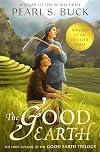
This is the first in a trilogy of novels published in the 1930s about the lives of generations of a family of Chinese peasants in the late 19th and early 20th centuries. The author was American Pearl S Buck, daughter of Presbyterian missionaries and who spent much of the first 40 years of her life in China. This novel was, rather counter-intuitively, the best-selling novel in the US in 1931 and 1932, in which latter year it won the Pulitzer Prize, while Buck herself was the first American show more woman to win the Nobel Prize in Literature in 1938.
The beauty of the novel is that the land, the soil, the earth of the title is almost a character in its own right. It belongs to farmer Wang Lung and his family which early on in the novel consists of himself, his young wife O-Lan, and their two young sons, and Wang's father; with a feckless uncle, with his wife and son, lurking in the background. Wang works hard but struggles. Famine comes to the land and desperate times. His family moves to a southern city where, eventually they encounter political turbulence and Wang acquires a small fortune of gold coins. Back home in his village, he wisely buys land and grows his farm, becoming prosperous. There are sad and tragic scenes, humour, pathos and an interesting cast of characters. One shocking aspect is the way daughters are treated as opposed to sons, girls are described as "slaves" who are (though not in Wang's family) sold off (or even killed) during times of hardship to help the family.
Part of the overall allure and mystery of the novel is its seeming to take place outside time and place - we don't find out the names of most of Wang's family members, and the outside world rarely impinges on their lives, with unspecified references to wars and revolutions, which I thought must refer to the Boxer rebellion of 1901 and the revolution that overthrew the Manchus in 1911-12, though the the stretches of time in the family's lives seems longer than these events allow - Wang is about 20 at the novel's start and about 70 at its end. I love Buck's writing style and her deep empathy for her characters and their landscape and culture. show less
The beauty of the novel is that the land, the soil, the earth of the title is almost a character in its own right. It belongs to farmer Wang Lung and his family which early on in the novel consists of himself, his young wife O-Lan, and their two young sons, and Wang's father; with a feckless uncle, with his wife and son, lurking in the background. Wang works hard but struggles. Famine comes to the land and desperate times. His family moves to a southern city where, eventually they encounter political turbulence and Wang acquires a small fortune of gold coins. Back home in his village, he wisely buys land and grows his farm, becoming prosperous. There are sad and tragic scenes, humour, pathos and an interesting cast of characters. One shocking aspect is the way daughters are treated as opposed to sons, girls are described as "slaves" who are (though not in Wang's family) sold off (or even killed) during times of hardship to help the family.
Part of the overall allure and mystery of the novel is its seeming to take place outside time and place - we don't find out the names of most of Wang's family members, and the outside world rarely impinges on their lives, with unspecified references to wars and revolutions, which I thought must refer to the Boxer rebellion of 1901 and the revolution that overthrew the Manchus in 1911-12, though the the stretches of time in the family's lives seems longer than these events allow - Wang is about 20 at the novel's start and about 70 at its end. I love Buck's writing style and her deep empathy for her characters and their landscape and culture. show less
Lists
Best War Stories (1)
1940s (1)
Sonlight Books (1)
4th Grade Books (1)
Precious People (1)
BitLife (1)
Which house? (1)
1950s (1)
Female Author (1)
Unread books (1)
Fiction For Men (1)
Asia (1)
Sense of place (1)
A Novel Cure (1)
Christmas Books (1)
Women's Stories (1)
. (1)
1930s (2)
1970 Club (1)
Down on the Farm (1)
Carole's List (1)
Shelf 101 (1)
Ambleside Books (1)
Reading Globally (1)
Awards


You May Also Like


Associated Authors
Statistics
- Works
- 430
- Also by
- 83
- Members
- 37,100
- Popularity
- #492
- Rating
- 3.9
- Reviews
- 676
- ISBNs
- 1,159
- Languages
- 30
- Favorited
- 78

