
Peter Altenberg (1859–1919)
Author of Telegrams of the Soul: Selected Prose of Peter Altenberg
About the Author
Image credit: Photograph © ÖNB/Wien
Works by Peter Altenberg
Skizoj 4 copies
Mein Lebensabend 2 copies
Minutové romány : Výbor z díla 2 copies
Der neue Weg der Genossenschaft Deutscher Bühnenangehöriger : Ein Protest in Sachen Herwarth Walden 1 copy
Was der Tag mir zuträgt. Fünfundfünfzig neue Studien. Dritte vermehrte und veränderte Auflage. (1901) 1 copy
Reporter der Seele 1 copy
Don Juan/Prevratnik 1 copy
Ketavim nivḥarim 1 copy
Associated Works
Tales of the German Imagination from the Brothers Grimm to Ingeborg Bachmann (Penguin Classics) (2012) — Contributor — 79 copies, 2 reviews
Nikolaus und Engelshaar : Weihnachten im alten Wien ; Geschichten & Bräuche zur schönsten Zeit des Jahres (2008) — Contributor — 1 copy
Hills #3 — Contributor — 1 copy
Winterzeit : eine fotografisch-poetische Betrachtung — Contributor — 1 copy
Tagged
Common Knowledge
- Legal name
- Engländer, Richard
- Birthdate
- 1859-03-09
- Date of death
- 1919-01-08
- Gender
- male
- Occupations
- writer
- Nationality
- Austria
- Birthplace
- Vienna, Austria
- Place of death
- Vienna, Austria
- Associated Place (for map)
- Vienna, Austria
Members
Reviews
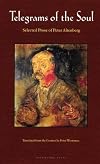
I read most of this through selected selections. I enjoyed each piece both for itself and as an influence on several writers I love/d. There's something so lovely about finding a classic that speaks to the modern; something that provides connection and perspective.

Sonnenuntergang im Prater. Fünfundfünfzig Prosastücke. consists of 55 short pieces of prose, selected from almost each period and each publish work by the Austrian author Peter Altenberg. Despite their variety and being written at different times between 1896 and 1913, the collection is remarkably unified, both in themes and style.
During this period, Altenberg lived the life of a Bohemian, spending his days in the coffee houses of Vienna. This period of the late Nineteenth Century and show more first decade of the Twentieth Century is known as the Belle Epoque, and marks the waning days of Vienna as the capital of the Austro-Hungarian Empire and Double Monarchy, which came to an end with the Great War. Thus, the title of the collection seems well-chosen: "Sonnenuntergang im Prater" or in English "Sunset in the Prater".
However, the story "Sonnenuntergang im Prater" ("Sunset in the Prater") was written in 1896; it should not be understood in a symbolist way. The work of Peter Altenberg can best be described as impressionistic. The short prose pieces are each descriptions of life in Vienna as observed by the author in those years.
Sie waren stundenlang im Grabenkiosk gesessen, letzter Augusttag, hatten Fiaker betrachtet mit Fremden, Automobile, wie Zugvögel von fernen Reisen, Damen auf dem Trottoire, die wunderbar sicher dahinglitten, und andere, die trippelten und tänzelten, um etwas Besonderes aus sich zu machen.
The work of Altenberg presents a complete picture, a glimpse into the life in Vienna at the time of the Secession. There are descriptions of people ("seltene Exemplare von Menschlein für ihre innerliche Käfersammlung"), traffic -- horse-drawn carriages as well as automobiles, parks and tree-lined boulevards, colours, scents, moods and the arts, painters and musicians. The work also captures the decadence and exotic, such as the pieces taken from Ashantee about the black African Aschanti village that was erected and on display for a year in Vienna in 1896 /7. show less
During this period, Altenberg lived the life of a Bohemian, spending his days in the coffee houses of Vienna. This period of the late Nineteenth Century and show more first decade of the Twentieth Century is known as the Belle Epoque, and marks the waning days of Vienna as the capital of the Austro-Hungarian Empire and Double Monarchy, which came to an end with the Great War. Thus, the title of the collection seems well-chosen: "Sonnenuntergang im Prater" or in English "Sunset in the Prater".
However, the story "Sonnenuntergang im Prater" ("Sunset in the Prater") was written in 1896; it should not be understood in a symbolist way. The work of Peter Altenberg can best be described as impressionistic. The short prose pieces are each descriptions of life in Vienna as observed by the author in those years.
Sie waren stundenlang im Grabenkiosk gesessen, letzter Augusttag, hatten Fiaker betrachtet mit Fremden, Automobile, wie Zugvögel von fernen Reisen, Damen auf dem Trottoire, die wunderbar sicher dahinglitten, und andere, die trippelten und tänzelten, um etwas Besonderes aus sich zu machen.
The work of Altenberg presents a complete picture, a glimpse into the life in Vienna at the time of the Secession. There are descriptions of people ("seltene Exemplare von Menschlein für ihre innerliche Käfersammlung"), traffic -- horse-drawn carriages as well as automobiles, parks and tree-lined boulevards, colours, scents, moods and the arts, painters and musicians. The work also captures the decadence and exotic, such as the pieces taken from Ashantee about the black African Aschanti village that was erected and on display for a year in Vienna in 1896 /7. show less

This book seems to have disappeared from the records of publication. It has certainly vanished from my recollection. it seems to be poetry from turn of the (20th) century Vienna, by an acquaintance of Arthur Schnitzler's.
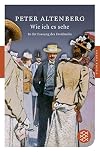
Peter Altenberger -cafétijger, zenuwlijder en alcoholist- schreef rond 1900 een beperkt oeuvre bij elkaar. Dit in 1896 verschenen Wie ich es sehe is zijn debuut, waarin alle ingrediënten van het Altenbergse universum reeds aanwezig zijn: korte stukjes van maximaal drie bladzijden met observaties uit het dagelijks leven, flarden van dialogen, soms lyrische passages in ritmisch proza. Altenberg heeft een scherp oog voor het juiste detail en een zelfrelativerend gevoel voor humor. In het show more verhaal Der Besuch bijvoorbeeld volgt na een proustiaanse meditatie over de poëtische kwaliteiten van thee met rum en weense gebakjes deze dialoog:
Wie macht man marons glacés?, fragte das schöne Mädchen
Ich weiss nicht, sagte die Hausfrau, man kauft sie bei Demel.
Het is deze mix van alledaagsheid en lyriek, sentiment en nuchtere observatie die Wie ich es sehe zijn onmiskenbare eigenheid geeft. Karl Kraus en Adolf Loos financierden de publicatie van dit boek, net als het lanterfanterende bestaan van hun vriend in de Weense koffiehuizen, waarvoor dank. show less
Wie macht man marons glacés?, fragte das schöne Mädchen
Ich weiss nicht, sagte die Hausfrau, man kauft sie bei Demel.
Het is deze mix van alledaagsheid en lyriek, sentiment en nuchtere observatie die Wie ich es sehe zijn onmiskenbare eigenheid geeft. Karl Kraus en Adolf Loos financierden de publicatie van dit boek, net als het lanterfanterende bestaan van hun vriend in de Weense koffiehuizen, waarvoor dank. show less
Jun 27, 2012Dutch
1
You May Also Like


Associated Authors
Statistics
- Works
- 48
- Also by
- 7
- Members
- 316
- Popularity
- #74,770
- Rating
- 3.4
- Reviews
- 4
- ISBNs
- 57
- Languages
- 6
- Favorited
- 2