

Martha A. Sandweiss
Author of The Oxford History of the American West
About the Author
Martha A. Sandweiss is professor of history and American studies at Amherst College. Martha A. Sandweiss received a Ph.D. in history from Yale University. She began her career as a photography curator at the Amon Carter Museum in Fort Worth, Texas. She then taught American studies and history at show more Amherst College for twenty years. She is currently a professor of history at Princeton University. She has written numerous books on American history and photography including Print the Legend: Photography and the American West, which won the Organization of American Historians' Ray Allen Billington Award for the best book in American frontier history and the William P. Clements Award; Laura Gilpin: An Enduring Grace, which won the George Wittenborn Award for outstanding art book of 1987; and Passing Strange: A Gilded Age Tale of Love and Deception Across the Color Line. (Bowker Author Biography) show less
Works by Martha A. Sandweiss
Denizens of the Desert: A Tale in Word and Picture of Life Among the Navaho Indians, the Letters of Elizabeth W. Forster (1988) — Editor; Introduction — 19 copies
Associated Works
Defining Eye: Women Photographers of the 20th Century Selections from the Helen Kornblum Collection (1998) — Introduction — 48 copies
Discovered Lands, Invented Pasts: Transforming Visions of the American West (1992) — Contributor — 36 copies
To Delight the Eye: Original Photographic Book Illustrations of the American West (1994) — Introduction — 5 copies
Tagged
Common Knowledge
- Canonical name
- Sandweiss, Martha A.
- Birthdate
- 1954-03-29
- Gender
- female
- Education
- Yale University (MA|1977|PhD|History|1985)
Harvard University (BA|1975) - Occupations
- professor
historian
curator - Organizations
- Princeton University
Amherst College
Amon Carter Museum of American Art
Organization of American Historians
Western History Association - Awards and honors
- Elected Member, American Antiquarian Society (2006)
Elected Member, Society of American Historians (2009)
Barbara Sudler Award (2004)
Ray Allen Billington Award (2003)
William P. Clements Award (2003)
Western Heritage Award (1994) (show all 11)
Caughey Western History Association Award (1995)
Vasari Award (1989)
American Council of Learned Societies Fellowship (1996-97)
Beinecke Senior Research Fellow (History ∙ 2004-2005)
National Endowment for the Humanities Fellowship (2000-2001) - Nationality
- USA
- Birthplace
- St. Louis, Missouri, USA
- Places of residence
- Princeton, New Jersey, USA
- Associated Place (for map)
- USA
Members
Reviews
Rating: 4.5* of five
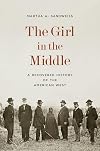
The Publisher Says: A haunting image of an unnamed Native child and a recovered story of the American West
In 1868, celebrated Civil War photographer Alexander Gardner traveled to Fort Laramie to document the federal government’s treaty negotiations with the Lakota and other tribes of the northern plains. Gardner, known for his iconic portrait of Abraham Lincoln and his visceral pictures of the Confederate dead at Antietam, posed six federal peace commissioners with a show more young Native girl wrapped in a blanket. The hand-labeled prints carefully name each of the men, but the girl is never identified. As The Girl in the Middle goes in search of her, it draws readers into the entangled lives of the photographer and his subjects.
Martha A. Sandweiss paints a riveting portrait of the turbulent age of Reconstruction and westward expansion. She follows Gardner from his birthplace in Scotland to the American frontier, as his dreams of a utopian future across the Atlantic fall to pieces. She recounts the lives of William S. Harney, a slave-owning Union general who earned the Lakota name “Woman Killer,” and Samuel F. Tappan, an abolitionist who led the investigation into the Sand Creek massacre. And she identifies Sophie Mousseau, the girl in Gardner’s photograph, whose life swerved in unexpected directions as American settlers pushed into Indian Country and the federal government confined Native peoples to reservations.
Spinning a spellbinding historical tale from a single enigmatic image, The Girl in the Middle reveals how the American nation grappled with what kind of country it would be as it expanded westward in the aftermath of the Civil War.
I RECEIVED A DRC FROM THE PUBLISHER VIA EDELWEISS+. THANK YOU.
My Review: One image, not typical of Alexander Gardner the Civil War photographer's work, sent Martha Sandweiss on an intense journey of genealogical and historical research. Author Sandweiss is an archive-divin' fool in this book. As you'd expect from this book coming out via Princeton University Press, the evidence is in the sixtyish pages of endnotes. Impressive recordkeeping, impressive intensity of trolling the census data, genealogy databases, newspaper morgues, Federal records of official actions...I'm very slightly overawed by the depth of Author Sandweiss' commitment to her search for one child's identity when, at the time, it's clear she was unimportant.
Yet she was there...why?
I could easily see the intrigue; I could not match the dogged pursuit of facts. In any lifetime. The revelation that there had ever been a Federal Peace Commission (made up of those white guys in the photo), tasked with meeting Native people from all groups, was news to me. That its mission was to determine the course that would bring about lasting and just peace shocked me...talk about honored in the breach not the observance! So the book expanded my knowledge about the injustice, the lies, and the chicanery that acquiring our empire necessitated.
Sophie Mousseau, the titular girl in the titular middle, serves as a lens for Author Sandweiss to bring the role of women, Native and settler, in the wars and peaces of that time and place into focus. It was all new information to me, so I enjoyed the whole experience...despite the expected violence against women, it was reported not detailed for titillation.
I'd rate the read a full five were it not for some...unusual...thoughts the author had about the nature of photography.... show less
The Publisher Says: A haunting image of an unnamed Native child and a recovered story of the American West
In 1868, celebrated Civil War photographer Alexander Gardner traveled to Fort Laramie to document the federal government’s treaty negotiations with the Lakota and other tribes of the northern plains. Gardner, known for his iconic portrait of Abraham Lincoln and his visceral pictures of the Confederate dead at Antietam, posed six federal peace commissioners with a show more young Native girl wrapped in a blanket. The hand-labeled prints carefully name each of the men, but the girl is never identified. As The Girl in the Middle goes in search of her, it draws readers into the entangled lives of the photographer and his subjects.
Martha A. Sandweiss paints a riveting portrait of the turbulent age of Reconstruction and westward expansion. She follows Gardner from his birthplace in Scotland to the American frontier, as his dreams of a utopian future across the Atlantic fall to pieces. She recounts the lives of William S. Harney, a slave-owning Union general who earned the Lakota name “Woman Killer,” and Samuel F. Tappan, an abolitionist who led the investigation into the Sand Creek massacre. And she identifies Sophie Mousseau, the girl in Gardner’s photograph, whose life swerved in unexpected directions as American settlers pushed into Indian Country and the federal government confined Native peoples to reservations.
Spinning a spellbinding historical tale from a single enigmatic image, The Girl in the Middle reveals how the American nation grappled with what kind of country it would be as it expanded westward in the aftermath of the Civil War.
I RECEIVED A DRC FROM THE PUBLISHER VIA EDELWEISS+. THANK YOU.
My Review: One image, not typical of Alexander Gardner the Civil War photographer's work, sent Martha Sandweiss on an intense journey of genealogical and historical research. Author Sandweiss is an archive-divin' fool in this book. As you'd expect from this book coming out via Princeton University Press, the evidence is in the sixtyish pages of endnotes. Impressive recordkeeping, impressive intensity of trolling the census data, genealogy databases, newspaper morgues, Federal records of official actions...I'm very slightly overawed by the depth of Author Sandweiss' commitment to her search for one child's identity when, at the time, it's clear she was unimportant.
Yet she was there...why?
I could easily see the intrigue; I could not match the dogged pursuit of facts. In any lifetime. The revelation that there had ever been a Federal Peace Commission (made up of those white guys in the photo), tasked with meeting Native people from all groups, was news to me. That its mission was to determine the course that would bring about lasting and just peace shocked me...talk about honored in the breach not the observance! So the book expanded my knowledge about the injustice, the lies, and the chicanery that acquiring our empire necessitated.
Sophie Mousseau, the titular girl in the titular middle, serves as a lens for Author Sandweiss to bring the role of women, Native and settler, in the wars and peaces of that time and place into focus. It was all new information to me, so I enjoyed the whole experience...despite the expected violence against women, it was reported not detailed for titillation.
I'd rate the read a full five were it not for some...unusual...thoughts the author had about the nature of photography.... show less
Passing Strange: A Gilded Age Tale of Love andDeception Across the Color Line by Martha A. Sandweiss
“To see her walk across a room, you would think someone had tilted up a coffin on end and propelled the corpse spasmodically forward.”
So not his type then. As it turns out, Clarence King would take a Cockney barmaid at a pinch, but he preferred Black women. And who can blame him? What we have here is a double biography of King, geologist and generally famous white man, and Ada Copeland, his secret African American wife, whom he deceived during their entire marriage into thinking he was a show more black man called James Todd.
King was an unusual and interesting man and his life is well documented in his own words, those of his friends and the media of the time. In telling his story, Sandweiss opens a window onto the history of the Wild West and growing industrialisation. With Copeland the situation is almost entirely reversed. Nothing survives of her personal voice beyond a few official documents and to infer something of her early life, Sandweiss has to tell the story of the end of slavery and the fall-out from it.
The story of their life (or half-life) together is interesting enough, but what makes this book really fascinating is the light it sheds on American conceptions of race and the fundamental societal dysfunction that results from such confusions. This is not always a happy book. It brought home to me just how close close slavery is in historical terms. Here we are in a world where an African American man can step out of his house to buy tobacco and be murdered in the street by the sheriff’s posse over a matter of twenty dollars. And when you consider that Copeland died in 1963, it is possible to speak to someone today who spoke to a woman who was born a slave in the American south. show less
So not his type then. As it turns out, Clarence King would take a Cockney barmaid at a pinch, but he preferred Black women. And who can blame him? What we have here is a double biography of King, geologist and generally famous white man, and Ada Copeland, his secret African American wife, whom he deceived during their entire marriage into thinking he was a show more black man called James Todd.
King was an unusual and interesting man and his life is well documented in his own words, those of his friends and the media of the time. In telling his story, Sandweiss opens a window onto the history of the Wild West and growing industrialisation. With Copeland the situation is almost entirely reversed. Nothing survives of her personal voice beyond a few official documents and to infer something of her early life, Sandweiss has to tell the story of the end of slavery and the fall-out from it.
The story of their life (or half-life) together is interesting enough, but what makes this book really fascinating is the light it sheds on American conceptions of race and the fundamental societal dysfunction that results from such confusions. This is not always a happy book. It brought home to me just how close close slavery is in historical terms. Here we are in a world where an African American man can step out of his house to buy tobacco and be murdered in the street by the sheriff’s posse over a matter of twenty dollars. And when you consider that Copeland died in 1963, it is possible to speak to someone today who spoke to a woman who was born a slave in the American south. show less
Passing strange : a Gilded Age tale of love and deception across the color line by Martha A. Sandweiss
Clarence King, the founder of the US Geological Service and a best-selling author, was the literally fair-haired child (also blue-eyed) of an impoverished but impeccably socially credentialed New York family. Yale-educated, he was widely considered by his set—which included people like Henry Adams—to be the brightest, most charming person they knew. He was also, in his later life, posing as James Todd, a Pullman porter, in order to be married to Ada Copeland, a black woman with whom he show more had several children. His few surviving letters to her speak of great love, while his writings through his life show a fetishization of nonwhite women as more authentic and natural; the book suggests that both could have been accurate. The book has to do a lot of imagining—there are almost no records of Copeland because of racism and sexism, and almost no records of King’s life as Todd because he deliberately hid that life from his white friends, and he was able to do so because he was a white man who could move freely throughout the US and between rich white New York and the socially and geographically distinct African-American middle class New York. Racism enabled a blond, blue-eyed man to be black if he said he was (and if he was married to a more phenotypically common “black” woman), because who would say he was if he wasn’t? (Though interestingly, Pullman porters were required to be very dark-skinned to give the proper image of deference, so his claim about his profession wouldn’t have been persuasive to African-Americans who knew more about Pullman.) Sexism and racism meant that King’s first biographer didn’t bother to interview Copeland Todd, who was alive when he wrote, because he didn’t think she was important to King’s real story. So now we’ll never know a lot about how they thought about what they did; we know only this much because Copeland Todd ultimately sued to get the benefits of a trust she believed King had set up from her (he revealed the truth to her in a letter he sent shortly before his death). show less
Passing strange : a Gilded Age tale of love and deception across the color line by Martha A. Sandweiss

When Clarence King died in Phoenix, Arizona, in 1901, he was eulogized by friends like John Hay, private secretary to Abraham Lincoln and Secretary of State under McKinley and Theodore Roosevelt, and historian and memoirist Henry Adams. He was remembered as the first director of the United States Geological Survey, the man who exposed a diamond hoax that threatened the economy of the United States, a devoted son and confirmed bachelor.
He was all those things, except the last. The man who, in show more 1880, said that he had lost the only woman he had ever wanted to marry through too much attention to duty, in 1888 married a woman so far outside his social circle and standing that he did so under a false name, a false occupation, a false identity and a false race. For Clarence King, son of a prosperous China trader, interlocutor of Ruskin and Turner, guest at the White House, had fallen in love with Ada Copeland, an African-American woman born into slavery. He courted her under the name "James Todd", and told her he was a Pullman porter, a job which must mean that he, too, was African-American.
How this blond, blue-eyed man passed as black is more than a story of love and deception. It is the story of how this nation has interpreted race and how social and cultural assumptions translate into racial "certainties". It was interesting to compare how King used those assumptions to pass as black with the way in which Belle da Costa Green used them to live as white (see An Illuminated Life). Although in some parts of the world distinctions were and are drawn between "white", "black" and mixed race ("colored", "mulatto" "mestizo"), in the world of Clarence King/James Todd any black ancestor made you black, no matter how you looked. At the same time, people took their cues about someone's race from their surroundings. So King could be perceived as "black" simply because he was met in an African-American neighborhood, visited an African-American church, and claimed to be a Pullman porter, a job for which only African-Americans were hired. (Curiously, though, he was in fact a bit too light-skinned for that to be entirely credible, as light-skinned blacks were more likely to be dining-car attendants.) A census-taker would look at the "white"-appearing children of Ada and Clarence (James) and mark then as "black" upon seeing their mother. (In fact, their two daughters would eventually marry white men and list their race as "white" on the marriage license applications.)
When King was dying in Arizona, away from his wife and family in New York, he finally revealed his secret to her, via letter, and to certain of his friends. Because he had kept Ada in the dark as to who he was and what his real life was, in order to keep his secret, he had left no documentation of their relationship other than his letters to her (obviously, though, not under his real name). She had no idea of his true financial situation either. And he had, foolishly, made no provision for her and his children in his will, which left everything to his mother. Based on things that he had told her, Ada believed that he had left money in trust for her and the children, and his friends arranged to have money sent to her each month, which she believed came from that trust. It was not until many years later that Ada sued in court to obtain the funds she believed were rightfully hers. The forces of privilege were marshalled against her.
Ada King died in 1964 at the age of 103. Did she hear Martin Luther King, Jr. speak of his dream that "the sons of former slaves and the sons of former slaveowners will be able to sit down together at the table of brotherhood" and think of her own life? Did she hear "I have a dream that my four little children will one day live in a nation where they will not be judged by the color of their skin but by the content of their character" and think of her husband and children, whose races were judged, not by the color of their skin, but by the company they kept?
Sandweiss has written an engaging account of the lives of King and Copeland, separately and together. She has illuminated their relationship, and Ada's later legal efforts, through the prism of American social, class and racial mores. Her work is thoroughly researched, through interviews and consultation with primary sources, and any speculation (for instance, as to where and how the two may have met) is clearly labeled as such and is backed by credible argument.
Passing Strange is both a love story and a story of the racial and social divides of 19th-century America, and is successful at telling both. show less
He was all those things, except the last. The man who, in show more 1880, said that he had lost the only woman he had ever wanted to marry through too much attention to duty, in 1888 married a woman so far outside his social circle and standing that he did so under a false name, a false occupation, a false identity and a false race. For Clarence King, son of a prosperous China trader, interlocutor of Ruskin and Turner, guest at the White House, had fallen in love with Ada Copeland, an African-American woman born into slavery. He courted her under the name "James Todd", and told her he was a Pullman porter, a job which must mean that he, too, was African-American.
How this blond, blue-eyed man passed as black is more than a story of love and deception. It is the story of how this nation has interpreted race and how social and cultural assumptions translate into racial "certainties". It was interesting to compare how King used those assumptions to pass as black with the way in which Belle da Costa Green used them to live as white (see An Illuminated Life). Although in some parts of the world distinctions were and are drawn between "white", "black" and mixed race ("colored", "mulatto" "mestizo"), in the world of Clarence King/James Todd any black ancestor made you black, no matter how you looked. At the same time, people took their cues about someone's race from their surroundings. So King could be perceived as "black" simply because he was met in an African-American neighborhood, visited an African-American church, and claimed to be a Pullman porter, a job for which only African-Americans were hired. (Curiously, though, he was in fact a bit too light-skinned for that to be entirely credible, as light-skinned blacks were more likely to be dining-car attendants.) A census-taker would look at the "white"-appearing children of Ada and Clarence (James) and mark then as "black" upon seeing their mother. (In fact, their two daughters would eventually marry white men and list their race as "white" on the marriage license applications.)
When King was dying in Arizona, away from his wife and family in New York, he finally revealed his secret to her, via letter, and to certain of his friends. Because he had kept Ada in the dark as to who he was and what his real life was, in order to keep his secret, he had left no documentation of their relationship other than his letters to her (obviously, though, not under his real name). She had no idea of his true financial situation either. And he had, foolishly, made no provision for her and his children in his will, which left everything to his mother. Based on things that he had told her, Ada believed that he had left money in trust for her and the children, and his friends arranged to have money sent to her each month, which she believed came from that trust. It was not until many years later that Ada sued in court to obtain the funds she believed were rightfully hers. The forces of privilege were marshalled against her.
Ada King died in 1964 at the age of 103. Did she hear Martin Luther King, Jr. speak of his dream that "the sons of former slaves and the sons of former slaveowners will be able to sit down together at the table of brotherhood" and think of her own life? Did she hear "I have a dream that my four little children will one day live in a nation where they will not be judged by the color of their skin but by the content of their character" and think of her husband and children, whose races were judged, not by the color of their skin, but by the company they kept?
Sandweiss has written an engaging account of the lives of King and Copeland, separately and together. She has illuminated their relationship, and Ada's later legal efforts, through the prism of American social, class and racial mores. Her work is thoroughly researched, through interviews and consultation with primary sources, and any speculation (for instance, as to where and how the two may have met) is clearly labeled as such and is backed by credible argument.
Passing Strange is both a love story and a story of the racial and social divides of 19th-century America, and is successful at telling both. show less
Lists
To Read (1)
Awards


You May Also Like


Associated Authors
Statistics
- Works
- 14
- Also by
- 4
- Members
- 1,012
- Popularity
- #25,473
- Rating
- 3.8
- Reviews
- 13
- ISBNs
- 30