
Porochista Khakpour
Author of The Last Illusion: A Novel
About the Author
Image credit: from author's website
Works by Porochista Khakpour
The Blind Owl 4 copies
Associated Works
Kingdom of Olives and Ash: Writers Confront the Occupation (2017) — Contributor — 166 copies, 5 reviews
A Map Is Only One Story: Twenty Writers on Immigration, Family, and the Meaning of Home (2020) — Contributor — 112 copies, 1 review
Eat Joy: Stories and Comfort Food from 31 Celebrated Writers (2019) — Contributor — 84 copies, 3 reviews
Better Than Fiction 2: True Adventures from 30 Great Fiction Writers (2015) — Contributor — 34 copies
Bodies Built for Game: The Prairie Schooner Anthology of Contemporary Sports Writing (2019) — Contributor — 7 copies
Tagged
Common Knowledge
- Birthdate
- 1978
- Gender
- female
- Nationality
- USA
- Birthplace
- Tehran, Iran
- Places of residence
- California, USA
New York, New York, USA - Map Location
- USA
Members
Reviews
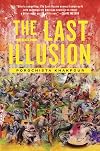
Zal is born in Iran with extremely pale skin and light coloured hair. His mother is convinced she has given birth to a ‘white demon’ and puts him in a cage where she raises him along with her menagerie of birds. He is finally rescued as a young adolescent by his sister and subsequently adopted by a behavioural analyst who takes him to New York. Zal tries to appear normal but he can’t escape his upbringing completely; he dreams of flying and hides his secret stash of candied insects show more from his adoptive father. Eventually, in his efforts to become more human, Zal leaves home. He meets a famous illusionist, Bran Silber (whose last illusion is referenced by the title) as well as a young artist, Asiya McDonald, who creates art from dead birds. Zal begins a relationship with Asiya who suffers from anorexia, panic attacks, and who may be psychic but it is Asiya’s sister, Willa, morbidly obese and bed-ridden, that he falls madly in love with. He tries but mostly fails at new adventures while he starts and loses several jobs including one at a pet store from which he is fired after developing feelings for a well-endowed canary.
The story takes place between 1999 when the world was obsessed with Y2K and 2001 and the fall of the Towers. The character, Zal, is taken from the Iranian Book of Kings in which an albino, Zal is abandoned, then raised by a giant eagle, and eventually becomes a great hero. But this modern Zal is not a hero at least not in any way except in his earnest attempts to escape his bird identity, to become human, to learn to smile but then the times he seems to occupy are not heroic either – it’s all illusion, freaks, hurtful encounters, made-up rules about the unknown and fears of possible future catastrophes - at least, that is, until the last illusion is shattered by the reality.
By combining myth, illusion, and reality, author Porachista Khakpour has created a beautifully crafted, original and lyrically told tale of New York and of the terrible tragedy that befell it. At times funny, sad, quirky, sympathetic and, in its treatment of the tragedy, respectful, The Last Illusion is the kind of story that mostly entertains, occasionally infuriates, but always makes you think, and it continues to resonate with the reader long after the final page is turned. show less
The story takes place between 1999 when the world was obsessed with Y2K and 2001 and the fall of the Towers. The character, Zal, is taken from the Iranian Book of Kings in which an albino, Zal is abandoned, then raised by a giant eagle, and eventually becomes a great hero. But this modern Zal is not a hero at least not in any way except in his earnest attempts to escape his bird identity, to become human, to learn to smile but then the times he seems to occupy are not heroic either – it’s all illusion, freaks, hurtful encounters, made-up rules about the unknown and fears of possible future catastrophes - at least, that is, until the last illusion is shattered by the reality.
By combining myth, illusion, and reality, author Porachista Khakpour has created a beautifully crafted, original and lyrically told tale of New York and of the terrible tragedy that befell it. At times funny, sad, quirky, sympathetic and, in its treatment of the tragedy, respectful, The Last Illusion is the kind of story that mostly entertains, occasionally infuriates, but always makes you think, and it continues to resonate with the reader long after the final page is turned. show less
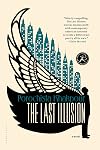
This book introduces us to Zal, an Iranian albino child born to a superstitious mother, who interprets his odd coloration as demonic. Not interested in more children anyway, she wants to spend her time now with her birds, so she decides to raise Zal as a bird, installing him in a cage on her veranda, her aviary. It is years before Zal is discovered and rescued, receiving some international attention as the latest in a tragic series of feral children -- children raised by animals -- with no show more native human language. Zal is adopted by an American psychologist who specializes in feral children, one whose deceased wife was also Iranian, and who used to read to him from a book of legends, including the story of Zal's namesake, also an albino, also raised by an (enormous) bird, who eventually becomes a great warrior. Got it? There is a lot going on in this book. And that was all the first chapter.
Once we're all in New York, it isn't long before the long shadow of September 11 hangs over us. The main action of the book happens in 1999-2001, and it quickly becomes clear that September 11 will be the conclusion of the book. Will it be the version of 9/11 that we know, or some fictional version? If it is the version we know, how will the characters be involved in the actions of that day? I suspect for most American readers of this novel, your brain will spend as much time engaged with these questions as the actual text. And given your personal level of investment in that day, you may not be able to see this text at all.
Which would be a shame, because Khakpour has done some good work here. I really adored Zal, even as his actions sometimes baffled me. His well-meaning father and therapist, his odd, doomsday-foreseeing girlfriend and her dysfunctional family, the drama-loving illusionist, all were intriguing characters.
But for an American audience, what most opinions and reviews come down to is, did Khakpour pull off the ending? I'm not going to spoil the ending here, but for me, the answer was: mostly. Or maybe a better answer would be: enough. It worked well enough, given my level of engagement with the characters, to not leave a bad taste in my mouth.
September 11 is such a large event in American consciousness. I think we are ready, on average, for September 11 to appear in fiction. But I think fewer of us are ready for it to be a metaphor. Khakpour was very ambitious with this novel. show less
Once we're all in New York, it isn't long before the long shadow of September 11 hangs over us. The main action of the book happens in 1999-2001, and it quickly becomes clear that September 11 will be the conclusion of the book. Will it be the version of 9/11 that we know, or some fictional version? If it is the version we know, how will the characters be involved in the actions of that day? I suspect for most American readers of this novel, your brain will spend as much time engaged with these questions as the actual text. And given your personal level of investment in that day, you may not be able to see this text at all.
Which would be a shame, because Khakpour has done some good work here. I really adored Zal, even as his actions sometimes baffled me. His well-meaning father and therapist, his odd, doomsday-foreseeing girlfriend and her dysfunctional family, the drama-loving illusionist, all were intriguing characters.
But for an American audience, what most opinions and reviews come down to is, did Khakpour pull off the ending? I'm not going to spoil the ending here, but for me, the answer was: mostly. Or maybe a better answer would be: enough. It worked well enough, given my level of engagement with the characters, to not leave a bad taste in my mouth.
September 11 is such a large event in American consciousness. I think we are ready, on average, for September 11 to appear in fiction. But I think fewer of us are ready for it to be a metaphor. Khakpour was very ambitious with this novel. show less
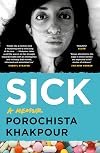
“the deal with so many chronic illnesses is that most people don’t want to believe you. They will tell you that you look great, that it might be in your head, that it is likely stress, that everything will be okay. None of these are the right thing to say to someone whose entire existence is a fairly consistent torture of the body and mind. They say it because they are well-intentioned usually, because they wish you the best, but they also say it because you make them uncomfortable. Your show more existence is evidence of death, and no one needs to keep seeing that . . .”
For those who might not be familiar with the condition, Lyme disease is caused by bacteria (Borrelia burgdorferi) that are transmitted to humans by black-legged (aka “deer”) tick bites. If the tick is removed within 24 hours of attaching to the skin, there is a good chance that a person (or animal) won’t be infected with B. burgdorferi, though he could still contract another tick-borne disease. The first sign of Lyme disease is usually a bull’s-eye rash, which appears within 3 to 30 days of the bite. After this, a person often feels feverish and flu-like, with muscle aches and pains. The CDC has been aware of the disease since the 1970s, when it investigated a cluster of cases (in New England) of what seemed to be juvenile rheumatoid arthritis that had been preceded by the distinctive target-like rash. However, the disease’s link to ticks was not known until 1981. Nowadays, infectious disease experts recommend two diagnostic tests be done in combination: the ELISA and the more-reliable Western Blot test. Since it takes four to six weeks for the body to generate antibodies to the bacteria, initial blood tests may be negative. If Lyme is suspected, a patient is typically prescribed a 10-21 day course of doxycycline (antibiotic) treatment.
Chronic Lyme disease—that is, disease which appears to persist after treatment has been completed—remains a controversial diagnosis. A decade ago, an article in Future Microbiology noted that there was “growing scientific evidence that chronic Lyme disease does exist, and that this clinical condition is related to persistent infection with B. burgdorferi as shown by microbiological and molecular studies.” All that I could find on the topic was that “Experts believe lingering symptoms may be caused by residual damage to tissues and the immune system, and some may not be related to Lyme disease at all”. The CDC and the NIH recommend against using the term “chronic Lyme disease”, acknowledging only that “Physicians sometimes describe patients who have non-specific symptoms (like fatigue, pain, and joint and muscle aches) after the treatment of Lyme disease”. These people are said to suffering from “post-treatment Lyme disease syndrome” or “post Lyme disease syndrome”. According to the CDC, the cause of the syndrome(s) is not known. Porochista Khakpour’s tests meet CDC standards for a diagnosis of Lyme disease. Her ordeal with what she says is “chronic Lyme disease” but which experts might refer to as “late disseminated, neuropsychiatric Lyme” has been harrowing. Because she was unaware she’d been infected, she didn’t receive prompt antibiotic therapy, and the disease progressed. She also has co-infection with other tick-borne bacteria/parasites: ehrlichia, and perhaps babesia and bartonella, as well. It is possible that these have further complicated the picture. Khakpour has been chronically ill for years and had hoped to write an inspiring book with full recovery as the happy ending. That was the book she sold. It was not the book she wrote.
I was initially interested in reading her book because Lyme disease is being diagnosed with increasing frequency in Ontario, where I live. It is even being seen more often in dogs. A few years ago, a relative of mine (who happens to have spent a great deal of time outdoors in tick-prone regions) developed strange neurological symptoms and was found to have sensory deficits in his lower leg. A neuron was knocked out, as he puts it. From time to time, we’ve wondered about his exposure to ticks. He recalls no bull’s-eye rash, but apparently a rash doesn’t appear in 20-30% of cases. The tests, too, aren’t without their problems. It’s possible, then, to miss a diagnosis.
Sick is not strictly an illness memoir. For the first 100 pages, the book is more a general and amorphous personal narrative of young adulthood. It gives the reader a sense of what it’s like to be a refugee who arrives in America from a suspect, “enemy” country, and it explores one person’s sense, since childhood, of not being quite right or comfortable in her own body. Early in life, Khakpour had an unusual response to anesthetic drugs. She also appears to have experienced seizures, seemingly triggered by emotional distress at her parents’ late-night arguments. These left her “feeling like death” the following morning. It is not initially clear whether Khakpour’s long discomfort in or with her body was due to her contracting Lyme on a hike during childhood or because of an earlier, deep, unidentifiable alteration in immune function due to PTSD, as a result of her and her family’s flight from revolutionary Iran (an idea she briefly floats early in the book).
Khakpour was only diagnosed with chronic Lyme disease as an adult. She attended university in New York, and, around that time, she also visited a number of Lyme hot spots in the state. It’s impossible to know exactly when or where she was infected. The reader also doesn’t know which Lyme camp the doctor who diagnosed and treated her is affiliated with. Infectious disease experts are distressed, for lack of a better word, by the emergence of a group of non-infectious-disease doctors, who use questionable tests to diagnose Lyme and who have even more questionable ideas and sometimes quite harmful treatments to deal with it. Damaging antibiotic therapy that lasts for years is not unheard of, for example.
Although Khakpour’s prose can be engagingly informal, it is sometimes vague, rambling, and imprecise. She occasionally admits to not knowing what she feels or means, and some of her statements are cryptic. About one romantic relationship, for example, she writes, “I felt bored . . . but somehow also chosen by it. But maybe I was chosen by something else.” Like what, exactly? I wish Khakpour had been slightly more inclined to clarify this and other fuzzy observations.
I also had a hard time keeping track of the order in which events had even occurred. Khakpour’s multiple boyfriends, numerous car accidents, endlessly changing living arrangements, and her addiction to benzodiazepines—well, the chronology of it all is pretty confusing. If you’re okay with a patchwork, impressionistic account of an aspiring writer’s life and baffling illness, this book won’t bother you. I tend to like a little more advanced-authorial-processing (before writing) and a bit more shape to the personal narratives I read. However, given that the author was obviously very ill as she wrote, the disorganization, vagueness, and imprecision are perhaps understandable. Regardless—by the halfway point, I was invested in Khakpour’s story, and found that her account didn’t just gain momentum, it became propulsive.
Khakpour herself is the first to admit that the episodes in her story settle around which partner she happened to be with at the time. She moved frequently, often finding herself back in much-loathed LA, where her parents live, when a severe health crisis occurred. Eventually, she would receive a diagnosis and some rather unconventional treatment, which worked for a time.
It is evident that medical science still has much to learn about how to deal with patients who don’t know they’ve been bitten by an infected tick, haven’t received timely antibiotic therapy, and are confronted years after the fact with a diagnosis of late disseminated Lyme disease with rheumatological, neurological, and even psychiatric symptoms. Although not intended as a cautionary tale, I can’t see how anyone can finish such a book without being more cognizant about what a tick bite can do. Checking yourself after you walk in the woods or long grass is a very smart idea. show less
For those who might not be familiar with the condition, Lyme disease is caused by bacteria (Borrelia burgdorferi) that are transmitted to humans by black-legged (aka “deer”) tick bites. If the tick is removed within 24 hours of attaching to the skin, there is a good chance that a person (or animal) won’t be infected with B. burgdorferi, though he could still contract another tick-borne disease. The first sign of Lyme disease is usually a bull’s-eye rash, which appears within 3 to 30 days of the bite. After this, a person often feels feverish and flu-like, with muscle aches and pains. The CDC has been aware of the disease since the 1970s, when it investigated a cluster of cases (in New England) of what seemed to be juvenile rheumatoid arthritis that had been preceded by the distinctive target-like rash. However, the disease’s link to ticks was not known until 1981. Nowadays, infectious disease experts recommend two diagnostic tests be done in combination: the ELISA and the more-reliable Western Blot test. Since it takes four to six weeks for the body to generate antibodies to the bacteria, initial blood tests may be negative. If Lyme is suspected, a patient is typically prescribed a 10-21 day course of doxycycline (antibiotic) treatment.
Chronic Lyme disease—that is, disease which appears to persist after treatment has been completed—remains a controversial diagnosis. A decade ago, an article in Future Microbiology noted that there was “growing scientific evidence that chronic Lyme disease does exist, and that this clinical condition is related to persistent infection with B. burgdorferi as shown by microbiological and molecular studies.” All that I could find on the topic was that “Experts believe lingering symptoms may be caused by residual damage to tissues and the immune system, and some may not be related to Lyme disease at all”. The CDC and the NIH recommend against using the term “chronic Lyme disease”, acknowledging only that “Physicians sometimes describe patients who have non-specific symptoms (like fatigue, pain, and joint and muscle aches) after the treatment of Lyme disease”. These people are said to suffering from “post-treatment Lyme disease syndrome” or “post Lyme disease syndrome”. According to the CDC, the cause of the syndrome(s) is not known. Porochista Khakpour’s tests meet CDC standards for a diagnosis of Lyme disease. Her ordeal with what she says is “chronic Lyme disease” but which experts might refer to as “late disseminated, neuropsychiatric Lyme” has been harrowing. Because she was unaware she’d been infected, she didn’t receive prompt antibiotic therapy, and the disease progressed. She also has co-infection with other tick-borne bacteria/parasites: ehrlichia, and perhaps babesia and bartonella, as well. It is possible that these have further complicated the picture. Khakpour has been chronically ill for years and had hoped to write an inspiring book with full recovery as the happy ending. That was the book she sold. It was not the book she wrote.
I was initially interested in reading her book because Lyme disease is being diagnosed with increasing frequency in Ontario, where I live. It is even being seen more often in dogs. A few years ago, a relative of mine (who happens to have spent a great deal of time outdoors in tick-prone regions) developed strange neurological symptoms and was found to have sensory deficits in his lower leg. A neuron was knocked out, as he puts it. From time to time, we’ve wondered about his exposure to ticks. He recalls no bull’s-eye rash, but apparently a rash doesn’t appear in 20-30% of cases. The tests, too, aren’t without their problems. It’s possible, then, to miss a diagnosis.
Sick is not strictly an illness memoir. For the first 100 pages, the book is more a general and amorphous personal narrative of young adulthood. It gives the reader a sense of what it’s like to be a refugee who arrives in America from a suspect, “enemy” country, and it explores one person’s sense, since childhood, of not being quite right or comfortable in her own body. Early in life, Khakpour had an unusual response to anesthetic drugs. She also appears to have experienced seizures, seemingly triggered by emotional distress at her parents’ late-night arguments. These left her “feeling like death” the following morning. It is not initially clear whether Khakpour’s long discomfort in or with her body was due to her contracting Lyme on a hike during childhood or because of an earlier, deep, unidentifiable alteration in immune function due to PTSD, as a result of her and her family’s flight from revolutionary Iran (an idea she briefly floats early in the book).
Khakpour was only diagnosed with chronic Lyme disease as an adult. She attended university in New York, and, around that time, she also visited a number of Lyme hot spots in the state. It’s impossible to know exactly when or where she was infected. The reader also doesn’t know which Lyme camp the doctor who diagnosed and treated her is affiliated with. Infectious disease experts are distressed, for lack of a better word, by the emergence of a group of non-infectious-disease doctors, who use questionable tests to diagnose Lyme and who have even more questionable ideas and sometimes quite harmful treatments to deal with it. Damaging antibiotic therapy that lasts for years is not unheard of, for example.
Although Khakpour’s prose can be engagingly informal, it is sometimes vague, rambling, and imprecise. She occasionally admits to not knowing what she feels or means, and some of her statements are cryptic. About one romantic relationship, for example, she writes, “I felt bored . . . but somehow also chosen by it. But maybe I was chosen by something else.” Like what, exactly? I wish Khakpour had been slightly more inclined to clarify this and other fuzzy observations.
I also had a hard time keeping track of the order in which events had even occurred. Khakpour’s multiple boyfriends, numerous car accidents, endlessly changing living arrangements, and her addiction to benzodiazepines—well, the chronology of it all is pretty confusing. If you’re okay with a patchwork, impressionistic account of an aspiring writer’s life and baffling illness, this book won’t bother you. I tend to like a little more advanced-authorial-processing (before writing) and a bit more shape to the personal narratives I read. However, given that the author was obviously very ill as she wrote, the disorganization, vagueness, and imprecision are perhaps understandable. Regardless—by the halfway point, I was invested in Khakpour’s story, and found that her account didn’t just gain momentum, it became propulsive.
Khakpour herself is the first to admit that the episodes in her story settle around which partner she happened to be with at the time. She moved frequently, often finding herself back in much-loathed LA, where her parents live, when a severe health crisis occurred. Eventually, she would receive a diagnosis and some rather unconventional treatment, which worked for a time.
It is evident that medical science still has much to learn about how to deal with patients who don’t know they’ve been bitten by an infected tick, haven’t received timely antibiotic therapy, and are confronted years after the fact with a diagnosis of late disseminated Lyme disease with rheumatological, neurological, and even psychiatric symptoms. Although not intended as a cautionary tale, I can’t see how anyone can finish such a book without being more cognizant about what a tick bite can do. Checking yourself after you walk in the woods or long grass is a very smart idea. show less
Too many novels are populated by characters that the reader forgets almost as soon as the last page is turned and the book closed. Others, with any luck, offer one or two memorable ones to whom the reader is sorry to say goodbye. And then there are novels like Porochista Khakpour’s Sons and Other Flammable Objects that contribute a whole family of unforgettable personalities.
The Adam family, mother, father and son, fled Iran for France when life became unbearable for them there but show more ultimately started new lives for themselves in Los Angeles. Xerxes, son of Laleh (who soon Americanized her name to Lala) and Darius Adam was so young when the family left Iran that he has only vague snatches of visual memories of his life there. He really came to consciousness only after arriving in California and, for the most part, he is a product of American culture. But still he senses that he is different and that that difference is the product of life inside the apartment of his parents who are, and always will be, Iranians at heart.
His parents are certainly a contrast of styles and messages. Lala is a naively good-hearted woman who is ready to embrace most things about American culture but her husband Darius expects her to stay inside her Los Angeles apartment and to live, as closely as possible, the same lifestyle that she left behind in Iran. Darius is a suspicious man by nature and his suspiciousness is compounded by the bitterness that he feels for having been forced to leave everything that he could not carry in a few suitcases behind when he fled Iran. He expects to rule his family with an iron fist and, as his wife and son become more and more independent of him, he resents the impossibility of making that happen. He is not a happy man.
The clash of two such very different cultures had a devastating impact on the Adam family. As Xerxes approached maturity, father and son hardly spoke to each other, and when they did, it was never pleasant for either of them. Darius and Lala grew farther and farther apart as she demanded more and more personal freedom from him. That was bad enough, but then came the events of 9-11 and all three of the Adams suddenly felt as much pressure outside the home as they did from within it.
Sons and Other Flammable Objects is a revealing portrayal of the struggle that immigrant families sometimes face when first-generation Americans grow up with a value set that differs greatly from the one held by their immigrant parents. Porochista Khakpour has written a remarkable first novel that still has me thinking about Darius, Lala and Xerxes and hoping that they are doing well. I won’t soon forget them.
Rated at: 4.0 show less
The Adam family, mother, father and son, fled Iran for France when life became unbearable for them there but show more ultimately started new lives for themselves in Los Angeles. Xerxes, son of Laleh (who soon Americanized her name to Lala) and Darius Adam was so young when the family left Iran that he has only vague snatches of visual memories of his life there. He really came to consciousness only after arriving in California and, for the most part, he is a product of American culture. But still he senses that he is different and that that difference is the product of life inside the apartment of his parents who are, and always will be, Iranians at heart.
His parents are certainly a contrast of styles and messages. Lala is a naively good-hearted woman who is ready to embrace most things about American culture but her husband Darius expects her to stay inside her Los Angeles apartment and to live, as closely as possible, the same lifestyle that she left behind in Iran. Darius is a suspicious man by nature and his suspiciousness is compounded by the bitterness that he feels for having been forced to leave everything that he could not carry in a few suitcases behind when he fled Iran. He expects to rule his family with an iron fist and, as his wife and son become more and more independent of him, he resents the impossibility of making that happen. He is not a happy man.
The clash of two such very different cultures had a devastating impact on the Adam family. As Xerxes approached maturity, father and son hardly spoke to each other, and when they did, it was never pleasant for either of them. Darius and Lala grew farther and farther apart as she demanded more and more personal freedom from him. That was bad enough, but then came the events of 9-11 and all three of the Adams suddenly felt as much pressure outside the home as they did from within it.
Sons and Other Flammable Objects is a revealing portrayal of the struggle that immigrant families sometimes face when first-generation Americans grow up with a value set that differs greatly from the one held by their immigrant parents. Porochista Khakpour has written a remarkable first novel that still has me thinking about Darius, Lala and Xerxes and hoping that they are doing well. I won’t soon forget them.
Rated at: 4.0 show less
Lists
Awards


You May Also Like


Associated Authors
Statistics
- Works
- 7
- Also by
- 10
- Members
- 658
- Popularity
- #38,342
- Rating
- 3.6
- Reviews
- 17
- ISBNs
- 30
- Languages
- 2