
Jaan Kaplinski (1941–2021)
Author of The Same Sea in Us All
About the Author
Works by Jaan Kaplinski
Ex oriente : tõlkekogumik 6 copies
Kes mida sööb, kes keda sööb 5 copies
Ma vaatasin päikese aknasse : luulet 4 copies
Jänes 3 copies
Raske on kergeks saada [luuletused] 3 copies
Sjunger näktergalen än i Dorpat? : en brevväxling mellan Jaan Kaplinski och Johannes Salminen (1990) 3 copies
Käoraamat : luulet, 1956-1980 2 copies
Kaks päikest 1 copy
Mitu suve ja kevadet: Kai Pu lini ja Su Dong po luulet ja märkmeid Mitu suve ja kevadet: Kai Pu lini ja Su Dong po (1995) 1 copy
Kust tuli öö 1 copy
Tule tagasi helmemänd 1 copy
Kes mida sööb, kes keda sööb 1 copy
Käoraamat: Luulet 1956-1980 1 copy
Udujutt 1 copy
Jää ja Titanic : [essee] 1 copy
Kust tuli öö 1 copy
Associated Works
A Book of Luminous Things: An International Anthology of Poetry (1996) — Contributor — 941 copies, 12 reviews
World Poetry: An Anthology of Verse from Antiquity to Our Time (1998) — Contributor — 498 copies, 2 reviews
Tagged
Common Knowledge
- Canonical name
- Kaplinski, Jaan
- Birthdate
- 1941-01-22
- Date of death
- 2021-08-08
- Gender
- male
- Education
- Université de Tartu (Linguistique, Franais)
Lycée Hugo-Treffner - Occupations
- Professeur
Poète
Traducteur (Estonien ∙ Espagnol ∙ Anglais ∙ Russe ∙ Français)
Editeur
Botaniste
Politicien - Organizations
- Université de Tartu (Professeur)
- Awards and honors
- Eino Leinon palkinto (1992)
Vilenica International Literary Prize (2001) - Relationships
- Kaplinski, Jerzy (Père)
Toomeet, Tiia (Epouse)
Raudsepp-Kaplinski, Nora (Mère) - Cause of death
- Charcot disease
- Nationality
- Estonia
- Place of death
- Tartu, Estonia
- Associated Place (for map)
- Tartu, Estonia
Members
Reviews

123/2020. For me, these translations have too much word salad and too much prose but when they find a sweet spot in between then they're worth reading.
This is heartbreaking, from the book Evening Brings Everything Back and available free on Jaan Kaplinski's website:
"My aunt knew them well, I know of them
only names and what other people have told me:
tinkers, haberdashers, attorneys, doctors,
Genss, Michelson, Itzkowitsch, Gulkowitsch...
Where are they now? Some of them were lucky enough
to be show more buried in this cemetery under a slab with Hebrew letters.
But those my aunt met on the streets of German-occupied Tartu,
with a yellow star sewn to their clothes, and to whom
she even dared to speak to the horror of her friends:
they are not here, they are scattered
into nameless graves, ditches and pits
in many places, many countries, homeless in death
as in life. Maybe some of them are hovering
in the air as a particles of ash, and have not yet
descended to earth. I've thought
that if I were a physicist I would like to study dust,
everything that is hovering in the air, dancing in sunlight,
getting into eyes and mouth, into the ice of Greenland
or between books on the shelf. Maybe one day
I would have met you,
Isaac, Mordechai, Sarah, Esther, Sulamith,
and whoever you were. Maybe even today I breathed in
something of you with this intoxicating spring air;
maybe a flake of you fell today on the white white
apple blossom in my grandfather's garden
or on my grey hair."
I'm not going to type all of this poem out but there's also humour, from the book Through the Forest:
"Politics and politicians are gradually becoming streamlined,
[...]
like the newest cars,
[...]
Their wind resistance is always decreasing;
[...]
[...] race through the community, whose resistance and turbulence have been thoroughly examined on the test circuit." show less
This is heartbreaking, from the book Evening Brings Everything Back and available free on Jaan Kaplinski's website:
"My aunt knew them well, I know of them
only names and what other people have told me:
tinkers, haberdashers, attorneys, doctors,
Genss, Michelson, Itzkowitsch, Gulkowitsch...
Where are they now? Some of them were lucky enough
to be show more buried in this cemetery under a slab with Hebrew letters.
But those my aunt met on the streets of German-occupied Tartu,
with a yellow star sewn to their clothes, and to whom
she even dared to speak to the horror of her friends:
they are not here, they are scattered
into nameless graves, ditches and pits
in many places, many countries, homeless in death
as in life. Maybe some of them are hovering
in the air as a particles of ash, and have not yet
descended to earth. I've thought
that if I were a physicist I would like to study dust,
everything that is hovering in the air, dancing in sunlight,
getting into eyes and mouth, into the ice of Greenland
or between books on the shelf. Maybe one day
I would have met you,
Isaac, Mordechai, Sarah, Esther, Sulamith,
and whoever you were. Maybe even today I breathed in
something of you with this intoxicating spring air;
maybe a flake of you fell today on the white white
apple blossom in my grandfather's garden
or on my grey hair."
I'm not going to type all of this poem out but there's also humour, from the book Through the Forest:
"Politics and politicians are gradually becoming streamlined,
[...]
like the newest cars,
[...]
Their wind resistance is always decreasing;
[...]
[...] race through the community, whose resistance and turbulence have been thoroughly examined on the test circuit." show less
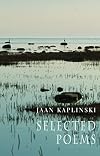
This anthology collection of selected English translations of the Estonian poetry of Jaan Kaplinski looked like it would be a winner but several aspects of it were disappointing for me.
It is handy to have a good majority of the poems from "The Same Sea In Us All", "The Wandering Border", "Evening Brings Everything Back" and "Through the Forest" collected in one volume. I do wish that several typos* had been repaired though (I'm not sure if these are new or carried forward from the first show more English editions) and it would have been so much more terrific if a bilingual edition had presented the original Estonian poems as well, as the original Estonian editions are completely impossible to find these days.
Personally, the omission of "Vercingetorix ütles" (Vercingetorix said), which I'm fairly certain is Kaplinski's most famous poem, is the greatest disappointment of all. Fortunately you can find the original on the web at http://presskann.wordpress.com/2012/06/15/vercingetorix-utles/ and also Sam Hamill's translation should show up somewhere if you google enough of the opening phrase: "Vercingetorix said: Caesar, you can take the land where we live away from us, but you cannot take the land from us where we have died."
*I didn't mark all of these, but some from towards the end of the book are "everyhting" (should be "everything") on pg. 215 and "Lembity" (should be "Lembitu") on pg. 233. show less
It is handy to have a good majority of the poems from "The Same Sea In Us All", "The Wandering Border", "Evening Brings Everything Back" and "Through the Forest" collected in one volume. I do wish that several typos* had been repaired though (I'm not sure if these are new or carried forward from the first show more English editions) and it would have been so much more terrific if a bilingual edition had presented the original Estonian poems as well, as the original Estonian editions are completely impossible to find these days.
Personally, the omission of "Vercingetorix ütles" (Vercingetorix said), which I'm fairly certain is Kaplinski's most famous poem, is the greatest disappointment of all. Fortunately you can find the original on the web at http://presskann.wordpress.com/2012/06/15/vercingetorix-utles/ and also Sam Hamill's translation should show up somewhere if you google enough of the opening phrase: "Vercingetorix said: Caesar, you can take the land where we live away from us, but you cannot take the land from us where we have died."
*I didn't mark all of these, but some from towards the end of the book are "everyhting" (should be "everything") on pg. 215 and "Lembity" (should be "Lembitu") on pg. 233. show less
Estonia.
Kaplinski is largely a poet of the every day, with the occasional philosophical musing thrown in for contrast. It's clear from his imagistic focus and here-and-now observations that he is a Buddhist. I enjoyed the sensory descriptions of Estonian farm life, flora (including genus and species in many cases), and fauna, though I didn't find the poems especially moving or thought-provoking.
Kaplinski is largely a poet of the every day, with the occasional philosophical musing thrown in for contrast. It's clear from his imagistic focus and here-and-now observations that he is a Buddhist. I enjoyed the sensory descriptions of Estonian farm life, flora (including genus and species in many cases), and fauna, though I didn't find the poems especially moving or thought-provoking.
A semi-autobiographical novel focussing on a student in early 1960s Estonia. I found a refresher on Estonia history from wikipedia useful before getting into this book to understand some of the family history which affects the present-day story. The student is highly intellectual, but at the same time has a bodily need to feel sexually fulfilled, and it is these two things which power the book along. In some places the relationship between the student and his teacher becomes an excuse to show more explore matters better left to non-fiction, but these are mostly brief interludes in an otherwise interesting story in a time and location unknown to me. show less
You May Also Like


Associated Authors
Statistics
- Works
- 84
- Also by
- 6
- Members
- 331
- Popularity
- #71,752
- Rating
- 4.1
- Reviews
- 5
- ISBNs
- 92
- Languages
- 9
- Favorited
- 2

