
Taslima Nasrin
Author of Shame
About the Author
Works by Taslima Nasrin
লজ্জা 3 copies
উতল হাওয়া 1 copy
আমার মেয়েবেলা 1 copy
নির্বাচিত কলাম 1 copy
আমার মেয়েবেলা 1 copy
উতল হাওয়া 1 copy
Doosra Paksh (Hindi Edition) 1 copy
"Ich träume von einer vollkommen säkularen Welt": Festschrift zur Verleihung des Erwin-Fischer-Preises 2002 (2003) 1 copy
العار (لاجا) 1 copy
Do Auraton Ke Patra [Hardcover] [Jan 01, 2010] TASLIMA NASRIN Translated by Sushil Gupta (Hindi Edition) (2010) 1 copy
ප්රංශ පෙම්වතා 1 copy
Žene pobunite se 1 copy
My Girlhood 1 copy
Associated Works
Tagged
Common Knowledge
- Canonical name
- Nasrin, Taslima
- Legal name
- নাসরিন, তসলিমা
- Other names
- Nasreen, Taslima
- Birthdate
- 1962-08-25
- Gender
- female
- Occupations
- activist (human rights)
physician
poet - Awards and honors
- Sakharov Prize for Freedom of Thought (1994)
Humanist Award (International Humanist and Ethical Union, 1996) - Nationality
- Bangladesh
- Birthplace
- Mymensingh, Bangladesh
- Places of residence
- Mymensingh, Bangladesh (birth)
Kolkata, India - Associated Place (for map)
- Bangladesh
Members
Reviews
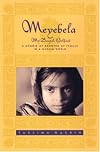
Listen. This book is a tough hang. It is FILLED with abuse — physical, sexual, structural. And its main function is just shining a light on that abuse. So there isn't a lot of analysis or redemption or anything to allow you to put some distance between yourself and the abuse on the page.
The light needs to be shown. The title, Meyebela, is a word coined by Nasrin to draw attention to the fact that in Bengali, there is no word for a girl's experience of childhood. That erasure is the center show more of the book. Nasrin's upbringing was patriarchal in the extreme. Her mother has no rights before her father. As children, she and her siblings have no rights not just before their parents, but any adult, even anyone older than they are. So when Nasrin experiences sexual abuse at the hands of two different uncles, it is not just who would she tell, but why would she tell? Of course her uncles could do what they like.
But the hierarchies aren't just within families. The class system is incredibly abusive as well, and religious tension and calls for revolution provide opportunities for abuse and violence. (The period of her girlhood coincides with both Bangladesh's struggle for independence and the 1975 coup.)
I struggled with this book. At one point I threw a whole tantrum in a private chat about how I should stop reading it, but couldn't quite decide to. I was frustrated with the non-linear structure, because certain events felt like they should have informed others, but it was often impossible to tell what happened when. I was frustrated with a lack of processing — at a certain point Nasrin herself becomes an abuser, and there is one tiny moment where she indicates some shame. but otherwise her actions are just narrated as is. Also, later in life Nasrin becomes both a doctor and a respected author, but when the book ends, she is still a teenager, and there is no clear path how she got there from here.
At the same time, it did feel like an important read. And Nasrin's straightforward narration is hard to argue with. but you will still see reviewers trying to do so. I think it allowed me to draw my own conclusions. show less
The light needs to be shown. The title, Meyebela, is a word coined by Nasrin to draw attention to the fact that in Bengali, there is no word for a girl's experience of childhood. That erasure is the center show more of the book. Nasrin's upbringing was patriarchal in the extreme. Her mother has no rights before her father. As children, she and her siblings have no rights not just before their parents, but any adult, even anyone older than they are. So when Nasrin experiences sexual abuse at the hands of two different uncles, it is not just who would she tell, but why would she tell? Of course her uncles could do what they like.
But the hierarchies aren't just within families. The class system is incredibly abusive as well, and religious tension and calls for revolution provide opportunities for abuse and violence. (The period of her girlhood coincides with both Bangladesh's struggle for independence and the 1975 coup.)
I struggled with this book. At one point I threw a whole tantrum in a private chat about how I should stop reading it, but couldn't quite decide to. I was frustrated with the non-linear structure, because certain events felt like they should have informed others, but it was often impossible to tell what happened when. I was frustrated with a lack of processing — at a certain point Nasrin herself becomes an abuser, and there is one tiny moment where she indicates some shame. but otherwise her actions are just narrated as is. Also, later in life Nasrin becomes both a doctor and a respected author, but when the book ends, she is still a teenager, and there is no clear path how she got there from here.
At the same time, it did feel like an important read. And Nasrin's straightforward narration is hard to argue with. but you will still see reviewers trying to do so. I think it allowed me to draw my own conclusions. show less
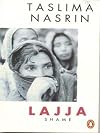
This book describes the impact of religious intolerance and the persecution of minorities through the experiences of the (nominally Hindu) Dutta family in Bangladesh. The main focus of the story traces the life of the family through 13 days following the destruction of the Babri Masjid mosque in India by Hindu fundamentalists and the anti-Hindu violence which takes place in response in Bangladesh. Inter-weaved with this narrative are memories from the lives of the four main characters which show more describe individual and communal humiliations and give perspective on the movement away from a secular Bangladesh after independence in 1974 towards a state whose official religion is Islam,.
I have mixed feelings about this book hence only 3 stars. I was previously only vaguely aware of the events it describes and found it informative and at times powerful. After tragedy strikes the family, the different ways the family members respond is movingly portrayed. I however have reservations over the clumsy writing style which does make me wonder about the quality of the translation. More frustrating was the way the author often uses minor characters to present documentary information on cases of abuse and destruction in a didactic manner. These become extremely repetitive and are often just long lists of unfamiliar names and places (this is a problem more specific to a non-Bangladeshi reader) which continually interrupt the narrative. While I can see why the author has taken this approach, a greater focus on specific examples with more context and background would have been more effective to this reader. (Or the use of an appendix.) There are also a few examples where some of the statistics given seem to be contradictory although this may be the haphazard way they are sometimes presented.
One obviously cannot underestimate the bravery of the author in writing this book and her emotional honesty and empathy is striking. I have reservations about the execution but at the same time believe it is well worth reading to anybody with even only a passing interest in South Asia. show less
I have mixed feelings about this book hence only 3 stars. I was previously only vaguely aware of the events it describes and found it informative and at times powerful. After tragedy strikes the family, the different ways the family members respond is movingly portrayed. I however have reservations over the clumsy writing style which does make me wonder about the quality of the translation. More frustrating was the way the author often uses minor characters to present documentary information on cases of abuse and destruction in a didactic manner. These become extremely repetitive and are often just long lists of unfamiliar names and places (this is a problem more specific to a non-Bangladeshi reader) which continually interrupt the narrative. While I can see why the author has taken this approach, a greater focus on specific examples with more context and background would have been more effective to this reader. (Or the use of an appendix.) There are also a few examples where some of the statistics given seem to be contradictory although this may be the haphazard way they are sometimes presented.
One obviously cannot underestimate the bravery of the author in writing this book and her emotional honesty and empathy is striking. I have reservations about the execution but at the same time believe it is well worth reading to anybody with even only a passing interest in South Asia. show less
A screed about the extensive, extended anti-Hindu riots and persecution of the minority Hindu community in Bangladesh after the demolition of the Babri Masjid mosque in India in 1992. Page after page is either quoted directly from non-fiction sources or inserted into the mouths of her characters. And sadly, although everything she cites or quotes is horrifyingly factual, the book is so overdone, so one-sided, that it runs a real risk of alienating otherwise-sympathetic readers. The incidents show more she cites are all-too-real, all-too-numerous, and nauseatingly offensive. But as in any set of events like these, the truth is not black-and-white, the facts not so simple as Nasrin would suggest. show less
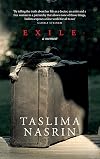
Contrary to the popular belief that Taslima Nasrin is 'Anti-Islam', I have always found Taslima's writings leaning more towards 'Anti-Fundamentalism'. And being one of these is not the same as being the other. This autobiographical book cements my belief in these thoughts about her.
While it starts on a darkly interesting note, in the middle it gets a bit muddled up in self pity... I mean, I can empathize with Taslima Nasrin as a liberal person whose basic freedom was stolen from her to serve show more political ambitions of the Leftists as well as the Rightists... And on an human level, I also feel for what she has gone through to simply exercise her freedom of speech about something that she deeply feels for... But it would have helped if some of the lines that repetitively express the same sense of despair over and over again, would have been left on the editing table. It would have made the experiences shared in this book more crisp.
Having said that, I would like to salute this living legend just for her courage to criticize things that are so terribly wrong with our world. show less
While it starts on a darkly interesting note, in the middle it gets a bit muddled up in self pity... I mean, I can empathize with Taslima Nasrin as a liberal person whose basic freedom was stolen from her to serve show more political ambitions of the Leftists as well as the Rightists... And on an human level, I also feel for what she has gone through to simply exercise her freedom of speech about something that she deeply feels for... But it would have helped if some of the lines that repetitively express the same sense of despair over and over again, would have been left on the editing table. It would have made the experiences shared in this book more crisp.
Having said that, I would like to salute this living legend just for her courage to criticize things that are so terribly wrong with our world. show less
Lists
Awards


You May Also Like


Associated Authors
Statistics
- Works
- 64
- Also by
- 4
- Members
- 731
- Popularity
- #34,740
- Rating
- 3.7
- Reviews
- 15
- ISBNs
- 101
- Languages
- 16

