
About the Author
Mark Bauerlein lives in Atlanta and teaches at Emory University.
Works by Mark Bauerlein
The Dumbest Generation: How the Digital Age Stupefies Young Americans and Jeopardizes Our Future(Or, Don't Trust Anyone Under 30) (2008) 659 copies, 18 reviews
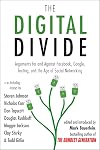
The Digital Divide: Arguments for and Against Facebook, Google, Texting, and the Age of Social Networking (2011) 154 copies, 6 reviews
The Dumbest Generation Grows Up: From Stupefied Youth to Dangerous Adults (2022) 37 copies, 1 review
Associated Works
History and Women, Culture and Faith, Volume 2: Selected Writings of Elizabeth Fox-Genovese: Ghosts and Memories: White and Black Southern Women's Lives and Writings (2011) — Foreword, some editions — 1 copy
Tagged
Common Knowledge
- Legal name
- Bauerlein, Mark Weightman
- Birthdate
- 1959
- Gender
- male
- Education
- University of California, Los Angeles
- Occupations
- English professor
- Organizations
- Emory University, Atlanta, Georgia, USA
National Endowment for the Arts - Short biography
- Mark Bauerlein earned his doctorate in English at UCLA in 1988. He has taught at Emory since 1989, with a two-and-a-half year break in 2003-05 to serve as the Director, Office of Research and Analysis, at the National Endowment for the Arts. Apart from his scholarly work, he publishes in popular periodicals such as The Wall Street Journal, The Weekly Standard, The Washington Post, TLS, and Chronicle of Higher Education. His latest book, The Dumbest Generation: How the Digital Age Stupefies Young Americans and Jeopardizes Our Future; Or, Don’t Trust Anyone Under 30 (www.dumbestgeneration.com), was published in May 2008.
http://www.english.emory.edu/people/f... - Nationality
- USA
- Places of residence
- California, USA
Georgia, USA - Associated Place (for map)
- USA
Members
Reviews

This book is flawed on every level. It posits that only an education clinging to a 75-year-old canon can primp and cajole the young into intelligent life. It argues that cultural cohesion depends entirely on the trivial references curated by elites. It mourns the passing of self-styled demigod mentors displaced by the Internet. It bristles at the threat to a Western Civilization that has utterly failed in its most critical and most basic responsibility: preservation of the planet. It winces show more in stylized horror at the idea of its fusty, decaying tenured academics not being daised, laureled and fawningly sung as our chosen eminences.
The Internet is Protean and readily feeds seekers of knowledge regardless of origin or class. This the self-important simply can't stand.
The literary classics are not the only source of moral exempla. show less
The Internet is Protean and readily feeds seekers of knowledge regardless of origin or class. This the self-important simply can't stand.
The literary classics are not the only source of moral exempla. show less
The Dumbest Generation: How the Digital Age Stupefies Young Americans and Jeopardizes Our Future (Or, Don't Trust Anyone Under 30) by Mark Bauerlein

Honestly, I don’t know why I’m even writing this. As someone born after 1980, I’m scarcely qualified to breathe on my own.
This, at least, is the case according to Mark Bauerlein, author of “The Dumbest Generation.” That’s not the full name of the book, but I got bored 15 percent of the way through (seriously, 20 words in the title). Apparently, we’re the dullest things since the bread-slicers they used to make sliced bread after the first hundred loaves or so.
(Don’t worry, I show more had someone much older write that joke for me.) Naturally, as a card-carrying member of the targeted generation I feel somewhat compelled to defend it. Unfortunately, there are two problems with me doing so. First, any argument I make will automatically be viewed as biased. Second, as a complete incompetent, who’s going to trust my interpretation of facts?
I will say that Bauerlein’s statistics seem somewhat … selective. As many people do when they try to assert positions that are difficult (if not impossible) to prove, he tries to drown the reader in numbers. Using the National Assessment of Educational Progress test, he cites from a variety of different versions and decades.
To wit: he mentions the 2005 science exam has scores three points lower than 1996, with an average score of 147. Then he mentions twelfth-graders haven’t improved upon their scores even though the number of them taking calculus tripled from 1978 to 1994.
Of course, these numbers mean almost nothing. The science exam scores dropped literally two percent in nine years, and the “shocking” truth is that math scores have stayed exactly the same.
Hardly a harbinger of hare-brains.
This is not a wholesale discounting of his claims. Lord knows there are plenty of stupid young people, many of whom attend WSU. I’ve edited enough columns, research papers and hate-filled e-mails (sent to me, not by me) to unequivocally state that. Indeed, he makes some good points regarding how utterly our educational system fails some students.
The problem stems from Bauerlein’s dichotomous approach – either this generation is smarter than the previous ones, or dumber. There isn’t any middle ground. If his argument was that our educational system needs to be reformed, I’m all for it. If he’s arguing that we need to have higher minimum standards, I’m in.
But that’s not what he’s saying. I suspect Bauerlein may be a bit of an old fogey. He doesn’t restrict himself solely to questioning the intelligence of the youth, but also harps on entertainment choices and cultural aesthetics. In the first chapter, he says the youth “refuse the cultural and civil inheritance” that created America. In his eyes, we’ve swapped intellectual possessions for material ones and trade in “pop styles and techno skills.” Bauerlein’s trouble with digesting a new society is his rigid approach to what “knowledge” is. Yes, there are a depressing number of teenagers out there who don’t know what the three branches of government are (chocolate, vanilla and strawberry) or who could recite the names of the Supreme Court Justices (John, Paul, Ringo and Diana Ross).
But in addition to an increasingly specialized approach to knowledge, the resources available to people are far greater than ever before. I can’t really picture the situation that would arise where an instant command of the Monroe Doctrine is required (save for policy analysts or history professors), but if you could call up a complete dissection of it within 10 seconds on Wikipedia, how is that any different than remembering it?
Detailed and nuanced analysis would be impossible to concoct in such a situation, but how often are you called upon to create one in 10 seconds? Lengthy explorations of topics often require lengthy amounts of research to prepare. Whether you’re recalling information on the computer or out of your brain, isn’t the important part that you know how to do so?
Frankly, I don’t really have a preference between the physician who knows how to research across the entire spectrum of medical knowledge or the old country doctor who relies on his accumulated wisdom. If anything, I’d lean toward the former’s breadth rather than the latter’s experience, but both are simply different kinds of knowledge.
In an age where adaptability and resourcefulness are valued far above rote memorization, it’s difficult to fathom preferring to stick with old models of knowledge that have no relevance.
But then, what do I know? show less
This, at least, is the case according to Mark Bauerlein, author of “The Dumbest Generation.” That’s not the full name of the book, but I got bored 15 percent of the way through (seriously, 20 words in the title). Apparently, we’re the dullest things since the bread-slicers they used to make sliced bread after the first hundred loaves or so.
(Don’t worry, I show more had someone much older write that joke for me.) Naturally, as a card-carrying member of the targeted generation I feel somewhat compelled to defend it. Unfortunately, there are two problems with me doing so. First, any argument I make will automatically be viewed as biased. Second, as a complete incompetent, who’s going to trust my interpretation of facts?
I will say that Bauerlein’s statistics seem somewhat … selective. As many people do when they try to assert positions that are difficult (if not impossible) to prove, he tries to drown the reader in numbers. Using the National Assessment of Educational Progress test, he cites from a variety of different versions and decades.
To wit: he mentions the 2005 science exam has scores three points lower than 1996, with an average score of 147. Then he mentions twelfth-graders haven’t improved upon their scores even though the number of them taking calculus tripled from 1978 to 1994.
Of course, these numbers mean almost nothing. The science exam scores dropped literally two percent in nine years, and the “shocking” truth is that math scores have stayed exactly the same.
Hardly a harbinger of hare-brains.
This is not a wholesale discounting of his claims. Lord knows there are plenty of stupid young people, many of whom attend WSU. I’ve edited enough columns, research papers and hate-filled e-mails (sent to me, not by me) to unequivocally state that. Indeed, he makes some good points regarding how utterly our educational system fails some students.
The problem stems from Bauerlein’s dichotomous approach – either this generation is smarter than the previous ones, or dumber. There isn’t any middle ground. If his argument was that our educational system needs to be reformed, I’m all for it. If he’s arguing that we need to have higher minimum standards, I’m in.
But that’s not what he’s saying. I suspect Bauerlein may be a bit of an old fogey. He doesn’t restrict himself solely to questioning the intelligence of the youth, but also harps on entertainment choices and cultural aesthetics. In the first chapter, he says the youth “refuse the cultural and civil inheritance” that created America. In his eyes, we’ve swapped intellectual possessions for material ones and trade in “pop styles and techno skills.” Bauerlein’s trouble with digesting a new society is his rigid approach to what “knowledge” is. Yes, there are a depressing number of teenagers out there who don’t know what the three branches of government are (chocolate, vanilla and strawberry) or who could recite the names of the Supreme Court Justices (John, Paul, Ringo and Diana Ross).
But in addition to an increasingly specialized approach to knowledge, the resources available to people are far greater than ever before. I can’t really picture the situation that would arise where an instant command of the Monroe Doctrine is required (save for policy analysts or history professors), but if you could call up a complete dissection of it within 10 seconds on Wikipedia, how is that any different than remembering it?
Detailed and nuanced analysis would be impossible to concoct in such a situation, but how often are you called upon to create one in 10 seconds? Lengthy explorations of topics often require lengthy amounts of research to prepare. Whether you’re recalling information on the computer or out of your brain, isn’t the important part that you know how to do so?
Frankly, I don’t really have a preference between the physician who knows how to research across the entire spectrum of medical knowledge or the old country doctor who relies on his accumulated wisdom. If anything, I’d lean toward the former’s breadth rather than the latter’s experience, but both are simply different kinds of knowledge.
In an age where adaptability and resourcefulness are valued far above rote memorization, it’s difficult to fathom preferring to stick with old models of knowledge that have no relevance.
But then, what do I know? show less
The Digital Divide: Arguments for and Against Facebook, Google, Texting, and the Age of Social Networking by Mark Bauerlein
Chi non ha un profilo su un social network? Chi usa lo smartphone solo come telefono cellulare ?Chi accende il personal computer, fisso, portatile o tablet che sia, solo per motivi professionali o di studio? Se avessi un pubblico davanti a me, nessuno alzerebbe un dito per rispondere positivamente al mio quesito e anch’io farei altrettanto! Tutti siamo armati di un mezzo che ci catapulta in un mondo che da reale è diventato virtuale, anzi no, un universo che è tanto sociale che spesso si show more tramuta in qualcosa di patologico.
Basta guardarsi attorno in qualsiasi ambito, locali pubblici, mezzi di trasporto e per strada per realizzare che la gente ha perso l’abitudine di parlare, tutti intenti ad armeggiare con lo smartphone.
Pare che non si possa vivere senza un costante contatto con il mondo virtuale, qualsiasi esso sia e sempre a discapito delle buone chiacchierate tra amici e dei rapporti personali, con il rischio di cadere vittima della sindrome di Hikikomori, termine giapponese dalle parole hiku "tirare" e komoru “ritirarsi" e la cui traduzione letterale è “stare in disparte, isolarsi” recentemente associato anche all’abuso di internet.
Ma questa patologia del Sol Levante non è l’unica, c’è anche il FOMO (Fear Of Missing Out), ovvero la paura di essere emarginati ed al quale sono legati molti utenti dei social network che non vogliono perdersi nulla dei profili dei propri amici, veri o virtuali che siano e temono di essere tagliati fuori da tutto quanto fa tendenza. Purtroppo c’è anche spazio, tanto cyber spazio per chi vuol farsi veramente male, il Dark Net, una grossa fetta di mondo virtuale, dagli esperti stimata 500 volte più grande rispetto al web, dove è possibile muoversi liberamente nell’illecito, dove pedofili e terroristi trovano un ambiente fertile, che si tramuta in una sorta di mercato nero per trafficanti d’armi e di droga.
Ma come è possibile tutto questo? Uno dei modi più seguiti è quello di accedere alla Dark Net per mezzo di Tor, un software che fa rimbalzare il traffico dati tramite vari sistemi crittografici e che garantisce l’anonimato degli utenti rendendo invisibile l’indirizzo IP del computer.
Sicuramente è inquietante sapere che nel ventunesimo secolo sia possibile muoversi così liberamente in siti altamente pericolosi soprattutto per i giovani, senza che si possa bloccarne il traffico da parte degli organi competenti. Il mondo della tripla W ha aperto un universo sconfinato, che comunque bisogna saper dosare con saggezza ed intelligenza per non correre il rischio di cadere nelle maglie di quella che si presenta come una nuova dipendenza e che può avere forti ripercussioni sull’autostima di utenti di qualsiasi età.
Scorrete i file degli scaffali dei libri su GoodReads alla voce "social networking" e vi renderete conto di quanti libri in tutte le lingue si occupano di questo argomento. Il mondo è diventato davvero un "social network" in tutti i suoi aspetti umani, sociali, politici, culturali, religiosi ... Puoi sapere tutto di tutti in maniera immediata se non addirittura prima che gli eventi accadano. In effetti le chat, gli sms, i tweet, le connessioni creano i fatti anticipandoli in "bits & bytes", in una vera e propria ragnatela nella quale chi segue resta imbrigliato senza comprendere bene cosa stia accadendo.
Nel giro di poche ore sono assicurati mutamenti e contraddizioni. La verità non verrà mai acquisita, la post-verità prenderà il suo posto, diventando un "post", la fotografia di un momento destinato ad allungarsi e diluirsi senza fine nel tempo e nello spazio. Ho letto questo libro uscito solo qualche anno fa e mi sono reso conto che molte delle cose che dice sono già obsolete. Tutto è destinato a cambiare perchè ogni cosa è "social", vale a dire mutabile, volatile, liquida. Se e quando tutto questo cambierà non è facile a dirsi. Sopratutto difficile dire come questa "socialità" evolverà ... Chi vivrà, vedrà ... show less
Basta guardarsi attorno in qualsiasi ambito, locali pubblici, mezzi di trasporto e per strada per realizzare che la gente ha perso l’abitudine di parlare, tutti intenti ad armeggiare con lo smartphone.
Pare che non si possa vivere senza un costante contatto con il mondo virtuale, qualsiasi esso sia e sempre a discapito delle buone chiacchierate tra amici e dei rapporti personali, con il rischio di cadere vittima della sindrome di Hikikomori, termine giapponese dalle parole hiku "tirare" e komoru “ritirarsi" e la cui traduzione letterale è “stare in disparte, isolarsi” recentemente associato anche all’abuso di internet.
Ma questa patologia del Sol Levante non è l’unica, c’è anche il FOMO (Fear Of Missing Out), ovvero la paura di essere emarginati ed al quale sono legati molti utenti dei social network che non vogliono perdersi nulla dei profili dei propri amici, veri o virtuali che siano e temono di essere tagliati fuori da tutto quanto fa tendenza. Purtroppo c’è anche spazio, tanto cyber spazio per chi vuol farsi veramente male, il Dark Net, una grossa fetta di mondo virtuale, dagli esperti stimata 500 volte più grande rispetto al web, dove è possibile muoversi liberamente nell’illecito, dove pedofili e terroristi trovano un ambiente fertile, che si tramuta in una sorta di mercato nero per trafficanti d’armi e di droga.
Ma come è possibile tutto questo? Uno dei modi più seguiti è quello di accedere alla Dark Net per mezzo di Tor, un software che fa rimbalzare il traffico dati tramite vari sistemi crittografici e che garantisce l’anonimato degli utenti rendendo invisibile l’indirizzo IP del computer.
Sicuramente è inquietante sapere che nel ventunesimo secolo sia possibile muoversi così liberamente in siti altamente pericolosi soprattutto per i giovani, senza che si possa bloccarne il traffico da parte degli organi competenti. Il mondo della tripla W ha aperto un universo sconfinato, che comunque bisogna saper dosare con saggezza ed intelligenza per non correre il rischio di cadere nelle maglie di quella che si presenta come una nuova dipendenza e che può avere forti ripercussioni sull’autostima di utenti di qualsiasi età.
Scorrete i file degli scaffali dei libri su GoodReads alla voce "social networking" e vi renderete conto di quanti libri in tutte le lingue si occupano di questo argomento. Il mondo è diventato davvero un "social network" in tutti i suoi aspetti umani, sociali, politici, culturali, religiosi ... Puoi sapere tutto di tutti in maniera immediata se non addirittura prima che gli eventi accadano. In effetti le chat, gli sms, i tweet, le connessioni creano i fatti anticipandoli in "bits & bytes", in una vera e propria ragnatela nella quale chi segue resta imbrigliato senza comprendere bene cosa stia accadendo.
Nel giro di poche ore sono assicurati mutamenti e contraddizioni. La verità non verrà mai acquisita, la post-verità prenderà il suo posto, diventando un "post", la fotografia di un momento destinato ad allungarsi e diluirsi senza fine nel tempo e nello spazio. Ho letto questo libro uscito solo qualche anno fa e mi sono reso conto che molte delle cose che dice sono già obsolete. Tutto è destinato a cambiare perchè ogni cosa è "social", vale a dire mutabile, volatile, liquida. Se e quando tutto questo cambierà non è facile a dirsi. Sopratutto difficile dire come questa "socialità" evolverà ... Chi vivrà, vedrà ... show less
The Dumbest Generation: How the Digital Age Stupefies Young Americans and Jeopardizes Our Future (Or, Don't Trust Anyone Under 30) by Mark Bauerlein
The book is a bit dated as it was published in 2008 and mentions social media like MySpace. But the message is still relevant and, in fact, more so now with *everyone* (except me) having a smartphone, since ~2011, and everyone using Instagram, Twitter, and Snapchat (a program designed for message deletion so parents can't supervise).
I know. I'm raising teenagers. So I have a front-row seat to the phenomenon. Like their peers, they're obsessed with social media, but they are fortunate because show more they also love to read books. Even my teens complain that their friends don't read and can't spell. When the teachers assign books, they provide a link to the audiobook. What's that about? That topic is covered in the chapter "The Betrayal of the Mentors." The teachers ensure that all lessons are easy and fun, but that's not preparing them for adult life, which is not always easy and fun.
Much of the book is dry with many statistics woven into the prose. I would have preferred the data laid out in a chart. Some of the text required patience but, in the end, the message was worth it.
Also recommended: "The Shallows: What the Internet Is Doing to Our Brains," by Nicolas Carr, published in 2011. Don't get me wrong -- I love the Internet. But we are all subject to brain changes as we use the Web. So, here's the test -- can you still read a book in hand for hours at a time? I can, and that's good news.
Our brain changes may depend on how we use the Web. Slowly and methodically? Or jumping from one page to the next till our brain can no longer focus on one topic at a time, or one page, or one classroom teacher.
I don't blame this generation. I blame the creators of the addictive, mobile technology and the adults that are sleeping on the job, or perhaps too distracted by their own screens.
I look forward to more books on this topic to bring us up to date with the latest in brain science. So we can enjoy the amazing Internet without losing our minds. show less
I know. I'm raising teenagers. So I have a front-row seat to the phenomenon. Like their peers, they're obsessed with social media, but they are fortunate because show more they also love to read books. Even my teens complain that their friends don't read and can't spell. When the teachers assign books, they provide a link to the audiobook. What's that about? That topic is covered in the chapter "The Betrayal of the Mentors." The teachers ensure that all lessons are easy and fun, but that's not preparing them for adult life, which is not always easy and fun.
Much of the book is dry with many statistics woven into the prose. I would have preferred the data laid out in a chart. Some of the text required patience but, in the end, the message was worth it.
Also recommended: "The Shallows: What the Internet Is Doing to Our Brains," by Nicolas Carr, published in 2011. Don't get me wrong -- I love the Internet. But we are all subject to brain changes as we use the Web. So, here's the test -- can you still read a book in hand for hours at a time? I can, and that's good news.
Our brain changes may depend on how we use the Web. Slowly and methodically? Or jumping from one page to the next till our brain can no longer focus on one topic at a time, or one page, or one classroom teacher.
I don't blame this generation. I blame the creators of the addictive, mobile technology and the adults that are sleeping on the job, or perhaps too distracted by their own screens.
I look forward to more books on this topic to bring us up to date with the latest in brain science. So we can enjoy the amazing Internet without losing our minds. show less
Lists
You May Also Like


Associated Authors
Statistics
- Works
- 12
- Also by
- 2
- Members
- 991
- Popularity
- #25,990
- Rating
- 3.2
- Reviews
- 25
- ISBNs
- 31
- Favorited
- 1
