
Leon Edel (1907–1997)
Author of Henry James: A Life
About the Author
Joseph Leon Edel was born September 9, 1907 in Pittsburgh, Pennsylvania. He received a master's degree in English from McGill University in Montreal in 1928 and a doctorate in literature from the University of Paris in 1932. In 1932, he was an assistant professor of English at Sir George Williams show more University in Montreal. Between 1934 and 1943, he worked as a freelance writer and journalist and in broadcasting. During World War II, he served in the Army. He was a professor of English at New York University from 1953 to 1972 and at the University of Hawaii from 1972 to 1978. His five-volume biography of Henry James, published between 1953 and 1972, has been considered among the finest biographies by and about an American author. Two of the volumes won the National Book Award and the Pulitzer Prize in 1963. He also edited books on James's letters, plays, essays, criticism and stories and wrote introductions to new editions of James's novels. He also wrote critical biographies of Willa Cather and Henry David Thoreau, a book about the Bloomsbury circle entitled A House of Lions, and Wartime Memoir. He was the editor of four volumes of Edmund Wilson's papers. He died on September 5, 1997 at the age of 89. (Bowker Author Biography) show less
Image credit: Photo by Walker Evans
Series
Works by Leon Edel
The Twenties: From Notebooks and Diaries of the Period (1975) — Editor; Introduction — 241 copies, 4 reviews
The Complete Tales of Henry James, vol. 5: 1883-1884 (1962) — Editor; Editor; Editor; Editor — 19 copies
The Complete Tales of Henry James, vol. 4: 1876-1882 (1962) — Editor, some editions; Editor — 18 copies
The Complete Tales of Henry James, vol. 11: 1900-1903 — Editor; Editor — 10 copies
Henry James - American Writers 4: University of Minnesota Pamphlets on American Writers (1960) 10 copies
LITERARY HISTORY & LITERARY CRITICISM ACTA of the 9th Congress Intn'l Federation for Modern Languages & Literature (1964) 2 copies
The complete tales of Henry James, vols. 1, 2, 4, 5, 6, 7, 8 — Editor — 1 copy
THE HENRY JAMES READER. 1 copy
The Life of Henry James 1 1 copy
The Life of Henry James 2 1 copy
The Prefaces of Henry James 1 copy
The prefaces of Henry James 1 copy
Associated Works
The Turn of the Screw and Other Stories [Oxford World's Classics] (1969) — Contributor, some editions — 617 copies, 4 reviews
Henry James and H.G. Wells: A record of their friendship, their debate on the art of fiction, and their quarrel (1979) — Editor — 12 copies
A Mirror for Modern Scholars: Essays in Methods of Research In Literature (1966) — Contributor — 11 copies
Tagged
Common Knowledge
- Other names
- Edel, Joseph Leon
- Birthdate
- 1907-09-09
- Date of death
- 1997-09-05
- Gender
- male
- Education
- McGill University
Université de Paris - Occupations
- biographer
literary critic - Awards and honors
- American Academy of Arts and Letters Academy Award (Literature ∙ 1959)
American Academy of Arts and Letters (Literature ∙ 1964) - Relationships
- Edel, Abraham (brother)
- Nationality
- USA
- Birthplace
- Pittsburgh, Pennsylvania, USA
- Places of residence
- Pittsburgh, Pennsylvania, USA
Yorkton, Saskatchewan, Canada
Paris, France
Hawai'i, USA - Associated Place (for map)
- USA
Members
Reviews
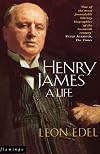
One of the best literary biographies that I know of in existence, period. James was nothing if not a highly sensitive observer and experiencer of old Europe, and Edel understands and shares this aspect of the expatriate's rapture. I also enjoyed reading James' short story The Passionate Pilgrim this year about a young man who goes to England from America and falls in love with the aged patina of English architecture, old taverns, country houses, and Oxford quads and lawns:
" It's well there show more should be such places, shaped in the interest of factitious needs, invented to minister to the book-begotten longing for a medium in which one may dream unwaked and believe unconfuted; to foster the sweet illusion that all's well in a world where so much is so damnable, all right and rounded, smooth and fair, in this sphere of the rough and ragged, the pitiful unachieved especially, and the dreadful uncommenced. The world's made--work's over. Now for leisure! England's safe--now for Theocritus and Horace, for lawn and sky! "
These days very few university campuses seem to be full of scholars lounging on the lawn chatting about poetry, but rather are places of grimly aspiring meritocrats with their eyes on the dollar.
Oxford again: "The plain perpendicular of the so mildly conventual fronts, masking blest seraglios of culture and leisure, irritates the imagination scarce less than the harem-walls of Eastern towns. Within their arching portals, however, you discover more sacred and sunless courts, and the dark verdure soothing and cooling to bookish eyes. The grey-green quadrangles stand for ever open with a trustful hospitality. The seat of the humanities is stronger in her own good manners than in a marshalled host of wardens and beadles. "
When James wrote this short story, as Leon Edel tells us in his biography, he was back in the US after some time in England and Italy and felt like he was disinherited of the great European treasure house of culture and history. Interesting to transpose Australians like Peter Porter and Clive James into the place of James and his characters. Australians have often been passionate pilgrims to European cathedrals and manor houses, museums and galleries, piazzas and ruins. Australians too have sometimes felt dispossessed of European culture and history on their southern continent.
Interestingly James wrote the Passionate Pilgrim just 8 years after Thoreau had died just around the corner from where James was living. Henry James literary and cultural sensibility was superb, but he remained unresponsive to the inspiring ecology of New England. Thankfully this world is big enough for both a Henry James and a Henry Thoreau, and readers are richer for having both.
The biography I read in its two volume guise (both together make 1800 pages!). I often felt I empathised with James as he cared for his parents, and then experienced their passing away, and later his wanting to find an anchorage point in the world, and moving into a house in the country in Rhye. James missed his physically contiguity with the flux of urban life and drama as he departed London - and again I empathise with this having felt the thrill of arriving in an apartment in Paris years ago and feeling suddenly part of the world in a way that was thrilling. show less
" It's well there show more should be such places, shaped in the interest of factitious needs, invented to minister to the book-begotten longing for a medium in which one may dream unwaked and believe unconfuted; to foster the sweet illusion that all's well in a world where so much is so damnable, all right and rounded, smooth and fair, in this sphere of the rough and ragged, the pitiful unachieved especially, and the dreadful uncommenced. The world's made--work's over. Now for leisure! England's safe--now for Theocritus and Horace, for lawn and sky! "
These days very few university campuses seem to be full of scholars lounging on the lawn chatting about poetry, but rather are places of grimly aspiring meritocrats with their eyes on the dollar.
Oxford again: "The plain perpendicular of the so mildly conventual fronts, masking blest seraglios of culture and leisure, irritates the imagination scarce less than the harem-walls of Eastern towns. Within their arching portals, however, you discover more sacred and sunless courts, and the dark verdure soothing and cooling to bookish eyes. The grey-green quadrangles stand for ever open with a trustful hospitality. The seat of the humanities is stronger in her own good manners than in a marshalled host of wardens and beadles. "
When James wrote this short story, as Leon Edel tells us in his biography, he was back in the US after some time in England and Italy and felt like he was disinherited of the great European treasure house of culture and history. Interesting to transpose Australians like Peter Porter and Clive James into the place of James and his characters. Australians have often been passionate pilgrims to European cathedrals and manor houses, museums and galleries, piazzas and ruins. Australians too have sometimes felt dispossessed of European culture and history on their southern continent.
Interestingly James wrote the Passionate Pilgrim just 8 years after Thoreau had died just around the corner from where James was living. Henry James literary and cultural sensibility was superb, but he remained unresponsive to the inspiring ecology of New England. Thankfully this world is big enough for both a Henry James and a Henry Thoreau, and readers are richer for having both.
The biography I read in its two volume guise (both together make 1800 pages!). I often felt I empathised with James as he cared for his parents, and then experienced their passing away, and later his wanting to find an anchorage point in the world, and moving into a house in the country in Rhye. James missed his physically contiguity with the flux of urban life and drama as he departed London - and again I empathise with this having felt the thrill of arriving in an apartment in Paris years ago and feeling suddenly part of the world in a way that was thrilling. show less
At the end of Henry James: the Untried Years the year was 1870 and James had just returned to Cambridge, Massachusetts after his first major jaunt through Europe. His beloved cousin, Minnie Temple, had succumbed to a very long illness and James was finding his way as a successful writer. Now, in Henry James: the Conquest of London James is broadening his horizons with another trip to Europe. Volume One outlined James's personality and temperament and the seedling of his career as a writer show more whereas Volume Two waters that seedling and produces the blossoming of a true novelist. The parallels between Henry's characters and that of his own grow. It is life feeding art. The art that begins to blossom is the ever-famous Portrait of a Lady. show less

Spending time with Virginia Woolf and court. An absorbing book read from the perspective of someone who has delved into Bloomsbury biographies for forty or more years and devoured any book about the Bloomsbury Group I could find. My main quibble is the elephant in the room. How to trust a book written in 1979, when homosexuality was legal, and which talks about Maynard and Lytton's homosexuality and totally ignores Duncan and Bunny and the triangle with Vanessa.
I had started with Lytton show more Strachey and slowly read works, mainly biographies/letters/diaries on Vanessa Bell, Virginia Woolf, Leonard Woolf, Roger Fry, Clive Bell, Maynard Keynes, Lydia Lopokova, Carrington, Desmond MacCathy, and Duncan Grant, etc. There were others, of course, on the fringe such as David Garnett, Ottoline Morrell, Angelica Bell, Aldous Huxley but the former were the individuals who continued to fascinate me, as they still do today in fact, was I reread my entire collection once more.
Leon Edel has written an amazing book here (published by the "ever-famous" Hogarth Press in 1979) and the following review given upon its publication couldn't have been better:
"With sustained literary power Leon Edel has brought into a strong, unified narrative all the complicated lives - hilarious, eccentric, and often tragic - of these gifted and inexorable individualists who together made up the most notorious literary coterie of modern England."
I couldn't have put it better myself.
This is actually quite an intimate portrait of these individuals' lives and the images of paintings by Vanessa Bell of the "divine" Duncan Grant, Leonard Woolf, Virginia Woolf, etc. show the remarkable painting style of this multi-faceted individual.
I particularly liked the parts about Leonard's time in Ceylon, times and life in Gordon Square and especially to see Virginia Stephen, as she was at the time, slowing developing with her own unique writing style, thanks to the men who surrounded her, I believe. Her style may also have been influenced by the sudden tragic death of her brother Thoby in 1906 and her depressions leading to nervous breakdowns throughout her life.
A delightful book and highly recommended to Bloomsbury lovers and admirers. show less
I had started with Lytton show more Strachey and slowly read works, mainly biographies/letters/diaries on Vanessa Bell, Virginia Woolf, Leonard Woolf, Roger Fry, Clive Bell, Maynard Keynes, Lydia Lopokova, Carrington, Desmond MacCathy, and Duncan Grant, etc. There were others, of course, on the fringe such as David Garnett, Ottoline Morrell, Angelica Bell, Aldous Huxley but the former were the individuals who continued to fascinate me, as they still do today in fact, was I reread my entire collection once more.
Leon Edel has written an amazing book here (published by the "ever-famous" Hogarth Press in 1979) and the following review given upon its publication couldn't have been better:
"With sustained literary power Leon Edel has brought into a strong, unified narrative all the complicated lives - hilarious, eccentric, and often tragic - of these gifted and inexorable individualists who together made up the most notorious literary coterie of modern England."
I couldn't have put it better myself.
This is actually quite an intimate portrait of these individuals' lives and the images of paintings by Vanessa Bell of the "divine" Duncan Grant, Leonard Woolf, Virginia Woolf, etc. show the remarkable painting style of this multi-faceted individual.
I particularly liked the parts about Leonard's time in Ceylon, times and life in Gordon Square and especially to see Virginia Stephen, as she was at the time, slowing developing with her own unique writing style, thanks to the men who surrounded her, I believe. Her style may also have been influenced by the sudden tragic death of her brother Thoby in 1906 and her depressions leading to nervous breakdowns throughout her life.
A delightful book and highly recommended to Bloomsbury lovers and admirers. show less

What makes Edmund Wilson interesting to me is the insight he brings to such diverse bodies of literature as the Civil War, a two-thousand-year-old desert sect, Utopian and Communist movements, and the influence of the French Symbolists on the great works of the early twentieth century. Such versatility and acuity made me curious to read more.
The fact that he was part of several intersecting circles of intellectuals during the decade covered in this book added to my curiosity. There was his show more college classmate and friend Scott Fitzgerald; then Walter Lippmann and the rest of the New Republic staff; Dorothy Parker and the Algonquin Round Table crowd; Eugene O'Neill and the Provincetown Players; and the ethereal yet adventurous poetess who broke Wilson's heart, Edna St. Vincent Millay.
What I found when I read this was something other than what I expected. I thought the book would be a chronicle of great writers and their works. Instead, there was juicy gossip about how libatious and libidinous he and his friends were. And since he seems to have known “everyone,” it’s hard to keep track. Those with lasting fame are mixed indiscriminately with those I’m unfamiliar with. It’s more complicated than a Russian novel. There was only so much curiosity I could muster for the record of his many bedmates or the inordinate attention he and his friends paid to the question of where they would get the next drink. Was this latter the distortion of prohibition?
Generous chunks of the book are devoted to scenic depictions. Wilson’s notebooks are more sketchbook than diary. In the decade treated in this book, Wilson’s ambition as a writer shifted. In the beginning, writing for publications such as Vanity Fair and the New Republic, he is a master of the review, the essay: ephemeral literature. His friends, meanwhile, produced novels, volumes of poetry, history: works that threatened to have lasting value, so his attention turned to longer forms as well. As part of his preparation, the author is practicing his hand at description. Those treating scenes I know, such as the first glimpse of New Jersey when leaving the Holland Tunnel, recreate my mental image, so I expect his descriptions of places I know less well are equally accurate.
In the last third of the book, the accounts of Wilson’s sexual exploits became more graphic. I think this may well have been rooted in his hope to be known as a serious writer. In the course of the 1920s, writers were grappling with how to describe sex in a way that was both graphic and literary. Ninety years on, we’re wondering whether it’s possible to achieve both at the same time, but back then, skilled writers seemed to believe it was. Wilson’s sketches in this vein predate the furor of the Lady Chatterly trial, so he seems to have been slightly ahead of the curve. One could also make the case he succeeds better than Lawrence. Certainly better than Henry Miller.
The book contains some fascinating reflections on the art of writing and the nature of literature, though fewer than I had hoped to find. If you're interested in finding the eminent critic analyzing the achievements of literature, I'd suggest you look at books such as Patriotic Gore, To the Finland Station, and Axel’s Castle. I’m looking forward, meanwhile, to reading his novels, I Thought of Daisy and Hecate County, to see how Wilson succeeded when he turned his hand to fiction.
Somewhere in between comes this book, fascinating not only for its small revelations about famous writers but also for the chance to peek over the shoulder of a craftsman honing his art. Admittedly, aspects of the book reflect the attitudes of its time. The casual anti-semitism, a view of Afro-Americans most charitably described as paternalistic, and the woman as a disposable item cause more than a few winces along the way. And while the scenic descriptions are evocative, precise, and fresh, I’ll admit that I skimmed some of them. But all in all, a good read. show less
The fact that he was part of several intersecting circles of intellectuals during the decade covered in this book added to my curiosity. There was his show more college classmate and friend Scott Fitzgerald; then Walter Lippmann and the rest of the New Republic staff; Dorothy Parker and the Algonquin Round Table crowd; Eugene O'Neill and the Provincetown Players; and the ethereal yet adventurous poetess who broke Wilson's heart, Edna St. Vincent Millay.
What I found when I read this was something other than what I expected. I thought the book would be a chronicle of great writers and their works. Instead, there was juicy gossip about how libatious and libidinous he and his friends were. And since he seems to have known “everyone,” it’s hard to keep track. Those with lasting fame are mixed indiscriminately with those I’m unfamiliar with. It’s more complicated than a Russian novel. There was only so much curiosity I could muster for the record of his many bedmates or the inordinate attention he and his friends paid to the question of where they would get the next drink. Was this latter the distortion of prohibition?
Generous chunks of the book are devoted to scenic depictions. Wilson’s notebooks are more sketchbook than diary. In the decade treated in this book, Wilson’s ambition as a writer shifted. In the beginning, writing for publications such as Vanity Fair and the New Republic, he is a master of the review, the essay: ephemeral literature. His friends, meanwhile, produced novels, volumes of poetry, history: works that threatened to have lasting value, so his attention turned to longer forms as well. As part of his preparation, the author is practicing his hand at description. Those treating scenes I know, such as the first glimpse of New Jersey when leaving the Holland Tunnel, recreate my mental image, so I expect his descriptions of places I know less well are equally accurate.
In the last third of the book, the accounts of Wilson’s sexual exploits became more graphic. I think this may well have been rooted in his hope to be known as a serious writer. In the course of the 1920s, writers were grappling with how to describe sex in a way that was both graphic and literary. Ninety years on, we’re wondering whether it’s possible to achieve both at the same time, but back then, skilled writers seemed to believe it was. Wilson’s sketches in this vein predate the furor of the Lady Chatterly trial, so he seems to have been slightly ahead of the curve. One could also make the case he succeeds better than Lawrence. Certainly better than Henry Miller.
The book contains some fascinating reflections on the art of writing and the nature of literature, though fewer than I had hoped to find. If you're interested in finding the eminent critic analyzing the achievements of literature, I'd suggest you look at books such as Patriotic Gore, To the Finland Station, and Axel’s Castle. I’m looking forward, meanwhile, to reading his novels, I Thought of Daisy and Hecate County, to see how Wilson succeeded when he turned his hand to fiction.
Somewhere in between comes this book, fascinating not only for its small revelations about famous writers but also for the chance to peek over the shoulder of a craftsman honing his art. Admittedly, aspects of the book reflect the attitudes of its time. The casual anti-semitism, a view of Afro-Americans most charitably described as paternalistic, and the woman as a disposable item cause more than a few winces along the way. And while the scenic descriptions are evocative, precise, and fresh, I’ll admit that I skimmed some of them. But all in all, a good read. show less
Awards


You May Also Like


Associated Authors
Statistics
- Works
- 62
- Also by
- 39
- Members
- 2,103
- Popularity
- #12,238
- Rating
- 3.8
- Reviews
- 24
- ISBNs
- 76
- Languages
- 3
- Favorited
- 3