
bell hooks (1952–2021)
Author of All About Love: New Visions
About the Author
A cultural critic, an intellectual, and a feminist writer, bell hooks best known for classic books including Ain't I a Woman, Bone Black, All About Love, Rock My Soul, Belonging, We Real Cool, Where We Stand, Teaching to Transgress, Teaching Community, Outlaw Culture, and Reel to Real, hooks is show more Distinguished Professor in Residence in Appalachian Studies at Berea College, and resides in her home state of Kentucky. show less
Disambiguation Notice:
bell hooks (uncapitalized intentionally) is the pen name of social and feminist activist and author Gloria Jean Watkins.
Series
Works by bell hooks
bell hooks: The Last Interview: and Other Conversations (The Last Interview Series) (2023) 37 copies, 1 review
Understanding Patriarchy 8 copies
In Solidarity: A Conversation 3 copies
Revolutionary Parenting 3 copies
Tivoli Turnhalle 3/5/04 2 copies
Theory as Liberatory Practice 2 copies
Hermanas del ñame 1 copy
Postmodern Blackness 1 copy
Hooks, Bel Archive 1 copy
Associated Works
Booknotes: America's Finest Authors on Reading, Writing, and the Power of Ideas (1997) — Contributor — 456 copies, 5 reviews
Mirror, Mirror on the Wall: Women Writers Explore Their Favorite Fairy Tales (1998) — Contributor — 311 copies, 4 reviews
Words of Fire: An Anthology of African-American Feminist Thought (1995) — Contributor — 264 copies, 1 review
Wise Women: Over Two Thousand Years of Spiritual Writing by Women (1996) — Contributor — 229 copies, 1 review
Daughters of Africa: An International Anthology of Words and Writings by Women of African Descent from the Ancient Egyptian to the Present (1992) — Contributor — 185 copies
Let Nobody Turn Us Around: An African American Anthology (1999) — Contributor — 174 copies, 1 review
The Raft Is Not the Shore: Conversations Toward a Buddhist-Christian Awareness (1975) — Foreword, some editions — 165 copies, 5 reviews
Black on White: Black Writers on What It Means to Be White (1998) — Contributor — 129 copies, 2 reviews
Writing Women's Lives: An Anthology of Autobiographical Narratives by Twentieth-Century American Women Writers (1994) — Contributor — 128 copies, 3 reviews
In Search of Color Everywhere: A Collection of African-American Poetry (1994) — Contributor — 107 copies
The Colors of Nature: Culture, Identity, and the Natural World (2002) — Contributor — 101 copies, 1 review
Bearing Witness: Selections from African-American Autobiography in the Twentieth Century (1991) — Contributor — 74 copies
Black Genius: African American Solutions to African American Problems (1999) — Contributor — 72 copies
Black Male: Representations of Masculinity in Contemporary American Art (1994) — Contributor — 71 copies, 1 review
The Feminist Standpoint Theory Reader: Intellectual and Political Controversies (2004) — Contributor, some editions — 68 copies
Inspired Lives: The Best of Real Life Yoga from Ascent Magazine (2005) — Contributor, some editions — 12 copies
The Bluelight Corner: Black Women Writing on Passion, Sex, and Romantic Love (1998) — Contributor — 10 copies
UpSouth Catalogue for the Exhibition "UpSouth", 24 January -29 March, 1999 (1999) — Contributor — 2 copies
Tagged
Common Knowledge
- Canonical name
- hooks, bell
- Other names
- Watkins, Gloria Jean (birth)
- Birthdate
- 1952-09-25
- Date of death
- 2021-12-15
- Gender
- female
- Education
- Stanford University (BA|1973 - English)
University of Wisconsin–Madison (MA|1976 - English)
University of California, Santa Cruz (Ph.D|1983 - English)
Hopkinsville High School, Hopkinsville, Kentucky, USA - Occupations
- scholar of English language and literature
university professor
cultural critic
poet - Organizations
- University of Southern California
University of California, Santa Cruz
San Francisco State University
Yale University
Oberlin College
City College of New York (show all 7)
Berea College - Awards and honors
- Kentucky Writers Hall of Fame (2018)
- Cause of death
- kidney failure
- Nationality
- USA
- Birthplace
- Hopkinsville, Kentucky, USA
- Places of residence
- Hopkinsville, Kentucky, USA
Berea, Kentucky, USA - Place of death
- Berea, Kentucky, USA
- Disambiguation notice
- bell hooks (uncapitalized intentionally) is the pen name of social and feminist activist and author Gloria Jean Watkins.
- Associated Place (for map)
- Kentucky, USA
Members
Reviews
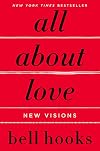
hooks shares interesting approaches and perspectives to the different facets and contexts of love, some of which resonated strongly with me and others that felt… disconnected. Irrelevant. Challenged me in a way that felt unhelpful. (I recognize that I am the problem here.) The first eight or nine chapters were interesting and engaging and helped me reflect on love and its place in the world, how it shapes and is shaped by the societies we live in. How it is an action and not a feeling, a show more choice and not happenstance. After those chapters, she lost me.
I am not a religious man, barely even a spiritual one, and that made the final third of this book a challenge. I did my best to tease out the broader ideas but I’m left with questions. The notion of romance, of finding “true love” through a resonance of souls, is supposed to be the ultimate form of salvation, of deliverance from evil or what have you. Why? How? What is so profoundly different about romantic love, however it is defined, that cannot be fulfilled by other contexts of love? (Please tell me it’s not just sex.) And if I do not believe in a god, what good will prayer do me?
Don’t get me wrong, I will be rereading this book eventually. There are several people in my life that would benefit far more than I from the ideas explored in it, and they will be hearing about it. show less
I am not a religious man, barely even a spiritual one, and that made the final third of this book a challenge. I did my best to tease out the broader ideas but I’m left with questions. The notion of romance, of finding “true love” through a resonance of souls, is supposed to be the ultimate form of salvation, of deliverance from evil or what have you. Why? How? What is so profoundly different about romantic love, however it is defined, that cannot be fulfilled by other contexts of love? (Please tell me it’s not just sex.) And if I do not believe in a god, what good will prayer do me?
Don’t get me wrong, I will be rereading this book eventually. There are several people in my life that would benefit far more than I from the ideas explored in it, and they will be hearing about it. show less
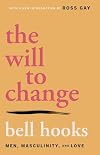
bell hooks' unflinching-yet-loving elucidation of patriarchy's ubiquitous mechanism delivers a warm blanket and an inescapable choice to a society of naked emperors: account for and combat patriarchy's proliferation, or commit agonizing suicide.
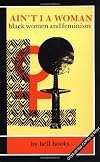
Best for: Those interested in exploring how feminism has failed at inclusivity, and how U.S. society has failed Black women.
In a nutshell: bell hooks provides a history of how racism, sexism and classism have impacted Black women in the U.S.
Line that sticks with me: “The process begins with the individual woman’s acceptance that American women, without exception, are socialized to be racist, classist, and sexist, in varying degrees, and that labeling ourselves feminists does not change show more the fact that we must consciously work to rid ourselves of the legacy of negative socialization.”
Why I chose it: I picked this for my office’s equity and social justice book club because I don’t think my feminist reading has included nearly enough of the Black woman’s perspective, and I wanted to be able to discuss this with others.
Review: I’ve somehow managed to never read any bell hooks even though I’m familiar with her importance to feminism. With this great book (which is frustratingly hard to track down in bookstores - I had to resort to ordering online) I feel like I got a more in-depth education on issues that I’ve been trying to learn more about this year.
Starting with slavery, Dr. hooks examines how racism, sexism and classism work together in impacting the experience of Black women in the U.S. For example, she explores how women who were slaves were forced to perform “masculine” tasks, but men who were slaves were not compelled to perform “feminine” tasks, and how society has spent a lot of time examining how slavery impacted the Black male psyche but has spent far less time examining how it impacted — and continues to impact — Black women.
She also looks at how the patriarchy — when combined with racism — has influenced the experience of Black women in society, eschewing the idea that Black women exist in a matriarchy simply because some households are run by women.
In the sections that might be challenging to read for white women who consider themselves feminists, Dr. hooks examines the ways in which white women have pushed black women out of discussions of sexism, seeking to maintain their status within the patriarchy as at least above Black people. She also spends time looking at how society seems to default ‘women’ to mean white women and ‘Black’ to mean Black men, leaving Black women out completely, and what the implications of that are.
I appreciated Dr. hooks's examination of how so much of feminism (as practices by white feminists) seeks not to overturn the system, but to make gains with the patriarchal, capitalist system that exists in this country. This isn’t particularly imaginative or revolutionary, and can mean that instead of fighting for true freedom, we just end up fighting with each other for material gains. I also appreciate that despite all of this, she doesn’t argue that feminism is only for white women; she sees the real benefits of it, but only when we can really fight for the freedom that feminism should bring about. I’m looking forward to discussing it at work this week.
This is a dense read (at under 200 pages it still took longer than I expected) but definitely worth it. show less
In a nutshell: bell hooks provides a history of how racism, sexism and classism have impacted Black women in the U.S.
Line that sticks with me: “The process begins with the individual woman’s acceptance that American women, without exception, are socialized to be racist, classist, and sexist, in varying degrees, and that labeling ourselves feminists does not change show more the fact that we must consciously work to rid ourselves of the legacy of negative socialization.”
Why I chose it: I picked this for my office’s equity and social justice book club because I don’t think my feminist reading has included nearly enough of the Black woman’s perspective, and I wanted to be able to discuss this with others.
Review: I’ve somehow managed to never read any bell hooks even though I’m familiar with her importance to feminism. With this great book (which is frustratingly hard to track down in bookstores - I had to resort to ordering online) I feel like I got a more in-depth education on issues that I’ve been trying to learn more about this year.
Starting with slavery, Dr. hooks examines how racism, sexism and classism work together in impacting the experience of Black women in the U.S. For example, she explores how women who were slaves were forced to perform “masculine” tasks, but men who were slaves were not compelled to perform “feminine” tasks, and how society has spent a lot of time examining how slavery impacted the Black male psyche but has spent far less time examining how it impacted — and continues to impact — Black women.
She also looks at how the patriarchy — when combined with racism — has influenced the experience of Black women in society, eschewing the idea that Black women exist in a matriarchy simply because some households are run by women.
In the sections that might be challenging to read for white women who consider themselves feminists, Dr. hooks examines the ways in which white women have pushed black women out of discussions of sexism, seeking to maintain their status within the patriarchy as at least above Black people. She also spends time looking at how society seems to default ‘women’ to mean white women and ‘Black’ to mean Black men, leaving Black women out completely, and what the implications of that are.
I appreciated Dr. hooks's examination of how so much of feminism (as practices by white feminists) seeks not to overturn the system, but to make gains with the patriarchal, capitalist system that exists in this country. This isn’t particularly imaginative or revolutionary, and can mean that instead of fighting for true freedom, we just end up fighting with each other for material gains. I also appreciate that despite all of this, she doesn’t argue that feminism is only for white women; she sees the real benefits of it, but only when we can really fight for the freedom that feminism should bring about. I’m looking forward to discussing it at work this week.
This is a dense read (at under 200 pages it still took longer than I expected) but definitely worth it. show less
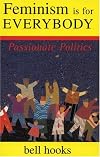
Really enjoyed reading this book. Expected a primer on Feminism and actually got a bit of a critique and history of the movement which turned out to be exactly what I wanted. While hooks may sometimes (actually rarely) stray into assertions I am uncomfortable accepting, a little contemplation on my part often reveals a core of truth in each. And for the most part, I find her to be a very convincing, erudite, and interesting writer. I'd recommend this book to just about anybody because its show more material addresses forces which affect everybody brought up in capitalist patriarchal society. show less
Lists
el (1)
Sociology (1)
Poetry Corner (1)
Read (1)
Female Author (1)
Read These Too (1)
Black Authors (4)
South End Press (3)
The Zora Canon (2)
Zora Canon (2)
Sapph-Lit (2)
Reading LIst (1)
important (1)
Taylor & Francis (1)
Awards


You May Also Like


Associated Authors
Statistics
- Works
- 84
- Also by
- 50
- Members
- 22,892
- Popularity
- #922
- Rating
- 4.1
- Reviews
- 362
- ISBNs
- 442
- Languages
- 17
- Favorited
- 76

