
Christopher A. Hall
Author of Ancient Christian Commentary on Scripture, New Testament II: Mark (Vol 2)
About the Author
Christopher A. Hall (PhD, Drew University) is the director of Renovar Institute of Christian Spiritual Formation. He is associate editor of the Ancient Christian Commentary on Scripture, and his books include Reading Scripture with the Church Fathers, Learning Theology with the Church Fathers, and show more Worshiping with the Church Fathers. show less
Image credit: InterVarsity Press
Works by Christopher A. Hall
Ancient Christian Commentary on Scripture, New Testament II: Mark (Vol 2) (1998) — Editor — 1,032 copies, 1 review
Ancient & Postmodern Christianity: Paleo-Orthodoxy in the 21st Century--Essays In Honor of Thomas C. Oden (2002) — Editor — 96 copies
Associated Works
Life in the Spirit: Spiritual Formation in Theological Perspective (2010) — Contributor — 106 copies
Talking Doctrine: Mormons and Evangelicals in Conversation (2015) — Contributor — 43 copies, 1 review
Evangelicals and the Early Church: Recovery, Reform, Renewal (Wheaton Center for Early Christian Studies) (2011) — Contributor — 12 copies
Tagged
Common Knowledge
Members
Reviews
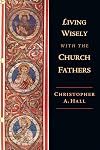
Summary: An exploration of what we might learn from the church fathers about lives well lived, touching on everything from martyrdom to entertainment.
We turn to a variety of sources to figure out how to live well, sources ranging from lists on websites, to self-help books, to mentors and "life coaches," to the scriptures. Christopher Hall, in the concluding volume of a four volume series, explores what the early fathers of the church, speaking out of a very different context than ours, can show more teach us about living wisely. Summarizing this four-part project and the focus of this final volume, Hall writes:
"What did these ancient Christians--whose thoughts and practices continue to be read, pondered, discussed, debated, and embraced today--think about the Bible, God, worship, and prayer? More importantly for this book, how did the fathers answer a very specific question: How can God's image bearer learn to live a good life, a life nourished by the values of the kingdom of God, a life of deep and lasting human flourishing, a life filled with love for God and neighbor? If, as Athanasius puts it, transgression has 'taken hold' of human beings, and 'natural corruption' now characterizes the human condition, how can God's image bearers be made right again--made right not only in our relationship to God but in relationship to one another and to the entire created order?" (p. 2)
An introduction explores the context of the fathers and the kinds of issues they confront, particularly our moral disposition and passion, concluding with the kinds of questions we might ask ourselves in the course of this study. Hall then addresses seven topics on which the fathers taught and their relevance to us:
Martyrdom
Wealth and Poverty
War and Military Service
Sex and the Dynamics of Desire
Life as Male and Female, and the Goodness and Beauty of Marriage
Life and Death
Entertainment
What Hall helps us appreciate is the distinctive message of the fathers, who speak the counsels of God from a very different cultural context than our own. For example, martyrdom was an ever present threat, one that could be avoided by an offering to the emperor, an easy ritual. Many refused, and died, even as is occurring in many parts of the world. A life of peace for Christians, assumed in the West, has often not been our lot and raises the question of whether there is any cost to our discipleship and where we might place our ultimate allegiance.
On wealth and poverty, Hall recounts a sermon of Chrysostom on Lazarus and the rich man and the issue of whether we live with discretion with our wealth, using it to bless and thus fulfilling the purpose of wealth in our lives and others. Hall helps us understand the pacifism of the early church, the uneasy change to more of a "just war" perspective post-Constantine, and challenges us to wrestle with the sometimes unequivocal refusal of the church to kill.
The following two chapters focus on sexuality, gender, and marriage. We often consider the ancients terribly repressed. Hall observes that contrary to the body-denying nature of gnosticism, the fathers recognized the realities of sexual desire, both how this might harm, and the goodness of marriage and marital sexuality. He deals honestly with the problems of linking celibacy and the priesthood in the west. He also reminds us of the significant roles of women, including Macrina, who might be numbered the "Fourth Cappadocian." Hill also points out the uncompromising opposition of the fathers to any form of homosexual intimacy.
One of the briefest, yet most pointed chapters lays out the strongly affirmative life ethic from cradle to grave in a society where abortion was commonly practiced, children abandoned, as well as the sick and dying in times of plague. The church adamantly refused to abort, rescued abandoned children and nursed the sick, at risk to themselves. Finally, in a challenge to our modern entertainment culture, often fascinated with gore, we learn of the refusal of the church to join the celebration of the violent gladiatorial games, recognizing how such things might create "dead zones" in our own lives.
The last chapter is truly a capstone, returning to the fundamental questions of how we live well. We learn of how the fathers diagnosed our problem of disordered loves and the disciplines of askesis that allow the rhythms of grace to reorder our affections in love for God and neighbor.
This work plainly whets our appetites for the fathers, and their counter-cultural message that may re-orient our perspectives and affections. Perhaps this was a part of earlier volumes, but I would have welcomed an appendix or suggested readings at the end of each chapter to go deeper with the fathers. One might track down ideas from the notes but recommendations of good editions and starting points could be helpful.
Hall has done us a great service in helping us to hear the distinctive voices of the fathers -- their writings and sermons. Not all the good books have been written in the last ten years! There is a durable heritage of wise thought rooted in scripture directed toward a concern good pastors down the ages have always had--how to help God's people enjoy God, love their neighbors and live well.
____________________________
Disclosure of Material Connection: I received a complimentary copy of this book from the publisher. I was not required to write a positive review. The opinions I have expressed are my own. show less
We turn to a variety of sources to figure out how to live well, sources ranging from lists on websites, to self-help books, to mentors and "life coaches," to the scriptures. Christopher Hall, in the concluding volume of a four volume series, explores what the early fathers of the church, speaking out of a very different context than ours, can show more teach us about living wisely. Summarizing this four-part project and the focus of this final volume, Hall writes:
"What did these ancient Christians--whose thoughts and practices continue to be read, pondered, discussed, debated, and embraced today--think about the Bible, God, worship, and prayer? More importantly for this book, how did the fathers answer a very specific question: How can God's image bearer learn to live a good life, a life nourished by the values of the kingdom of God, a life of deep and lasting human flourishing, a life filled with love for God and neighbor? If, as Athanasius puts it, transgression has 'taken hold' of human beings, and 'natural corruption' now characterizes the human condition, how can God's image bearers be made right again--made right not only in our relationship to God but in relationship to one another and to the entire created order?" (p. 2)
An introduction explores the context of the fathers and the kinds of issues they confront, particularly our moral disposition and passion, concluding with the kinds of questions we might ask ourselves in the course of this study. Hall then addresses seven topics on which the fathers taught and their relevance to us:
Martyrdom
Wealth and Poverty
War and Military Service
Sex and the Dynamics of Desire
Life as Male and Female, and the Goodness and Beauty of Marriage
Life and Death
Entertainment
What Hall helps us appreciate is the distinctive message of the fathers, who speak the counsels of God from a very different cultural context than our own. For example, martyrdom was an ever present threat, one that could be avoided by an offering to the emperor, an easy ritual. Many refused, and died, even as is occurring in many parts of the world. A life of peace for Christians, assumed in the West, has often not been our lot and raises the question of whether there is any cost to our discipleship and where we might place our ultimate allegiance.
On wealth and poverty, Hall recounts a sermon of Chrysostom on Lazarus and the rich man and the issue of whether we live with discretion with our wealth, using it to bless and thus fulfilling the purpose of wealth in our lives and others. Hall helps us understand the pacifism of the early church, the uneasy change to more of a "just war" perspective post-Constantine, and challenges us to wrestle with the sometimes unequivocal refusal of the church to kill.
The following two chapters focus on sexuality, gender, and marriage. We often consider the ancients terribly repressed. Hall observes that contrary to the body-denying nature of gnosticism, the fathers recognized the realities of sexual desire, both how this might harm, and the goodness of marriage and marital sexuality. He deals honestly with the problems of linking celibacy and the priesthood in the west. He also reminds us of the significant roles of women, including Macrina, who might be numbered the "Fourth Cappadocian." Hill also points out the uncompromising opposition of the fathers to any form of homosexual intimacy.
One of the briefest, yet most pointed chapters lays out the strongly affirmative life ethic from cradle to grave in a society where abortion was commonly practiced, children abandoned, as well as the sick and dying in times of plague. The church adamantly refused to abort, rescued abandoned children and nursed the sick, at risk to themselves. Finally, in a challenge to our modern entertainment culture, often fascinated with gore, we learn of the refusal of the church to join the celebration of the violent gladiatorial games, recognizing how such things might create "dead zones" in our own lives.
The last chapter is truly a capstone, returning to the fundamental questions of how we live well. We learn of how the fathers diagnosed our problem of disordered loves and the disciplines of askesis that allow the rhythms of grace to reorder our affections in love for God and neighbor.
This work plainly whets our appetites for the fathers, and their counter-cultural message that may re-orient our perspectives and affections. Perhaps this was a part of earlier volumes, but I would have welcomed an appendix or suggested readings at the end of each chapter to go deeper with the fathers. One might track down ideas from the notes but recommendations of good editions and starting points could be helpful.
Hall has done us a great service in helping us to hear the distinctive voices of the fathers -- their writings and sermons. Not all the good books have been written in the last ten years! There is a durable heritage of wise thought rooted in scripture directed toward a concern good pastors down the ages have always had--how to help God's people enjoy God, love their neighbors and live well.
____________________________
Disclosure of Material Connection: I received a complimentary copy of this book from the publisher. I was not required to write a positive review. The opinions I have expressed are my own. show less
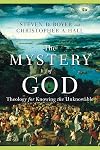
An adept, skillful exposition on the most demanding religious subject: pure theology.
The authors use two metaphors throughout in order to seek to make sense of the difficulty: the sun, which causes blindness if you look at it directly but yet its light illuminates and allows us to see everything else, which helps to show how whereas we cannot directly look upon God, through what God has revealed about Himself, we can make sense of everything else we can see; and the book Flatland and the show more concept of two-dimensional Flatlanders attempting to come to some understanding of a 3-dimensional object, showing the challenges we experience as finite, physical humans in understanding what is transcendent and spiritual.
The concept of mystery is well explored in the first section of the book, and the authors attempt to maintain the tightrope of recognizing that there is always more that we can never know about God, and how God, by His very nature, is well beyond any attempt we may make to comprehend Him, yet nevertheless He has revealed some things about Himself to us so that we might have some understanding (even if that understanding is the confession of how much we do not know!). "Mystery" is the idea of revelation, of God seeking to make Himself known in some way, and also the means by which we can come to grips with many of the aspects of God and His work and their internal tensions/seeming contradictions, that two things that to our eyes may seem contradictory might well be both true if seen in its fullness, as God sees it.
The authors then apply these ideas to the theology at hand: the Trinity, the Incarnation, salvation, prayer, and interaction with world religions. The authors' explanation of heresy regarding the Trinity as the result of men attempting to smooth out and make more "rational" what God revealed about Himself is excellent, and that the revelation of God as Triune, One in relational unity, so to speak, as well as the Incarnation, helps make the world in which we live more comprehensible (hence the sun metaphor).
The authors, as historic Protestants to some degree, leave a bit too much unfinished with their attempt to reconcile Augustinian/Calvinist insistence on God's sovereignty and Arminian insistence on human responsibility through the prism of "mystery," in which it remains possible that God remains sovereign while humans maintain a level of free will. The authors' deeper exploration of "free will" and the inherent contradictions that exist at its core is good, but no such exploration is made in terms of Calvinist notions of "sovereignty", its definition accepted prima facie instead. Likewise, the authors take total depravity as a given, having no room for human response to the Gospel, although their concept of mystery as well would explain how it could be that God has done all that is necessary for man to be saved and yet man must himself respond, accept, and pursue that salvation in Christ.
The authors do well at expressing how "theology is not just knowledge about God, but the knowledge that God himself is." Great quotes include, "knowing God is a matter not merely of analyzing data about him but of entering into him" and the response of Cyril of Jerusalem when asked why he attempted to learn more about God if God is beyond our understanding: "I am endeavoring now to glorify the Lord, not to describe him." They do well at showing how theology can never be about mastering God but instead being awed and humbled by Him, leading to glorification and praise, the essence of "worship" as usually construed.
The authors' explanation of God's impassibility is extremely valuable, especially for those of us who are a bit divorced from the Greek philosophical paradigm, and provide a robust defense of why it ought to still be considered one of God's virtues. The exploration of ascertaining correctives to our own perspectives through the critique and theology of other religions is interesting but a bit esoteric.
This review cannot do justice to the nuance and full explanatory power of the original. For those interested in theology, a must read.
**--book received as part of early review program show less
The authors use two metaphors throughout in order to seek to make sense of the difficulty: the sun, which causes blindness if you look at it directly but yet its light illuminates and allows us to see everything else, which helps to show how whereas we cannot directly look upon God, through what God has revealed about Himself, we can make sense of everything else we can see; and the book Flatland and the show more concept of two-dimensional Flatlanders attempting to come to some understanding of a 3-dimensional object, showing the challenges we experience as finite, physical humans in understanding what is transcendent and spiritual.
The concept of mystery is well explored in the first section of the book, and the authors attempt to maintain the tightrope of recognizing that there is always more that we can never know about God, and how God, by His very nature, is well beyond any attempt we may make to comprehend Him, yet nevertheless He has revealed some things about Himself to us so that we might have some understanding (even if that understanding is the confession of how much we do not know!). "Mystery" is the idea of revelation, of God seeking to make Himself known in some way, and also the means by which we can come to grips with many of the aspects of God and His work and their internal tensions/seeming contradictions, that two things that to our eyes may seem contradictory might well be both true if seen in its fullness, as God sees it.
The authors then apply these ideas to the theology at hand: the Trinity, the Incarnation, salvation, prayer, and interaction with world religions. The authors' explanation of heresy regarding the Trinity as the result of men attempting to smooth out and make more "rational" what God revealed about Himself is excellent, and that the revelation of God as Triune, One in relational unity, so to speak, as well as the Incarnation, helps make the world in which we live more comprehensible (hence the sun metaphor).
The authors, as historic Protestants to some degree, leave a bit too much unfinished with their attempt to reconcile Augustinian/Calvinist insistence on God's sovereignty and Arminian insistence on human responsibility through the prism of "mystery," in which it remains possible that God remains sovereign while humans maintain a level of free will. The authors' deeper exploration of "free will" and the inherent contradictions that exist at its core is good, but no such exploration is made in terms of Calvinist notions of "sovereignty", its definition accepted prima facie instead. Likewise, the authors take total depravity as a given, having no room for human response to the Gospel, although their concept of mystery as well would explain how it could be that God has done all that is necessary for man to be saved and yet man must himself respond, accept, and pursue that salvation in Christ.
The authors do well at expressing how "theology is not just knowledge about God, but the knowledge that God himself is." Great quotes include, "knowing God is a matter not merely of analyzing data about him but of entering into him" and the response of Cyril of Jerusalem when asked why he attempted to learn more about God if God is beyond our understanding: "I am endeavoring now to glorify the Lord, not to describe him." They do well at showing how theology can never be about mastering God but instead being awed and humbled by Him, leading to glorification and praise, the essence of "worship" as usually construed.
The authors' explanation of God's impassibility is extremely valuable, especially for those of us who are a bit divorced from the Greek philosophical paradigm, and provide a robust defense of why it ought to still be considered one of God's virtues. The exploration of ascertaining correctives to our own perspectives through the critique and theology of other religions is interesting but a bit esoteric.
This review cannot do justice to the nuance and full explanatory power of the original. For those interested in theology, a must read.
**--book received as part of early review program show less
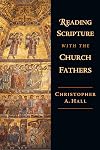
Highly recommended if the title intrigues you or if you just want a first book to start to enter historical theology. I have a very difficult time believing there is a better book out there to introduce the idea of reading with the fathers, especially at this trim 200 pages. It's not perfect, of course, but I think my wish for additional dialogue with other traditions (Hall is an Episcopalian) could only be fulfilled if this book were a whole lot longer.
Hall's book provides a neat counterpoint to Fitzmyer's. He explores how Church Fathers were both unified and at odds in how to read scripture, and how they run counter to the way biblical scholars work in the academy. His book is a description of the Antiochian and Alexandrian schools of exegesis in the first few centuries of Christianity, but also a defense of these exegetes and a call to reclaim them for today. This book is meant to serve as an overture to Hall's Ancient Christian show more Commentary on Scripture series.
The Fathers were not tenured professors writing books in private offices. They were bishops, ministers, men whose reading of the Bible was done with an eye to homiletics and to the immediate needs of the Church. Their criteria for sound exegesis did not just include critical reading skills, but also the spiritual health of the exegete: just as sin blinds one to God, it blinds one to God's Word. We should pay attention to their mode of reading scripture not just because many are saints and Church Doctors, but because of their hermeneutical and historical closeness to Christ, their ability to hear the music of scripture that falls dead on our modern ears.
Hall goes on to describe eight of the major exegetes of the ancient Church, including Augustine, Basil, John Chrysostom, Athanasius, and Jerome. In really like how he describes their personal lives and the struggles they face: struggles between a call to ascetic contemplation and a need to serve the Church, between embracing the world or seeing its brokenness, between their scholarly sensibilities and the demands of the laity and leaders they served. These were men who fought heresies, such as Gnosticism and Arianism. At the end of describing these figures Hall points to good translations of their works for popular audiences, helping to bring ancient exegetes easily into the hands of modern readers.
Hall then goes on to compare the Antiochian school of exegesis with the Alexandrian. The Alexandrian school, with such famous figures as Ireneus, Origen, and Augustine, looked to highly speculative allegorical readings of scripture. They could find the deepest symbolism in even the most prosaic Levitical laws; the cloven hoof of a goat could represent the Father and the Son, as could any binary in the Bible. To me this was reminiscent of Jungian dream interpretation: they assume that there is deep, deep meaning in every small detail of the dream, and of course find what they are searching for. Allegorical interpretation is useful for "explaining away" factual contradictions in the text or places where God seems less than Godlike. Alexandrian exegetes, responding to the Jewish skeptics of Christ's Messianship and the Gnostics' own allegorical reading, used allegory as an apologetic tool. Yet without hermeneutical constraints, allegory easily turned into a free-for-all more telling of the exegete's imagination than the text itself. Ironically, the same criticism is given to dream analysts
Antiochian exegetes such as Theophilus of Antioch or John Chrysostom were more careful. While they were not above finding figurative meaning in scripture, they were clear that no figurative reading could contradict or take precedent over the literal meaning of a text. While there were surely viscious debates between these schools, Hall leads the reader through an examination of various exegetes' comments on Jesus' saying that a rich man's attainment of salvation is harder than putting a camel through the eye of a needle. The exegetes don't differ as much as one might think. While there were some wacky allegorists (Origen comes to mind), perhaps the polemics exaggerate the issue.
Hall holds up ancient Biblical reading as a way out of two dilemmas faced in the academy. One is a modernist way of reading scripture: a rational, individual reader publishes research marked as their own corner. The other is the postmodern lapse into subjectivism. What criteria can we have for reading scripture if ultimately it's only our own solipsistic perspective? Hall's mode of returning to the Fathers, which he terms paleo-orthodoxy, provides an out by placing all scholarship in the community and needs of the Church. His readings are always theological. The Fathers unanimously read every verse of the Bible in light of Christ, whether allegorically or more literally.
While I enjoyed Hall's book, his polemics at the end seemed unnecessary. I will keep in mind that this is published by InterVarsity Press, an Evangelical group, so perhaps his appeal to tradition needs to be defended more clearly. As a Catholic it seemed redundant. But perhaps this is my own failure to understand the mindset of his audience, a mindset that might disregard any Christian writer before Luther and Calvin. (Never mind that Luther was himself a Catholic monk nurtured on the Fathers!) Despite this annoyance, Hall's book is a solid user friendly introduction to how the Fathers read scripture. show less
The Fathers were not tenured professors writing books in private offices. They were bishops, ministers, men whose reading of the Bible was done with an eye to homiletics and to the immediate needs of the Church. Their criteria for sound exegesis did not just include critical reading skills, but also the spiritual health of the exegete: just as sin blinds one to God, it blinds one to God's Word. We should pay attention to their mode of reading scripture not just because many are saints and Church Doctors, but because of their hermeneutical and historical closeness to Christ, their ability to hear the music of scripture that falls dead on our modern ears.
Hall goes on to describe eight of the major exegetes of the ancient Church, including Augustine, Basil, John Chrysostom, Athanasius, and Jerome. In really like how he describes their personal lives and the struggles they face: struggles between a call to ascetic contemplation and a need to serve the Church, between embracing the world or seeing its brokenness, between their scholarly sensibilities and the demands of the laity and leaders they served. These were men who fought heresies, such as Gnosticism and Arianism. At the end of describing these figures Hall points to good translations of their works for popular audiences, helping to bring ancient exegetes easily into the hands of modern readers.
Hall then goes on to compare the Antiochian school of exegesis with the Alexandrian. The Alexandrian school, with such famous figures as Ireneus, Origen, and Augustine, looked to highly speculative allegorical readings of scripture. They could find the deepest symbolism in even the most prosaic Levitical laws; the cloven hoof of a goat could represent the Father and the Son, as could any binary in the Bible. To me this was reminiscent of Jungian dream interpretation: they assume that there is deep, deep meaning in every small detail of the dream, and of course find what they are searching for. Allegorical interpretation is useful for "explaining away" factual contradictions in the text or places where God seems less than Godlike. Alexandrian exegetes, responding to the Jewish skeptics of Christ's Messianship and the Gnostics' own allegorical reading, used allegory as an apologetic tool. Yet without hermeneutical constraints, allegory easily turned into a free-for-all more telling of the exegete's imagination than the text itself. Ironically, the same criticism is given to dream analysts
Antiochian exegetes such as Theophilus of Antioch or John Chrysostom were more careful. While they were not above finding figurative meaning in scripture, they were clear that no figurative reading could contradict or take precedent over the literal meaning of a text. While there were surely viscious debates between these schools, Hall leads the reader through an examination of various exegetes' comments on Jesus' saying that a rich man's attainment of salvation is harder than putting a camel through the eye of a needle. The exegetes don't differ as much as one might think. While there were some wacky allegorists (Origen comes to mind), perhaps the polemics exaggerate the issue.
Hall holds up ancient Biblical reading as a way out of two dilemmas faced in the academy. One is a modernist way of reading scripture: a rational, individual reader publishes research marked as their own corner. The other is the postmodern lapse into subjectivism. What criteria can we have for reading scripture if ultimately it's only our own solipsistic perspective? Hall's mode of returning to the Fathers, which he terms paleo-orthodoxy, provides an out by placing all scholarship in the community and needs of the Church. His readings are always theological. The Fathers unanimously read every verse of the Bible in light of Christ, whether allegorically or more literally.
While I enjoyed Hall's book, his polemics at the end seemed unnecessary. I will keep in mind that this is published by InterVarsity Press, an Evangelical group, so perhaps his appeal to tradition needs to be defended more clearly. As a Catholic it seemed redundant. But perhaps this is my own failure to understand the mindset of his audience, a mindset that might disregard any Christian writer before Luther and Calvin. (Never mind that Luther was himself a Catholic monk nurtured on the Fathers!) Despite this annoyance, Hall's book is a solid user friendly introduction to how the Fathers read scripture. show less
Awards

You May Also Like


Associated Authors
Statistics
- Works
- 14
- Also by
- 5
- Members
- 3,272
- Popularity
- #7,821
- Rating
- 3.9
- Reviews
- 14
- ISBNs
- 27
- Languages
- 1
- Favorited
- 1