

Buddy Levy
Author of Conquistador: Hernan Cortes, King Montezuma, and the Last Stand of the Aztecs
About the Author
Buddy Levy is clinical associate professor of English at Washington State University.
Works by Buddy Levy
Conquistador: Hernan Cortes, King Montezuma, and the Last Stand of the Aztecs (2008) 440 copies, 19 reviews
River of Darkness: Francisco Orellana's Legendary Voyage of Death and Discovery Down the Amazon (2011) 288 copies, 8 reviews
Empire of Ice and Stone: The Disastrous and Heroic Voyage of the Karluk (2022) 205 copies, 11 reviews
Realm of Ice and Sky: Triumph, Tragedy, and History's Greatest Arctic Rescue (2024) 105 copies, 9 reviews
Associated Works
Tagged
Common Knowledge
- Canonical name
- Levy, Buddy
- Legal name
- Levy, Lynn (Buddy)
- Other names
- Levy, Lynn
- Birthdate
- 1960-02-02
- Gender
- male
- Education
- University of Idaho (B.A., 1986, M.A., 1988)
- Occupations
- Sportswriter
University of Idaho, Moscow, writing instructor, 1988-93
Washington State University, Pullman, clinical assistant professor, beginning 1991 - Nationality
- USA
- Birthplace
- New Orleans, Louisiana, USA
- Associated Place (for map)
- Louisiana, USA
Members
Reviews
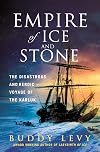
Empire of Ice and Stone: The Disastrous and Heroic Voyage of the Karluk by Buddy Levy is the very highly recommended true story of the 1913 Canadian Arctic Expedition.
When the Karluk departed Canada for the Arctic Ocean, Captain Bob Bartlett was at the helm and Vilhjalmur Stefansson was the leader of the expedition. The expedition set out in June and by early August the Karluk was icebound. Stefansson headed off with five men on a hunting trip and never returned, choosing to head for land show more and continue the expedition on his own. This left Bartlett in charge of the survivors. When the ship was crushed by the ice, they trekked 50 miles across the ice pack to Wrangel Island. Then Bartlett and an Inuit hunter set out on a 1,000 miles hike to Alaska to summon help to rescue the survivors.
Empire of Ice and Stone reads like a thriller. It is a fascinating, terrifying, and un-put-downable account of a polar expedition gone terribly wrong. Levy takes the facts and uses them to portray these people as real individuals facing a harrowing, impossible situation where a good outcome seems highly unlikely. He also clearly portrays the two different paths taken by Stefansson and Bartlett, with most of the focus on the crew trying to survive. Bartlett is legitimately the hero of this frightening true story.
Anyone who enjoys reading about Arctic expeditions will want to add Empire of Ice and Stone to their list of must read nonfiction. Included at the end is an extensive list of documents, collections, websites, etc. in a selected bibliography that showcases the research that went into writing this account. This is an excellent, well-researched book and one of the best nonfiction books of the year.
Disclosure: My review copy was courtesy of St. Martin's Press via NetGalley.
http://www.shetreadssoftly.com/2022/11/empire-of-ice-and-stone.html show less
When the Karluk departed Canada for the Arctic Ocean, Captain Bob Bartlett was at the helm and Vilhjalmur Stefansson was the leader of the expedition. The expedition set out in June and by early August the Karluk was icebound. Stefansson headed off with five men on a hunting trip and never returned, choosing to head for land show more and continue the expedition on his own. This left Bartlett in charge of the survivors. When the ship was crushed by the ice, they trekked 50 miles across the ice pack to Wrangel Island. Then Bartlett and an Inuit hunter set out on a 1,000 miles hike to Alaska to summon help to rescue the survivors.
Empire of Ice and Stone reads like a thriller. It is a fascinating, terrifying, and un-put-downable account of a polar expedition gone terribly wrong. Levy takes the facts and uses them to portray these people as real individuals facing a harrowing, impossible situation where a good outcome seems highly unlikely. He also clearly portrays the two different paths taken by Stefansson and Bartlett, with most of the focus on the crew trying to survive. Bartlett is legitimately the hero of this frightening true story.
Anyone who enjoys reading about Arctic expeditions will want to add Empire of Ice and Stone to their list of must read nonfiction. Included at the end is an extensive list of documents, collections, websites, etc. in a selected bibliography that showcases the research that went into writing this account. This is an excellent, well-researched book and one of the best nonfiction books of the year.
Disclosure: My review copy was courtesy of St. Martin's Press via NetGalley.
http://www.shetreadssoftly.com/2022/11/empire-of-ice-and-stone.html show less
I was stunned. I never expected to read about an Arctic exploration team blessed by the Pope and funded by Mussolini. How did Fascist Italy ever get involved in such an endeavor?
It was their state-of-the-art airship that was the attraction. After a hundred-plus years of sailing into the Arctic and finally reaching the North Pole, men of adventure were looking for the next big thing. The cutting edge technology of air power–airplanes and dirigibles–appeared to be the next vehicle to show more scientific discovery and fame.
The explorers of the frozen Arctic and Antarctic were the culture heroes of their time, like astronauts were in the early days of the Space Race. Of course, scientific discovery was their tacit reason, but who could deny the attraction of fame and the wealth that came with it, the newsheadlines, the income from speaking engagements and writing articles and books.
The first to use air power was explorer and newspaperman Walter Wellman. After his failure, the first man to reach the South Pole, Roald Amundsen, selected an Italian manufactured airship for his endeavor. The Italian engineer who designed the airship, Umberto Nobile, went along, and when Amundsen failed, Nobile determined to organize his own expedition, which met a most grievous end.
Such hubris! We imagine our science and technology can arm to battle nature’s gales and squalls and ice and freezing temperatures! We risk our lives and are shocked to discover our fate leads to tragedy.
Nobile’s party crashed, were separated. Men died. Hiss failure looked bad for his country and their story was suppressed and lost to time. Plus, Amundsen had flown into the Arctic searching for them, never to be seen again.
Levy again delivers a nail-biting, page-turner of an adventure story from the pages of history that reminds us of our fragility compared to the forces of nature.
Thanks to the publisher for a free book through NetGalley. show less
It was their state-of-the-art airship that was the attraction. After a hundred-plus years of sailing into the Arctic and finally reaching the North Pole, men of adventure were looking for the next big thing. The cutting edge technology of air power–airplanes and dirigibles–appeared to be the next vehicle to show more scientific discovery and fame.
The explorers of the frozen Arctic and Antarctic were the culture heroes of their time, like astronauts were in the early days of the Space Race. Of course, scientific discovery was their tacit reason, but who could deny the attraction of fame and the wealth that came with it, the newsheadlines, the income from speaking engagements and writing articles and books.
The first to use air power was explorer and newspaperman Walter Wellman. After his failure, the first man to reach the South Pole, Roald Amundsen, selected an Italian manufactured airship for his endeavor. The Italian engineer who designed the airship, Umberto Nobile, went along, and when Amundsen failed, Nobile determined to organize his own expedition, which met a most grievous end.
Such hubris! We imagine our science and technology can arm to battle nature’s gales and squalls and ice and freezing temperatures! We risk our lives and are shocked to discover our fate leads to tragedy.
Nobile’s party crashed, were separated. Men died. Hiss failure looked bad for his country and their story was suppressed and lost to time. Plus, Amundsen had flown into the Arctic searching for them, never to be seen again.
Levy again delivers a nail-biting, page-turner of an adventure story from the pages of history that reminds us of our fragility compared to the forces of nature.
Thanks to the publisher for a free book through NetGalley. show less
A little over two years ago I reviewed Buddy Levy’s book Empire of Ice and Stone, his fascinating account of the wreck of the ship the Karluk, part of the Canadian Arctic Expedition of 1913. I called that book “a well-crafted true story that reads like an action-adventure novel” and gave it five stars.
Levy is back again with a new nonfiction book that tells the story of a forgotten chapter of Arctic exploring, when the Age of the Airships took polar adventurers out of their dog sleds show more and to the North Pole.
In particular Levy tells the stories of three men - American Walter Wellman, Norwegian Roald Amundsen and Italian Umberto Nobile, the pioneers of Arctic aviation. These men all led expeditions in experimental lighter-than-air craft in attempts to reach the Pole. Together these stories form the “serial history” (the author’s words) that Levy once again turns into a well-crafted book that reads like an action-adventure novel.
Walter Wellman was an American journalist, explorer and innovator who took the first airship into the polar regions in an attempt to reach the North Pole. His story starts this book, and I found myself rooting for Wellman as he overcame obstacles and almost succeeded in his self-appointed task.
While his final voyage set numerous records, he did not make it to the North Pole. Nevertheless, the public reception when Wellman returned to America was triumphant. Contemporary adventurers and explorers however, looked down on Wellman as a failure and a showman. They felt his self-promotion through newspaper deals was a stunt and made a mockery of the “serious business” of exploring.
He remained a respected journalist throughout his life though, and Levy makes a solid case that Wellman should also be viewed as a pioneer both of polar exploration and of aviation. He set a record for longest dirigible flight up to that time, over any terrain, let alone the frozen north. He went further north by airship than anyone had before him. And he was the first Arctic explorer to report his progress to the world in real-time, using telegraphic messages sent by radio from his airship.
The stories of Roald Amundsen and Umberto Nobile are intertwined. Their partnership brought success, but their personalities could not have been more different. Amundsen, the “last Viking” was a seasoned polar explorer motivated by going where others had not been. Nobile was an airship designer and pawn of Benito Mussolini, who seemed mostly driven by career considerations within the Italian armed forces. Theirs was a marriage of convenience, and while they were successful together, they were often at odds and drew their nations into contentious rivalry. Nobile’s second attempt, without Amundson, proved a disaster to both men.
All three of these stories are compelling — just as fascinating for the courage and daring of the men involved as for the history they tell. I have to admit that I’ve read several polar exploration books over the last few years, so that when I saw yet another one was coming out I didn’t really have high expectations. But Buddy Levy has hit this one out of the park. show less
Levy is back again with a new nonfiction book that tells the story of a forgotten chapter of Arctic exploring, when the Age of the Airships took polar adventurers out of their dog sleds show more and to the North Pole.
In particular Levy tells the stories of three men - American Walter Wellman, Norwegian Roald Amundsen and Italian Umberto Nobile, the pioneers of Arctic aviation. These men all led expeditions in experimental lighter-than-air craft in attempts to reach the Pole. Together these stories form the “serial history” (the author’s words) that Levy once again turns into a well-crafted book that reads like an action-adventure novel.
Walter Wellman was an American journalist, explorer and innovator who took the first airship into the polar regions in an attempt to reach the North Pole. His story starts this book, and I found myself rooting for Wellman as he overcame obstacles and almost succeeded in his self-appointed task.
While his final voyage set numerous records, he did not make it to the North Pole. Nevertheless, the public reception when Wellman returned to America was triumphant. Contemporary adventurers and explorers however, looked down on Wellman as a failure and a showman. They felt his self-promotion through newspaper deals was a stunt and made a mockery of the “serious business” of exploring.
He remained a respected journalist throughout his life though, and Levy makes a solid case that Wellman should also be viewed as a pioneer both of polar exploration and of aviation. He set a record for longest dirigible flight up to that time, over any terrain, let alone the frozen north. He went further north by airship than anyone had before him. And he was the first Arctic explorer to report his progress to the world in real-time, using telegraphic messages sent by radio from his airship.
The stories of Roald Amundsen and Umberto Nobile are intertwined. Their partnership brought success, but their personalities could not have been more different. Amundsen, the “last Viking” was a seasoned polar explorer motivated by going where others had not been. Nobile was an airship designer and pawn of Benito Mussolini, who seemed mostly driven by career considerations within the Italian armed forces. Theirs was a marriage of convenience, and while they were successful together, they were often at odds and drew their nations into contentious rivalry. Nobile’s second attempt, without Amundson, proved a disaster to both men.
All three of these stories are compelling — just as fascinating for the courage and daring of the men involved as for the history they tell. I have to admit that I’ve read several polar exploration books over the last few years, so that when I saw yet another one was coming out I didn’t really have high expectations. But Buddy Levy has hit this one out of the park. show less
Empire of Ice and Stone should come with a warning label. Don’t read before bedtime unless you can stay up way too late. It may cause bad dreams. No matter how many blankets you pile on, you will feel an Arctic cold in your bones. Its a thrilling, harrowing true story of survival.
Buddy Levy’s newest book on the 1913 voyage of the Karluk has the adventure and bravery that I love about these tales of polar exploration, which also are about the hubris of mankind and the brutal vagaries of show more weather and climate. There are villains and men who buckle under the hardships, good men who are lost, men determined to do the impossible. And the Inuit family whose stamina and knowledge was essential to their survival.
Fame-seeking Vilhjalmur Stefansson assembled the expedition hastily and without good planning. Supplies were stowed haphazard among the ships. Within weeks, the Karluk became encased in an ice flow. Stefansson abandoned the ship under cover of going hunting for caribou, leaving the chip captain Robert Bartlett in charge.
The ship drifted westward with the ice which crushed and sank it after five months. Bartlett had planned ahead, moving necessary goods to the ice. The did not have adequate clothing and essential supplies. The men had to cross the ice to an island off the Siberian coast. They woke in the night to sudden cracks under their igloos. They had to hack paths through ice ridges. Polar bears were a constant threat. The sled dogs fatigued and supplies had to be cached along the way. Feet and hands froze and some sustained life-threatening injuries. Some of the scientific men made their own party, going off on their own, never to be seen again.
Arriving at Wrangle Island didn’t end their suffering. They had to erect shelters and they could not find enough food. The men were starving, and under duress personalities changed. Stefansson never alerted authorities of the ship’s loss, or arranged a rescue mission. Bartlett and Kataktovik had to travel across the ice to Siberia, and down the coast to find a ship to Alaska where they could arrange a rescue mission for the men. What they accomplished was amazing. They were helped by the generous Inuit and Russian traders they came across along the way.
You get to know these men intimately and suffer with them. While Stefansson left men on the Kurlak to fend for themselves, turning his attention to another expedition, it was Bartlett who worried about the crew and risked his life on an arduous trek to arrange a rescue ship to find the survivors.
This is a wonderful follow up to Levy’s last book Labyrinth of Ice about the Greeley Expedition.
I received a free ARC from the publisher. My review is fair and unbiased. show less
Buddy Levy’s newest book on the 1913 voyage of the Karluk has the adventure and bravery that I love about these tales of polar exploration, which also are about the hubris of mankind and the brutal vagaries of show more weather and climate. There are villains and men who buckle under the hardships, good men who are lost, men determined to do the impossible. And the Inuit family whose stamina and knowledge was essential to their survival.
Fame-seeking Vilhjalmur Stefansson assembled the expedition hastily and without good planning. Supplies were stowed haphazard among the ships. Within weeks, the Karluk became encased in an ice flow. Stefansson abandoned the ship under cover of going hunting for caribou, leaving the chip captain Robert Bartlett in charge.
The ship drifted westward with the ice which crushed and sank it after five months. Bartlett had planned ahead, moving necessary goods to the ice. The did not have adequate clothing and essential supplies. The men had to cross the ice to an island off the Siberian coast. They woke in the night to sudden cracks under their igloos. They had to hack paths through ice ridges. Polar bears were a constant threat. The sled dogs fatigued and supplies had to be cached along the way. Feet and hands froze and some sustained life-threatening injuries. Some of the scientific men made their own party, going off on their own, never to be seen again.
Arriving at Wrangle Island didn’t end their suffering. They had to erect shelters and they could not find enough food. The men were starving, and under duress personalities changed. Stefansson never alerted authorities of the ship’s loss, or arranged a rescue mission. Bartlett and Kataktovik had to travel across the ice to Siberia, and down the coast to find a ship to Alaska where they could arrange a rescue mission for the men. What they accomplished was amazing. They were helped by the generous Inuit and Russian traders they came across along the way.
You get to know these men intimately and suffer with them. While Stefansson left men on the Kurlak to fend for themselves, turning his attention to another expedition, it was Bartlett who worried about the crew and risked his life on an arduous trek to arrange a rescue ship to find the survivors.
This is a wonderful follow up to Levy’s last book Labyrinth of Ice about the Greeley Expedition.
I received a free ARC from the publisher. My review is fair and unbiased. show less
Lists
Awards


You May Also Like


Associated Authors
Statistics
- Works
- 9
- Also by
- 1
- Members
- 1,531
- Popularity
- #16,806
- Rating
- 4.1
- Reviews
- 59
- ISBNs
- 58
- Languages
- 7
- Favorited
- 1
