
Douglas Carlton Abrams
Author of The Book of Joy: Lasting Happiness in a Changing World
About the Author
Image credit: Susan Satcher
Series
Works by Douglas Carlton Abrams
Multi-Orgasmic Man, The 2 copies
Associated Works
The Book of Forgiving: The Fourfold Path for Healing Ourselves and Our World (2014) — Editor — 391 copies, 6 reviews
Tagged
Common Knowledge
- Birthdate
- 1966
- Gender
- male
- Education
- Stanford University (MA|1989)
- Occupations
- author
editor
literary agent - Organizations
- Idea Architects (founder)
University of California Press
HarperCollins - Short biography
- CEO of Idea Architects, Santa Cruz, CA
- Nationality
- USA
- Places of residence
- Santa Cruz, California, USA
- Associated Place (for map)
- California, USA
Members
Reviews
Goodreads Review:
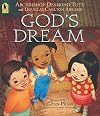
With warmth and humor, Archbishop Desmond Tutu distills his philosophy of unity and forgiveness into a picture book for the very young.
Archbishop Desmond Tutu has a vision of God's dream, which he shares here with the youngest of listeners. It involves people who reach out and hold each other's hands, but sometimes get angry and hurt each other — and say they're sorry and forgive. It's a wish that everyone will see they are brothers and sisters, no matter their way of show more speaking to God, no matter the size of their nose or the shade of their skin. Aided by vibrant artwork evoking such images as a rainbow and a sharing circle, Tutu offers the essence of his ubuntu philosophy, a wisdom so clear and crystalline that even the smallest child can understand. show less
With warmth and humor, Archbishop Desmond Tutu distills his philosophy of unity and forgiveness into a picture book for the very young.
Archbishop Desmond Tutu has a vision of God's dream, which he shares here with the youngest of listeners. It involves people who reach out and hold each other's hands, but sometimes get angry and hurt each other — and say they're sorry and forgive. It's a wish that everyone will see they are brothers and sisters, no matter their way of show more speaking to God, no matter the size of their nose or the shade of their skin. Aided by vibrant artwork evoking such images as a rainbow and a sharing circle, Tutu offers the essence of his ubuntu philosophy, a wisdom so clear and crystalline that even the smallest child can understand. show less
I wasn’t prepared for a story so moving when I first picked up EYE OF THE WHALE: A NOVEL by Douglas Carlton Abrams. The premise of the book sounded good and I had a feeling that it would be interesting, but I certainly wasn’t expecting something that would invade my dreams and keep me up at night! EYE OF THE WHALE was a great story about humans and our interaction with the world we live in. I would recommend it to anyone looking for a book that will really engage you and make you show more think.Elizabeth is our main heroine in EYE OF THE WHALE. She is a marine biologist and spends a good deal of her time studying humpback whales and more specifically their songs in relation to their behavior. In fact, she spends so much time with her beloved whales that her marriage is falling apart. Desperately wanting to keep her husband Frank by her side, she tries to find a way stay active in both her marriage and her research. When she suddenly discovers that the whale song is changing however, she finds herself drawn down into a mystery that could involve not only the survival of the whales, but also of the human race.I thought EYE OF THE WHALE was unique and captivating. Throughout the story we follow Elizabeth, Frank, other whale researchers, whalers, and even a Japanese corporation looking to promote whaling and liven up the whale market. While Abrams does write the story with a “save the whales” attitude, it also seemed like he gave us a fairly authentic look into the lives and reasoning behind those who hunt whales. I think that creating a book that was not entirely one-sided in its detail actually encouraged the story to grow and made it more realistic.One of the main things that had me hooked on EYE OF THE WHALE was how Abrams brought the whales to life. There are sections of the book where we actually become the whales and see the world through their eyes. While the story didn’t necessarily incorporate the element of magic, I think that becoming one with the whales and taking a peek into their minds did add that magical touch to the book. It allowed the reader to view things not only from the human side, but also from under the water where the world is completely different.EYE OF THE WHALE is a wonderfully complex and deep tale. I’ve discovered that often, when a story becomes this involved, the character development might suffer. In my opinion that is not the case here. Each character was wonderfully developed, creating additional depth in the story and rounding it out nicely. Outside of the main plot, we get to learn each main character’s hopes and dreams, the motivation behind their actions, and what has helped to shape them into the person that they are. Great characters really help to make a book real and keep me engaged; Abrams aced this.Lastly, for me, the mark of a truly great author is the ability to draw an emotion out of me simply with some words set on a piece of paper. There were times when the tension in the book had me on the edge of my seat. There were other times when I was so captivated with the moving details of the story that an hour would go by and I wouldn’t even realize it. Tender moments, devastating ones; they were all within the story. Abrams is a truly wonderful writer who knows just what to do to shape that finicky thing we call emotion.As I mentioned earlier, I would recommend this book to anyone looking for something to make you think or make you feel. I think that animal lovers should really love EYE OF THE WHALE as well as Romance fans. Although romance is not the main characteristic of EYE OF THE WHALE, it is there and adds that delicious touch to an already great story. show less
***received as an ARC from the publisher
I’m SO not the person who reads self-help books, collections of affirmations, or even most books that fall into the memoir/autobiography category, but I figured that I would give Jane Goodall’s new book a try after the publishers sent it to me, and surprisingly I quite enjoyed it! Formatted like a longform conversation (with some exposition) between Goodall and co-author Douglas Abrams, the book has a cosy sort of feeling, like you’re hanging out show more talking about the big ideas in the world with two of your close friends over a cup of good coffee - or in Goodall’s case, a glass of fine whiskey. Foremost of the ideas discussed by Goodall and Abrams is the titular idea of hope - something that seems to be in far too short a supply in the trying times that we live in. After the year we’ve had in my hometown, being hit hard by COVID-19, an inevitable economic downturn, and a summer spent surrounded by monumental forest fires, the book hit a bit harder than I expected, since all of the major ideas that Jane is trying to help have taken on a very personal note. And yet, even in these darkest of times, the concept of hope is one that doesn’t seem to have really gone away. Day to day may be a struggle, but when it comes down to it, we’re still doing what we can to make a better world for tomorrow. At least that’s my hope. I don’t know if this book adds up to its promise of being “a survival guide for trying times,” but it definitely has a little spark driven by Jane’s seemingly endless personal hope, and her matter of fact discussion of how the world keeps turning in its many ways (no matter what) make it well worth the read. show less
I’m SO not the person who reads self-help books, collections of affirmations, or even most books that fall into the memoir/autobiography category, but I figured that I would give Jane Goodall’s new book a try after the publishers sent it to me, and surprisingly I quite enjoyed it! Formatted like a longform conversation (with some exposition) between Goodall and co-author Douglas Abrams, the book has a cosy sort of feeling, like you’re hanging out show more talking about the big ideas in the world with two of your close friends over a cup of good coffee - or in Goodall’s case, a glass of fine whiskey. Foremost of the ideas discussed by Goodall and Abrams is the titular idea of hope - something that seems to be in far too short a supply in the trying times that we live in. After the year we’ve had in my hometown, being hit hard by COVID-19, an inevitable economic downturn, and a summer spent surrounded by monumental forest fires, the book hit a bit harder than I expected, since all of the major ideas that Jane is trying to help have taken on a very personal note. And yet, even in these darkest of times, the concept of hope is one that doesn’t seem to have really gone away. Day to day may be a struggle, but when it comes down to it, we’re still doing what we can to make a better world for tomorrow. At least that’s my hope. I don’t know if this book adds up to its promise of being “a survival guide for trying times,” but it definitely has a little spark driven by Jane’s seemingly endless personal hope, and her matter of fact discussion of how the world keeps turning in its many ways (no matter what) make it well worth the read. show less
Before reading The Lost Diary of Don Juan, the infamous title character was nothing more than a name to me. From a mere caricature, Abrams has skillfully created a character who is richly complex and multi-layered. As I read the eloquently written pages of Don Juan's diary, it was impossible not to be drawn into his libertine life and the intrigues of the city of Seville in 1593.
With beautiful, readable prose, Abrams paints a vivid picture of late 16th century Spain. The descriptions have a show more very cinematic feel. I could visualize the walled courtyard of a nobleman's home, and the dark, dank interior of Don Juan's favorite tavern. I could feel the velvet fabric of his maroon doublet. I could smell the faint, seductive orange-apricot scent of a woman's perfume. The prose tends to feel a little flowery and euphemistic when describing Don Juan's many and varied sexual encounters, the upside of this being that the subject matter is thus handled in a manner that is inoffensive to a broader audience.
The Spanish Inquisition was going strong in 1593, creating a sinister atmosphere in Seville which Abrams conveys well. His Inquisitor is a cruel, dark, ominous figure. The reader will sense that treachery and betrayal are rampant in Don Juan's world. Because of this, the trustworthy few - a nun or priest here, a loyal coachman there - feel all the more significant and engaging as supporting characters. show less
With beautiful, readable prose, Abrams paints a vivid picture of late 16th century Spain. The descriptions have a show more very cinematic feel. I could visualize the walled courtyard of a nobleman's home, and the dark, dank interior of Don Juan's favorite tavern. I could feel the velvet fabric of his maroon doublet. I could smell the faint, seductive orange-apricot scent of a woman's perfume. The prose tends to feel a little flowery and euphemistic when describing Don Juan's many and varied sexual encounters, the upside of this being that the subject matter is thus handled in a manner that is inoffensive to a broader audience.
The Spanish Inquisition was going strong in 1593, creating a sinister atmosphere in Seville which Abrams conveys well. His Inquisitor is a cruel, dark, ominous figure. The reader will sense that treachery and betrayal are rampant in Don Juan's world. Because of this, the trustworthy few - a nun or priest here, a loyal coachman there - feel all the more significant and engaging as supporting characters. show less
Lists
Awards


You May Also Like


Associated Authors
Statistics
- Works
- 12
- Also by
- 4
- Members
- 3,535
- Popularity
- #7,185
- Rating
- 4.1
- Reviews
- 108
- ISBNs
- 93
- Languages
- 12
- Favorited
- 1