
Dominic Smith (1) (1971–)
Author of The Last Painting of Sara de Vos
For other authors named Dominic Smith, see the disambiguation page.
About the Author
Dominic Smith grew up in Sydney, Australia and now lives in Austin, Texas. Smith earned an MFA in writing from the Michener Center for Writers at the University of Texas at Austin. His writing has been nominate for a Pushcart Prize and appeared in numerous journals and magazines, including The show more Atlantic Monthly. Dominic's writing has received several awards including the Dobie Paisano Fellowship, the Sherwood Anderson Fiction Prize, and the Gulf Coast Fiction Prize. His debut novel The Mercury Visions of Louis Daguerre was selected for the Barnes and Noble Discover Great New Writers Program. It also received the Steven Turner Prize for First Fiction from the Texas Institute of Letters. Dominic's second novel, The Beautiful Miscellaneous, was optioned for a film by Southpaw Entertainment. His third novel-Bright and Distant Shores was published in 2011 and was shortlisted for The Age Book of the Year and the Vance Palmer Prize, two of Australia's foremost literary awards. His most recent book is The Last Painting of Sara De Vos (2016). It won the 2017 2017 Indie Book Award for Fiction. Dominic serves as a faculty of the Warren Wilson MFA Program for Writers and has taught recently at the University of Texas at Austin and Southern Methodist University. (Bowker Author Biography) show less
Works by Dominic Smith
Nuts 2007, No. 13 2 copies
Tagged
Common Knowledge
- Birthdate
- 1971
- Gender
- male
- Nationality
- Australia (birth)
USA - Birthplace
- Brisbane, Queensland, Australia
- Associated Place (for map)
- Queensland, Australia
Members
Reviews
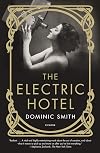
The Electric Hotel by Dominic Smith is an evocative richly detailed story of the earliest days of filmmaking featuring pivotal encounters with historic figures such as the Lumiere brothers and Thomas Edison while taking place in prominent historic film centers of yesterday and today including Paris, Australia, New York, New Jersey, and of course Hollywood. The story begins in the Hollywood in the early sixties when a young academic tracks down Claude Ballard to ask what became of him and his show more legendary lost film The Electric Hotel. After some persuading Claude decides to tell the whole story starting with his days in Paris as a photographer supporting his sister slowly dying of consumption when his life was upended in 1895 in the basement of a Paris hotel. "When Claude recalled seeing those first Lumiere reels"..."he closed his eyes and smelled the warming nitrates of the celluloid." Transformed by the experience Claude signs up to be a cameraman representative of the Lumiere Brothers both creating new views, as he calls the brief early films, and exhibiting them while promoting the Lumiere products. With his sister's encouragement Claude captures on film her last breath as she dies before his camera. Claude's travels eventually take him to New York where he will first encounter his future business partner, a youngster on the make, Hal Bender, and his muse, "who would later maul him like a tiger", actress Sabine Montrose and as "Claude would say, the genesis of our troubled moviemaking family." Claude comes to Sabine's attention when her performance as Hamlet is disrupted by applause for Claude's film views being projected in an adjacent part of the theater. Claude is invited to Sabine's hotel to screen his film views in private for her and her colleagues. This leads to a night together that will transform Claude's emotional life and affect both of them in the future. After agreeing to share thirty percent of the proceeds Claude captures a view of Sabine as she gracefully rises out of a bubble bath before departing for Australia. First we learn about Hal Bender as he hustles for his family amusement parlor in Brooklyn that doubles as the home and support of himself, his younger brothers, and mother in the wake of their father's death. In Australia Chip Spaulding becomes the final member introduced in the "troubled moviemaking family" when Claude films the young daredevil taking a fiery plunge in Sydney as part of a water amusement at the Royal Aquarium and Pleasure Grounds. Claude having recruited Chip to act as his assistant and featured performer they work their way back to America and New York City where Sabine has returned from Europe and Hal Bender is excited or organize a special show with Claude and Sabine as special guests. Author Dominic Smith then traces the troupes' growing success as Claude creates and shoots their scenarios as they grow in length and sophistication with Sabine as their star and Chip providing stunts and Hal organizing financing until they purchase land and build their own studio across the Hudson River on the Palisades of New Jersey right in the shadow of Thomas Edison and the agents who enforce his patents on motion pictures. Claude embarks on their most ambitious photoplay The Electric Hotel a multi-reel epic at an unheard of 60 minutes to be projected in a theater when the average picture was less then 20 minutes and viewed at a Nickelodeon. All this to channel Claude's frustrated romantic obsession with Sabine by having her play a murderous consumptive widow who must be destroyed. As happens with passion projects Hal finds he needs go into debt to complete the picture, against all odds, they do followed by a successful premiere with the promise of recouping their investment, when disaster strikes in the form of Edison and his patent agents. In the financial chaos that follows Sabine vanishes while Claude, Chip, and Hal stick together making what films they can while dodging financial creditors. When war breaks out in Europe the trio follow to document the events only to have their troupe sundered further as they are swept up in the horror and carnage. Resolutions will follow for all the characters, although some will not come until returning to the framing story years later in Hollywood.
Author Dominic Smith is clearly fascinated by the history of image making, as a previous novel was The Mercury Visions of Louis Daguerre and his development of the eponymous daguerreotype process photography, and he puts his deep research on display as he follows his characters across years as film develops as a medium from impactful images being as simple as a train arriving in a station and a couple embracing with a kiss to advances in visual narrative length and sophistication to documentary horrors of a world at war. As a New Jersey native I particularly enjoyed the central part of the story taking place at a studio on the Palisades which was used as one of the first backlots for movie making. My only quibbles are I think the framing story, which does have interesting incidents, disrupts the narrative flow plus as the viewpoint character I found Claude to be the least dynamic of the three as I think the book could have been even richer if Smith had told parts of the story from the perspectives of Sabine, Chip, and Hal. Still a wonderful voyage through the earliest years in history and development of film as a medium and an artform.
The book includes an Author's Note about the title - "The Electric Hotel is the name of a silent "trick film" made by the early Spanish director Segundo de Chomon and released as El hotel electrico in 1908." show less
Author Dominic Smith is clearly fascinated by the history of image making, as a previous novel was The Mercury Visions of Louis Daguerre and his development of the eponymous daguerreotype process photography, and he puts his deep research on display as he follows his characters across years as film develops as a medium from impactful images being as simple as a train arriving in a station and a couple embracing with a kiss to advances in visual narrative length and sophistication to documentary horrors of a world at war. As a New Jersey native I particularly enjoyed the central part of the story taking place at a studio on the Palisades which was used as one of the first backlots for movie making. My only quibbles are I think the framing story, which does have interesting incidents, disrupts the narrative flow plus as the viewpoint character I found Claude to be the least dynamic of the three as I think the book could have been even richer if Smith had told parts of the story from the perspectives of Sabine, Chip, and Hal. Still a wonderful voyage through the earliest years in history and development of film as a medium and an artform.
The book includes an Author's Note about the title - "The Electric Hotel is the name of a silent "trick film" made by the early Spanish director Segundo de Chomon and released as El hotel electrico in 1908." show less
I listened to this book in audiobook format, unabridged. About halfway through, though, I did something I rarely do: I borrowed a hard copy from the library as well, as there were parts I wanted to look back at and that is the one thing that is not easy to do with an audiobook. This proved to be a good decision.
This is almost time travel story. In 1631, Sara de Vos is the wife of a landscape painter, and is a talented painter in her own right, the first woman admitted to Amsterdam's Guild of show more master painters. Although women usually only paint indoor still lifes, Sara is mesmerized by a scene she has witnessed of a lone girl standing beside the river, watching skaters at dusk, and decided to paint it. After the sudden death of their young daughter, the life that Sara and her husband lead begins to unravel and eventually, comes apart. The painting, however, survives. Fast forward to the 1950s, where a wealthy New York lawyer, Marty de Groot, has owned the painting that has been in family for generations. It hangs over his bed until one day, he suddenly discovers that it has been replaced by a forged copy. The mystery of how or even when, this happened, or where the original might be, obsesses him and he hires a private detective to try to find out. The events that lead him to the truth haunt him in ways that he could not have expected. It isn't until the year 2000 that the circle closes, that the forger and Marty make peace.
Throughout the book, the chapters alternate between Sara's story and Marty's story (as well as Ellie -- the forger's -- story). I have to say, the reader of this audiobook, Edoardo Ballerini, is excellent. His voice is quiet, understated but eloquent and he is masterful at accents and giving voice to the characters. But most of all, the writing is beautiful. I want to include just 2 short excerpts here, from the very end of the book, as a sample:
"The cold air burns her cheeks as she skates along, pushing into long glides, her hands behind her back, the sound of her skate blades like the sharpening of a knife on a whetstone. She wants to skate for miles, to fall until midnight into this bracing pleasure. The bare trees glitter with ice along the riverbank, a complement to the inking stars. The night feels unpeeled, as if she's burrowed into its flesh. Here is the bone and armature, the trees holding up the sky like the ribs of a ship, the ice hardening the river into a mirror too dull to see the sky's full reflection. Everything flits by except the sky and her thoughts, both of which seem to widen and gyre in a loose, clockwise procession...Everything is strung together on the line of her skates, swooping curves and perfect delineations of her wistful thinking. She is light upon the ice, a weightless passenger."
"Every work is a depiction and a lie. We rearrange the living, exaggerate the light, intimate dusk when it's really noonday sun..." show less
This is almost time travel story. In 1631, Sara de Vos is the wife of a landscape painter, and is a talented painter in her own right, the first woman admitted to Amsterdam's Guild of show more master painters. Although women usually only paint indoor still lifes, Sara is mesmerized by a scene she has witnessed of a lone girl standing beside the river, watching skaters at dusk, and decided to paint it. After the sudden death of their young daughter, the life that Sara and her husband lead begins to unravel and eventually, comes apart. The painting, however, survives. Fast forward to the 1950s, where a wealthy New York lawyer, Marty de Groot, has owned the painting that has been in family for generations. It hangs over his bed until one day, he suddenly discovers that it has been replaced by a forged copy. The mystery of how or even when, this happened, or where the original might be, obsesses him and he hires a private detective to try to find out. The events that lead him to the truth haunt him in ways that he could not have expected. It isn't until the year 2000 that the circle closes, that the forger and Marty make peace.
Throughout the book, the chapters alternate between Sara's story and Marty's story (as well as Ellie -- the forger's -- story). I have to say, the reader of this audiobook, Edoardo Ballerini, is excellent. His voice is quiet, understated but eloquent and he is masterful at accents and giving voice to the characters. But most of all, the writing is beautiful. I want to include just 2 short excerpts here, from the very end of the book, as a sample:
"The cold air burns her cheeks as she skates along, pushing into long glides, her hands behind her back, the sound of her skate blades like the sharpening of a knife on a whetstone. She wants to skate for miles, to fall until midnight into this bracing pleasure. The bare trees glitter with ice along the riverbank, a complement to the inking stars. The night feels unpeeled, as if she's burrowed into its flesh. Here is the bone and armature, the trees holding up the sky like the ribs of a ship, the ice hardening the river into a mirror too dull to see the sky's full reflection. Everything flits by except the sky and her thoughts, both of which seem to widen and gyre in a loose, clockwise procession...Everything is strung together on the line of her skates, swooping curves and perfect delineations of her wistful thinking. She is light upon the ice, a weightless passenger."
"Every work is a depiction and a lie. We rearrange the living, exaggerate the light, intimate dusk when it's really noonday sun..." show less
I recently finished Dominic Smith’s latest book, Return to Valetto, and I enjoyed it so much that I decided to read an earlier novel of his which I had been on my to-read pile for quite some time.
The Last Painting of Sara de Vos covers three time periods in three different continents. In New York in 1957, Marty de Groot is robbed of the sole painting attributed to Sara de Vos and left with a “meticulous fake.” Entitled “At the Edge of a Wood,” the painting has been in his family show more for over 300 years. Marty hires a private detective who discovers that the forger was a graduate student of art history, Ellie Shipley. Marty adopts an alias, Jake Alpert, to entrap Ellie.
In 1637 in Amsterdam, Sara de Vos, the first woman to be admitted into St. Luke’s guild of master painters, paints “At the Edge of a Wood” to help her cope with an unimaginable loss.
In 2000, in Sydney, Australia, Ellie Shipley, now a renowned art historian, awaits the arrival of two paintings entitled “At the Edge of a Wood,” one the original and one the forgery she herself painted almost 50 years earlier. One is coming from the Netherlands and one is being personally delivered by Marty de Groot.
There is sufficient suspense to engage the reader throughout. What will Marty do when he uncovers the identity of the forger? Did Sara de Vos paint only this one painting? Will Ellie’s crime be revealed and her reputation ruined and career destroyed?
Lovers of art will certainly enjoy this book which examines one painting’s impact on people hundreds of years after its creation. Personally I loved the parallels between a painting’s canvas and the canvas of a person’s life. The painting process, and restoration process too, involves the layering of paints just as over a lifetime, we layer on experiences which shape our lives. The canvases of people’s lives show layers of grime, damage, and the effects of time, so the past cannot be totally escaped.
Ellie, for instance, after agreeing to “copy” de Vos, has worked hard to hide that choice but “The forgery didn’t stop after she’d handed off the canvas, it continued into the unfolding of years – the plush academic job, the marriage to an art dealer, the publications and curating of exhibits, none of these spoils would have been offered if anyone knew what she’d done. . . . She never stopped painting the beautiful fake.” Marty admits that he “carries the past around like a bottle of antacids in his pocket. . . . You live among the ruins of the past, carry them in your pockets, wishing you’d been decent and loving and talented and brave.”
I enjoyed the stories of all three characters, especially the examination of their motives. Anger in fact connects all three: Sara is angry at her husband’s choices, Marty is angry at “those who wronged him,” and Ellie “recognized her own recurring anger at being overlooked.” When there are multiple main characters in a novel, I often find one of the narratives less appealing, but that is not the case here. All three emerge as distinct characters, with both flaws and redeeming qualities, and interesting backstories.
On a personal note, I began reading this novel while on a visit to family in the Netherlands so I loved the description of the Dutch “sturdy, unflappable manner and their occasional brusqueness.” We visited the seaside village of Zoutelande in the province of Zeeland so I enjoyed the references to “the dunes of Zeeland” where “German tourists can bunk down with their entire brood” since I climbed those dunes and discovered that German is the second language in that area.
This is a wonderful book which touches on so many human impulses and emotions: anger, ambition, revenge, deceit, regret. Full of suspense and memorable characters, it is a work of both creativity and meticulous research. I highly recommend it.
Note: Please check out my reader's blog (https://schatjesshelves.blogspot.com/) and follow me on Twitter (@DCYakabuski). show less
The Last Painting of Sara de Vos covers three time periods in three different continents. In New York in 1957, Marty de Groot is robbed of the sole painting attributed to Sara de Vos and left with a “meticulous fake.” Entitled “At the Edge of a Wood,” the painting has been in his family show more for over 300 years. Marty hires a private detective who discovers that the forger was a graduate student of art history, Ellie Shipley. Marty adopts an alias, Jake Alpert, to entrap Ellie.
In 1637 in Amsterdam, Sara de Vos, the first woman to be admitted into St. Luke’s guild of master painters, paints “At the Edge of a Wood” to help her cope with an unimaginable loss.
In 2000, in Sydney, Australia, Ellie Shipley, now a renowned art historian, awaits the arrival of two paintings entitled “At the Edge of a Wood,” one the original and one the forgery she herself painted almost 50 years earlier. One is coming from the Netherlands and one is being personally delivered by Marty de Groot.
There is sufficient suspense to engage the reader throughout. What will Marty do when he uncovers the identity of the forger? Did Sara de Vos paint only this one painting? Will Ellie’s crime be revealed and her reputation ruined and career destroyed?
Lovers of art will certainly enjoy this book which examines one painting’s impact on people hundreds of years after its creation. Personally I loved the parallels between a painting’s canvas and the canvas of a person’s life. The painting process, and restoration process too, involves the layering of paints just as over a lifetime, we layer on experiences which shape our lives. The canvases of people’s lives show layers of grime, damage, and the effects of time, so the past cannot be totally escaped.
Ellie, for instance, after agreeing to “copy” de Vos, has worked hard to hide that choice but “The forgery didn’t stop after she’d handed off the canvas, it continued into the unfolding of years – the plush academic job, the marriage to an art dealer, the publications and curating of exhibits, none of these spoils would have been offered if anyone knew what she’d done. . . . She never stopped painting the beautiful fake.” Marty admits that he “carries the past around like a bottle of antacids in his pocket. . . . You live among the ruins of the past, carry them in your pockets, wishing you’d been decent and loving and talented and brave.”
I enjoyed the stories of all three characters, especially the examination of their motives. Anger in fact connects all three: Sara is angry at her husband’s choices, Marty is angry at “those who wronged him,” and Ellie “recognized her own recurring anger at being overlooked.” When there are multiple main characters in a novel, I often find one of the narratives less appealing, but that is not the case here. All three emerge as distinct characters, with both flaws and redeeming qualities, and interesting backstories.
On a personal note, I began reading this novel while on a visit to family in the Netherlands so I loved the description of the Dutch “sturdy, unflappable manner and their occasional brusqueness.” We visited the seaside village of Zoutelande in the province of Zeeland so I enjoyed the references to “the dunes of Zeeland” where “German tourists can bunk down with their entire brood” since I climbed those dunes and discovered that German is the second language in that area.
This is a wonderful book which touches on so many human impulses and emotions: anger, ambition, revenge, deceit, regret. Full of suspense and memorable characters, it is a work of both creativity and meticulous research. I highly recommend it.
Note: Please check out my reader's blog (https://schatjesshelves.blogspot.com/) and follow me on Twitter (@DCYakabuski). show less
I thoroughly enjoyed this account of a fictional (though based on a conglomeration of historical figures) woman painter in the 1600s - the Dutch Golden Age of painting. [[Dominic Smith]] weaves together the little known life of Sara de Vos with a modern day story of the relationship between a woman art forger/historian and the man who owns the work she forges (Sara de Vos's painting).
Usually in these sorts of novels I get annoyed with the modern-day part and just want to read the historical show more part, but I actually enjoyed both parts equally here. I also though Smith hit just the right note in describing the paintings without being overly wordy or pretentious. He also cleverly works noting light patterns and the visual world of a painters into the story without interrupting the flow of the book or being overly obvious.
I really enjoyed this. Thanks to the LT members who have recommended it! show less
Usually in these sorts of novels I get annoyed with the modern-day part and just want to read the historical show more part, but I actually enjoyed both parts equally here. I also though Smith hit just the right note in describing the paintings without being overly wordy or pretentious. He also cleverly works noting light patterns and the visual world of a painters into the story without interrupting the flow of the book or being overly obvious.
I really enjoyed this. Thanks to the LT members who have recommended it! show less
Lists
Awards


You May Also Like


Associated Authors
Statistics
- Works
- 6
- Members
- 2,127
- Popularity
- #12,104
- Rating
- 3.8
- Reviews
- 113
- ISBNs
- 116
- Languages
- 6
- Favorited
- 1
