
Ellen J. Prager
Author of Sex, Drugs, and Sea Slime: The Oceans' Oddest Creatures and Why They Matter
About the Author
Ellen J. Prager is currently science advisor at the world's only undersea research station, Aquarius Reef Base in the Florida Keys, and a freelance writer. Among her publications are the Oceans and Furious Earth: The Science and Nature of Earthquakes, Volcanoes, and Tsunamis; a series of children's show more books including Sand, Volcano, and Earthquakes with the National Geographic Society; and a children's novel, Adventure on Dolphin Island. show less
Image credit: http://www.earth2ocean.net/
Works by Ellen J. Prager
Sex, Drugs, and Sea Slime: The Oceans' Oddest Creatures and Why They Matter (2011) 124 copies, 2 reviews
Chasing Science at Sea: Racing Hurricanes, Stalking Sharks, and Living Undersea with Ocean Experts (2008) 36 copies, 3 reviews
Dangerous Earth: What We Wish We Knew about Volcanoes, Hurricanes, Climate Change, Earthquakes, and More (2020) 21 copies, 1 review
Tagged
Common Knowledge
- Gender
- female
- Relationships
- Jones, Dave (partner)
Members
Reviews
Chasing science at sea : Racing hurricanes, stalking sharks, and living undersea with ocean experts by Ellen Prager
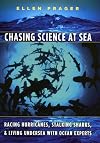
Prager has a noble purpose in this book: to convey the excitement and adventure of doing science, and specifically of doing ocean science fieldwork, through telling the stories of the experiences of ocean-going scientists. To a fair degree she succeeds, but not entirely. This feels more like a collection of anecdotes than a collection of stories--but some of them are, no question, great anecdotes! I'm reminded of Randy Olson's Don't Be Such a Scientist, in the sense that I would wonder if show more she had read it, and were working at applying his advice, except that her book was published first.
The book is arranged in thematic chapters, highlighting the challenges of ocean-going shipboard research, diving in coastal waters, the effects of weather in making hay of the best-laid plans, the benefits of serendipity and of direct observation in making critical discoveries that would elude remote observation using ROVs and AUVs (remotely-operated vessels and autonomous underwater vessels) to do deep ocean exploration and research, the joys and challenges of life in underwater habitats, and the sheer delight and wonder of seeing the undersea world first-hand.
Prager was previously the chief scientist for the Aquarius Reef Base program in Key Largo, Florida, which includes what is currently the world's only undersea research station. Some of her best tales include the challenges, dangers, and rewards of living in an undersea research station, able to dive and do active research for eight or nine hours a day. She also shares her own and other scientists' stories of surviving dangerous weather at sea on the ocean-going research ships of the Sea Education Association--hurricanes, waterspouts, sudden squalls, and even an encounter with pirates. There's a disarming honesty about the role played by simply human mistakes and errors in judgment in contributing to dangerous situations, as well as human ingenuity in surviving the dangers and recovering and doing useful research anyway. She seems to take a special glee in describing her own early experiences, including her own mistakes that sometimes placed herself and others in danger. Prager learned the hard way to check everything twice, including whether or not colleagues had actually done their part in the preparations.
On the other hand, she also learned the joy of making unexpected discoveries for herself, whether or not those discoveries proved to be ones that would move the science forward in a big way, and she talks about her passion for sharing that joy with students who may yet become scientists themselves. This is one of the two major things Prager is seeking to convey in this book: the joy, delight, and pure satisfaction of doing real fieldwork at sea.
The other major point she wants to convey is the importance of real fieldwork, the vital necessity of doing direct fieldwork to build a real understanding of the ocean that is three-quarters of the surface of our planet, a major source of both food and weather affecting us all. She and her colleagues are deeply worried about what essential knowledge we might miss, if the difficulties, expense, and dangers of underwater fieldwork cause us to cease doing it, and she returns again and again to this issue.
Recommended despite my reservations.
I received this ebook as a free download from the University of Chicago Press. show less
The book is arranged in thematic chapters, highlighting the challenges of ocean-going shipboard research, diving in coastal waters, the effects of weather in making hay of the best-laid plans, the benefits of serendipity and of direct observation in making critical discoveries that would elude remote observation using ROVs and AUVs (remotely-operated vessels and autonomous underwater vessels) to do deep ocean exploration and research, the joys and challenges of life in underwater habitats, and the sheer delight and wonder of seeing the undersea world first-hand.
Prager was previously the chief scientist for the Aquarius Reef Base program in Key Largo, Florida, which includes what is currently the world's only undersea research station. Some of her best tales include the challenges, dangers, and rewards of living in an undersea research station, able to dive and do active research for eight or nine hours a day. She also shares her own and other scientists' stories of surviving dangerous weather at sea on the ocean-going research ships of the Sea Education Association--hurricanes, waterspouts, sudden squalls, and even an encounter with pirates. There's a disarming honesty about the role played by simply human mistakes and errors in judgment in contributing to dangerous situations, as well as human ingenuity in surviving the dangers and recovering and doing useful research anyway. She seems to take a special glee in describing her own early experiences, including her own mistakes that sometimes placed herself and others in danger. Prager learned the hard way to check everything twice, including whether or not colleagues had actually done their part in the preparations.
On the other hand, she also learned the joy of making unexpected discoveries for herself, whether or not those discoveries proved to be ones that would move the science forward in a big way, and she talks about her passion for sharing that joy with students who may yet become scientists themselves. This is one of the two major things Prager is seeking to convey in this book: the joy, delight, and pure satisfaction of doing real fieldwork at sea.
The other major point she wants to convey is the importance of real fieldwork, the vital necessity of doing direct fieldwork to build a real understanding of the ocean that is three-quarters of the surface of our planet, a major source of both food and weather affecting us all. She and her colleagues are deeply worried about what essential knowledge we might miss, if the difficulties, expense, and dangers of underwater fieldwork cause us to cease doing it, and she returns again and again to this issue.
Recommended despite my reservations.
I received this ebook as a free download from the University of Chicago Press. show less
Dangerous Earth: What We Wish We Knew about Volcanoes, Hurricanes, Climate Change, Earthquakes, and More by Ellen Prager
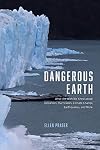
Inconsistent Bordering On Hypocritical. This book is divided into just five chapters - Climate Change, Volcanoes, Earthquakes, Hurricanes, and (effectively "Other") Rogue Waves, Landslides, Rip Currents, Sinkholes, and Sharks. Thus, there really is a considerable amount of detail put into explaining each phenomenon and purportedly what is known and unknown and wished to be known about each. The analysis is largely lacking, however, and Prager tends to blame everything on climate change, show more which she speaks of in absolutist terms. (Indeed, at least twice she outright claims there is "no credible scientific debate" on the issue, despite there being quite a bit.) She tends to blame the rising costs of coastal damage in particular on her preferred bogeyman, despite at least one other work published within the last year (Geography of Risk by Gilbert Saul) building a compelling case that it is actually an increase in coastal development that has led to much of the rising cost of coastal damages - quite simply, there wasn't much on the coasts a century ago to *be* damaged. But Prager doesn't even consider this factor at all.
Where she seemingly is unaware of her inconsistency bordering on hypocrisy is when she claims repeatedly that we have more than enough information in the historical record to "confirm" climate change... yet claims with near the same frequency when discussing volcanoes and earthquakes that we simply don't have enough information in the *geologic* historical record to be able to make any significant determinations. Hmmm...
Recommended for the mostly detailed discussions, but be prepared to have about a boulder of salt in some passages.
(I don't remember if this publisher requested it, but just in case, some legalese that I despise but try to tag on when requested: This book publishes in March 2020 and I am writing this review 10 days before Christmas 2019. Thus, this is very obviously an Advance Review Copy. All opinions are completely my own and freely given.) show less
Where she seemingly is unaware of her inconsistency bordering on hypocrisy is when she claims repeatedly that we have more than enough information in the historical record to "confirm" climate change... yet claims with near the same frequency when discussing volcanoes and earthquakes that we simply don't have enough information in the *geologic* historical record to be able to make any significant determinations. Hmmm...
Recommended for the mostly detailed discussions, but be prepared to have about a boulder of salt in some passages.
(I don't remember if this publisher requested it, but just in case, some legalese that I despise but try to tag on when requested: This book publishes in March 2020 and I am writing this review 10 days before Christmas 2019. Thus, this is very obviously an Advance Review Copy. All opinions are completely my own and freely given.) show less

This was a fun and informative book, some of the humor to me felt a bit flat, like the author was trying to hard to be clever, but it was clear how much she enjoys her subject and that comes through clearly.
Each chapter is broken down into groups of animals and gives a lot of details into their lives without feeling bogged down and each chapter ends with a look at how these creatures benefit our world and our lives, it's a shame we need to be given reasons to want to protect these species show more and the environment they live in but I thought this was a very effective and unpreachy way to do so.
My only complaint is a consistent one for me, I would have liked more photos, though the ones included were excellent. I understand the cost of color photography makes it prohibitive to have more, but I really wanted to see more of the amazing animals she was describing. show less
Each chapter is broken down into groups of animals and gives a lot of details into their lives without feeling bogged down and each chapter ends with a look at how these creatures benefit our world and our lives, it's a shame we need to be given reasons to want to protect these species show more and the environment they live in but I thought this was a very effective and unpreachy way to do so.
My only complaint is a consistent one for me, I would have liked more photos, though the ones included were excellent. I understand the cost of color photography makes it prohibitive to have more, but I really wanted to see more of the amazing animals she was describing. show less
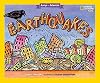
This book is an informational text about earthquakes. I like that it is not just a narrative, but it is instead an informational text; however, it is in kid-friendly language. It talks about what an earthquake is, what causes earthquakes, how often they occur, how the size can vary, how long an earthquake can last, what they feel like, where they happen, and how we should react to an earthquake. I like that it has points throughout the book that are built in for asking students questions and show more getting them to think and respond. I would use this book at the beginning of a unit or lesson on earthquakes. It is a good overview of earthquakes. show less
Awards


You May Also Like


Associated Authors
Statistics
- Works
- 21
- Members
- 698
- Popularity
- #36,253
- Rating
- 3.5
- Reviews
- 22
- ISBNs
- 59
- Languages
- 4