
Phyllis Ann Karr
Author of Idylls of the Queen
About the Author
Works by Phyllis Ann Karr
The Gardener's Boy of Oz. 3 copies
Maybe the Miffin 1 copy
Hollyhock Dolls in Oz 1 copy
Babbitt's Daughter 1 copy
Tales Told To A Toymaker 1 copy
The Coming of the Light 1 copy
The Toe 1 copy
Merlin's Dark Mirror 1 copy
Love's Labour's Discover'd 1 copy
Associated Works
The Best of Marion Zimmer Bradley's Fantasy Magazine Vol. 2 (1995) — Contributor — 151 copies, 1 review
The Camelot Chronicles: Heroic Adventures from the Age of Legend (1992) — Contributor — 137 copies, 1 review
The Chronicles of the Holy Grail: The Ultimate Quest from the Age of Arthurian Literature (1996) — Contributor — 79 copies, 1 review
The Women Who Walk Through Fire : Women's Fantasy and Science Fiction (1990) — Contributor — 40 copies
Wyngraf: Issue 4 — Contributor — 1 copy
Tagged
Common Knowledge
- Legal name
- Karr, Phyllis Ann
- Other names
- Lauren, Frances (pen name)
Remington, Gregory (pen name) - Birthdate
- 1944-07-25
- Gender
- female
- Occupations
- romance novelist
fantasy writer
novelist
short story writer - Organizations
- Science Fiction and Fantasy Writers of America
- Short biography
- Phyllis Ann Karr was born Karmilowicz in Oakland, California, and shortened her suname. Her literary interests encompass Arthurian legend, Shakespeare, the works of Gilbert and Sullivan, and the Oz books of L. Frank Baum. In the 1970s, she began publishing articles, poetry, and fantasy and mystery stories in periodicals and journals such as Ellery Queen's Mystery Magazine, Weird Tales, The Savoyard, and Library Review. Her earliest novels were romances, but she then began to write fantasy and mystery novels, including the Frostflower series and The Idylls of the Queen: A Tale of Queen Guenevere (1982). Between 1986 and 2001, she concentrating on shorter works. Many of her stories have been anthologized. Her major nonfiction work is The King Arthur Companion (1983), later expanded as The Arthurian Companion (1997). She married Clifton Hoyt in 1990.
- Nationality
- USA
- Birthplace
- Oakland, California, USA
- Places of residence
- Oakland, California, USA
Solon Springs, Wisconsin, USA - Associated Place (for map)
- USA
Members
Discussions
Implements I don't recognize in Good Show Sir! — bad science fiction and fantasy covers (July 2025)
Mrs. Butterworth in Good Show Sir! — bad science fiction and fantasy covers (March 2025)
Reviews

This is not your average Fantasy novel: At Amberleaf Fair contains no Chosen One and no Dark Lord, no swords and only very little sorcery, no battles are waged and no duels fought, no heroes show up and no villains, in fact there is barely any conflict at all, it takes place in a peaceful world among mostly happy people and there is far and wide no sign of that staple of fantasy novel structuring, the travelogue. In short, this brief novel is about both as un-Epic and as un-Grimdark as it show more gets and reads more like a cozy mystery (except there is no murder either) than a Fantasy novel.
It belongs to a small Fantasy sub-genre which Jo Walton (who wrote an outstanding contribution to it with her novel Lifelode) calls “Domestic Fantasy.” Personally, I’d prefer to see it named “Idyllic Fantasy” instead, because this hints at a somewhat wider range than just home and hearth and also ties it back into a literary tradition going back to Ancient Greece.
At Amberleaf Fair is told from the perspectives of three characters: Torin the toymaker, Dylis the storyteller and Alrathe the Judge and its plot (which is minimal and very reminiscent of a mystery novel) revolves around a necklace whose theft Alrathe is tasked with investigating, with Torin being the prime suspect in the theft; tied up with that are decisions Torin has to make regarding his professional and romantic future. All of this takes place at and during the title-giving fair, so that the novel sticks pretty close to the three Aristotelian unities of time, place and action – in fact one can easily imagine it as a stage play.
Nothing much happens during At Amberleaf Fair – Alrathe investigates, Torin dithers and Dylis does her best to be supportive – and yet there is never a boring moment throughout the novel. Admittedly, that is at least partially due to it being quite short and hence not outstaying its welcome – as a general rule and with proper allowance made for the occasional exception, Idyllic Fantasy seems to work best in story or novella format, and stories belonging to that sub-genre feature quite frequently in Beneath Ceaseless Skies.
I think, however, it that it is not just or even chiefly its brevity which makes At Amberleaf Fair such a pleasant read, but that this owes even more to the way Phyllis Ann Karr weaves her tale – the way she keeps the mystery going at a slow but steady pace and thus pulls the reader along, keeping their interest up even through an almost total lack of plot; and the way she paints her characters. In fact, it are precisely the character which make this novel so engaging – in keeping with the idyllic setting most of them are sympathetic – one or two are somewhat unlikable but there is nobody even faintly resembling a villain here. And – I think more important for what the novel and the genre it belongs to set out to do – they are all immensely relatable. We encounter what are basically a bunch of normal people in slightly uncommon circumstances…. okay, in quite uncommon circumstances, what with magic and a Fantasy setting and all that. But the point which At Amberleaf Fair and possibly the whole sub-genre of Idyllic Fantasy is trying bring across (in my opinion, at least) is basically that people will be people and that human nature will assert itself and remain more or less the same no matter how strange and alien the surroundings it finds itself placed in. One does not have to agree with this point (and I for my part am not at all certain I do) but if its made as entertainingly and appealingly as in At Amberleaf Fair it is hard to find issue with it. show less
It belongs to a small Fantasy sub-genre which Jo Walton (who wrote an outstanding contribution to it with her novel Lifelode) calls “Domestic Fantasy.” Personally, I’d prefer to see it named “Idyllic Fantasy” instead, because this hints at a somewhat wider range than just home and hearth and also ties it back into a literary tradition going back to Ancient Greece.
At Amberleaf Fair is told from the perspectives of three characters: Torin the toymaker, Dylis the storyteller and Alrathe the Judge and its plot (which is minimal and very reminiscent of a mystery novel) revolves around a necklace whose theft Alrathe is tasked with investigating, with Torin being the prime suspect in the theft; tied up with that are decisions Torin has to make regarding his professional and romantic future. All of this takes place at and during the title-giving fair, so that the novel sticks pretty close to the three Aristotelian unities of time, place and action – in fact one can easily imagine it as a stage play.
Nothing much happens during At Amberleaf Fair – Alrathe investigates, Torin dithers and Dylis does her best to be supportive – and yet there is never a boring moment throughout the novel. Admittedly, that is at least partially due to it being quite short and hence not outstaying its welcome – as a general rule and with proper allowance made for the occasional exception, Idyllic Fantasy seems to work best in story or novella format, and stories belonging to that sub-genre feature quite frequently in Beneath Ceaseless Skies.
I think, however, it that it is not just or even chiefly its brevity which makes At Amberleaf Fair such a pleasant read, but that this owes even more to the way Phyllis Ann Karr weaves her tale – the way she keeps the mystery going at a slow but steady pace and thus pulls the reader along, keeping their interest up even through an almost total lack of plot; and the way she paints her characters. In fact, it are precisely the character which make this novel so engaging – in keeping with the idyllic setting most of them are sympathetic – one or two are somewhat unlikable but there is nobody even faintly resembling a villain here. And – I think more important for what the novel and the genre it belongs to set out to do – they are all immensely relatable. We encounter what are basically a bunch of normal people in slightly uncommon circumstances…. okay, in quite uncommon circumstances, what with magic and a Fantasy setting and all that. But the point which At Amberleaf Fair and possibly the whole sub-genre of Idyllic Fantasy is trying bring across (in my opinion, at least) is basically that people will be people and that human nature will assert itself and remain more or less the same no matter how strange and alien the surroundings it finds itself placed in. One does not have to agree with this point (and I for my part am not at all certain I do) but if its made as entertainingly and appealingly as in At Amberleaf Fair it is hard to find issue with it. show less

I know I've come across short stories by Phyllis Ann Karr before, but this was the first novel I'd read by her. An early entry into the sword-and-sorceresss genre, it's a tale about two very different women: Thorn, a foul-mouthed, sex-loving, polytheistic warrior - and Frostflower, a virginal, vegetarian, monotheistic sorceress. With the topics of abortion and religion featuring significantly in the plot, I kept worrying that the story would veer into moralizing - but it gracefully steered show more clear, maintaining a respect for both women and their different points of view, while telling a fun and entertaining story. show less
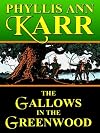
This was a very inventive re-envisioning of the Robin Hood legend that plausibly had the Sheriff of Nottingham as a woman. The main story revolves around the Sheriff's squire, who is captured by the outlaws. But I found the way Karr wove a lady sheriff into the back story fascinating. A very fun find for this Robin Hood fan.
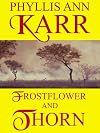
The best part of this book is the world. Karr really thought it out- the social classes, the magical systems, the theologies, and the economics. It's basically a spin on feudal, but with the towns more independent. The prejudice against the sorcerers is rampant, partly because their theology differs from most (most are polytheists; the sorcerers are monotheists), and because of their power. The sorcerers are feared, even though they are utterly non-violent.
The sex/gender egalitarianism is show more also a surprise. ALL the soldiers are women; men are not seen as suited to that lifestyle... and soldiers have a social status higher than that of merchants, etc.
So- the world is fascinating, and well-worth visiting.
The characters are distinctly drawn, sometimes in an exaggerated way, espeically with the swordswomen. The plot hinges on choices various well-described characters make.
I'm giving it a 4, though, because some of the violence, and the carefully described tortures, were shocking. OK, maybe that's a good thing... but it's not necessarily what I want to read unless I'm pre-warned.
Also, some of the action got repetitive. Escape from the pursuers kept going around in circles, and it felt stuck. Eventually things resolved... but only after a LOT of static circling. Karr tried to raise the stakes each time, and did- but it still felt static to me.
It's worth reading for the world, if you are prepared for the ugliness. (The ugliness was not exactly gratuitous, but I'm not convinced so much of it was necesary, either.) show less
The sex/gender egalitarianism is show more also a surprise. ALL the soldiers are women; men are not seen as suited to that lifestyle... and soldiers have a social status higher than that of merchants, etc.
So- the world is fascinating, and well-worth visiting.
The characters are distinctly drawn, sometimes in an exaggerated way, espeically with the swordswomen. The plot hinges on choices various well-described characters make.
I'm giving it a 4, though, because some of the violence, and the carefully described tortures, were shocking. OK, maybe that's a good thing... but it's not necessarily what I want to read unless I'm pre-warned.
Also, some of the action got repetitive. Escape from the pursuers kept going around in circles, and it felt stuck. Eventually things resolved... but only after a LOT of static circling. Karr tried to raise the stakes each time, and did- but it still felt static to me.
It's worth reading for the world, if you are prepared for the ugliness. (The ugliness was not exactly gratuitous, but I'm not convinced so much of it was necesary, either.) show less
Lists
You May Also Like


Associated Authors
Statistics
- Works
- 42
- Also by
- 26
- Members
- 1,088
- Popularity
- #23,608
- Rating
- 3.7
- Reviews
- 19
- ISBNs
- 45
- Favorited
- 1