

Anne Sexton (1928–1974)
Author of The Complete Poems: Anne Sexton
About the Author
Anne Sexton (1928-1974) is one of the most influential & frequently discussed American poets. She lived all her life in the Boston area. (Publisher Provided) Poet Anne Sexton was born in Newton, Massachusetts in 1928. She attended Garland Junior College for a year and at nineteen, married Alfred show more Muller Sexton II. After the birth of her first daughter in 1953 and her second daughter in 1955, Sexton suffered mental breakdowns, which included attempting suicide on her birthday in 1955. She had been diagnosed with postpartum depression. Both times she was hospitalized at Westwood Lodge and it was there that her doctor got her to pursue her interest in writing poetry. She enrolled in a poetry workshop at the Boston Center for Adult Education in 1957, which is where she met fellow poet, and soon to be close friend, Maxine Kumin. Sexton then wrote "To Bedlam and Part Way Back" (1960), "All My Pretty Ones" (1962), and in 1966, Sexton won the Pulitzer Prize for poetry for "Live or Die." Sexton wrote about controversial subjects, which included abortion and drug addiction. As with many other "confessional" poets, Sexton wrote of emotional anguish which came from her battle with mental illness. In 1974, she lost that battle and committed suicide. (Bowker Author Biography) show less
Image credit: Photo: Nancy Crampton (cropped)
Works by Anne Sexton
[Two poems] 12 copies
Poesie 5 copies
Four poems 4 copies
[Five poems] 3 copies
Poetry of Anne Sexton 3 copies
[Three poems] 2 copies
Six poems 2 copies
Poems 2 copies
Kjærligheten: denne røde sykdom 2 copies
Sexton, Anne Archive 1 copy
The Complete Poems 1 copy
Cinderella 1 copy
After Auschwitz 1 copy
Wanting to die 1 copy
Music Swims Back to Me 1 copy
Red Riding Hood 1 copy
Élj vagy halj meg — Author — 1 copy
KİLİTLİ KAPILAR 1 copy
The Heart of Anne Sexton's Poetry (Boxed Set) : Love Poems/ All My Pretty Ones/ Live or Die (1977) 1 copy
Kilitli Kapılar 1 copy
Words 1 copy
Didn't know 1 copy
The hoarder 1 copy
Four 1 copy
Fluctuations ; Tides 1 copy
Dancing the jig 1 copy
Kind Sir, these woods 1 copy
The breast 1 copy
Bestiary U.S.A. 1 copy
The barfly ought to sing 1 copy
The house 1 copy
Late poems 1 copy
With you gone 1 copy
The wedding night 1 copy
The touch 1 copy
Thirty pair of eyes talk 1 copy
Sweeney 1 copy
Spring beach at Truro 1 copy
Somewhere in Africa 1 copy
A small journal 1 copy
Santa 1 copy
Red roses 1 copy
The papa and mama dance 1 copy
My friend, my friend : poem 1 copy
Mother and Jack and the rain 1 copy
Love song 1 copy
Associated Works
Literature: An Introduction to Fiction, Poetry, and Drama (1995) — Contributor, some editions — 1,014 copies, 7 reviews
Don't Bet on the Prince: Contemporary Feminist Fairy Tales in North America and England (1987) — Contributor — 513 copies, 4 reviews
Cries of the Spirit: A Celebration of Women's Spirituality (2000) — Contributor — 404 copies, 2 reviews
Drinking, Smoking and Screwing: Great Writers on Good Times (1994) — Contributor — 354 copies, 5 reviews
The Armless Maiden and Other Tales for Childhood's Survivors (1995) — Contributor — 256 copies, 4 reviews
No More Masks: An Anthology of Twentieth-Century American Women Poets (1993) — Contributor, some editions — 226 copies, 3 reviews
Teaching with Fire: Poetry That Sustains the Courage to Teach (2003) — Contributor — 224 copies, 1 review
From Totems to Hip-Hop: A Multicultural Anthology of Poetry Across the Americas 1900-2002 (2002) — Contributor — 182 copies
Poetry Speaks Expanded: Hear Poets Read Their Own Work from Tennyson to Plath (2007) — Contributor — 158 copies, 2 reviews
An American Album: One Hundred and Fifty Years of Harper's Magazine (2000) — Contributor — 145 copies, 1 review
The Norton Anthology of American Literature, Volume 2: 1865 to Present (1979) — Contributor, some editions — 136 copies
What Did Miss Darrington See? An Anthology of Feminist Supernatural Fiction (1989) — Contributor — 126 copies
A Controversy of Poets: An Anthology of Contemporary American Poetry, (1965) — Contributor — 83 copies
The Heath Anthology of American Literature, Concise Edition (2003) — Contributor — 73 copies, 1 review
The Poets' Grimm: 20th Century Poems from Grimm Fairy Tales (2003) — Contributor — 70 copies, 1 review
Buzz Words: Poems About Insects (Everyman's Library Pocket Poets Series) (2021) — Contributor — 56 copies
Vampires, Zombies, Werewolves and Ghosts: 25 Classic Stories of the Supernatural (Signet Classics) (2011) — Contributor — 54 copies, 1 review
Face to Face: Women Writers on Faith, Mysticism, and Awakening (2004) — Contributor — 39 copies, 1 review
About Women: An Anthology of Contemporary Fiction, Poetry, and Essays (1973) — Contributor — 25 copies
Sunlight on the River: Poems About Paintings, Paintings About Poems (2015) — Contributor — 11 copies, 2 reviews
In'hui, No.9 — Contributor — 1 copy
Tagged
Common Knowledge
- Other names
- Harvey, Anne Gray (birth name)
- Birthdate
- 1928-11-09
- Date of death
- 1974-10-04
- Gender
- female
- Education
- Garland Junior College
Boston University - Occupations
- poet
- Awards and honors
- Shelley Memorial Award (1966/1967)
Frost Fellowship to the Bread Loaf Writers' Conference (1959)
Radcliffe Institute Fellowship (1961)
Levinson Prize (1962)
American Academy of Arts and Letters traveling fellowship (1963)
Guggenheim Fellowship (show all 7)
Ford Foundation grants - Relationships
- Sexton, Linda Gray (daughter)
Kumin, Maxine (friend, collaborator)
Plath, Sylvia (friend)
Lucas, Craig (student) - Cause of death
- suicide
- Nationality
- USA
- Birthplace
- Newton, Massachusetts, USA
- Places of residence
- Newton, Massachusetts, USA
Weston, Massachusetts, USA - Place of death
- Weston, Massachusetts, USA
- Burial location
- Forest Hills Cemetery and Crematory, Jamaica Plain, Massachusetts, USA
- Map Location
- Massachusetts, USA
Members
Discussions
Anne Sexton in Legacy Libraries (July 2014)
Reviews

There was a period of my life where I was like, "OOH NO POETRY!", convinced I didn't like the stuff at all. Very slowly I emerged from this state of mind, and one of the poems that got me out of it was Anne Sexton's "The Truth the Dead Know," which I read in a 20th-century American literature survey class as an undergraduate. A semester later, when I had to read a poem aloud in an English education class, it was the one I picked, and my professor praised me for the feeling of my reading. It show more continues to be in my top five favorite poems, a great poem about grief and human isolation. So sometime around then I went out and bought a copy of Sexton's Complete Poems, but it wasn't until over ten years later that I finally read through the whole thing. Sexton's poetry is still top-notch (my habit when I read a book of poetry is to fold over the corner of pages of poems I particularly like, and there are dozens of such folds in my book now). It was interesting to see her transformation; without knowing much about her actual life, you can see a lot of youthful poems about romance and sex, which give way to ones that feel less overtly personal, religious poems and transformations of fairy tales, before circling back around to the personal again, but in a more retrospective way. I could probably write lots about this book, but to focus myself, I'll pick three of my favorites at random (excerpting from each), and then conclude with my second-favorite.
"The Gold Key" from Transformations (1971)
He turns the key.
Presto!
It opens this book of odd tales
which transform the Brothers Grimm.
Transform?
As if an enlarged paper clip
could be a piece of sculpture.
(And it could.)
Transformations is Sexton's book of fairy tale adaptations, and there's a lot to like in it: her takes on Snow White, Rapunzel, Cinderella, "One-Eye, Two-Eyes, and Three-Eyes," Hansel and Gretel, and Sleeping Beauty were all highlights for me. I was also really struck, though, by the last few lines of the book's opening poem, which sets up the book's whole project of twisting fairy tales. There's something really captivating in that final image of adaptation as taking a large paper clip and claiming it's a sculpture, which the poem simultaneously disparages ("As if") and affirms ("it could") the truth of.
"Rats Live on No Evil Star" from The Death Notebooks (1974)
Thus Eve gave birth.
In this unnatural act
she gave birth to a rat.
It slid from her like a pearl.
It was ugly, of course,
but Eve did not know that
and when it died before its time
she placed its tiny body
on that piece of kindergarten called STAR.
To be honest, I don't entirely know what to make of this one, which fuses Garden of Eden imagery with ideas inspired by a "palindrome seen on the side of a barn in Ireland." What is Sexton saying about the fruit of the Tree of Knowledge here, about humanity, about human happiness? I'm not sure, but I'm on the edges of understanding, something about the ugliness of humanity and our need to overlook it (as in the poem below, I guess) if we're ever going to be happy. But who knows what kindergarten has got to do with it.
"After Auschwitz" from The Awful Rowing Toward God (1975)
Let man never again raise his teacup.
Let man never again write a book.
Let man never again put on his shoe.
Let man never again raise his eyes,
on a soft July night.
Never. Never. Never. Never. Never.
I say these things aloud.
I beg the Lord not to hear.
There's something about how the speaker confronts the enormity of the Holocaust in this poem that I found very striking. The Holocaust is, of course, indefensible. But Sexton finds the whole human race indefensible after the Holocaust, even in great actions like writing a book or in minor actions like putting on a shoe, and the poem ends (as I've excerpted) essentially without resolution. There is no and can be no defense of humankind, and so the most the speaker can do is ask God not pass judgment, for if He did we would all be found guilty.
"The Boat" from The Book of Folly (1972)
Suddenly
a wave that we go under.
Under. Under. Under.
We are daring the sea.
We have parted it.
We are scissors.
Here in the green room
the dead are very close.
Here in the pitiless green
where there are no keepsakes
or cathedrals an angel spoke:
You have no business.
No business here.
Give me a sign,
cries Father,
and the sky breaks over us.
This is from a cycle of six poems called "The Death of the Fathers," and it's about a speaker riding in her father's speedboat with her mother off the coast of Maine. On one level it's always resonated with me because around the time I first read it was when my own father was becoming obsessed with boating, and I can see something of his pride in the way the speaker describes her own father: "Father / (he calls himself / 'old sea dog'), / in his yachting cap..." My father would never wear a yachting cap or call himself a "sea dog," but the sentiment is similar, the idea that when you drive a boat you command the world.
But pride leads to humbling, and that's the bit I really like (even though this bears no resemblance to any of my boating experiences): the Go Too III plunges beneath the waves and enters another world entirely hostile to humanity, one full of "the dead" and "pitiless" and without monuments built by humans. The ocean is inimical to human life, and will forever remain so on some level-- the poem reminds us that no matter what we might think we command, there are some things in nature that will always hold dominion over us, and if we survive them, it is only a temporary reprieve. show less
"The Gold Key" from Transformations (1971)
He turns the key.
Presto!
It opens this book of odd tales
which transform the Brothers Grimm.
Transform?
As if an enlarged paper clip
could be a piece of sculpture.
(And it could.)
Transformations is Sexton's book of fairy tale adaptations, and there's a lot to like in it: her takes on Snow White, Rapunzel, Cinderella, "One-Eye, Two-Eyes, and Three-Eyes," Hansel and Gretel, and Sleeping Beauty were all highlights for me. I was also really struck, though, by the last few lines of the book's opening poem, which sets up the book's whole project of twisting fairy tales. There's something really captivating in that final image of adaptation as taking a large paper clip and claiming it's a sculpture, which the poem simultaneously disparages ("As if") and affirms ("it could") the truth of.
"Rats Live on No Evil Star" from The Death Notebooks (1974)
Thus Eve gave birth.
In this unnatural act
she gave birth to a rat.
It slid from her like a pearl.
It was ugly, of course,
but Eve did not know that
and when it died before its time
she placed its tiny body
on that piece of kindergarten called STAR.
To be honest, I don't entirely know what to make of this one, which fuses Garden of Eden imagery with ideas inspired by a "palindrome seen on the side of a barn in Ireland." What is Sexton saying about the fruit of the Tree of Knowledge here, about humanity, about human happiness? I'm not sure, but I'm on the edges of understanding, something about the ugliness of humanity and our need to overlook it (as in the poem below, I guess) if we're ever going to be happy. But who knows what kindergarten has got to do with it.
"After Auschwitz" from The Awful Rowing Toward God (1975)
Let man never again raise his teacup.
Let man never again write a book.
Let man never again put on his shoe.
Let man never again raise his eyes,
on a soft July night.
Never. Never. Never. Never. Never.
I say these things aloud.
I beg the Lord not to hear.
There's something about how the speaker confronts the enormity of the Holocaust in this poem that I found very striking. The Holocaust is, of course, indefensible. But Sexton finds the whole human race indefensible after the Holocaust, even in great actions like writing a book or in minor actions like putting on a shoe, and the poem ends (as I've excerpted) essentially without resolution. There is no and can be no defense of humankind, and so the most the speaker can do is ask God not pass judgment, for if He did we would all be found guilty.
"The Boat" from The Book of Folly (1972)
Suddenly
a wave that we go under.
Under. Under. Under.
We are daring the sea.
We have parted it.
We are scissors.
Here in the green room
the dead are very close.
Here in the pitiless green
where there are no keepsakes
or cathedrals an angel spoke:
You have no business.
No business here.
Give me a sign,
cries Father,
and the sky breaks over us.
This is from a cycle of six poems called "The Death of the Fathers," and it's about a speaker riding in her father's speedboat with her mother off the coast of Maine. On one level it's always resonated with me because around the time I first read it was when my own father was becoming obsessed with boating, and I can see something of his pride in the way the speaker describes her own father: "Father / (he calls himself / 'old sea dog'), / in his yachting cap..." My father would never wear a yachting cap or call himself a "sea dog," but the sentiment is similar, the idea that when you drive a boat you command the world.
But pride leads to humbling, and that's the bit I really like (even though this bears no resemblance to any of my boating experiences): the Go Too III plunges beneath the waves and enters another world entirely hostile to humanity, one full of "the dead" and "pitiless" and without monuments built by humans. The ocean is inimical to human life, and will forever remain so on some level-- the poem reminds us that no matter what we might think we command, there are some things in nature that will always hold dominion over us, and if we survive them, it is only a temporary reprieve. show less
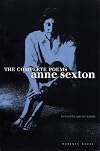
I listened to an interview in which Madonna mentioned that Anne Sexton's poetry influenced her. I was intrigued enough to research Anne Sexton because I'd never heard of her. Once I read a little about Sexton, I knew I needed to read her poetry, if for no other reason than to see if I could learn anything from her work that would help my own poetry writing. So I decided to buy The Complete Poems: Anne Sexton by Anne Sexton. I opted to take my time and only read a few poems a day when I show more started The Complete Poems: Anne Sexton. I wanted to think about the poems, to really internalize them, to study style, to learn from them. Some days it was tempting to read several. Other days I found it a struggle to read even one. Sexton played with words and social norms in ways that I can only imagine upset people when they were published. Her poems ripped into fairy tales and religion with the same irreverence in a way I found refreshing at times and uncomfortable at others, but those poems always made me think as good poetry should. She tackled life head-on in some poems and wrote all around topics in others. I found myself relating to her need to both expose and hide. Certain poems resonated with me on a deep level. Others had me scrambling for meaning. Still others inspired me to try new ideas in my own poetry. As I consciously and slowly worked my way through the over 600 pages of poems, I discovered some limits I didn't know I had. I thought how I'd never feel comfortable writing about some of the topics Sexton covered, but I also discovered a desire to push my work in different directions. The thing that's always interesting about a complete work is its range. There are poems in this book that will appeal to many as well as poems people will find offensive. And, while it shows a great deal of insight into the human condition, there are times when it feels incredibly, personally voyeuristic. I love poems that go to the depths of human experience, so this appealed to me. show less
I received an advance copy of this book from the publisher through NetGalley in exchange for an honest review and I got so much more than I bargained for.
As an English major I read more than my fair share of poetry. Mostly by guys, really. Coleridge, Keats, Shelley, Byron, Milton, Wordsworth, William Carlos Williams. They were all showing me the nature of God, or perhaps god in nature. Beauty is Truth and Truth is Beauty---Keats was telling me what he thought I needed to know. While show more beautiful, It was all rather Didactic, I felt, and to a large extent, left me cold.
I was not prepared for Anne Sexton. She scares the crap out of me. I read the reviews of other reviewers who were familiar with her work, who already had their own favorite poems or lines. I am the newby. It makes me wonder how in the world did I major in English at a major university and not read her poetry. Is it because I (and almost all of my teachers) are men? Seriously, how can any survey of modern poetry not include Sexton’s work? Especially for the young. If I would have read her in my late teens or early 20’s I would have continued to read and re-read her all my life, just as these other reviewers have. I envy them having read and re-read her work.
If you haven’t read her and are willing to open your mind (and especially your heart) you need to get this collection. Reading it is like reading an autobiography of a brilliant, tortured yet often joyful, self aware genius, and as I said earlier, I was not prepared for her. From the very beginning I felt my heart in my throat. Her poetry is so different from what I have read before. I found myself thinking of the sheer pain some of these poems must have caused in their creation. I have never felt such suffering combined with such beauty. Yet through it all was, like Keats would have said, a beauty and truth---and the beauty was IN the truth. Whether she was telling the stories of her ancestors crossing to the new world, eulogizing a lost loved one, either a beloved aunt or an aborted child, or painfully working her way back from Bedlam to sanity, there is truth in these poems. Truth that makes your hair stand on end as she performs an autopsy on her body and soul. Her poems are so devastatingly personal that I was uncomfortable. It was hard knowing that much, seeing that deeply into another’s suffering and most embarrassing thoughts, or her fears, or her anguish---she is the most honest writer I have ever read. Is there anything held back? I never felt that there was an author hiding behind a veil. Anne Sexton opens up herself to the reader and to read her poetry changes you, I think.
This book stays near at hand and should be read over and over again. show less
As an English major I read more than my fair share of poetry. Mostly by guys, really. Coleridge, Keats, Shelley, Byron, Milton, Wordsworth, William Carlos Williams. They were all showing me the nature of God, or perhaps god in nature. Beauty is Truth and Truth is Beauty---Keats was telling me what he thought I needed to know. While show more beautiful, It was all rather Didactic, I felt, and to a large extent, left me cold.
I was not prepared for Anne Sexton. She scares the crap out of me. I read the reviews of other reviewers who were familiar with her work, who already had their own favorite poems or lines. I am the newby. It makes me wonder how in the world did I major in English at a major university and not read her poetry. Is it because I (and almost all of my teachers) are men? Seriously, how can any survey of modern poetry not include Sexton’s work? Especially for the young. If I would have read her in my late teens or early 20’s I would have continued to read and re-read her all my life, just as these other reviewers have. I envy them having read and re-read her work.
If you haven’t read her and are willing to open your mind (and especially your heart) you need to get this collection. Reading it is like reading an autobiography of a brilliant, tortured yet often joyful, self aware genius, and as I said earlier, I was not prepared for her. From the very beginning I felt my heart in my throat. Her poetry is so different from what I have read before. I found myself thinking of the sheer pain some of these poems must have caused in their creation. I have never felt such suffering combined with such beauty. Yet through it all was, like Keats would have said, a beauty and truth---and the beauty was IN the truth. Whether she was telling the stories of her ancestors crossing to the new world, eulogizing a lost loved one, either a beloved aunt or an aborted child, or painfully working her way back from Bedlam to sanity, there is truth in these poems. Truth that makes your hair stand on end as she performs an autopsy on her body and soul. Her poems are so devastatingly personal that I was uncomfortable. It was hard knowing that much, seeing that deeply into another’s suffering and most embarrassing thoughts, or her fears, or her anguish---she is the most honest writer I have ever read. Is there anything held back? I never felt that there was an author hiding behind a veil. Anne Sexton opens up herself to the reader and to read her poetry changes you, I think.
This book stays near at hand and should be read over and over again. show less

I never think of Anne Sexton without thinking about Sylvia Plath & I can definitely feel a Plathian influence here (but these poems are very much her own.) These may not have the sophistication of Plath but I like these better than Ariel. Plath's poems are richer, more obtuse, tighter structure....Sexton's are looser, more alive, more Zen-like...
I am so grateful for this collection of poems, her final collection before her suicide. I am at a loss for how to describe them and their impact on show more me but Sexton's genius-and how it finally comes out here, leaves me astonished. Each beautifully follows the next in perfect, Divine right order from a woman exploring her lost connection to God. Her agony is real, a feeling of being cut off from god- and her suicide being a final expression of this. Sexton was one of those who burned too bright for this world. show less
I am so grateful for this collection of poems, her final collection before her suicide. I am at a loss for how to describe them and their impact on show more me but Sexton's genius-and how it finally comes out here, leaves me astonished. Each beautifully follows the next in perfect, Divine right order from a woman exploring her lost connection to God. Her agony is real, a feeling of being cut off from god- and her suicide being a final expression of this. Sexton was one of those who burned too bright for this world. show less
Lists
Awards


You May Also Like


Associated Authors
Statistics
- Works
- 116
- Also by
- 49
- Members
- 6,349
- Popularity
- #3,874
- Rating
- 4.0
- Reviews
- 67
- ISBNs
- 97
- Languages
- 9
- Favorited
- 81


