
Leah Hager Cohen
Author of Train Go Sorry: Inside a Deaf World
About the Author
Leah Hager Cohen, a graduate of the Columbia School of Journalism, established herself as a serious writer in 1994 with her nonfiction book, Train Go Sorry: Inside a Deaf World. Chosen by the American Library Association as one of the best books of 1994, Inside a Deaf World details what it was like show more growing up as a hearing child around deaf children. Cohen's first fiction novel, Heat Lightning, is a coming-of-age story told from the point of view of two sisters, ages eleven and twelve, who have to deal with the death of their parents. (Bowker Author Biography) Leah Hager Cohen earned a BA in writing at Hampshire College & an MS from the Columbia University Graduate School of Journalism. In addition to her non-fiction, she is the author of "Heat Lightning". She lives near Boston. (Bowker Author Biography) show less
Image credit: photo by John Earle
Works by Leah Hager Cohen
Glass, Paper, Beans: Revelations on the Nature and Value of Ordinary Things (1995) 187 copies, 2 reviews
I don't know: In Praise of Admitting Ignorance (Except When You Shouldn’t) (2013) 77 copies, 26 reviews
Acting Out 1 copy
Tagged
Common Knowledge
- Birthdate
- 1967
- Gender
- female
- Education
- New York University
Hampshire College
Columbia University Graduate School of Journalism - Agent
- Barney Karpfinger (The Karpfinger Agency, New York, NY)
- Relationships
- Golijov, Osvaldo (husbnd)
- Nationality
- USA
- Places of residence
- Belmont, Massachusetts, USA (2007 ∙ 1994 ∙ childhoood)
- Associated Place (for map)
- Massachusetts, USA
Members
Reviews
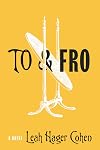
To & Fro is a remarkably unique book; it's two mirrored stories bound together, and can be read in either order, with each story "ending" in the middle. I started with "To," which features a young girl, Ani, who sets off on a journey, ostensibly following the Captain. The other story, "Fro," is about Annamae, a girl growing up with her mother and older brother Danny in Manhattan.
Serious Annamae has a deep interiority; she writes and draws constantly in a notebook she calls "Company," or show more Coco for short, from age 7 until about 12. This notebook seems to be the very one that Ani sets out to return to the Captain, along with his glasses; on Ani's journey, she brings an apricot-colored kitten, which she names Company, and she overhears a song - the lyrics of which are a poem Annamae wrote in her notebook.
More mirroring: Both Ani and Annamae each find a "ferryman": in Ani's case, a man who brings people across the river in a ferry, to Tewanfrough (to and fro); Annamae used to address letters to a "fairy man" but when she gets older, a bar and restaurant called the Ferryman opens on her street.
Both are fascinated with letters - "signs and wonders" - and study, after a fashion, the Torah and its commentary. To & Fro itself is full of signs and wonders, deep thinking, and a strong connection to what it's like to be a child, and begin growing out of childhood.
WaPo review: https://www.washingtonpost.com/books/2024/05/21/to-fro-leah-hager-cohen-book/
Quotes from "To"
"No one's not broken in some way or other." (Cook to Ani, 22)
I like pretending objects are a kind of book. That they can be read. I like making up stories about them. Where they came from, whose hands used them, where they might be headed next. (52)
"A messenger doesn't have to understand the message. A messenger just has to receive it." (Ottla to Ani, 117)
Who can say what's beyond repair? (118)
[The notebook] had become like a song whose words I didn't know but whose tune I could hum. (147)
...and because I could not leave her, because maybe the old story didn't have to determine the new, because maybe I could invent a different story this time, I stayed. (155)
In a story riddled with holes, a single newfound scrap can have the power to recast the others. (158)
What I felt was, This has not happened to me only.
Maybe stories don't make things happen, but maybe through stories we find we are not alone. (170)
From "Fro"
"[A contranym] is a word with two opposite meanings." (Annamae's mom, 36)
"No two people can ever know the exact same thing!" (Annamae to her mom, 82)
"Questions of curiosity" vs. "questions of agenda" (98)
This was what Annamae had realized. No one could ever understand anybody. Not really.
They were all doomed.
Doomed not to understand one another.
Worse: doomed to go around thinking they were understanding one another, thinking they were being understood.
It was language's fault. People mistook language for solid ground, when really it was just a net. (119)
[The story of Akhnai's Oven, 166-167]
And yet she wondered...might it be possible to create something beyond your control? To imagine something into being that yet had a life of its own, an unruliness, an ability to disobey, perhaps to invent you in return? (183) show less
Serious Annamae has a deep interiority; she writes and draws constantly in a notebook she calls "Company," or show more Coco for short, from age 7 until about 12. This notebook seems to be the very one that Ani sets out to return to the Captain, along with his glasses; on Ani's journey, she brings an apricot-colored kitten, which she names Company, and she overhears a song - the lyrics of which are a poem Annamae wrote in her notebook.
More mirroring: Both Ani and Annamae each find a "ferryman": in Ani's case, a man who brings people across the river in a ferry, to Tewanfrough (to and fro); Annamae used to address letters to a "fairy man" but when she gets older, a bar and restaurant called the Ferryman opens on her street.
Both are fascinated with letters - "signs and wonders" - and study, after a fashion, the Torah and its commentary. To & Fro itself is full of signs and wonders, deep thinking, and a strong connection to what it's like to be a child, and begin growing out of childhood.
WaPo review: https://www.washingtonpost.com/books/2024/05/21/to-fro-leah-hager-cohen-book/
Quotes from "To"
"No one's not broken in some way or other." (Cook to Ani, 22)
I like pretending objects are a kind of book. That they can be read. I like making up stories about them. Where they came from, whose hands used them, where they might be headed next. (52)
"A messenger doesn't have to understand the message. A messenger just has to receive it." (Ottla to Ani, 117)
Who can say what's beyond repair? (118)
[The notebook] had become like a song whose words I didn't know but whose tune I could hum. (147)
...and because I could not leave her, because maybe the old story didn't have to determine the new, because maybe I could invent a different story this time, I stayed. (155)
In a story riddled with holes, a single newfound scrap can have the power to recast the others. (158)
What I felt was, This has not happened to me only.
Maybe stories don't make things happen, but maybe through stories we find we are not alone. (170)
From "Fro"
"[A contranym] is a word with two opposite meanings." (Annamae's mom, 36)
"No two people can ever know the exact same thing!" (Annamae to her mom, 82)
"Questions of curiosity" vs. "questions of agenda" (98)
This was what Annamae had realized. No one could ever understand anybody. Not really.
They were all doomed.
Doomed not to understand one another.
Worse: doomed to go around thinking they were understanding one another, thinking they were being understood.
It was language's fault. People mistook language for solid ground, when really it was just a net. (119)
[The story of Akhnai's Oven, 166-167]
And yet she wondered...might it be possible to create something beyond your control? To imagine something into being that yet had a life of its own, an unruliness, an ability to disobey, perhaps to invent you in return? (183) show less
 This review was written for LibraryThing Early Reviewers.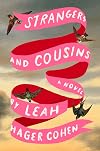
My book club and I were pretty much in unison on this one: so much ado about ... what? The author seems to be working her way through a checklist of "contemporary fiction to-dos" ... eccentric family, prodigal son, dark family secret = check! Gender fluid characters, interracial romance, environmental activism, free range parenting = check! "Ripped from the headlines" subplot (a religious group poised to transform an established old town - will the community welcome them or close ranks?) = show more check! Whimsical ancestral home, precocious kid, and a bit with an animal = check! ... without bothering to connect these disparate narrative elements into any kind of cohesive whole.
The result is a story that has a lot going on but not much happening ... which can be okay if the author creates characters that you're vested in, but that doesn't happen here either because Cohen seems to believe that endowing characters with imaginative idiosyncrasies - a husband who loves baking, a wife who grooves on being fertile, a daughter who's into avant garde theater, a little kid who fancies himself a military scout - is enough to make them fully realized and endearing, but of course it's not. And maybe it's just me, but authors who employ third person limited narration shouldn't endow their characters with anachronistic perspectives and vocab just so the author can show off their wit and wokeness. Totally undermines any authenticity the author is attempting to establish.
I hung in there until the end because I kept thinking that something must be coming - some revelation or narrative twist that would tie all these meandering subplots together - but that never happens and now I kind of regret the time I spent on this, time I could have spent on something with more authenticity, depth, and genuine empathy. show less
The result is a story that has a lot going on but not much happening ... which can be okay if the author creates characters that you're vested in, but that doesn't happen here either because Cohen seems to believe that endowing characters with imaginative idiosyncrasies - a husband who loves baking, a wife who grooves on being fertile, a daughter who's into avant garde theater, a little kid who fancies himself a military scout - is enough to make them fully realized and endearing, but of course it's not. And maybe it's just me, but authors who employ third person limited narration shouldn't endow their characters with anachronistic perspectives and vocab just so the author can show off their wit and wokeness. Totally undermines any authenticity the author is attempting to establish.
I hung in there until the end because I kept thinking that something must be coming - some revelation or narrative twist that would tie all these meandering subplots together - but that never happens and now I kind of regret the time I spent on this, time I could have spent on something with more authenticity, depth, and genuine empathy. show less

Once upon a time, I thought it would be wonderful to learn sign language. I never really got beyond the alphabet in the Girl Scout Handbook, aside from learning some quite rude signs from Instagram, but I remain fascinated by the language. Because of that fascination, somewhere along the way I picked up Train Go Sorry: Inside a Deaf World by Leah Hager Cohen, thinking to read and learn more about the deaf community but I let the book languish on my shelves for ages. While some of it is show more unfortunately quite dated now (published in 1994), it still gives an interesting and thought-provoking look into a community and culture I've read very little about, and interacted with even less.
At the time of her writing of the book, Cohen's father Oscar was the superintendent of the Lexington School for the Deaf in New York so Cohen herself spent quite a lot of time in or adjacent to the deaf community, although as a hearing child she didn't attend the school or learn ASL herself until adulthood. She had a unique entre into the deaf community via her father and via her paternal grandparents, both of whom were deaf. The book jumps around touching on a variety of topics, from the politics, debates, and discussions within the deaf community (students and staff at Gallaudet University had just successfully protested against a hearing president) to the fears that things like the pressure to mainstream deaf children instead of maintaining dedicated schools and the push towards cochlear implants would lead to an erasure of deaf culture. She presents the arguments for and against ASL, signed exact English, and vocalization without offering a value judgment on any of them as options in the world. She discusses sign language interpreting, including her own experience learning to interpret, and considers how interpreters are not native speakers of sign language, presenting challenges that most hearing people wouldn't ever have thought about (I sure hadn't!). She shares tales of her own deaf grandparents, telling of both the difficulties (and tragedies) and the joys in their lives in a hearing world. And finally, she weaves stories of two students at the school throughout the rest of her narrative, sharing the extra challenges that James, whose family is economically disadvantaged, and Sophia, whose family is non-native English speaking, face as they work toward their high school degrees and toward a future that they are just starting to envision.
The book hops back and forth between all of Cohen's focuses, which can be a bit choppy but the information she presents is consistently interesting. She draws the attention of hearing readers to issues and concerns that they've probably never spared even one second of time thinking about, and has presented the needs and wants of the deaf community, which is not a monolith, in a balanced and thoughtful manner. There's history and personal stories both in this detailed and engaging non-fiction book. People who want insight into a people and community they probably don't have much knowledge about will learn a lot from this book, and yet leave it with a lot to think about. show less
At the time of her writing of the book, Cohen's father Oscar was the superintendent of the Lexington School for the Deaf in New York so Cohen herself spent quite a lot of time in or adjacent to the deaf community, although as a hearing child she didn't attend the school or learn ASL herself until adulthood. She had a unique entre into the deaf community via her father and via her paternal grandparents, both of whom were deaf. The book jumps around touching on a variety of topics, from the politics, debates, and discussions within the deaf community (students and staff at Gallaudet University had just successfully protested against a hearing president) to the fears that things like the pressure to mainstream deaf children instead of maintaining dedicated schools and the push towards cochlear implants would lead to an erasure of deaf culture. She presents the arguments for and against ASL, signed exact English, and vocalization without offering a value judgment on any of them as options in the world. She discusses sign language interpreting, including her own experience learning to interpret, and considers how interpreters are not native speakers of sign language, presenting challenges that most hearing people wouldn't ever have thought about (I sure hadn't!). She shares tales of her own deaf grandparents, telling of both the difficulties (and tragedies) and the joys in their lives in a hearing world. And finally, she weaves stories of two students at the school throughout the rest of her narrative, sharing the extra challenges that James, whose family is economically disadvantaged, and Sophia, whose family is non-native English speaking, face as they work toward their high school degrees and toward a future that they are just starting to envision.
The book hops back and forth between all of Cohen's focuses, which can be a bit choppy but the information she presents is consistently interesting. She draws the attention of hearing readers to issues and concerns that they've probably never spared even one second of time thinking about, and has presented the needs and wants of the deaf community, which is not a monolith, in a balanced and thoughtful manner. There's history and personal stories both in this detailed and engaging non-fiction book. People who want insight into a people and community they probably don't have much knowledge about will learn a lot from this book, and yet leave it with a lot to think about. show less
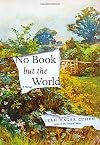
Leah Hager Cohen's "No Book but the World" is about stories, about being different, about growing up and becoming adults who now are trying to understand themselves and others close to them, past and present.
It is told, in all its parts, by Ava, who in the final few pages describes how she began, in a journal, to tell what she knew, what she remembered, how she tried to research and ask questions of other people involved. She admits she will never completely understand all the things that show more might have happened, but has written what she believed could have been, how others might have acted, even though she could not be sure.
Ava and her brother Freddy were raised among a small group of families, each living in their own buildings in a remote woodland that once was a school run by their parents, Neel and June. Neel founded the now closed school, believing the role of teachers was to let children roam, and to guide them only when needed. Freddy was born "different", and "difficult", maybe autistic, but never diagnosed. Ava, two years older, was often his caretaker.
As adults, Ava and Fred seldom see each other. Then Fred becomes a suspect in the death of a young boy, and Ava goes to Perdue, the town near where he has been jailed, to meet his lawyer and try to be of aid. There she begins her journal.
Each section of the book is beautifully written, even the unhappy parts. Each character, major and minor, is memorably described, both their features and their actions.
And there is a real sense of Ava remembering, trying to discover, and
trying to understand her brother, as well as the parts she and the other people around him have played in his fate. show less
It is told, in all its parts, by Ava, who in the final few pages describes how she began, in a journal, to tell what she knew, what she remembered, how she tried to research and ask questions of other people involved. She admits she will never completely understand all the things that show more might have happened, but has written what she believed could have been, how others might have acted, even though she could not be sure.
Ava and her brother Freddy were raised among a small group of families, each living in their own buildings in a remote woodland that once was a school run by their parents, Neel and June. Neel founded the now closed school, believing the role of teachers was to let children roam, and to guide them only when needed. Freddy was born "different", and "difficult", maybe autistic, but never diagnosed. Ava, two years older, was often his caretaker.
As adults, Ava and Fred seldom see each other. Then Fred becomes a suspect in the death of a young boy, and Ava goes to Perdue, the town near where he has been jailed, to meet his lawyer and try to be of aid. There she begins her journal.
Each section of the book is beautifully written, even the unhappy parts. Each character, major and minor, is memorably described, both their features and their actions.
And there is a real sense of Ava remembering, trying to discover, and
trying to understand her brother, as well as the parts she and the other people around him have played in his fate. show less
Lists
Awards


You May Also Like


Associated Authors
Statistics
- Works
- 16
- Members
- 1,637
- Popularity
- #15,691
- Rating
- 3.5
- Reviews
- 135
- ISBNs
- 68
- Languages
- 6
