
Sandra Benitez
Author of A Place Where the Sea Remembers
About the Author
Image credit: Unattributed photo at Sandra Benitez.com
Works by Sandra Benitez
Mexico! 2 copies
Associated Works
Tagged
Common Knowledge
- Canonical name
- Benitez, Sandra
- Birthdate
- 1941-03-26
- Gender
- female
- Agent
- Ellen Levine (The Ellen Levine Literary Agency)
- Nationality
- USA (birth)
- Places of residence
- Washington, D.C., USA (birth)
Mexico
El Salvador
Unionville, Missouri, USA
Edina, Minnesota, USA - Associated Place (for map)
- USA
Members
Reviews
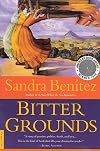
This is a sweeping historical epic covering three generations of two families: the Tabors, who are aristocratic land-owners; and the Prieto clan, the servants/peasants employed by the Tabors. Through these families the reader learns something of the history of El Salvador from about 1932 to 1975, including the role of the Church, the military, and the influence of the United States on the politics of this nation. But the main story line of the novel remained focused on these two families and show more their interaction over several generations.
.
I really enjoyed the way Benítez showed these two classes interacting. As much as they felt they were different and as much as they were kept apart (or at least the upper class tried to separate themselves from the lower class), they were inextricably linked and their lives held many parallels. Mothers and daughters disagreed; husbands betrayed their wives; children refused to listen; secrets were kept; and everyone was addicted to the radio soap opera, Los Dos (and yet never recognized how that story line also paralleled their real-life stories).
This won the American Book Award in 1998. show less
.
I really enjoyed the way Benítez showed these two classes interacting. As much as they felt they were different and as much as they were kept apart (or at least the upper class tried to separate themselves from the lower class), they were inextricably linked and their lives held many parallels. Mothers and daughters disagreed; husbands betrayed their wives; children refused to listen; secrets were kept; and everyone was addicted to the radio soap opera, Los Dos (and yet never recognized how that story line also paralleled their real-life stories).
This won the American Book Award in 1998. show less
I read this book out loud to my husband during lengthy car trips. The book is less about the coffee industry and more about the social welfare of El Salvador and its people. It was like life, happy, sad, heartbreaking at times, but always very real. I knew nothing of the events in this country which, in this book, take place between 1932 and 1977 and it made me glad I never had to live through things like this. Well worth reading.

Another book passed on to me by my younger brother who lives in Latin America.
Benitez takes us through modern history of El Salvador through the relationships of three generations of women from two very different backgrounds.
We start with Mercedes and Elena, the former living in a hut in the shadow of Izalco, an active volcano, while the latter is from a privileged background, the wife of a coffee plantation owner. Mercedes is a very calm woman, fairly methodical, but the losses she has show more suffered are always with her.
Her daughter, Jacinta, has more fire in her belly, she is practical, but prone to passionate outbursts. Jacinta ends up working for Magda, Elena's daughter, who depends greatly and on her and is keen for their own daughters to be raised together, despite the reservations of her in-laws. Magda is also a strong character determined to open a shop, Tesoro, against society's clearly defined female roles: wife, mother and home-maker.
Jacinta's daughter, Maria Mercedes, becomes involved in the struggle to educate the peasants, a struggle turning increasingly violent. Flora, Magda's daughter, is bloody-minded, in terms of her private life, turning to dramatic methods to get her man, but she is less aware of what is happening around her.
The political situation affects everyone's lives in the book, from the Matanza to the violence of the 1970s. Setting these three pairs and their stories against such a background helps to humanise the history, making it more real to a reader unfamiliar with El Salvador. Women dominate the book, as mothers, home-makers, but also as the ones left to deal with the aftermath. Benitez shows the bonds that transcend wealth and situation, bonds so strong that it makes the betrayals so much more painful.
I enjoyed the touches of magical realism, from Mercedes seeing the ghosts or spirits of the dead to Elena's ring which seems bewitched. Another enjoyable thread running through the book was that of the radio soap opera to which everyone is addicted, another element which transcends class, but also mirrors aspects of the main plot. show less
Benitez takes us through modern history of El Salvador through the relationships of three generations of women from two very different backgrounds.
We start with Mercedes and Elena, the former living in a hut in the shadow of Izalco, an active volcano, while the latter is from a privileged background, the wife of a coffee plantation owner. Mercedes is a very calm woman, fairly methodical, but the losses she has show more suffered are always with her.
Her daughter, Jacinta, has more fire in her belly, she is practical, but prone to passionate outbursts. Jacinta ends up working for Magda, Elena's daughter, who depends greatly and on her and is keen for their own daughters to be raised together, despite the reservations of her in-laws. Magda is also a strong character determined to open a shop, Tesoro, against society's clearly defined female roles: wife, mother and home-maker.
Jacinta's daughter, Maria Mercedes, becomes involved in the struggle to educate the peasants, a struggle turning increasingly violent. Flora, Magda's daughter, is bloody-minded, in terms of her private life, turning to dramatic methods to get her man, but she is less aware of what is happening around her.
The political situation affects everyone's lives in the book, from the Matanza to the violence of the 1970s. Setting these three pairs and their stories against such a background helps to humanise the history, making it more real to a reader unfamiliar with El Salvador. Women dominate the book, as mothers, home-makers, but also as the ones left to deal with the aftermath. Benitez shows the bonds that transcend wealth and situation, bonds so strong that it makes the betrayals so much more painful.
I enjoyed the touches of magical realism, from Mercedes seeing the ghosts or spirits of the dead to Elena's ring which seems bewitched. Another enjoyable thread running through the book was that of the radio soap opera to which everyone is addicted, another element which transcends class, but also mirrors aspects of the main plot. show less
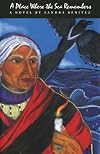
A series of interconnected stories, with the final chapter closing the loop from the opening chapter. Since we spend so little time with any one character, I didn't feel especially invested in the story's final tragedy. But one chapter moved me to tears, as the man and his son were able to reach one another past the barriers of grief and guilt.
Awards


You May Also Like


Associated Authors
Statistics
- Works
- 8
- Also by
- 1
- Members
- 948
- Popularity
- #27,124
- Rating
- 3.7
- Reviews
- 19
- ISBNs
- 28
- Languages
- 3
- Favorited
- 1