
Tash Aw
Author of The Harmony Silk Factory
About the Author
Works by Tash Aw
Étrangers sur la grève 1 copy
Associated Works
Tagged
Common Knowledge
- Canonical name
- Aw, Tash
- Legal name
- Ta-Shi, Aw
- Other names
- 歐大旭
- Birthdate
- 1971-10-04
- Gender
- male
- Education
- University of Cambridge
University of Warwick
University of East Anglia - Occupations
- attorney
- Nationality
- Malaysia
Taiwan (birth) - Birthplace
- Taipei, Taiwan
- Places of residence
- Taipei, Taiwan
London, England, UK
Kuala Lumpur, Malaysia - Associated Place (for map)
- London, England, UK
Members
Reviews
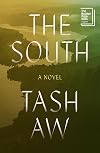
Real Rating: 4.25* of five
The Publisher Says: A luminous and intimate novel about the weight of inheritance, the bonds of loyalty, and the awakening of love, set against the backdrop of a changing Malaysia.
The South unfolds during a visit by the Lim family to their rural clan estate after a long absence. Jay, in his mid-teens, and his two older sisters are less than thrilled to leave their city for the remote house in the south, but their parents, Sui Ching and Jack, are adamant.
Jay finds show more he's expected to share a room with Chuan, the son of the estate's overseer, a bit older than Jay but seemingly much more mature and capable in the world. The two soon form an intense bond, but with their very different backgrounds, and even more disparate expectations for the future, the course of their relationship is always an unspoken question.
Meanwhile, change presses in, including the destruction of the farm's beloved orchards, and the sale of the estate is mooted. The relationships between Chuan's father and Jack and Sui Ching go deep, but pressures both internal and external threaten to sever old bonds and upend an entire way of life. The South, at once sweeping and intimate, is a masterful portrait of a family navigating a period of great transformation.
I RECEIVED A DRC FROM THE PUBLISHER VIA NETGALLEY. THANK YOU.
My Review: Farms feed us. At the vast, unceasing exaction of labor, they feed us. Do they feed farmers? That is, do farmers get fulfillment and satisfaction from the labor they do? (Are there people being farmers in 2025?) And the cost of that labor, the relationships it bends to exigencies city-dwelling consumers don't worry their pretty heads about, how is it borne? Never equally...Nature seems to forbid anything like ease in farming, droughts, excesses of rain, it is literally always something on the socially elite Lim family's inherited land.
Author Tash Aw has done that thinking in this story. He observes and occasionally examines the workings of a family with a farm in Malaya (as it was at the beginning of the narrative) as they farm, live, love, doubt, together and apart. It's a book of calm, eerie stillness as the characters live lives they begin to question...is this necessary? am I necessary to it? am I doing good for the world?...and analyze how things are and aren't making them happy. Love is in the air between boys whose families have known each other most all their lives; loves slides out of mom Sui and dad Jack's grasp; love, true to its reputation, ruins everything with its exquisite torturous promises of pleasure, happiness, belonging that are so elusive to the Lim siblings. “We feel as though our entire world changes when we get older, every object, every person, has been rearranged into some strange new configuration, but in fact nothing at all has changed.” Nor will it ever. That realization stymies and disheartens many. I find it exhilarating in its challenge to redistribute attention, wisdom, knowledge within the unchanging reality of Life.
Maybe Jay Lim won't get Chuan, the boy he loves (In that moment, forever seems like a comforting notion. But at that age, what does either of them really know about time?), maybe Jack Lim will stop him as his culture demands despite his own complicated past, maybe Sui Lim won't be able to move past regrets for things undone. Maybe Malaysia's long tradition of relative harmony among its constituent groups is about to blow up into full-on Sinophobia. What will the Lims do then? We can't call it an orchard if it no longer bears fruits pretty much sums up the dilemmas in the whole book.
Family drama is evergreen because family is universal. Jay's older sisters are plumping for connection in the form of religious nuttery, the other in the embrace of rejection. (Parents believe this, so she rejects it; a stance adolescence damn near demands.) Jay's struggles with finding queerness in his world, knowing it's there and just out of his reach, is how I know the author understands me across generations and cultures: "This emptiness feels like hunger but Jay thinks that it is really a longing, though he doesn't know what he is longing for."
I was delighted to read this story of queer self-discovery against a backdrop of cultural and economic shifts that both enable and inhibit the journey. It is not a negative, but an observation, that hearing from so many points of view does not center queerness in the story quite the way I'd thought it would based on how it's marketed. It wasn't enough Jay to make the queer angle the only one in the telling, so I took three-quarters of a star back.
But how very beautiful and quietly profound and enfolding this read was! I recommend it to all including the "eww-ick" homophobes. show less
The Publisher Says: A luminous and intimate novel about the weight of inheritance, the bonds of loyalty, and the awakening of love, set against the backdrop of a changing Malaysia.
The South unfolds during a visit by the Lim family to their rural clan estate after a long absence. Jay, in his mid-teens, and his two older sisters are less than thrilled to leave their city for the remote house in the south, but their parents, Sui Ching and Jack, are adamant.
Jay finds show more he's expected to share a room with Chuan, the son of the estate's overseer, a bit older than Jay but seemingly much more mature and capable in the world. The two soon form an intense bond, but with their very different backgrounds, and even more disparate expectations for the future, the course of their relationship is always an unspoken question.
Meanwhile, change presses in, including the destruction of the farm's beloved orchards, and the sale of the estate is mooted. The relationships between Chuan's father and Jack and Sui Ching go deep, but pressures both internal and external threaten to sever old bonds and upend an entire way of life. The South, at once sweeping and intimate, is a masterful portrait of a family navigating a period of great transformation.
I RECEIVED A DRC FROM THE PUBLISHER VIA NETGALLEY. THANK YOU.
My Review: Farms feed us. At the vast, unceasing exaction of labor, they feed us. Do they feed farmers? That is, do farmers get fulfillment and satisfaction from the labor they do? (Are there people being farmers in 2025?) And the cost of that labor, the relationships it bends to exigencies city-dwelling consumers don't worry their pretty heads about, how is it borne? Never equally...Nature seems to forbid anything like ease in farming, droughts, excesses of rain, it is literally always something on the socially elite Lim family's inherited land.
Author Tash Aw has done that thinking in this story. He observes and occasionally examines the workings of a family with a farm in Malaya (as it was at the beginning of the narrative) as they farm, live, love, doubt, together and apart. It's a book of calm, eerie stillness as the characters live lives they begin to question...is this necessary? am I necessary to it? am I doing good for the world?...and analyze how things are and aren't making them happy. Love is in the air between boys whose families have known each other most all their lives; loves slides out of mom Sui and dad Jack's grasp; love, true to its reputation, ruins everything with its exquisite torturous promises of pleasure, happiness, belonging that are so elusive to the Lim siblings. “We feel as though our entire world changes when we get older, every object, every person, has been rearranged into some strange new configuration, but in fact nothing at all has changed.” Nor will it ever. That realization stymies and disheartens many. I find it exhilarating in its challenge to redistribute attention, wisdom, knowledge within the unchanging reality of Life.
Maybe Jay Lim won't get Chuan, the boy he loves (In that moment, forever seems like a comforting notion. But at that age, what does either of them really know about time?), maybe Jack Lim will stop him as his culture demands despite his own complicated past, maybe Sui Lim won't be able to move past regrets for things undone. Maybe Malaysia's long tradition of relative harmony among its constituent groups is about to blow up into full-on Sinophobia. What will the Lims do then? We can't call it an orchard if it no longer bears fruits pretty much sums up the dilemmas in the whole book.
Family drama is evergreen because family is universal. Jay's older sisters are plumping for connection in the form of religious nuttery, the other in the embrace of rejection. (Parents believe this, so she rejects it; a stance adolescence damn near demands.) Jay's struggles with finding queerness in his world, knowing it's there and just out of his reach, is how I know the author understands me across generations and cultures: "This emptiness feels like hunger but Jay thinks that it is really a longing, though he doesn't know what he is longing for."
I was delighted to read this story of queer self-discovery against a backdrop of cultural and economic shifts that both enable and inhibit the journey. It is not a negative, but an observation, that hearing from so many points of view does not center queerness in the story quite the way I'd thought it would based on how it's marketed. It wasn't enough Jay to make the queer angle the only one in the telling, so I took three-quarters of a star back.
But how very beautiful and quietly profound and enfolding this read was! I recommend it to all including the "eww-ick" homophobes. show less

Friends are a mirror that allow us to see who we are in relief, he realises. In their strengths we discern our weaknesses, and vice versa. His solitary existence has made him forget who he is and it is only now, with Sui, that he is able to recall himself. He is a tender person, or at least a person capable of tenderness.
The summer Jay and his family spend on a farm they own in the south of Malaysia is one of quiet but substantial change for each of them. Jay, an unhappy teenager nearing the show more end of high school, is sent out to work for Fong, the farm's manager. He's ill-suited to the work but as he finds things he can do, he begins to see that the farm is failing and there is less and less work. He falls into a friendship with Chuan, Fong's son, which is complicated by his own feelings and by the disparity in their lives and futures. As their relationship progresses, it changes Jay as he's exposed to lives with fewer opportunities, and asked to become more open about his own feelings. Meanwhile, his sisters are dealing with their own changes -- the oldest figuring out how to live the life she wants rather than the one her parents expect of her, the middle child learning how to separate herself from the expectations placed on her. And parents are also struggling, their rigid university lecturer father has lost his job at an age were he probably won't find another and their mother, who has spent her life taking care of her husband and dealing with having come from a lower social class than her husband. All of this taking place quietly in a Malaysia that seems to be falling apart.
This is the kind of introspective novel that pays far more attention to the inner lives of the characters and how they relate to each other than it does to plot. Aw is a skilled writer, and there is a great deal of enjoyment in reading the beautiful sentences. show less
The summer Jay and his family spend on a farm they own in the south of Malaysia is one of quiet but substantial change for each of them. Jay, an unhappy teenager nearing the show more end of high school, is sent out to work for Fong, the farm's manager. He's ill-suited to the work but as he finds things he can do, he begins to see that the farm is failing and there is less and less work. He falls into a friendship with Chuan, Fong's son, which is complicated by his own feelings and by the disparity in their lives and futures. As their relationship progresses, it changes Jay as he's exposed to lives with fewer opportunities, and asked to become more open about his own feelings. Meanwhile, his sisters are dealing with their own changes -- the oldest figuring out how to live the life she wants rather than the one her parents expect of her, the middle child learning how to separate herself from the expectations placed on her. And parents are also struggling, their rigid university lecturer father has lost his job at an age were he probably won't find another and their mother, who has spent her life taking care of her husband and dealing with having come from a lower social class than her husband. All of this taking place quietly in a Malaysia that seems to be falling apart.
This is the kind of introspective novel that pays far more attention to the inner lives of the characters and how they relate to each other than it does to plot. Aw is a skilled writer, and there is a great deal of enjoyment in reading the beautiful sentences. show less
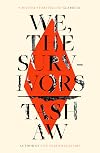
I couldn’t put down this book without remembering the lessons of John Steinbeck’s Grapes of Wrath: that all men are born equal under the sun, and that the owners of the land have no right to legislate the lives of their workers.
In this novel we are faced with an unsparing look at the lives of the increasing armies of the dispossessed.
Tash Aw writes a gruesome, accurate tale of human beings as so much tinder on a bonfire. Where humans are moved like filth across the sea, over borders, to show more another human dungheap. There is filth, there is cholera, and worst of all, there is indifference. Another brown man dead? So what.
Migrant workers need a voice and a vote in the lands they visit, and the lands they settle in.
Not least the armies of Phillipine women who manage our children as nannies or our elderly as caregivers.
Not least the Mexican and other Latin American men and women who make American beds, pick their fruit, wash their dishes, wipe their children, and weed the gardens of increasingly ungrateful Americans.
Not least the Indians, Bangladeshis, Rohingyas who populate the sweatshops and construction projects of the Middle East and the Far East. show less
In this novel we are faced with an unsparing look at the lives of the increasing armies of the dispossessed.
Tash Aw writes a gruesome, accurate tale of human beings as so much tinder on a bonfire. Where humans are moved like filth across the sea, over borders, to show more another human dungheap. There is filth, there is cholera, and worst of all, there is indifference. Another brown man dead? So what.
Migrant workers need a voice and a vote in the lands they visit, and the lands they settle in.
Not least the armies of Phillipine women who manage our children as nannies or our elderly as caregivers.
Not least the Mexican and other Latin American men and women who make American beds, pick their fruit, wash their dishes, wipe their children, and weed the gardens of increasingly ungrateful Americans.
Not least the Indians, Bangladeshis, Rohingyas who populate the sweatshops and construction projects of the Middle East and the Far East. show less
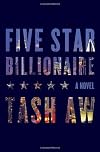
Shanghai is a beautiful place, but it is also a harsh place. Life here is not really life, it is a competition.
Shanghai is the world's largest city, with a total population of over 23 million. It can arguably claim to be the city of the 21st century, similar to 19th century London and 20th century New York, as it is a booming financial, commercial and entertainment center that attracts emigrants and visitors from every continent, and it is the leading symbol of the new China and its growing show more influence on Asia and the rest of the world.
Tash Aw was born in Taipei to Malaysian parents, grew up in Kuala Lumpur, was educated in the UK, and lived in London before he moved to Shanghai after he was chosen to be the first M Literary Writer in Residence in 2010. In this superb novel, he portrays five Malaysian Chinese who have moved to Shanghai to seek the wealth and prestige that the city seems to offer to each of its newcomers.
Phoebe is a naïve and uneducated young woman from the Malaysian countryside, who emigrates illegally to China on the suggestion of a friend, but soon after she arrives she finds that the dream job she was promised has suddenly vanished. Justin is the eldest son of a wealthy real estate tycoon, charged with purchasing a property in Shanghai that will save his family from ruin in the face of the Asian financial crisis. Gary is a pop mega-star who performs in front of thousands of adoring fans, while battling internal demons that threaten to destroy his career. Yinghui is the daughter of a prominent family in Kuala Lumpur who transforms herself from a left wing political activist into a hard nosed and successful businesswoman. Finally, Walter is a secretive and shadowy figure who has risen up from the ashes of his father's ruin to become a prominent developer and the anonymous author of the best selling book "How to Become a Five Star Billionaire". The first four characters are all interlinked with Walter, the only person given a voice in the first person in the book, in an intricately woven web that slowly tightens around each of them.
Through these characters, Tash Aw provides a fascinating internal glimpse into modern Shanghai, a city filled with ambitious but often lonely and desperate people from all over Asia whose singular focus on material goods and wealth outweighs love and personal happiness. Anything and anyone is fair game for exploitation and deceit, and the widespread availability of counterfeit watches, purses and clothing mimics the superficiality of the city's high stakes capitalist culture. Self help books such as the one written by Walter are the bibles of the young up-and-comers, and traditional Chinese culture is viewed as outdated and stifling to young people like Phoebe.
Each one attains some degree of success, but several meet with sudden and spectacular failure, in the matter of a climber that reaches the summit of a mountain only to be blown off of it entirely by a sudden gust of wind.
The city held its promises just out of your reach, waiting to see how far you were willing to go to get what you wanted, how long you were prepared to wait. And until you determined the parameters of your pursuit, you would be on edge, for despite the restaurants and shops and art galleries and sense of unbridled potential, you would always feel that Shanghai was accelerating a couple of steps ahead of you, no matter how hard you worked or played. The crowds, the traffic, the impenetrable dialect, the muddy rains that carried the remnants of the Gobi Desert sandstorms and stained your clothes every March: The city was teasing you, testing your limits, using you. You arrived thinking you were going to use Shanghai to get what you wanted, and it would be some time before you realized that it was using you, that it had already moved on and you were playing catch up.
Five Star Billionaire is a captivating work about Shanghai and the new China, and the lives of five talented and determined people who seek wealth and fulfillment but find loneliness and misery instead. I read nearly all of this novel in a single sitting, and I was quite sorry to see it end. I also loved Tash Aw's previous novel Map of the Invisible World, and I look forward to reading The Harmony Silk Factory later this year. show less
Shanghai is the world's largest city, with a total population of over 23 million. It can arguably claim to be the city of the 21st century, similar to 19th century London and 20th century New York, as it is a booming financial, commercial and entertainment center that attracts emigrants and visitors from every continent, and it is the leading symbol of the new China and its growing show more influence on Asia and the rest of the world.
Tash Aw was born in Taipei to Malaysian parents, grew up in Kuala Lumpur, was educated in the UK, and lived in London before he moved to Shanghai after he was chosen to be the first M Literary Writer in Residence in 2010. In this superb novel, he portrays five Malaysian Chinese who have moved to Shanghai to seek the wealth and prestige that the city seems to offer to each of its newcomers.
Phoebe is a naïve and uneducated young woman from the Malaysian countryside, who emigrates illegally to China on the suggestion of a friend, but soon after she arrives she finds that the dream job she was promised has suddenly vanished. Justin is the eldest son of a wealthy real estate tycoon, charged with purchasing a property in Shanghai that will save his family from ruin in the face of the Asian financial crisis. Gary is a pop mega-star who performs in front of thousands of adoring fans, while battling internal demons that threaten to destroy his career. Yinghui is the daughter of a prominent family in Kuala Lumpur who transforms herself from a left wing political activist into a hard nosed and successful businesswoman. Finally, Walter is a secretive and shadowy figure who has risen up from the ashes of his father's ruin to become a prominent developer and the anonymous author of the best selling book "How to Become a Five Star Billionaire". The first four characters are all interlinked with Walter, the only person given a voice in the first person in the book, in an intricately woven web that slowly tightens around each of them.
Through these characters, Tash Aw provides a fascinating internal glimpse into modern Shanghai, a city filled with ambitious but often lonely and desperate people from all over Asia whose singular focus on material goods and wealth outweighs love and personal happiness. Anything and anyone is fair game for exploitation and deceit, and the widespread availability of counterfeit watches, purses and clothing mimics the superficiality of the city's high stakes capitalist culture. Self help books such as the one written by Walter are the bibles of the young up-and-comers, and traditional Chinese culture is viewed as outdated and stifling to young people like Phoebe.
Each one attains some degree of success, but several meet with sudden and spectacular failure, in the matter of a climber that reaches the summit of a mountain only to be blown off of it entirely by a sudden gust of wind.
The city held its promises just out of your reach, waiting to see how far you were willing to go to get what you wanted, how long you were prepared to wait. And until you determined the parameters of your pursuit, you would be on edge, for despite the restaurants and shops and art galleries and sense of unbridled potential, you would always feel that Shanghai was accelerating a couple of steps ahead of you, no matter how hard you worked or played. The crowds, the traffic, the impenetrable dialect, the muddy rains that carried the remnants of the Gobi Desert sandstorms and stained your clothes every March: The city was teasing you, testing your limits, using you. You arrived thinking you were going to use Shanghai to get what you wanted, and it would be some time before you realized that it was using you, that it had already moved on and you were playing catch up.
Five Star Billionaire is a captivating work about Shanghai and the new China, and the lives of five talented and determined people who seek wealth and fulfillment but find loneliness and misery instead. I read nearly all of this novel in a single sitting, and I was quite sorry to see it end. I also loved Tash Aw's previous novel Map of the Invisible World, and I look forward to reading The Harmony Silk Factory later this year. show less
 This review was written for LibraryThing Early Reviewers.
Lists
Awards


You May Also Like


Associated Authors
Statistics
- Works
- 11
- Also by
- 5
- Members
- 2,110
- Popularity
- #12,198
- Rating
- 3.5
- Reviews
- 113
- ISBNs
- 120
- Languages
- 12
- Favorited
- 3


