
Vicky Alvear Shecter
Author of Cleopatra's Moon
About the Author
Series
Works by Vicky Alvear Shecter
Anubis Speaks!: A Guide to the Afterlife by the Egyptian God of the Dead (Secrets of the Ancient Gods) (2013) 74 copies, 5 reviews
Hades Speaks!: A Guide to the Underworld by the Greek God of the Dead (Secrets of the Ancient Gods) (2014) 33 copies, 3 reviews
Thor Speaks!: A Guide to the Realms by the Norse God of Thunder (Secrets of the Ancient Gods) (2015) 18 copies, 2 reviews
Associated Works
Songs of Blood and Gold — Contributor — 4 copies
Tagged
Common Knowledge
- Birthdate
- 1961
- Gender
- female
- Occupations
- docent
writer - Organizations
- Michael C. Carlos Museum of Antiquities
- Places of residence
- Miami, Florida, USA
Atlanta, Georgia, USA - Associated Place (for map)
- USA
Members
Reviews
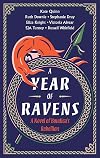
What an unusual twist on co-authoring! The story of Boudica's rebellion is told in (mostly) linear time, but from the points of view of several different characters with each installment carrying on the story from a different p.o.v. as told by a different author. Surprisingly, there's not a blatantly lesser section in the lot.
Given how little we know about Boudica, the culture of Celtic Britain, and Druidism, the authors had very little to work with, yet they've created a very plausible show more sociopolitical setting for their novel. The characters are round and believable and often sympathetic. There's not a single uninflected "good guy," which seems appropriate, given the historical roots of the tale and the fact that this is primarily a story of war.
As expected, the subject means that the book gets pretty much all the content warnings. Violence, SA, child abuse, gore, cruelty to humans and animals, homophobia, racism, etc. There are many disturbing scenes and elements, but none are exploitative or unnecessarily detailed or prolonged. If you've somehow gotten this far in life without realizing that humans, even those who are generally decent in other contexts, often do abjectly horrific things to each other in war, this novel will thoroughly correct that oversight. Also, if you don't know the source story, be aware that Boudica revolted against the Roman occupation of Britain after the Roman provincial procurator had her publicly stripped and flogged and allowed Roman soldiers to rape her daughters, so things get ugly pretty quickly in this book and then just stay ugly.
Human nature is actually the most disturbing thing about the book. As in life, there are a few characters who are so thoroughly degenerate and brutal that we feel pretty comfortable hating them and it's a relief when they're taken out of circulation, but the vast majority of the characters are not so easily managed. Nearly every main character, whether Roman or Britton, does things that, to a comfortable 21st-century eye, are terrible. Sometimes they have no choice, but often they make what seems like the best decision in the moment, even if it leads them into committing injustices. And yet every single one has moments in which the reader sees their humanity and feels for them. For a book with seven authors, that's pretty impressive. show less
Given how little we know about Boudica, the culture of Celtic Britain, and Druidism, the authors had very little to work with, yet they've created a very plausible show more sociopolitical setting for their novel. The characters are round and believable and often sympathetic. There's not a single uninflected "good guy," which seems appropriate, given the historical roots of the tale and the fact that this is primarily a story of war.
As expected, the subject means that the book gets pretty much all the content warnings. Violence, SA, child abuse, gore, cruelty to humans and animals, homophobia, racism, etc. There are many disturbing scenes and elements, but none are exploitative or unnecessarily detailed or prolonged. If you've somehow gotten this far in life without realizing that humans, even those who are generally decent in other contexts, often do abjectly horrific things to each other in war, this novel will thoroughly correct that oversight. Also, if you don't know the source story, be aware that Boudica revolted against the Roman occupation of Britain after the Roman provincial procurator had her publicly stripped and flogged and allowed Roman soldiers to rape her daughters, so things get ugly pretty quickly in this book and then just stay ugly.
Human nature is actually the most disturbing thing about the book. As in life, there are a few characters who are so thoroughly degenerate and brutal that we feel pretty comfortable hating them and it's a relief when they're taken out of circulation, but the vast majority of the characters are not so easily managed. Nearly every main character, whether Roman or Britton, does things that, to a comfortable 21st-century eye, are terrible. Sometimes they have no choice, but often they make what seems like the best decision in the moment, even if it leads them into committing injustices. And yet every single one has moments in which the reader sees their humanity and feels for them. For a book with seven authors, that's pretty impressive. show less

Funny, I wonder if there is a bit of truth in the way the "barbarians" underestimated the Romans by their effete appearance. Sadly, the tribe leaders met with maybe the least impressive, Claudius. Tragically so.
I've always found it odd that the Romans wiped out the Druid practice/religion when they pretty much left all others alone, even encouraging people to build temples in Rome to foreign gods.
Interesting the self-interest on display when the outraged Britons quake under the prospect of show more becoming Roman slaves when they enslave each other with abandon.
Not sure I'll finish this. It's a foregone conclusion and there is a ton of grisly action and cruelty, to be expected with war, but I'll never listen to it again even if I do get through it. Back to Audible it will go.
Ok, I made it through, but skipped over some more gratuitous passages - droning on about curses and battle blows. It strikes me, in the fierce pride of the women in the book, that the only way they can have any agency is to adopt the bloodthirsty violence made the cultural norm by men. Behaving with gentleness, kindness, compassion and compromise are all weak and despised. Why? Because they are the default position of many women? Because they don't result in absolute domination and oppression? Why do we value those qualities in humans over the others? Why are we, and by we I mean the culture as a whole and men in particular, so afraid of that other side to us? Sometimes called the feminine side, but I don't think it's that specific. It's just been nearly completely wiped out of so much of how we think of ourselves and what we consider normal and natural. Sad really. We never learn and it will be the end of us one day. And, sadly, probably all life on earth as we know it. show less
I've always found it odd that the Romans wiped out the Druid practice/religion when they pretty much left all others alone, even encouraging people to build temples in Rome to foreign gods.
Interesting the self-interest on display when the outraged Britons quake under the prospect of show more becoming Roman slaves when they enslave each other with abandon.
Not sure I'll finish this. It's a foregone conclusion and there is a ton of grisly action and cruelty, to be expected with war, but I'll never listen to it again even if I do get through it. Back to Audible it will go.
Ok, I made it through, but skipped over some more gratuitous passages - droning on about curses and battle blows. It strikes me, in the fierce pride of the women in the book, that the only way they can have any agency is to adopt the bloodthirsty violence made the cultural norm by men. Behaving with gentleness, kindness, compassion and compromise are all weak and despised. Why? Because they are the default position of many women? Because they don't result in absolute domination and oppression? Why do we value those qualities in humans over the others? Why are we, and by we I mean the culture as a whole and men in particular, so afraid of that other side to us? Sometimes called the feminine side, but I don't think it's that specific. It's just been nearly completely wiped out of so much of how we think of ourselves and what we consider normal and natural. Sad really. We never learn and it will be the end of us one day. And, sadly, probably all life on earth as we know it. show less
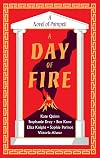
A Day of Fire is a vividly imagined compilation from six best-selling authors as they envision the last days of Pompeii. Each author writes a story about their chosen character and what fate befell them from the eruption of Mount Vesuvius. The characters come from a varied back ground, from a wealthy senator to a couple of lowly prostitutes, a retired soldier and a young bride-to-be. Pompeii was a lively resort town filled with a flourishing population before it was destroyed and buried in show more 79 AD.
The unique format of the book gives us a wide view of the city of Pompeii and it’s inhabitants. The authors have meshed together well and we are awarded with some very interesting characters who show up in more than one story which helps to give the book continuity. These intertwining plots give the book the feeling of a novel rather than just inter-connected stories. While some of the chapters are tragic and dark, there are also others that are uplifting and hopeful.
A Day of Fire brings this two thousand year old tragedy to life. Authors Kate Quinn, Vicky Alvear, Ben Kane, Stephanie Dray, Eliza Knight and Sophie Perinot capture the terror of this momentous historical event even as they educate us in Roman culture, society and relationships. Overall, I found A Day of Fire to be a gripping and involving read. show less
The unique format of the book gives us a wide view of the city of Pompeii and it’s inhabitants. The authors have meshed together well and we are awarded with some very interesting characters who show up in more than one story which helps to give the book continuity. These intertwining plots give the book the feeling of a novel rather than just inter-connected stories. While some of the chapters are tragic and dark, there are also others that are uplifting and hopeful.
A Day of Fire brings this two thousand year old tragedy to life. Authors Kate Quinn, Vicky Alvear, Ben Kane, Stephanie Dray, Eliza Knight and Sophie Perinot capture the terror of this momentous historical event even as they educate us in Roman culture, society and relationships. Overall, I found A Day of Fire to be a gripping and involving read. show less
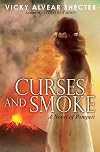
I must write upfront that I love stories from Ancient Rome and its environs and I'm totally fascinated by volcanoes so this book called to me on many levels. The book begins with our young heroine, Lucia finding out she is to be married to a man old enough to be her grandfather since he is willing to invest in her father's gladiator school. She is a smart girl who doesn't want to marry a man with hairy ears and who will take her away from her beloved Pompeii.
Lucia has always been interested show more in nature and the writings of Pliny. When she starts noticing odd things occurring she feels that the Earth is trying to give forth a message but no one will listen to her except for Tag - a slave of the household who has returned from medical training. He was her childhood friend and they start to develop feelings for each other which is completely forbidden in their rigid society.
As events move forward Lucia tries to find a way out of her marriage and starts to dream of running away with Tag but another man conspires to not have that happen. As the Earth rumbles and things heat up all around will Lucia find happiness?
I don't want to spoil the story of course and despite this being a young adult novel I quite enjoyed it. It was at times a bit more simplistic than an adult novel would have been but that is to be expected and it didn't detract from the story. There were instances of behaviors and language that were a little too modern but I suspect this was also to work for the intended audience. The book is well researched and the characters quite compelling. The ending was riveting and not at all what I expected. show less
Lucia has always been interested show more in nature and the writings of Pliny. When she starts noticing odd things occurring she feels that the Earth is trying to give forth a message but no one will listen to her except for Tag - a slave of the household who has returned from medical training. He was her childhood friend and they start to develop feelings for each other which is completely forbidden in their rigid society.
As events move forward Lucia tries to find a way out of her marriage and starts to dream of running away with Tag but another man conspires to not have that happen. As the Earth rumbles and things heat up all around will Lucia find happiness?
I don't want to spoil the story of course and despite this being a young adult novel I quite enjoyed it. It was at times a bit more simplistic than an adult novel would have been but that is to be expected and it didn't detract from the story. There were instances of behaviors and language that were a little too modern but I suspect this was also to work for the intended audience. The book is well researched and the characters quite compelling. The ending was riveting and not at all what I expected. show less
Lists
Awards


You May Also Like


Associated Authors
Statistics
- Works
- 12
- Also by
- 2
- Members
- 1,264
- Popularity
- #20,302
- Rating
- 3.9
- Reviews
- 72
- ISBNs
- 66
- Languages
- 3
