
Yōko Tawada
Author of The Emissary
About the Author
Series
Works by Yōko Tawada
Yoko Tawada's Portrait of a Tongue: An Experimental Translation by Chantal Wright (Literary Translation) (2013) 22 copies
The Last Children of Tokyo 5 copies
Eine raffinierte Grenze aus Licht: Japanische Dichtung der Gegenwart (Mainzer Reihe. Neue Folge) (2023) — Editor — 2 copies
地球にちりばめられて 1 copy
Chàng Chó 1 copy
Memoires van een ijsbeer 1 copy
Persona 1 copy
Tabula rasa 1 copy
地球にちりばめられて 1 copy
To Zagreb 1 copy
Ookami Ken 1 copy
Tokió utolsó gyermekei 1 copy
Sendiboðinn 1 copy
ゴットハルト鉄道 (講談社文芸文庫) 1 copy
Bir Kutup Ayısının Anıları 1 copy
Associated Works
Digital Geishas and Talking Frogs: The Best 21st Century Short Stories from Japan (2011) — Contributor — 19 copies
Ich habe eine fremde Sprache gewählt. Ausländische Schriftsteller schreiben deutsch (1998) — Contributor — 2 copies
新潮 2018年 01月号 — Contributor — 1 copy
新潮 2019年 01月号 — Contributor — 1 copy
早稲田文学 2014年秋号 — Contributor — 1 copy
早稲田文学 2017年初夏号 (単行本) — Contributor — 1 copy
月の文学館 月の人の一人とならむ — Contributor — 1 copy
三田文学 2020年 02 月号 — Contributor — 1 copy
平成の名小説 (新潮2019年08月号増刊) — Contributor — 1 copy
群像 2019年 02月号 — Contributor — 1 copy
群像 2020年 01 月号 — Contributor — 1 copy
現代詩手帖 1996年 05月号 — Contributor — 1 copy
Kodansha's Fiction Sampler, Extraordinary Writers from Japan — Contributor — 1 copy
武蔵野美術 No.112 1999春 — Contributor — 1 copy
多和田葉子ノート — Contributor — 1 copy
すばる2018年1月号 — Contributor — 1 copy
てんでんこ 2018 第9号 — Contributor — 1 copy
現代詩手帖 2016年 01月号 — Contributor — 1 copy
現代詩手帖 2016年 02月号 — Contributor — 1 copy
現代詩手帖 2018年 01月号 — Contributor — 1 copy
現代詩手帖 2019年 12月号 現代詩年鑑2020 — Contributor — 1 copy
現代詩手帖 2020年 12月号 現代詩年鑑2021 — Contributor — 1 copy
文學界 2021年2月号 創刊1000号記念特大号 — Contributor — 1 copy
文學界2020年5月号 — Contributor — 1 copy
新潮 2010年 03月号 [雑誌] — Contributor — 1 copy
現代詩手帖 2005年 06月号 特集 境域の詩人たち―母語・母国語をめぐる旅 — Contributor — 1 copy
Tagged
Common Knowledge
- Canonical name
- Tawada, Yōko
- Birthdate
- 1960-03-23
- Gender
- female
- Education
- Waseda University (Russian Literature)
University of Hamburg (MA - Contemporary German literature)
University of Zurich (PhD - German Literature) - Organizations
- Deutsche Akademie für Sprache und Dichtung
- Awards and honors
- Adelbert von Chamisso Prize (1996)
Goethe Medal (2005)
Akutagawa Prize (1993)
Gunzo Literature Prize (1991)
Lessing Prize (1994) - Nationality
- Japan
- Birthplace
- Tokyo, Japan
- Places of residence
- Berlin, Germany
Tokyo, Japan - Associated Place (for map)
- Japan
Members
Reviews
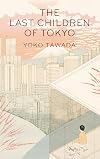
I can never resist a short dystopian fable and devour them like snacks, all in one go. This quite possibly results in my deriving less meaning from them than I could. In this case, I felt myself lacking the linguistic and cultural reference points to appreciate it properly. I quite often find this with Russian literature and sometimes other fiction in translation. There are probably references to the Fukushima disaster in ‘The Last Children of Tokyo’, for instance, although I couldn’t show more pin them down. The narrative centres on a hale and hearty centenarian great-grandfather and his delicate and sickly great-grandson. As a consequence of major environmental disaster, future Japan has retreated from the rest the world in an echo of the Edo period. Cutting the country off completely has not addressed the environmental crisis or falling population, so shadowy authorities are considering sending youthful ambassadors overseas. There are many intriguing world-building details, such as privatisation of the government, pervasive gender fluidity, and dismantling of the electric grid. The plot is minimal, however. The reader observes the elderly and energetic Yoshiro painstakingly care of young Mumei, whose delicate body seems unlikely to reach adulthood. Yoshiro also observes that soon it will be unsafe to go outside at all, as well as frequently commenting on food contamination, because the environment continues to deteriorate.
Quite a lot of the book’s short length consists of flashbacks centring on the rest of Yoshiro’s family. These are slightly frustrating, as they lack sufficient context to provide any explanation of how the environment, economy, and society collapsed to such an extent. Mumei’s grandparents and parents are depicted as somewhat flighty individuals, while he himself is a calm person apparently unconcerned by mortality. Yoshiro is likewise a peaceable and reliable fellow, albeit afraid for Mumei who can barely survive a short walk. I found the reflections on generation gaps striking:
Such minor details are the only signs of anger, fear, and dread in the face of civilisation’s apparent collapse. If children cannot survive, there is no prospect of a future for Japan, yet this remains subtext hidden behind daily routines. I did like the way that the narrative conveys significant changes in society via material details, often of food. By contrast, the relationships between characters are quite ephemeral, except the touching bond between Yoshiro and Mumei. The unsettling generational differences are perhaps the most memorable parts of the book:
‘The Last Children of Tokyo’ is mysterious, atmospheric, and guarded, although that could in part be due to my lack of familiarity with Japan. While technically apocalyptic in content, it is at heart a quiet tale of an old man and a young child that comes to no firm conclusions about how the generation gap can be bridged.The final scenes seem to be Mumei’s hallucinations while he dies of a stroke, foreclosing hope for the future. Rather than showing potential for revival, the narrative is of declining with dignity. Older generations survive so they can witness the results of their greed and destructiveness. Despite the gentle style in which it is told, this is a harsh and bleak story when you think about it. show less
Quite a lot of the book’s short length consists of flashbacks centring on the rest of Yoshiro’s family. These are slightly frustrating, as they lack sufficient context to provide any explanation of how the environment, economy, and society collapsed to such an extent. Mumei’s grandparents and parents are depicted as somewhat flighty individuals, while he himself is a calm person apparently unconcerned by mortality. Yoshiro is likewise a peaceable and reliable fellow, albeit afraid for Mumei who can barely survive a short walk. I found the reflections on generation gaps striking:
Assuming he had knowledge and wealth to leave to his descendants was mere arrogance, Yoshiro now realised. This life with his great-grandson was about all he could manage. And for that he needed to be flexible, in mind and body, with the courage to doubt what he had believed for over a century. Sloughing off his pride like an old jacket, he’d have to go around in his shirtsleeves. If he was cold, rather than buying a new jacket it would be better to think of ways to grow a coat of fur like a bear’s. He was not really an ‘old man’, but a man who, after living for a century, had become a new species of human being, he thought, clenching his fists again and again.
Such minor details are the only signs of anger, fear, and dread in the face of civilisation’s apparent collapse. If children cannot survive, there is no prospect of a future for Japan, yet this remains subtext hidden behind daily routines. I did like the way that the narrative conveys significant changes in society via material details, often of food. By contrast, the relationships between characters are quite ephemeral, except the touching bond between Yoshiro and Mumei. The unsettling generational differences are perhaps the most memorable parts of the book:
You could tell the younger relations by their rounded backs, thinning hair, pale faces, and by how slowly their chopsticks moved. Realising their descendants were in such a state because they’d been so feckless made the elderly feel guilty, dampening the festivities.
While it wasn’t clear whether or not Yoshiro’s generation would really have to live forever, for the time being they had definitely been robbed of death. Perhaps when their bodies had reached the end, even their fingers and toes worn down to nothing, their minds would hang on, refusing to shut down, writhing still against immobile flesh.
‘The Last Children of Tokyo’ is mysterious, atmospheric, and guarded, although that could in part be due to my lack of familiarity with Japan. While technically apocalyptic in content, it is at heart a quiet tale of an old man and a young child that comes to no firm conclusions about how the generation gap can be bridged.
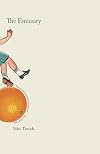
I read this book twice because I enjoyed it so much. I can see myself reading it a third time. It's meandering and fluid in its organization, wandering in and out of character's heads and even in and out of time. Those who like more traditionally plotted novels (like Parul Sehgal of the New York Times) maybe find themselves frustrated. I was entranced and also moved. For me the book is one of the starkest and saddest statements on the environmental devastation one generation leaves for show more another -- told metaphorically and fantastically. What if we had to witness how humanity's poor environmental actions today will affect our great-grandchildren? What if those environmental actions, in addition to destroying the Earth, destroyed our great-grandchildren physically? What if we were fine and nearly immortal while our great-grandchildren were neither fine nor immortal so we had to take care of them and watch them die? A powerful and beautiful book.
(Because of the meandering plot, I found the audiobook a little hard to follow. Reading the novel on the page worked much better for me.) show less
(Because of the meandering plot, I found the audiobook a little hard to follow. Reading the novel on the page worked much better for me.) show less
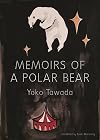
Etüden im Schnee is - amongst other things - a book about three (polar) bears and a little girl. But it's the magic-realist three bears novel that you might imagine Günter Grass, Angela Carter and Richard Adams getting together to write. Part one is narrated by the grandmother bear, who is writing her memoirs in between riding a tricycle in a Russian circus; part two is a joint effort by the East German mother bear Toska and her circus trainer Barbara, and part three is again a show more bear's-eye-view narrated by a slightly-fictionalised version of the greatest real polar-bear-celebrity of our times, Knut of the Berlin Zoo. There's also a guest appearance by a well-known US musician. Although it touches on World War II, the division and reunification of Germany, climate change, and other big topics, this isn't really a political novel - its real focus is on the relationship between people and animals. Tawada tries to get past the anthropomorphism and sentimentality to dig into what is really going on when people interact with animals. Interesting, beautifully written, and technically very ingenious, but I don't know if the result is really worth the effort.
The only obviously Japanese thing about this book was the use of coloured printed paper (with Arctic motifs) for dividers between the chapters, which I thought was a rather nice touch. Less successful was the idea of setting the entire text in Futura. I can't see what that was supposed to achieve - it is a typeface that really doesn't look good when it's packed together to fill a page. show less
The only obviously Japanese thing about this book was the use of coloured printed paper (with Arctic motifs) for dividers between the chapters, which I thought was a rather nice touch. Less successful was the idea of setting the entire text in Futura. I can't see what that was supposed to achieve - it is a typeface that really doesn't look good when it's packed together to fill a page. show less
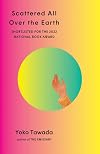
One of the things I used to enjoy about travel was tasting regional cuisines, learning new words and languages (I always try to learn a few phrases of the local language), and seeing the world through different eyes. But the world is becoming more homogenous in many ways. Tawada's premise here challenges the reader to begin seeing the world through the eyes of migrants -- those who leave home for a variety of reasons (the focus here is on two people who leave for the purpose of study) and show more have to learn new languages and new ways of communicating and, consequently, form new ways of thinking and new identities. Leaving assimilation behind, the novel asks 'as migrants in a different language and culture who do we become?' Then provokes related questions about how those language/dress/culture/identity issues affect acceptance. Do we still have a 'home' country? Are we 'aliens'? What does it mean to be be 'legal' or 'illegal'? Because this is the first volume of a trilogy, it seems incomplete. But what is here piqued my interests (and I love the linguistic issues it raises). It's bold, provocative, witty, intellectual, frustrating, and brilliant. show less
Lists
Awards


You May Also Like


Associated Authors
Statistics
- Works
- 78
- Also by
- 52
- Members
- 2,768
- Popularity
- #9,270
- Rating
- 3.5
- Reviews
- 80
- ISBNs
- 161
- Languages
- 18
- Favorited
- 7