
Sally Gardner
Author of I, Coriander
About the Author
Series
Works by Sally Gardner
Pernickety Boo: A beautifully illustrated, magical, fantasy adventure for kids aged 7+ (2024) 3 copies
Magical Children Flip Book (2 books in 1): (Invisible Boy/Boy with Magic Numbers) (Magical Children) (2007) 2 copies
Icon Ah! Graph EE! 1 copy
Co be Ti Hon 1 copy
Survival Guide 1 copy
Snap Shackle 1 copy
Associated Works
Tagged
Common Knowledge
- Legal name
- Gardner, Sally
- Birthdate
- 1954
- Gender
- female
- Nationality
- UK
- Places of residence
- London, England, UK
- Associated Place (for map)
- England, UK
Members
Discussions
Found: Romance/Action Period Piece Teen Novel About a Noble Girl in Name that Book (May 12)
Fantasy girl locked in closet travels to magic land in Name that Book (January 2018)
Reviews

A strange and beautifully written tale of Cromwellian London and fairy-tales come to life. After the death of her mother and the flight of her father, Coriander is left to the tender mercies of her Puritan step-mother and a fiendish preacher. Her mother was not of this world, however, and has left something precious and powerful behind, something coveted by a malicious witch who is manipulating Coriander's misfortunes and plotting her murder. Can Coriander travel between the two worlds, show more defeat the witch, rescue the prince and be reunited with her father? It's a classic fairy-tale with a wonderfully evocative setting, packed with danger and wonder. show less
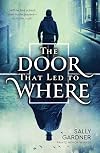
This was a recommendation from a 7th grader whose taste I share, and she was not wrong. (Note to self: next time she needs a book, foist Gardner's [b:Maggot Moon|15798757|Maggot Moon|Sally Gardner|https://images.gr-assets.com/books/1351213402s/15798757.jpg|19697088] upon her -- it's a weird-ass book that I can never get anyone to read, but I kind of love it and the author connection may work, even though story-wise it's a much stranger sell than than this one. Anyway.)
I loved its straight-up show more Britishness: you really feel you are in another country; it's not "translated" for American audiences the way Harry Potter is, and even I with my longtime Anglophilia stumbled over bits of slang or cultural expectations. I maintain that it's good for kids to feel the tiniest bit confused by a book's language or emotional plotting, and this seems on just the right level for American 7th-10th grade mind-opening confusion.
I am always pleased to find a slightly odd, thought-provoking book that nevertheless has an easy pitch: "A kid finds a secret door that leads to London of 100 years ago, and uses it to figure out mysteries about his family's past!" I know the kids who'll be all over that, and you do, too.
I found it really interesting that the "correct ending" was to close the door (with an opening for a sequel), but with some characters on the "wrong" side of it. Screw you, 19th century, I'm wearing jeans and having a career, said the young woman -- and screw you, 21st century, I'm staying in the place where I can make money and have a future, said the young man from a cold and impoverished family. I wouldn't have bought it had they chosen otherwise, though I suspect that's the more typical ending of a story like this. show less
I loved its straight-up show more Britishness: you really feel you are in another country; it's not "translated" for American audiences the way Harry Potter is, and even I with my longtime Anglophilia stumbled over bits of slang or cultural expectations. I maintain that it's good for kids to feel the tiniest bit confused by a book's language or emotional plotting, and this seems on just the right level for American 7th-10th grade mind-opening confusion.
I am always pleased to find a slightly odd, thought-provoking book that nevertheless has an easy pitch: "A kid finds a secret door that leads to London of 100 years ago, and uses it to figure out mysteries about his family's past!" I know the kids who'll be all over that, and you do, too.

Born in 1643 to a wealthy London merchant and his beautiful wife, Coriander Hobbie was raised in a loving and affectionate home, knowing only happiness until the day a mysteriously alluring pair of silver shoes was delivered to her house beside the Thames. This strange gift, which her mother refused to allow her to wear, introduced the first note of disquiet into Coriander's life, and was the beginning of a series of strange events that would bring her great heartache, and involve her in show more dangerous adventures in both the mortal world and in the fairy world existing alongside it. Having lost her mother early in the book, Coriander moves back and forth between the two worlds, contending with an abusive and scheming Puritan stepmother - the horrible Maude Leggs, ugly, ignorant, and shrill, is seen as a wise choice for her father, whose Royalist sympathies had put him at risk from the repressive forces of the Commonwealth - her stepmother's maniacal preacher friend, Arise Fell; and the evil Fairy Queen Rosmore, whose cunning schemes are all aimed at stealing the powerful shadow that once belonged to Coriander's mother...
This work of historical fantasy, which alternates between Commonwealth and Restoration England, and a magical fairy world existing alongside our own, was chosen as the October selection for The Children's Fiction Book-Club to which I belong, and I am very happy to have finally read it, as I have owned a copy since it was first published in 2005. That said, while I found I, Coriander an enjoyable read in many ways - I thought the writing itself was lovely, and that Coriander made for an engaging heroine - it had some significant problems. From a storytelling perspective, I thought the sections of the book that occurred in the mortal world were far more convincing than those that occurred in the fairy world. Rosmore, for all that she is the true author of Coriander's misery, is never as fully realized a character as Maud, while Coriander's romance withTycho had a distinctly tacked-on feeling to it, when compared to the relationship between Hester and Gabriel Appleby.
Unfortunately, while Maud Leggs and Arise Fell were marvelously realized villains, from the storytelling perspective - just the sort of repulsive characters one loves to hate! - their depiction raises troubling questions of historical inaccuracy and bias. I have no quarrel with a critical depiction of the Puritans - they were often zealots, bringing persecution to bear upon those with whom they disagreed, and their notion of culture (what was and wasn't 'godly') was appalling - but Gardner's aim is more than a little off here, potentially leaving young readers with some mistaken ideas. Like many other Reform-based Protestant sects (as opposed to both Catholics and Anglicans of this period), the Puritans placed great emphasis on the individual's relationship with the divine, unmediated by the clergy. To encourage this, they promoted education - the idea being that everyone should be able to read the Bible for themselves - and female literacy rose under their aegis. The exact opposite impression is created in the story, however, through the depiction of Maud and Arise, and their hostility toward women learning. Similarly, although the Puritans arose in response to a worldview every bit as repressive as their own, this is not the impression created by the story at all, which leaves readers with the impression that the monarchy (jubilantly welcomed back at the end of the book) was somehow benevolent.
I don't know that these glaring errors really ruined the book for me - although I did laugh out loud, when reading the historical afterword, to see Quakers described as a 'radical sect' and classified with the Puritans! - but then, I feel equipped to perceive them. It troubles me that young readers, perhaps not as informed about this period, might not be. For this reason, I really wavered in my rating. Three stars represents my enjoyment of the writing. If I were rating for historical accuracy, on the other hand, I might give the book only one. show less
This work of historical fantasy, which alternates between Commonwealth and Restoration England, and a magical fairy world existing alongside our own, was chosen as the October selection for The Children's Fiction Book-Club to which I belong, and I am very happy to have finally read it, as I have owned a copy since it was first published in 2005. That said, while I found I, Coriander an enjoyable read in many ways - I thought the writing itself was lovely, and that Coriander made for an engaging heroine - it had some significant problems. From a storytelling perspective, I thought the sections of the book that occurred in the mortal world were far more convincing than those that occurred in the fairy world. Rosmore, for all that she is the true author of Coriander's misery, is never as fully realized a character as Maud, while Coriander's romance with
Unfortunately, while Maud Leggs and Arise Fell were marvelously realized villains, from the storytelling perspective - just the sort of repulsive characters one loves to hate! - their depiction raises troubling questions of historical inaccuracy and bias. I have no quarrel with a critical depiction of the Puritans - they were often zealots, bringing persecution to bear upon those with whom they disagreed, and their notion of culture (what was and wasn't 'godly') was appalling - but Gardner's aim is more than a little off here, potentially leaving young readers with some mistaken ideas. Like many other Reform-based Protestant sects (as opposed to both Catholics and Anglicans of this period), the Puritans placed great emphasis on the individual's relationship with the divine, unmediated by the clergy. To encourage this, they promoted education - the idea being that everyone should be able to read the Bible for themselves - and female literacy rose under their aegis. The exact opposite impression is created in the story, however, through the depiction of Maud and Arise, and their hostility toward women learning. Similarly, although the Puritans arose in response to a worldview every bit as repressive as their own, this is not the impression created by the story at all, which leaves readers with the impression that the monarchy (jubilantly welcomed back at the end of the book) was somehow benevolent.
I don't know that these glaring errors really ruined the book for me - although I did laugh out loud, when reading the historical afterword, to see Quakers described as a 'radical sect' and classified with the Puritans! - but then, I feel equipped to perceive them. It troubles me that young readers, perhaps not as informed about this period, might not be. For this reason, I really wavered in my rating. Three stars represents my enjoyment of the writing. If I were rating for historical accuracy, on the other hand, I might give the book only one. show less
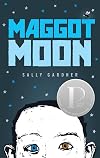
This book. This tiny, amazing, horrific book.
It's difficult to get my thoughts in order.
On page four, I fell in love with the voice. I was absolutely involved with the protagonist and his story. Maggot Moon is definitely written with a less-is-more approach in mind, and it really works.
The MC, Standish Treadwell (who "can't read, can't write, Standish Treadwell isn't bright") is a teenager with dyslexia and heterochromia in a horrific, dystopian version of history where both make him show more undesirable. He lives with his gramps in the only house left on his street, and people keep getting "rubbed out" all around him.
But over the wall, he finds something that the Motherland has been hiding, something that gives him the stone he can use to bring down the giant.
This is a dystopia truly seen through the eyes of a youth. Not really understanding why or how things really work, just that this is the way it is, and that he's living in it (instead of overwhelming the reader with info about the book's dystopian society because the author wants to show readers all about their society and how it's run, how it's oppressive, how it's different, etc.).
This book is also terrifying. Not only because of the book's story, but because of the art accompanying each new chapter, which turns out to be about every two to three pages. It's definitely not for the squeamish. Illustrations of a fly laying eggs in a dead rats mouth are on each page opposite the chapter titles, and it can get pretty gruesome.
I fell in love with this book word by carefully-thought-out word. Standish, Gramps, Hector, Mr. Lush, Standish's beautiful relationship with Hector, Standish's bravery in the face of all that horror and death, and everything this tiny book had to offer. It's awful and frightening, but it's also amazing. show less
It's difficult to get my thoughts in order.
On page four, I fell in love with the voice. I was absolutely involved with the protagonist and his story. Maggot Moon is definitely written with a less-is-more approach in mind, and it really works.
The MC, Standish Treadwell (who "can't read, can't write, Standish Treadwell isn't bright") is a teenager with dyslexia and heterochromia in a horrific, dystopian version of history where both make him show more undesirable. He lives with his gramps in the only house left on his street, and people keep getting "rubbed out" all around him.
But over the wall, he finds something that the Motherland has been hiding, something that gives him the stone he can use to bring down the giant.
This is a dystopia truly seen through the eyes of a youth. Not really understanding why or how things really work, just that this is the way it is, and that he's living in it (instead of overwhelming the reader with info about the book's dystopian society because the author wants to show readers all about their society and how it's run, how it's oppressive, how it's different, etc.).
This book is also terrifying. Not only because of the book's story, but because of the art accompanying each new chapter, which turns out to be about every two to three pages. It's definitely not for the squeamish. Illustrations of a fly laying eggs in a dead rats mouth are on each page opposite the chapter titles, and it can get pretty gruesome.
I fell in love with this book word by carefully-thought-out word. Standish, Gramps, Hector, Mr. Lush, Standish's beautiful relationship with Hector, Standish's bravery in the face of all that horror and death, and everything this tiny book had to offer. It's awful and frightening, but it's also amazing. show less
Lists
Revolutions (1)
Awards


You May Also Like


Associated Authors
Statistics
- Works
- 75
- Also by
- 2
- Members
- 5,356
- Popularity
- #4,649
- Rating
- 3.8
- Reviews
- 207
- ISBNs
- 414
- Languages
- 14
- Favorited
- 5

