
Brian W. Aldiss (1925–2017)
Author of Non-Stop
About the Author
Brian W. Aldiss was born in Dereham, United Kingdom on August 18, 1925. In 1943, he joined the Royal Signals regiment, and saw action in Burma. After World War II, he worked as a bookseller at Oxford University. His first book, The Brightfount Diaries, was published in 1955. His first science show more fiction novel, Non-Stop (Starship in the United States), was published in 1958. He wrote more than 80 books including Hothouse, Greybeard, The Helliconia Trilogy, The Squire Quartet, Frankenstein Unbound, The Malacia Tapestry, Walcot, and Mortal Morning. His short story Super-Toys Last All Summer Long was the basis for the film A.I. Artificial Intelligence. He has received numerous awards for his work including two Hugo Awards, the Nebula Award, the John W. Campbell Memorial Award, and an OBE for services to literature. He was also an anthologist and an artist. He was the editor of 40 anthologies including Introducing SF, The Penguin Science Fiction Omnibus, Space Opera, Space Odysseys, Galactic Empires, Evil Earths, and Perilous Planets. He was an abstract artist and his first solo exhibition, The Other Hemisphere, was held in Oxford in August-September 2010. He died on August 19, 2017 at the age of 92. (Bowker Author Biography) show less
Disambiguation Notice:
Do NOT combine this author page with any author page that includes Aldiss and another person. ONE author or combination of authors per page, please!
Series
Works by Brian W. Aldiss
Hell's Cartographers: Some Personal Histories of Science Fiction Writers (1975) — Editor — 141 copies, 3 reviews
Brothers of the head ; and, Where the lines converge (Panther science fiction) (1977) 46 copies, 1 review
Chroniken der Zukunft III. Die Zeitsonde. Feinde aus dem Kosmos / Kinder der Retorte. (1984) 16 copies
Science Fiction Blues: The Show That Brian Aldiss Took on the Road: A Selection of His Best Stories, Poetry, and Speculations: An Evening of Wonders. (1988) 13 copies
Four for Fantasy: A Quartet of Fantastical Stories Collected for World FantasyCon 2013 (2013) — Contributor — 13 copies, 1 review
The Complete Short Stories: The 1960s (Part 4) (The Brian Aldiss Collection) (2015) 11 copies, 1 review
Total Environment 10 copies
A Tupolev Too Far 9 copies
Amen and Out [short fiction] 6 copies
A Tupolev Too Far 5 copies
Os últimos dias da Terra 5 copies
In the Arena [short story] 4 copies
Better Morphosis 4 copies
Sunlight 4 copies
Afterward- This Year in SF 1966 4 copies
Inteligência Artificial 4 copies
Let's Be Frank [short fiction] 4 copies
The Man and a Man with His Mule 4 copies
Introduction to Nebula Award Stories 2 edt by Brian Aldiss — Editor — 3 copies
Os últimos dias da Terra - 2 3 copies
Best of Aldiss 3 copies
North Of The Abyss [short story] 3 copies
Door Slams In Fourth World 3 copies
Tomorrow's Yesterdays 3 copies
The Hunter at His Ease {short story} 3 copies
Sonrisas de metal 3 copies
The New Father Christmas 3 copies
My Lady Of The Psychiatric Sorrows 3 copies
Judas Danced 3 copies
The Expensive Delicate Ship 2 copies
Manuscript Found In A Police State 2 copies
The Folio Science Fiction Anthology 2 copies
Imperi Galattici 2 copies
Terre Pericolose 2 copies
Comic Inferno {short story} 2 copies
עידן הסוד 2 copies
Summertime Was Nearly Over 2 copies
Tarzan of the Alps 2 copies
The Skeleton 2 copies
Common Clay 2 copies
The Day Of The Doomed King 2 copies
Infestation 2 copies
Blighted Profile [short story] 2 copies
The Soft Predicament [short story] 2 copies
FRANKESTEIN INSOLITO 2 copies
La lampada del sesso 2 copies
The Squire Quartet: Life in the West, Forgotten Life, Remembrance Day, and Somewhere East of Life (2018) 2 copies
Cittadino del tramonto 2 copies
Pipeline {short story} 2 copies
An Apollo Asteroid 2 copies
Aboard The Beatitude 2 copies
El mundo devastado (Spanish Edition) 2 copies
Listen With Big Brother 2 copies
Marte, pianeta libero 2 copies
Sciame Stellare 2 copies
Safe! {short story} 2 copies
Cardiac Arrest [short story] 2 copies
Årets bedste science fiction, 1968 — Editor — 2 copies
The Small Stones of Tu Fu 2 copies
L'albero della vita: Fantapocket 23 2 copies
(Nebulae 84) Espacio y tiempo 2 copies
A lét és a halál 1 copy
A mi tudásunk 1 copy
A géngólem 1 copy
A tó túlpartja 1 copy
A valószínűtlen csillag 1 copy
Nonstop 1 copy
Minden időké ő... 1 copy
Ahead [short story] 1 copy
Ez is művészet 1 copy
Mondjátok el nekik 1 copy
Sera 1 copy
Világ minden könnye 1 copy
A vér szava 1 copy
Kék félláb 1 copy
Strange in a familiar way 1 copy
H.A.B 1 copy
Shape of Things to come, The 1 copy
The Canopy Of Time 1 copy
Imperios galácticos IV 1 copy
Imperios galácticos III 1 copy
Imperios galácticos II 1 copy
Marte pianeta libero 1 copy
Verano 1 copy
Invierno 1 copy
Song of the Silencer 1 copy
Swarm 1 copy
Az arénában 1 copy
נחיל כוכבים 1 copy
Jornada de esperança 1 copy
Neanderbolygó 1 copy
Jaj a tigrisnek 1 copy
Urbanisztika 1 copy
Vetélkedő 1 copy
The Heirs of Earth 1 copy
Kaland a végeken 1 copy
Journey To The Heartland 1 copy
the First-Borne 1 copy
Equator [novella] 1 copy
Cuando la Tierra esté muerta 1 copy
Un miliardo di anni 1 copy
Avventure tra i mondi 1 copy
נחיל כוכבים 1 copy
Best SF stories 1 copy
1979 1 copy
The O in José 1 copy
Indifference 1 copy
The Hibernators 1 copy
The Firmament Theorem 1 copy
Ten Billion Of Them 1 copy
Scarfe's World 1 copy
The God Who Slept With Women 1 copy
End Game 1 copy
Il Mio Mondo Bruciato 1 copy
Confluence [anthology] 1 copy
Gigamesh 39 1 copy
A Private Whale 1 copy
SET OF 3 "BRIAN W. ALDISS" BOOKS: Cryptozoic! / Starship (aka Non-Stop) / Neanderthal Planet (1970) 1 copy
En la Arena 1 copy
Tiger in the Night 1 copy
Three's A Cloud 1 copy
אל האינסוף 1 copy
Last Orders {short story} 1 copy
The Alteration 1 copy
שנים באפלה 1 copy
Os Negros Anos Luz Livro 1 1 copy
Einleitung (Titan 20) 1 copy
THE WORLD OF A Easton Press 1 copy
L'albero della vita 1 copy
אל האינסוף 1 copy
Associated Works
The Year's Best Science Fiction: Eleventh Annual Collection (1994) — Contributor — 467 copies, 2 reviews
The Year's Best Science Fiction: Ninth Annual Collection (1992) — Contributor — 457 copies, 4 reviews
The Science Fiction Hall of Fame, Volume Three: Nebula Winners 1965-1969 (1982) — Contributor — 267 copies, 1 review
The Year's Best Fantasy and Horror: Sixth Annual Collection (1993) — Contributor — 219 copies, 1 review
Adaptations: From Short Story to Big Screen: 35 Great Stories That Have Inspired Great Films (2005) — Contributor — 136 copies, 1 review
Gateways: A Feast of Great New Science Fiction Honoring Grand Master Frederik Pohl (2010) — Contributor — 111 copies, 2 reviews
The Very Best of Fantasy & Science Fiction, Volume 2 (2014) — Contributor, some editions — 108 copies, 7 reviews
The Magazine of Fantasy & Science Fiction: A 30-Year Retrospective (1980) — Contributor — 94 copies, 1 review
Creatures from Beyond: Nine Stories of Science Fiction and Fantasy (1975) — Contributor — 88 copies, 1 review
SF: The Year's Greatest Science Fiction and Fantasy: 4th Annual Volume (1959) — Contributor — 78 copies, 1 review
SF: The Year's Greatest Science-Fiction and Fantasy: 3rd Annual Volume (1958) — Contributor — 66 copies, 2 reviews
The Best Horror Stories from The Magazine of Fantasy & Science Fiction (1988) — Contributor — 52 copies, 1 review
This Way to the End Times: Classic Tales of the Apocalypse (2016) — Contributor — 52 copies, 2 reviews
Twenty Houses of the Zodiac: Anthology of International Science Fiction (1979) — Contributor — 47 copies, 1 review
Menace of the Machine: The Rise of AI in Classic Science Fiction (2019) — Contributor — 44 copies, 1 review
In the Shadow of the Towers: Speculative Fiction in a Post-9/11 World (2015) — Contributor — 41 copies
Celebration: Commemorating the 50th Anniversary of the British Science Fiction Association (2008) — Contributor — 37 copies, 1 review
Deadly Dolls: Midnight Tales of Uncanny Playthings: 50 (British Library Tales of the Weird) (2024) — Contributor — 33 copies, 1 review
Science Fiction Writers: Critical Studies of the Major Authors From the Early Nineteenth Century to the Present Day (1982) — Contributor — 33 copies
The Best Horror Stories from the Magazine of Fantasy & Science Fiction, Vol. I (1989) — Contributor — 27 copies
Holding your eight hands; an anthology of science fiction verse (1970) — Contributor — 25 copies, 1 review
The Magazine of Fantasy and Science Fiction June 1991, Vol. 80, No. 6 (1991) — Contributor — 22 copies
Analog Science Fiction/Science Fact: Vol. LXXVIII, No. 4 (December 1966) (1966) — Contributor — 20 copies
Isaac Asimov's Science Fiction Magazine: Vol. 2, No. 2 [March-April 1978] (1978) — Contributor — 17 copies
The Magazine of Fantasy and Science Fiction October 1982, Vol. 63, No. 4 (1982) — Author — 16 copies
Postscripts Magazine, Issue 15: Worldcon 2008 Special (2008) — Contributor, some editions — 15 copies
The Magazine of Fantasy and Science Fiction June 1963, Vol. 24, No. 6 (1963) — Contributor — 15 copies
Isaac Asimov's Science Fiction Magazine: Vol. 7, No. 4 [April 1983] (1983) — Contributor — 13 copies
The Magazine of Fantasy and Science Fiction September 1965, Vol. 29, No. 3 (1965) — Contributor — 12 copies
Rejser i tid og rum : en bog om science fiction (1973) — Author, some editions — 12 copies, 1 review
The Magazine of Fantasy and Science Fiction October 1989, Vol. 77, No. 4 (1989) — Author — 11 copies
Die Fußangeln der Zeit. Die schönsten Zeitreise- Geschichten I. (1984) — Contributor, some editions — 11 copies
Das Science Fiction Jahr 1994. Ein Jahrbuch für den Science Fiction Leser (1994) — Contributor — 10 copies
The Magazine of Fantasy and Science Fiction November 1988, Vol. 75, No. 5 (1988) — Author — 10 copies
Robotics Through Science Fiction: Artificial Intelligence Explained Through Six Classic Robot Short Stories (2018) — Contributor — 8 copies
Flotsam Fantasique The Souvenir Book of World Fantasy Convention 2013 (2013) — Contributor — 6 copies
New Worlds Science Fiction 75, September 1958 — Contributor — 4 copies
Songs from the Steppes of Central Asia: The Collected Poems of Makhtumkuli: Eighteenth Century Poet-Hero of Turkmenistan (1995) — Versifier, some editions — 3 copies
Bruin's Midnight Reader: Strange and Engaging Stories for the Curious (2022) — Contributor — 3 copies
Den elektriske myre og andre science fiction-fortællinger (1984) — Author, some editions — 2 copies, 1 review
危険なヴィジョン〔完全版〕1 — Contributor — 2 copies
The Private Library: Vol 2 No 2 Summer1969 : Quarterly Journal of the Private Libraries Association (1969) — Contributor — 2 copies
New Worlds Science Fiction 51, September 1956 — Contributor — 2 copies
SF宝石 1979年 08月号(創刊号) — Contributor — 1 copy
S-Fマガジン 1982年 10月号 — Contributor — 1 copy
S-Fマガジン 1982年 12月号 — Contributor — 1 copy
S-Fマガジン 1983年 06月号 — Contributor — 1 copy
S-Fマガジン 1986年 03月号 — Contributor — 1 copy
S-Fマガジン 1987年 07月号 — Contributor — 1 copy
SFマガジン 2017年 12 月号 — Contributor — 1 copy
短編ミステリの二百年 5 — Contributor — 1 copy
S-Fマガジン 1968年 01月号(通巻103号) — Contributor — 1 copy
S-Fマガジン 1984年 10月号 — Contributor — 1 copy
Science Fantasy 62, December 1963 — Contributor — 1 copy
SFの評論大全集 (別冊奇想天外 4) — Contributor — 1 copy
S-Fマガジン 1965年02月号 (通巻65号) — Contributor — 1 copy
海の鎖 — Contributor — 1 copy
季刊NW-SF 2号 — Contributor — 1 copy
ロボット・オペラ — Contributor — 1 copy
SFファンタジイ大全集 (別冊奇想天外 10) — Contributor — 1 copy
S-Fマガジン 1978年 12月号 — Contributor — 1 copy
S-Fマガジン 2000年 02月号 [雑誌] — Contributor — 1 copy
季刊NW-SF 1981年 07月 第17号 — Contributor — 1 copy
S-Fマガジン 1992年 06月号 — Contributor — 1 copy
S-Fマガジン 1978年 10月臨時増刊号 — Contributor — 1 copy
季刊NW-SF 1973年 11月 第8号 — Contributor — 1 copy
Tagged
Common Knowledge
- Legal name
- Aldiss, Brian Wilson
- Other names
- Aldiss, Brian
Shackleton, C.C.
Cracken, Jael
Runciman, John
אולדיס, בריאן ווילסון - Birthdate
- 1925-08-18
- Date of death
- 2017-08-19
- Gender
- male
- Education
- West Buckland School
Framlingham College, Suffolk, England, UK - Occupations
- bookseller
author
editor
anthologist
artist
critic - Organizations
- Birmingham Science Fiction Group (Co-President)
H. G. Wells Society (Vice President)
British Science Fiction Association
Science Fiction and Fantasy Writers of America
British Army (Royal Signals regiment) - Awards and honors
- Order of the British Empire (Officer, 2005)
Permanent Special Guest, International Conference for the Fantastic in the Arts [ICFA]
Honorary Doctorate (University of Liverpool | 2008)
SFRA Pilgrim Award (1978)
IAFA Distinguished Scholarship (1986)
Prix Utopia (1999) (show all 10)
SFWA Grand Master (2000)
Science Fiction and Fantasy Hall Of Fame (2004)
First Fandom Hall of Fame Award (2004)
Royal Society of Literature (Fellow, 1990) - Relationships
- Aldiss, Margaret (spouse)
- Short biography
- Brian Aldiss is an English author of general fiction and science fiction, greatly influenced by H G Wells. He saw action in Burma during WWII, which influenced several of his books. After the war he became a bookseller in Oxford and wrote short pieces for science fiction magazines and a bookseller trade journal. His first book, about a sales assistant in a bookshop, was published in 1955. He has also edited a number of anthologies.
- Nationality
- UK
- Birthplace
- East Dereham, Norfolk, England, UK
- Places of residence
- Oxford, Oxfordshire, England, UK
- Place of death
- Oxford, Oxfordshire, England, UK
- Map Location
- England, UK
- Disambiguation notice
- Do NOT combine this author page with any author page that includes Aldiss and another person. ONE author or combination of authors per page, please!
Members
Discussions
A tasty concoction in Good Show Sir! — bad science fiction and fantasy covers (November 2024)
Brian Aldiss, 1925-2017 in Science Fiction Fans (September 2017)
Trilogy? Parasite/global weather changes cause humans to revert to caveman status every few 1000 yrs in Name that Book (December 2013)
Reviews
Helliconia: Helliconia Spring, Helliconia Summer, Helliconia Winter: "Hellonica Spring", "Helliconia Summer", "Helliconia Winter" (S.F. MASTERWORKS) by Brian Aldiss
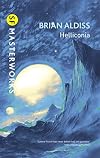
An astonishing trilogy, best read, I suspect, in one big 1,000-plus paged lump as presented here. Helliconia is a formidable work. The timescale is vast, the themes are difficult, the human dramas, though full of intrigue and passion, battles and spectacle, are unashamedly literary in the demands placed on the reader. The trilogy, in fact, expects full intellectual and emotional engagement in order to fully appreciate the scale and complexity of Aldiss' achievement.
Helliconia is a planet show more with two suns and two years. The shorter years are over four hundred days long. The greater year takes milllenia. At one end of the great year the planet is shrouded in extreme cold, at the other in extreme heat. Civilisations rise and fall over the course of the year, only for the survivors to come forth again in the Spring and start all over again. Helliconia is an epic of climate change.
Vying for supremacy on the planet are two species, the phagor, who dominate in the cold time, and humans who dominate in the warmth. The two are profoundly hostile to each other, and yet fundamentally linked in the struggle to survive. Overhead is a research station from Earth, the Avernus, cataloguing and recording and transmitting its findings home.
Life persists, in abundant forms and varieties, though the processes are cruel and profligate with individuals, but the books chart the stories of individuals as they struggle with their strange world, trying to understand it or shape it or control it, often with plenty of cruelty of their own. Can the cycle be broken? Can memory and civilisation persist, and if so at what price?
The worlbuilding's the thing here. Designed, envisioned and delineated with great care and detail, Helliconia is alive on the page, but though marvelous and splendid and strange, it's more than a simple vehicle for escapist fantasy. It's a world in some ways even more circumscribed than our own, partly because of the strictures of the environment and partly because of humanity itself. It's a big, broad, shambling masterpiece. Every human is flawed, every venture doomed and the vast natural processes designed to preserve life are merciless and inscrutable, yet ultimately Aldiss unifies these elements into a vision of universal empathy in which intelligent life must adapt to to the natural vehicles that keep it alive. show less
Helliconia is a planet show more with two suns and two years. The shorter years are over four hundred days long. The greater year takes milllenia. At one end of the great year the planet is shrouded in extreme cold, at the other in extreme heat. Civilisations rise and fall over the course of the year, only for the survivors to come forth again in the Spring and start all over again. Helliconia is an epic of climate change.
Vying for supremacy on the planet are two species, the phagor, who dominate in the cold time, and humans who dominate in the warmth. The two are profoundly hostile to each other, and yet fundamentally linked in the struggle to survive. Overhead is a research station from Earth, the Avernus, cataloguing and recording and transmitting its findings home.
Life persists, in abundant forms and varieties, though the processes are cruel and profligate with individuals, but the books chart the stories of individuals as they struggle with their strange world, trying to understand it or shape it or control it, often with plenty of cruelty of their own. Can the cycle be broken? Can memory and civilisation persist, and if so at what price?
The worlbuilding's the thing here. Designed, envisioned and delineated with great care and detail, Helliconia is alive on the page, but though marvelous and splendid and strange, it's more than a simple vehicle for escapist fantasy. It's a world in some ways even more circumscribed than our own, partly because of the strictures of the environment and partly because of humanity itself. It's a big, broad, shambling masterpiece. Every human is flawed, every venture doomed and the vast natural processes designed to preserve life are merciless and inscrutable, yet ultimately Aldiss unifies these elements into a vision of universal empathy in which intelligent life must adapt to to the natural vehicles that keep it alive. show less

Mumanity's arrogant first contact with the peaceful, intelligent, but physically repulsive Utods, alien beings who wallow in their own excrement as a spiritual and biological necessity, leading humans to mistake them for animals and slaughter them, highlighting themes of xenophobia, cultural misunderstanding, and the narrow definition of "civilization". A few surviving Utods are brought back to Earth, but their true nature and advanced culture, so alien to human concepts of hygiene, remain show more misunderstood until one human explorer, Bruce Ainson, begins to grasp their alien wisdom. show less
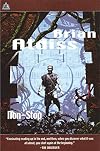
A generational starship which has lost it's way/purpose is hardly new ground in sci-fi but Aldiss gives it a novel spin by adding everything from evolutionary twists and homegrown theology to conspiracy theories. The final act, while not a total shocker, still managed to provide a couple of surprises. I liked it!

This is the first novel in Brian Aldiss's monster trilogy; I unwittingly read the later novel Dracula Unbound first, two months ago. In this one it is 2020 (the book was published in 1973, when that was still the fairly far future), when increasing stability in the space time continuum is causing timeslips, one of which sends Joseph Bodenland back to 1816 Switzerland. He meets Mary Shelley, plus Percy and Lord Byron, during the summer the former wrote her masterpiece, Frankenstein. There are show more some great scenes where Bodenland interacts with these literary giants, revelling in their speculative thinking, way ahead of its time, but very unrealistically idealistic from a 21st century view point. However, time is more mixed up than he thinks - in this version of 1816, while Mary Shelley still wrote Frankenstein, Victor Frankenstein is also a real person who created a real monster, and its female partner, which Bodenland pledges to hunt down, to prevent what he sees as the impact of Frankenstein's amoral scientific endeavour on his own present day situation. The novel is thus a perhaps slightly awkward amalgam of literary homage, Gothic horror and thriller chase. I found the ending slightly unsatisfactory. show less
Lists
Awards


You May Also Like


Associated Authors
Statistics
- Works
- 563
- Also by
- 384
- Members
- 27,387
- Popularity
- #749
- Rating
- 3.7
- Reviews
- 555
- ISBNs
- 1,079
- Languages
- 21
- Favorited
- 36


