
Jonis Agee
Author of The River Wife
About the Author
Jonis Agee teaches at the University of Nebraska-Lincoln.
Image credit: University of Nebraska - Lincoln
Works by Jonis Agee
Two Poems 1 copy
Mercury, A Short Story 1 copy
Associated Works
HAWK-WIND #2 — Contributor — 1 copy
Tagged
Common Knowledge
- Birthdate
- 1943-05-31
- Gender
- female
- Education
- University of Iowa (BA)
State University of New York, Binghamton (MA) (PhD) - Occupations
- university professor
scholar of English language and literature
screenwriter - Organizations
- University of Nebraska
College of St. Catherine - Relationships
- Spencer, Brent (husband)
Brenda (daughter)
Nora (daughter) - Nationality
- USA
- Birthplace
- Omaha, Nebraska, USA
- Places of residence
- Omaha, Nebraska, USA
St. Paul, Minnesota, USA
Missouri, USA - Associated Place (for map)
- USA
Members
Reviews
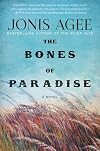
Birds call to their mates across the sandy plains. A multicolored cloud of butterflies wings its way across the grassy landscape. Astride a horse, a mysterious man finds the body of an Indian woman and her child in a shallow grave in the shadow of a windmill. Gunshots erupt across the expanse, and the man is killed.
With [The Bones of Paradise], Jonis Agee establishes herself as one of the most underappreciated writers of our time. Her delicate descriptions, echoing the tones and colors and show more sounds of the place where the story is rooted, are so poetic that it’s hard to believe you’re reading a western, complete with gun play and violence. She is a wordsmith equal to the great poets. Here is her description of one of the minor characters:
“Pushing the strand of damp hair off her forehead, she gave Grave a quick smile and tilted her head. Her eyes had a touch of green like the water I hay meadows. Sometimes, when she was angry, a dark cast appeared like the morning sky before rain. She was a handsome woman with light tortoiseshell skin that shone in the new summer light.”
Her skill with words is matched in her story creation. [The Bones of Paradise] is a family saga, rich in plain’s history and western sensibility. You’ll taste the dust in the air as her characters sift through the vengeance and greed that rules their lives. You’ll smell the blood in the air as the cavalry massacre the innocent at Wounded Knee. And the overripe plains sun will illuminate the spidery threads woven from these events into their lives.
In her main characters, Dulcinea and Rose, she’s created women to rival any cowboy. At the end, in the wake of her husband’s death, her son’s death, and attempts to swindle her out of her land, she ponders how to proceed with her life –
“Her faith had removed God, dispersed him like seed or gravel. It was not that God didn’t exist. It was that he wasn’t alone, but in pieces, parts, always whole, sufficient, always multiple. So like the ancient Greeks she trod lightly, carefully, tried to give no offense to the land, the sacred grass her feet crushed, the ants hurriedly preparing caverns for the winter, pushing tiny yellow boulders out of a hole the size of a bee’s leg. Oh the offense, to walk so clumsily through the world, to crush and bring havoc, that they couldn’t help. But to give no recognition to the cost of their being alive, to the price paid for their dreams by everything else?
Bottom Line: A lyrical and poetic book that will make you forget you’re reading a western. Agee is easily one of the most underappreciated writers of our time.
5 bones!!!!! show less
With [The Bones of Paradise], Jonis Agee establishes herself as one of the most underappreciated writers of our time. Her delicate descriptions, echoing the tones and colors and show more sounds of the place where the story is rooted, are so poetic that it’s hard to believe you’re reading a western, complete with gun play and violence. She is a wordsmith equal to the great poets. Here is her description of one of the minor characters:
“Pushing the strand of damp hair off her forehead, she gave Grave a quick smile and tilted her head. Her eyes had a touch of green like the water I hay meadows. Sometimes, when she was angry, a dark cast appeared like the morning sky before rain. She was a handsome woman with light tortoiseshell skin that shone in the new summer light.”
Her skill with words is matched in her story creation. [The Bones of Paradise] is a family saga, rich in plain’s history and western sensibility. You’ll taste the dust in the air as her characters sift through the vengeance and greed that rules their lives. You’ll smell the blood in the air as the cavalry massacre the innocent at Wounded Knee. And the overripe plains sun will illuminate the spidery threads woven from these events into their lives.
In her main characters, Dulcinea and Rose, she’s created women to rival any cowboy. At the end, in the wake of her husband’s death, her son’s death, and attempts to swindle her out of her land, she ponders how to proceed with her life –
“Her faith had removed God, dispersed him like seed or gravel. It was not that God didn’t exist. It was that he wasn’t alone, but in pieces, parts, always whole, sufficient, always multiple. So like the ancient Greeks she trod lightly, carefully, tried to give no offense to the land, the sacred grass her feet crushed, the ants hurriedly preparing caverns for the winter, pushing tiny yellow boulders out of a hole the size of a bee’s leg. Oh the offense, to walk so clumsily through the world, to crush and bring havoc, that they couldn’t help. But to give no recognition to the cost of their being alive, to the price paid for their dreams by everything else?
Bottom Line: A lyrical and poetic book that will make you forget you’re reading a western. Agee is easily one of the most underappreciated writers of our time.
5 bones!!!!! show less
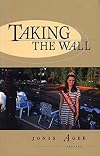
I don’t wear that kind of ball-cap. You know the kind – the ones that are plastic mesh on the back half and cushiony polyester up front. They usually have some kind of business logo up front because these are the cheapest kind of give-aways. You might find the bill rolled to an unnatural cone shape and the front marked with grease and oil smudges. I don’t wear that kind of ball-cap, but the characters who populate Jonis Agee’s collection of short fiction, [Taking the Wall], wear that show more kind of ball-cap with pride.
Most of you won’t have ever heard of Jonis Agee. Yet three of her books were chosen as New York Times Notable Books of the Year: [Bend This Heart], 1989; [Sweet Eyes], 1991; and [Strange Angels], 1993. Her milieu is the American Midwest and the characters of her books are the people who populate the small towns there. She gives voice to the frustrated narrow existence of the common people and finds the beauty in their simple, noble lives.
[Taking the Wall] focuses on race car driving, not NASCAR and Winston Cup, so much as dirt tracks in fields and demolition derbies. This is not a world that I would have ever wanted to read about, but Agee is a favorite author, so I dipped into the stories and found I couldn’t get away. Even though the stories describe races and cars, they are really about the lonely and broken people sliding through life one corner at a time, trying to avoid another encounter with the wall. Agee’s stories are riveting, largely due to her ability to tap into a common longing in the human soul. These people dream of better, even if it is out of their reach or they are incapable of seizing it. And when paired with Agee’s near perfect prose, the result is stunning. Let me let Agee speak for herself:
“You have to dream your way back to beginnings, that’s why stories start in the middle, like a fingering away from some rock you can’t see but imagine has to be there. Everything lives in a bowl the size it requires. The bucket of night that holds our melting sleep. Even the clar hard soil of Esparance’s farm found ways to use the burnt sticky liquor spilling from dreams. I know Blu’s gone on ahead of me now, so I stop in Missouri.”
Bottom Line: Sherwood Anderson for the racing fan – more about the unseen lives of common folk than about racing, Sherwood would have been proud.
5 bones!!!!!
A favorite for the year!!!!! show less
Most of you won’t have ever heard of Jonis Agee. Yet three of her books were chosen as New York Times Notable Books of the Year: [Bend This Heart], 1989; [Sweet Eyes], 1991; and [Strange Angels], 1993. Her milieu is the American Midwest and the characters of her books are the people who populate the small towns there. She gives voice to the frustrated narrow existence of the common people and finds the beauty in their simple, noble lives.
[Taking the Wall] focuses on race car driving, not NASCAR and Winston Cup, so much as dirt tracks in fields and demolition derbies. This is not a world that I would have ever wanted to read about, but Agee is a favorite author, so I dipped into the stories and found I couldn’t get away. Even though the stories describe races and cars, they are really about the lonely and broken people sliding through life one corner at a time, trying to avoid another encounter with the wall. Agee’s stories are riveting, largely due to her ability to tap into a common longing in the human soul. These people dream of better, even if it is out of their reach or they are incapable of seizing it. And when paired with Agee’s near perfect prose, the result is stunning. Let me let Agee speak for herself:
“You have to dream your way back to beginnings, that’s why stories start in the middle, like a fingering away from some rock you can’t see but imagine has to be there. Everything lives in a bowl the size it requires. The bucket of night that holds our melting sleep. Even the clar hard soil of Esparance’s farm found ways to use the burnt sticky liquor spilling from dreams. I know Blu’s gone on ahead of me now, so I stop in Missouri.”
Bottom Line: Sherwood Anderson for the racing fan – more about the unseen lives of common folk than about racing, Sherwood would have been proud.
5 bones!!!!!
A favorite for the year!!!!! show less

[The Bones of Paradise] is a sprawling historical Western set in the Nebraska Sand Hills at the end of the nineteenth century. In the opening pages, rancher J.B. Bennett is killed as he discovers the dead body of an Indian girl, setting in motion a struggle over the title of the land and a search for the killer.
The Sand Hills are wonderfully evoked by Agee's descriptions: "A person had to keep his eye on the smallest detail while the vast emptiness constantly tugged at his vision. You can show more get lost in a heartbeat out here, he'd told his wife. It took him most of his life to realize the significance of his own words." Throughout the novel, we are treated to the sights, sounds, and smells of this hard place.
But the novel isn't just about the challenges of ranching life; Agee also visits the massacre of the Ghost Dancers at Wounded Knee, recognizing that many of the ranchers lived on land stolen from the Indians, "who mourned the land, not as wealth but as the place where all was alive, all living, in one form or another. The whites took it but the dead still walked it, the spirits, whatever they were."
Dulcinea Bennett, J.B.'s wife and Rose, the murdered Indian girl's sister, are strong women, great characters who work together to fight for their place in this unforgiving country generally considered a man's world, as well as to find the murderer of their loved ones.
Highly recommended for fans of historical fiction with a strong sense of place. show less
The Sand Hills are wonderfully evoked by Agee's descriptions: "A person had to keep his eye on the smallest detail while the vast emptiness constantly tugged at his vision. You can show more get lost in a heartbeat out here, he'd told his wife. It took him most of his life to realize the significance of his own words." Throughout the novel, we are treated to the sights, sounds, and smells of this hard place.
But the novel isn't just about the challenges of ranching life; Agee also visits the massacre of the Ghost Dancers at Wounded Knee, recognizing that many of the ranchers lived on land stolen from the Indians, "who mourned the land, not as wealth but as the place where all was alive, all living, in one form or another. The whites took it but the dead still walked it, the spirits, whatever they were."
Dulcinea Bennett, J.B.'s wife and Rose, the murdered Indian girl's sister, are strong women, great characters who work together to fight for their place in this unforgiving country generally considered a man's world, as well as to find the murderer of their loved ones.
Highly recommended for fans of historical fiction with a strong sense of place. show less
This is a stunning book that I couldn’t stop reading, even though it included historical accounts of terrible evil and I didn’t like many of the protagonists, some of whom committed the most repugnant acts imaginable. But through alternating narrators, the author shows us the forces that drove these characters, and brings us to an understanding of the needs for either revenge or redemption that haunted them.
It takes place in 1900 in the Nebraska Sandhills (measuring almost 20,000 miles, show more it is the largest sand dune formation in the Western Hemisphere). The Sandhills then required constant management by cattle ranchers to ensure plants took root in the shifting sand to feed the herds. Starvation, disease, and death were all too common. (Today, three Sandhills counties are the top three beef cow counties in the U.S.)
The story begins with the murder of J.B. Bennett, owner of a large ranch near the South Dakota border, and of Star, a young Lakota woman from the Pine Ridge Reservation, their bodies found together by the remote windmill on J.B.’s property. Their deaths bring a number of people to the Bennett farm to find out who murdered them and what they were doing together. Foremost among them are Dulcinea, J.B.’s estranged wife; Rose, Star’s sister; Drum, J.B.’s father and owner of the adjacent farm; J.B. and Dulcinea’s sons, Cullen and Hayward; and Ryland Graver, shot by someone unknown when he went to investigate the bodies.
Their secrets unfold gradually, as the characters - both living and dead, circle each other and the truth. The writing is exceptional, as this example, when Dulcinea returns to the ranch and enters her old bedroom, and we get a hint of the relationship between J.B. and Dulcinea:
“‘My God, how we are destroyed,’ she whispered, a line from some forgotten drama, or maybe she had written it in her head as she entered the room where she had slept with J.B. all those years ago. She had carried on an internal dialogue with her husband for so long that his death did not alter the conversation. It merely expanded across time and space.”
Rose too communes with a ghost, in her case her dead sister,. Rose promises her she will find her killer and avenge her death, as well as the death of their mother, who was slaughtered in the Massacre at Wounded Knee ten years earlier.
The Wounded Knee Massacre occurred near Wounded Knee Creek on the Lakota Pine Ridge Indian Reservation. Soldiers - a detachment of the U.S. 7th Cavalry Regiment, surrounded the peaceful encampment. The Lakota made the soldiers nervous by their performance of the “Ghost Dance,” a religious ceremony. In any event, the Seventh Cavalry wanted retribution for their defeat at Little Bighorn. As J.B. mused:
“And when the Indians were finally blotted out, the Black Hills and all the reservation lands would be open for white settlement. … There was money to be made here.”
On the morning of December 29, 1890, the young Lakota men once again began to dance. The elderly and sick were lying on the ground encouraging them, women were preparing food from meager provisions, and children were running and playing. The dancing gave the impoverished natives hope, but the soldiers thought it was a “scalp dance” and a provocation. The soldiers had spent the previous night drinking heavily, and that next morning, as a battery of four Hotchkiss mountain guns moved into position, the troops, some of whom were still drinking, attacked the Lakota encampment. More than 200 men, women, and children of the Lakota were killed and 51 were wounded (4 men and 47 women and children, some of whom died later). As the wounded fled, the soldiers pursued them to finish them off. Many of the women were raped before they were killed, and many of soldiers hacked off body parts to take as souvenirs. (At least twenty of the soldiers were later awarded the Medal of Honor.)
When the carnage was over, surviving Lakota were "allowed" either to join Buffalo Bill’s show, go to prison, or go to Oklahoma where the tribes hated them.
Almost all of the characters in this book were either involved in or impacted by what happened that day at Wounded Knee. But J.B., who was there and had been horrified, felt that serving as a witness would make no difference: “The true story was unthinkable, unheroic, so it was changed by the newspapers, the military, and the government.” Yet he knew what happened, and for the rest of his life it preyed upon him. His unexpected end, next to a Lakota girl who managed to hide during the attack only to be killed later, is only one of the network of tragedies and ironies of this book.
This network is constructed in part by some excellent characterization, with the author adding surprising shades to characters that I never would have expected, and yet these switches from cruelty to compassion, or puissance to pathos, were done in such a way as to seem totally convincing.
The breathtaking ending comes in a series of tragic waves that nevertheless eventually smooth out into a note of hope for the future.
Discussion: This novel takes us back to a shameful and profoundly sad historic moment and provides richly-drawn characters to provide details of what happened. That story of the removal and genocide of native peoples, and of the internecine conflicts of greed among the conquerers, is yet woven today into the social and political landscape of the country. And in this book, it plays out not only in the characters’ pasts, but in their present and futures as well.
Oliver Wendall Holmes wrote that “There is in all men a demand for the superlative,” but this book reminds us of our equally important potential for cruelty toward one another.
Evaluation: I was unaware that this book would include details of the massacre at Wounded Knee because, chicken that I am, had I known I wouldn’t have read it. It hurts my heart to think about it, and it will hurt your heart to read this book. Nevertheless, this riveting and poignant story of settlement in the West by a gifted and award-winning author is well worth the journey. It would also make an excellent choice for book clubs. show less
It takes place in 1900 in the Nebraska Sandhills (measuring almost 20,000 miles, show more it is the largest sand dune formation in the Western Hemisphere). The Sandhills then required constant management by cattle ranchers to ensure plants took root in the shifting sand to feed the herds. Starvation, disease, and death were all too common. (Today, three Sandhills counties are the top three beef cow counties in the U.S.)
The story begins with the murder of J.B. Bennett, owner of a large ranch near the South Dakota border, and of Star, a young Lakota woman from the Pine Ridge Reservation, their bodies found together by the remote windmill on J.B.’s property. Their deaths bring a number of people to the Bennett farm to find out who murdered them and what they were doing together. Foremost among them are Dulcinea, J.B.’s estranged wife; Rose, Star’s sister; Drum, J.B.’s father and owner of the adjacent farm; J.B. and Dulcinea’s sons, Cullen and Hayward; and Ryland Graver, shot by someone unknown when he went to investigate the bodies.
Their secrets unfold gradually, as the characters - both living and dead, circle each other and the truth. The writing is exceptional, as this example, when Dulcinea returns to the ranch and enters her old bedroom, and we get a hint of the relationship between J.B. and Dulcinea:
“‘My God, how we are destroyed,’ she whispered, a line from some forgotten drama, or maybe she had written it in her head as she entered the room where she had slept with J.B. all those years ago. She had carried on an internal dialogue with her husband for so long that his death did not alter the conversation. It merely expanded across time and space.”
Rose too communes with a ghost, in her case her dead sister,. Rose promises her she will find her killer and avenge her death, as well as the death of their mother, who was slaughtered in the Massacre at Wounded Knee ten years earlier.
The Wounded Knee Massacre occurred near Wounded Knee Creek on the Lakota Pine Ridge Indian Reservation. Soldiers - a detachment of the U.S. 7th Cavalry Regiment, surrounded the peaceful encampment. The Lakota made the soldiers nervous by their performance of the “Ghost Dance,” a religious ceremony. In any event, the Seventh Cavalry wanted retribution for their defeat at Little Bighorn. As J.B. mused:
“And when the Indians were finally blotted out, the Black Hills and all the reservation lands would be open for white settlement. … There was money to be made here.”
On the morning of December 29, 1890, the young Lakota men once again began to dance. The elderly and sick were lying on the ground encouraging them, women were preparing food from meager provisions, and children were running and playing. The dancing gave the impoverished natives hope, but the soldiers thought it was a “scalp dance” and a provocation. The soldiers had spent the previous night drinking heavily, and that next morning, as a battery of four Hotchkiss mountain guns moved into position, the troops, some of whom were still drinking, attacked the Lakota encampment. More than 200 men, women, and children of the Lakota were killed and 51 were wounded (4 men and 47 women and children, some of whom died later). As the wounded fled, the soldiers pursued them to finish them off. Many of the women were raped before they were killed, and many of soldiers hacked off body parts to take as souvenirs. (At least twenty of the soldiers were later awarded the Medal of Honor.)
When the carnage was over, surviving Lakota were "allowed" either to join Buffalo Bill’s show, go to prison, or go to Oklahoma where the tribes hated them.
Almost all of the characters in this book were either involved in or impacted by what happened that day at Wounded Knee. But J.B., who was there and had been horrified, felt that serving as a witness would make no difference: “The true story was unthinkable, unheroic, so it was changed by the newspapers, the military, and the government.” Yet he knew what happened, and for the rest of his life it preyed upon him. His unexpected end, next to a Lakota girl who managed to hide during the attack only to be killed later, is only one of the network of tragedies and ironies of this book.
This network is constructed in part by some excellent characterization, with the author adding surprising shades to characters that I never would have expected, and yet these switches from cruelty to compassion, or puissance to pathos, were done in such a way as to seem totally convincing.
The breathtaking ending comes in a series of tragic waves that nevertheless eventually smooth out into a note of hope for the future.
Discussion: This novel takes us back to a shameful and profoundly sad historic moment and provides richly-drawn characters to provide details of what happened. That story of the removal and genocide of native peoples, and of the internecine conflicts of greed among the conquerers, is yet woven today into the social and political landscape of the country. And in this book, it plays out not only in the characters’ pasts, but in their present and futures as well.
Oliver Wendall Holmes wrote that “There is in all men a demand for the superlative,” but this book reminds us of our equally important potential for cruelty toward one another.
Evaluation: I was unaware that this book would include details of the massacre at Wounded Knee because, chicken that I am, had I known I wouldn’t have read it. It hurts my heart to think about it, and it will hurt your heart to read this book. Nevertheless, this riveting and poignant story of settlement in the West by a gifted and award-winning author is well worth the journey. It would also make an excellent choice for book clubs. show less
Lists
Awards


You May Also Like


Associated Authors
Statistics
- Works
- 19
- Also by
- 5
- Members
- 922
- Popularity
- #27,829
- Rating
- 3.5
- Reviews
- 44
- ISBNs
- 42
- Languages
- 1
- Favorited
- 3
