
Edith Hahn Beer (1914–2009)
Author of The Nazi Officer's Wife: How One Jewish Woman Survived the Holocaust
About the Author
Works by Edith Hahn Beer
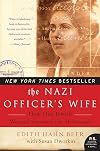
The Nazi Officer's Wife: How One Jewish Woman Survived the Holocaust (1999) 2,280 copies, 67 reviews
Associated Works
Tagged
Common Knowledge
- Legal name
- Beer, Edith Hahn
- Other names
- Christina Maria Margarethe Denner
Grete Vetter
Hahn-Beer, Edith - Birthdate
- 1914-01-24
- Date of death
- 2009-03-17
- Gender
- female
- Nationality
- Austria (birth)
UK (naturalized) - Birthplace
- Vienna, Austria
- Places of residence
- Vienna, Austria
Munich, Bavaria, Germany
Brandenburg, Germany
London, England, UK
Netanya, Israel - Place of death
- London, England, UK
Members
Reviews
Edith Hahn Beer’s memoir of her life prior to and during World War II in Austria and Germany. The book starts before the war and covers her decision to remain in Austria as well as events that led to her marriage to a Nazi. As conditions for European Jews worsened, and with assistance from others, she made the decision to “hide in plain sight.” This is a riveting story of identity, fear, courage, guilt, and redemption. It provides another slice of history, depicting the personal impact show more of the Nazi regime. It shows the lengths to which a person needed to go to survive. At times, it seemed she was almost apologizing for what she decided to do to escape Nazi persecution, but who can blame her? The tone of this book is one of candor. She does not shy away from addressing difficult subjects. I felt like I was sitting down with the author and listening to her tell me her story. Recommended to those interested in the history of World War II, especially personal experiences of that time period. show less
I have mostly read novels and only a couple of nonfiction books about WWII but this might be the first memoir. It doesn’t really talk about concentration camps and atrocities committed on the prisoners but about the human side of the survivors and people who helped them on the way.
Edith is from a loving Jewish family in Vienna studying to be a lawyer. When the Nazi’s come, she is denied her degree, forced out of her home into a ghetto and finally sent to labor camp. She works almost show more eighty hour work weeks while starving and her only hope being the letters and packages that she received from her mom and Pepi. After her mother is deported to Poland, she refuses to report to the authorities and after managing to secure false papers, moves to Munich. There she meets a Nazi party member Werner who falls in love with her and they get married.
There were some comments about Edith’s life that demeaned her for surviving as a German Nazi wife. But that’s the whole point of this book. In times of war, when living is the only matter of concern, is it really worth it to judge a woman for setting up a false identity and surviving under the enemy’s nose. Edith is a smart, intelligent woman who is deprived of everything – her education, dignity, a future, even basic food and shelter – and when all doors close for her freedom, she chooses the one way that she finds. She lives in constant fear of being caught, every minute of her existence, but still manages to carve out a life and family for herself. She suppresses her witty intelligent personality to become a meek submissive wife of a Nazi because all she wants is to live; because that’s the only thing she has left. Finally, when the occupation ends, she gets a chance to resume her true identity, even become a lawyer and judge to help the people who have lost everything in the war.
But this book is not just about Edith. It’s about all the people who chose to help her. Her friend Christl, a German who gave Edith her original papers at great peril to herself. Maria Niedarall, another German who provided her all the encouragement and resources to escape. Pepi, her eternal love whose letters provided her great relief and hope during the whole ordeal before her escape. Even Werner in some ways helps her because despite being his aggressive self and knowing Edith’s truth, he never betrays her.
This book is about humanity – how seemingly good people can turn their backs on friends for personal safety and well-being while at the same time, people from unexpected quarters risk their lives to help their fellow citizens. I think this book is a must read for anyone who thinks living in wartime and surviving is a black and white. Because it is most definitely not. show less
Edith is from a loving Jewish family in Vienna studying to be a lawyer. When the Nazi’s come, she is denied her degree, forced out of her home into a ghetto and finally sent to labor camp. She works almost show more eighty hour work weeks while starving and her only hope being the letters and packages that she received from her mom and Pepi. After her mother is deported to Poland, she refuses to report to the authorities and after managing to secure false papers, moves to Munich. There she meets a Nazi party member Werner who falls in love with her and they get married.
There were some comments about Edith’s life that demeaned her for surviving as a German Nazi wife. But that’s the whole point of this book. In times of war, when living is the only matter of concern, is it really worth it to judge a woman for setting up a false identity and surviving under the enemy’s nose. Edith is a smart, intelligent woman who is deprived of everything – her education, dignity, a future, even basic food and shelter – and when all doors close for her freedom, she chooses the one way that she finds. She lives in constant fear of being caught, every minute of her existence, but still manages to carve out a life and family for herself. She suppresses her witty intelligent personality to become a meek submissive wife of a Nazi because all she wants is to live; because that’s the only thing she has left. Finally, when the occupation ends, she gets a chance to resume her true identity, even become a lawyer and judge to help the people who have lost everything in the war.
But this book is not just about Edith. It’s about all the people who chose to help her. Her friend Christl, a German who gave Edith her original papers at great peril to herself. Maria Niedarall, another German who provided her all the encouragement and resources to escape. Pepi, her eternal love whose letters provided her great relief and hope during the whole ordeal before her escape. Even Werner in some ways helps her because despite being his aggressive self and knowing Edith’s truth, he never betrays her.
This book is about humanity – how seemingly good people can turn their backs on friends for personal safety and well-being while at the same time, people from unexpected quarters risk their lives to help their fellow citizens. I think this book is a must read for anyone who thinks living in wartime and surviving is a black and white. Because it is most definitely not. show less
Edith Hahn Beer’s memoir of her life prior to and during World War II in Austria and Germany. The book starts before the war and covers her decision to remain in Austria as well as events that led to her marriage to a Nazi. As conditions for European Jews worsened, and with assistance from others, she made the decision to “hide in plain sight.” This is a riveting story of identity, fear, courage, guilt, and redemption. It provides another slice of history, depicting the personal impact show more of the Nazi regime. It shows the lengths to which a person needed to go to survive. At times, it seemed she was almost apologizing for what she decided to do to escape Nazi persecution, but who can blame her? The tone of this book is one of candor. She does not shy away from addressing difficult subjects. I felt like I was sitting down with the author and listening to her tell me her story. Recommended to those interested in the history of World War II, especially personal experiences of that time period. show less
This was an excellent memoir, written many many years after the fact by a Jewish woman who survived the Nazi takeover of Austria and all the subsequent horrors through luck, unexpected kindnesses, and ingenuity. This is not a story of survival in the concentration camps, or of hiding out in attics, but rather of assuming a false identity and living a life "beneath the surface of society". After the Russian Army defeated the Germans and took over the town where Edith (then known as Grete) was show more living, an official asked her "From which camp did you come?". Her answer was "I managed without a camp." Not without hardships and nearly constant fear, however. On the eve of obtaining her qualifications as a lawyer and judge, Edith Hahn was told that she would not be allowed to take the final exam, and that as a Jew she was forbidden to return to the University of Vienna for any reason. For the next 8 years Edith managed to hide her race from the official world until the Nazi regime fell, at which time she triumphantly resurrected her true identity and became a family court judge for a brief time -- "the one and only time I had even the slightest power to alleviate any of the suffering in this world."
The title is somewhat misleading, since she did not marry a Nazi officer (her husband was nominally a Nazi, but not even in the military when she married him), and her marriage was only one of the factors that kept her alive and under the radar throughout the course of the war. Not only did she and her daughter survive, but so did a fairly extensive archive of letters, photos and official documents she and a former lover each held on to, at considerable risk. Those documents are now in the custody of the Holocaust Memorial Museum in Washington, D.C. The author died in Israel earlier this year (2009). Highly recommended as a revealing look at life in Nazi Europe from a rather unusual perspective. show less
The title is somewhat misleading, since she did not marry a Nazi officer (her husband was nominally a Nazi, but not even in the military when she married him), and her marriage was only one of the factors that kept her alive and under the radar throughout the course of the war. Not only did she and her daughter survive, but so did a fairly extensive archive of letters, photos and official documents she and a former lover each held on to, at considerable risk. Those documents are now in the custody of the Holocaust Memorial Museum in Washington, D.C. The author died in Israel earlier this year (2009). Highly recommended as a revealing look at life in Nazi Europe from a rather unusual perspective. show less
Lists
Awards


You May Also Like


Associated Authors
Statistics
- Works
- 2
- Also by
- 2
- Members
- 2,282
- Popularity
- #11,245
- Rating
- 3.9
- Reviews
- 67
- ISBNs
- 34
- Languages
- 8
- Favorited
- 1