
Terry Brooks
Author of The Sword of Shannara
About the Author
Terry Brooks was born in Sterling, Illinois on January 8, 1944. He received a bachelor's degree in English literature from Hamilton College and a graduate degree from the School of Law at Washington and Lee University. Before becoming a full-time writer, he was a practicing attorney for many years. show more His first book The Sword of Shannara (1977) was the first work of fiction to appear on the New York Times Trade Paperback Bestseller List. He made the list again with his title The High Druid'd Blade: The Defenders of Shannara. His other works include the Word and Void trilogy, The Heritage of Shannara series, Magic Kingdom of Landover series, The Voyage of the Jerle Shannara series, High Druid of Shannara series, Genesis of Shannara series, and the novelization to Star Wars Episode I: The Phantom Menace. (Bowker Author Biography) show less
Series
Works by Terry Brooks
The Heritage of Shannara: Book I and II (The Scions of Shannara, The Druid of Shannara) (2006) 39 copies
Landover Collection: Magic Kingdom for Sale-Sold!, The Black Unicorn, Wizard at Large, The Tangle Box, Witches' Brew (2009) 22 copies
The Sword of Shannara / The Elfstones of Shannara / The Wishsong of Shannara / First King of Shannara (1994) 8 copies
[Title Unknown] 7 copies
Why I Write About Elves 3 copies
The Defenders of Shannara Series Terry Brooks 3 Books Collection Set (The High Druids Blade, The Darkling Child, The Sorcerers Daughter) (2018) 3 copies
Shannara: A Retrospective 3 copies
Paladins Of Shannara (3 Book Series) 2 copies
In the Shadow of the Warlock Lord 2 copies
The Wishsong Shannara 1 copy
Magische vergissing 1 copy
The Shannara chronicles 1 copy
The Magic Kingdom of... 1 copy
Shannara'nýn Kýlýcý II 1 copy
Terry Brooks Landover Series: Books 1-2: Magic Kingdom for Sale - Sold! & The Black Unicorn (2017) 1 copy
Tranquel 1 copy
Shannara'nýn Kýlýcý I 1 copy
Thr Druid of Shannara; The Wishsong of Shannara; First King of shanara; The Scions of Shanara. (1990) 1 copy
Del Rey 2017 free sampler 1 copy
Terry Brooks: 3 Book Set: Softcover: The Elf Queen of Shannara: The Druid of Shannara: The Black Unicorn: Very Good (1994) 1 copy
The Last Ride 1 copy
Associated Works
Legends II: New Short Novels by the Masters of Modern Fantasy (2003) — Contributor — 1,373 copies, 22 reviews
The Writer's Complete Fantasy Reference: An Indispensable Compendium of Myth and Magic (1998) — Introduction, some editions — 555 copies, 5 reviews
Nebula Awards 26: SFWA's Choices for the Best Science Fiction and Fantasy of the Year (1992) — Contributor — 52 copies, 1 review
The Creative Compass: Writing Your Way from Inspiration to Publication (2013) — Foreword — 33 copies, 2 reviews
Légendes de la Fantasy, Vol. 2: Cinq récits inédits par les maîtres de la Fantasy moderne (2003) — Contributor — 10 copies, 1 review
Legends II: New Short Novels by the Masters of Modern Fantasy: Vol. 2 (Audio) (2004) — Contributor — 6 copies
Tagged
Common Knowledge
- Legal name
- Brooks, Terence Dean
- Birthdate
- 1944-01-08
- Gender
- male
- Education
- Hamilton College (BA|English Literature, 1966)
Washington and Lee University (JD, 1969) - Occupations
- attorney
fantasy writer - Organizations
- Science Fiction and Fantasy Writers of America
Authors Guild
American Bar Association
Trial Lawyers of America
Illinois State Bar Association - Awards and honors
- Inkpot Award (1997)
Best Young Adult Books citation, American Library Association (Magic Kingdom for Sale-Sold!, 1986)
Best Young Adult Books citation, American Library Association (The Elfstones of Shannara, 1982)
Best Books for Young Adults citations, School Library Journal (The Elfstones of Shannara, 1982) - Nationality
- USA
- Birthplace
- Sterling, Illinois, USA
- Places of residence
- Sterling, Illinois, USA
Seattle, Washington, USA - Associated Place (for map)
- USA
Members
Discussions
Sword of Shannara Trilogy in Easton Press Collectors (January 2024)
Found: YA(?) High Fantasy with parallel worlds in Name that Book (September 2021)
Found: Fiction/Scifi/Fantasy in Name that Book (February 2021)
Main character has dagger that gives him special abilities in Name that Book (September 2020)
Magic Kingdom for Sale - SOLD! Week 2 in Hogwarts Express (June 2009)
Reviews
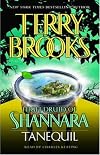
Tanequil—a shimmering gem in Terry Brooks’ illustrious crown of fantasy. As a devoted reader since the '70s, I can’t help but marvel at how Brooks continues to weave magic into his tales. 🌟
In this second installment of The High Druid of Shannara trilogy, we journey deeper into the Four Lands. The characters—like old friends—return, their destinies entwined. Penn Ohmsford, the reluctant hero, inches closer to his fateful encounter with the enigmatic Tanequil. Grianne Ohmsford, show more once the Ilse Witch, grapples with her past and the weight of leadership. And the Druids, oh, the Druids—they scheme and plot, their ancient knowledge a double-edged sword. 🌿
Brooks’ prose remains as clear as a mountain stream, his storytelling seasoned with nostalgia. The stakes rise, secrets unfurl, and the Four Lands tremble. If you seek adventure, magic, and a touch of melancholy—the hallmark of Brooks’ craft—Tanequil awaits. show less
In this second installment of The High Druid of Shannara trilogy, we journey deeper into the Four Lands. The characters—like old friends—return, their destinies entwined. Penn Ohmsford, the reluctant hero, inches closer to his fateful encounter with the enigmatic Tanequil. Grianne Ohmsford, show more once the Ilse Witch, grapples with her past and the weight of leadership. And the Druids, oh, the Druids—they scheme and plot, their ancient knowledge a double-edged sword. 🌿
Brooks’ prose remains as clear as a mountain stream, his storytelling seasoned with nostalgia. The stakes rise, secrets unfurl, and the Four Lands tremble. If you seek adventure, magic, and a touch of melancholy—the hallmark of Brooks’ craft—Tanequil awaits. show less
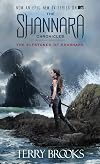
Another stinky book club pick. At this point I'm just going for the socialization. Anyway...
The worst thing about this book is not that it's a Tolkien rip-off; it's that it's a tedious, badly-written Tolkien rip-off. It reads as if a young writer read a few fantasy novels, maybe played a little D&D, and then proceeded to write what he thought a fantasy novel should sound like. In other words, the style is very affected and pretentious. He also repeats himself a lot. At least Stephen King show more will wait a few pages before reminding you of something you already read; Terry will keep going over it until he is sure that you got it the first time. Maybe the publisher asked for a longer book and Terry didn't understand that he was supposed to add more story, so he just went through and reiterated everything.
Not only does the plot feel strangely familiar, but Terry's version is terribly contrived. There's no sense of danger after a while because whenever the protagonists get into a fix they are saved by one deus ex machina after another. If it's not the book's third-rate Gandalf, it's a never-before-mentioned earth spirit that relocates them to safety, or it's the Elfstones whose power is to do whatever is needed to save the protagonists in any situation.
The characters are completely uninteresting. When one slightly interesting character shows up who might make things a bit sexier, she is left behind. (Those fools!) I think she might turn up again later, probably at just the right moment to miraculously save our protagonists, but I didn't get that far. show less
The worst thing about this book is not that it's a Tolkien rip-off; it's that it's a tedious, badly-written Tolkien rip-off. It reads as if a young writer read a few fantasy novels, maybe played a little D&D, and then proceeded to write what he thought a fantasy novel should sound like. In other words, the style is very affected and pretentious. He also repeats himself a lot. At least Stephen King show more will wait a few pages before reminding you of something you already read; Terry will keep going over it until he is sure that you got it the first time. Maybe the publisher asked for a longer book and Terry didn't understand that he was supposed to add more story, so he just went through and reiterated everything.
Not only does the plot feel strangely familiar, but Terry's version is terribly contrived. There's no sense of danger after a while because whenever the protagonists get into a fix they are saved by one deus ex machina after another. If it's not the book's third-rate Gandalf, it's a never-before-mentioned earth spirit that relocates them to safety, or it's the Elfstones whose power is to do whatever is needed to save the protagonists in any situation.
The characters are completely uninteresting. When one slightly interesting character shows up who might make things a bit sexier, she is left behind. (Those fools!) I think she might turn up again later, probably at just the right moment to miraculously save our protagonists, but I didn't get that far. show less
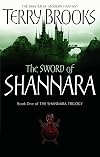
The Sword of Shannara was also the first of the high fantasy best-sellers, and since I’m in the middle of a (partial) reread of the Wheel of Time series, I thought it might be worth seeing what this novel was like. I shouldn’t have bothered. It’s fucking dreadful. A “Valeman” on his way home one night is scared by some giant flappy thing in the sky, and then waylaid by a scary man over seven foot tall with a goatee. Except the scary man is well-known to the Valemen (they live in a show more vale, see), although he is very mysterious. Cue info-dump. The Valeman’s adopted brother is half-elvish, and is actually the only surviving relative of an ancient elvish king. Because of this, he’s the only person who can wield the Sword of Shannara, an ancient, er, sword, and defeat the Warlock Lord, an evil sorcerer who is about to invade the Four Lands and kill everyone. Or maybe just enslave them. It’s not clear. There’s the good guys – one of which is a dwarf, and another is Boromir in all but name – and they have to make their way to Druid’s Keep to retrieve the sword before the evil gnome army. But the gnomes get there first, and Shea (the naming is absolutely terrible in this book), the half-elf half-not-a-hobbit-honestly, is separated from the others and ends up travelling into absolutely-not-Mordor chasing after the titular sword. Meanwhile, the others are involved in defending Tyrsis – which is definitely not Minas Tirith – against a huge army of gnomes and rock trolls… This was the first of the big-selling Tolkien rip-offs, and I can’t honestly see what its appeal is. Did people just want another LotR with the serial numbers filed off? And were they so desperate for it, they’d accept this sub-literate crap? Even now, fantasy fans still recommend this book – and then they do that thing, which is absolutely fucking stupid, of explaining that the first few books are not very good but “it gets a lot better around book four or five”. Seriously, fuck off. I’m not going to read half a dozen shit 700-page novels to reach one which is “better”, especially since as a fan of the series, the person recommending it clearly has no idea what a good book actually is. Books like this should no longer be in print. They do the genre a disservice, they do its readers a disservice. show less
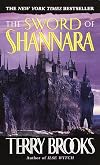
I've heard this book compared to Tolkien's Lord of the Rings--it's comparable all right, and it's not in Sword of Shannara's favor. I've read the book was the first fantasy to make it on the New York Times bestseller list. I can only speculate it was a matter of timing--that in the late seventies the fantasy reading public was hungry for an epic fantasy along Lord of the Rings lines--and here we have a quest, a Dark Lord and a group of heroes traveling together in almost a one to one show more correspondence with the Fellowship of the Ring including a wizard, a dwarf, more than one elf and more than one Prince of the blood. It's far too easy to match up the Tolkien characters with their Brooks counterparts: Gandalf (Allanon), Sam (Flick), Frodo (Shea), Sauron (Brona), Aragorn (Balinor), Boromir (Menion), Gimli (Hendel), Legolas (Durin and Dayel--brothers who are indistinguishable and interchangeable), Gollum (Orl Fane) and the Nazgûl (Skull Bearers). Even places and matters of plot can be matched point for point. I can't recall ever reading such a blatant rip-off.
Except that compared to a Gandolf or Frodo, these characters come across as stock, the plot and themes as shallow as a video game, and unlike Tolkien, who has memorable scenes and lines, the writing here isn't even workmanlike, with a shoddy omniscient point of view and a style that hits every branch on the clunker tree out of guides of how not to write.
I only stayed beyond page 50 of this because I wanted to give what I know some see as a beloved book a fair chance. Then I pushed beyond 200 pages out of curiosity if a female would get a speaking part--because at that point, were it not for a brief scene with a female monster that almost traps one character and a mention by another character he had a sweetie at home (and that the central character once had a mother) I might have thought they only had one gender in this fantasy world. Even Tolkien, who I thought slighted female characters, did much, much better than that. (Even books set on ships at sea and monasteries tend to do better than that). Finally, a female character did show up--on page 456 of 726--naturally to be rescued. I gave up. I will not be reading more Terry Brooks. show less
Except that compared to a Gandolf or Frodo, these characters come across as stock, the plot and themes as shallow as a video game, and unlike Tolkien, who has memorable scenes and lines, the writing here isn't even workmanlike, with a shoddy omniscient point of view and a style that hits every branch on the clunker tree out of guides of how not to write.
I only stayed beyond page 50 of this because I wanted to give what I know some see as a beloved book a fair chance. Then I pushed beyond 200 pages out of curiosity if a female would get a speaking part--because at that point, were it not for a brief scene with a female monster that almost traps one character and a mention by another character he had a sweetie at home (and that the central character once had a mother) I might have thought they only had one gender in this fantasy world. Even Tolkien, who I thought slighted female characters, did much, much better than that. (Even books set on ships at sea and monasteries tend to do better than that). Finally, a female character did show up--on page 456 of 726--naturally to be rescued. I gave up. I will not be reading more Terry Brooks. show less
Lists
Carole's List (5)
um actually (1)
Farm Boy Fantasy (1)
1990s Star Wars (1)
al.vick-series (1)
Awards


You May Also Like


Associated Authors
Statistics
- Works
- 152
- Also by
- 18
- Members
- 112,520
- Popularity
- #76
- Rating
- 3.8
- Reviews
- 1,070
- ISBNs
- 1,601
- Languages
- 20
- Favorited
- 254


