
Mark T. Conard
Author of The Simpsons and Philosophy: The D'oh! of Homer
About the Author
Mark T. Conard, associate professor of philosophy at Marymount Manhattan College, is the editor of the Philosophy of Popular Culture series and of numerous books, including The Philosophy of Film Noir, The Philosophy of Neo-Noir, and The Philosophy of Martin Scorsese.
Works by Mark T. Conard
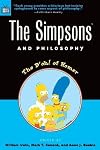
The Simpsons and Philosophy: The D'oh! of Homer (2001) — Editor; Contributor — 1,483 copies, 13 reviews
A Filosofia Segundo Woody Allen 2 copies
Tagged
Common Knowledge
- Birthdate
- 20th Century
- Gender
- male
Members
Reviews
I really enjoyed these series of essays on philosophy with the Simpsons as the starting point. My favorite essay has to be the one comparing Nietze to Bart. I was actually laughing while reading the essay!
Just the fact that this book exists is awesome. I love the chapter about Lisa and how we live in an anti-intellectual society. However, there is a downside: the essays are written in an academic format, and thus don't read fluidly, which I think would have made this book perfect.
Disappointing
I was not terribly impressed by this book. The problem is not that I'm not a fan of "The Simpsons"; I watch that show in reruns just about every day. The problem is not that I don't find philosophy interesting; I own about 40 books on philosophy and tend to spend a lot of my spare time reading them. I gave the first book in this series (_Seinfeld and Philosophy_) 4 stars. The authors of that book had meaningful things to say about the philosophical aspects of "Seinfeld", but show more they seemed to think it would be hilarious if they liberally and randomly inserted phrases like "not that there's anything wrong with that" into their essays, and that got old really quick. (To get an idea how annoying this can be, think of your acquaintances who can't seem to carry on a conversation without repeating dialogue from _Monty Python and the Holy Grail_.)
In _The Simpsons and Philosophy_, the editors have managed to keep the cuteness under control, but the authors don't establish too many non-obvious connections between philosophy and the show. Part of the problem is that some of them don't seem to be very familiar with the program and with popular culture, in general. For example, the author of one essay asserts that Maude Flanders was killed at a football game and that the running character on the old Letterman show was the "equalizer guy", and seems unaware that the song "Jazzman" that was featured in the episode about the death of Bleeding Gums Murphy was an old Carole King hit. Another essay reveals the shocking fact that "The Simpsons" does not, to the essay's author's dismay, push a consistent Marxist agenda.
Several of the essays make only tangential and superficial reference to the Simpsons. It's hard to suppress the impression that many of the authors are junior faculty members who jumped at the chance to pad their CV's by taking an old essay of theirs and dressing it up with token reference to the Simpsons. There is also an essay or two that reads like another Alan Sokal parody. show less
I was not terribly impressed by this book. The problem is not that I'm not a fan of "The Simpsons"; I watch that show in reruns just about every day. The problem is not that I don't find philosophy interesting; I own about 40 books on philosophy and tend to spend a lot of my spare time reading them. I gave the first book in this series (_Seinfeld and Philosophy_) 4 stars. The authors of that book had meaningful things to say about the philosophical aspects of "Seinfeld", but show more they seemed to think it would be hilarious if they liberally and randomly inserted phrases like "not that there's anything wrong with that" into their essays, and that got old really quick. (To get an idea how annoying this can be, think of your acquaintances who can't seem to carry on a conversation without repeating dialogue from _Monty Python and the Holy Grail_.)
In _The Simpsons and Philosophy_, the editors have managed to keep the cuteness under control, but the authors don't establish too many non-obvious connections between philosophy and the show. Part of the problem is that some of them don't seem to be very familiar with the program and with popular culture, in general. For example, the author of one essay asserts that Maude Flanders was killed at a football game and that the running character on the old Letterman show was the "equalizer guy", and seems unaware that the song "Jazzman" that was featured in the episode about the death of Bleeding Gums Murphy was an old Carole King hit. Another essay reveals the shocking fact that "The Simpsons" does not, to the essay's author's dismay, push a consistent Marxist agenda.
Several of the essays make only tangential and superficial reference to the Simpsons. It's hard to suppress the impression that many of the authors are junior faculty members who jumped at the chance to pad their CV's by taking an old essay of theirs and dressing it up with token reference to the Simpsons. There is also an essay or two that reads like another Alan Sokal parody. show less
Oh don't be pretentious . . . it's fun! It's also all good. The ability to relate thought and thinking not only to the issues of today, but to the contemporary inculturated expressions of that thought is a necessary discipline if ideas are to be recognized and used well. This book undertakes that task well. Enjoy it - and admit it - you just wish you'd thought of it first!
You May Also Like


Associated Authors
Statistics
- Works
- 11
- Members
- 1,733
- Popularity
- #14,830
- Rating
- 3.5
- Reviews
- 15
- ISBNs
- 52
- Languages
- 9