
P. C. Doherty
Author of The Nightingale Gallery
About the Author
Paul C. Doherty was born on September 21, 1946. He is an award winning British author, educator, and historian. He is also the Headmaster of Trinity Catholic High School, Woodford Green, Essex, in the United Kingdom. He went to Liverpool University where he gained a First Class Honours Degree in show more History and at Exeter College, Oxford, where he received a doctorate for his thesis on Edward II. Dr. Doherty is a historian who lectures for a number of organisations, particularly on historical mysteries. Dr. Doherty was awarded an Order of the British Empire for his services to education in 2011. His other career is that of Headmaster at Trinity Catholic High School, Woodford Green, Essex for 30 years. In 1999, the school was given Beacon status which rates it as outstanding among other schools in it's category. Dr. Doherty has published a series of historical mysteries set in the Middle Ages, Classical, Greek, and Ancient Egypt. He writes both fiction and non-fiction under his own name, both as P.C. Doherty and Paul C. Doherty, as well as the pennames: Anna Apostolou, Michael Clynes, and Ann Dukthas. Doherty is the author of several mystery series, including The Sorrowful Mysteries of Brother Athelstan, the Hugh Corbett medieval mysteries, and the Canterbury Tales of mystery. He has written 100 published books which have been printed in several languages and distributed in several different countries including the UK, United States, Spain, and Germany. He was also awarded the Herodotus, for lifelong achievement for excellence in the writing of historical mysteries by the Historical Mystery Appreciation Society. (Bowker Author Biography) show less
Disambiguation Notice:
Paul Doherty has published under several pseudonyms, including C. L. Grace, Paul Harding, Ann Dukthas, and Anna Apostolou, but now writes under his own name.
Paul C. Doherty, or P. C. Doherty, writes under a number of pseudonyms: --- Ann Dukthas, --- Anna Apostalou, --- Michael Clynes and --- Vanessa Alexander have single-author pages which are combined here.The pages for --- C. L. Grace, --- Paul Harding and --- Paul Doherty --- are shared with other authors and the works are therefore aliased here.
There is also a Peter C. Doherty (author of Pandemics).
Series
Works by P. C. Doherty
The Great Crown Jewels Robbery of 1303: The Extraordinary Story of the First Big Bank Raid in History (2005) 68 copies, 2 reviews
The Death of Alexander the Great: What-or Who-Really Killed the Young Conqueror of the Known World? (2004) 62 copies, 2 reviews
[Title missing] 1 copy
Or You Can Drink the Wine 1 copy
The King's Writ 1 copy
Associated Works
The Folio Book of Historical Mysteries (2008) — Author: Was Tutankhamun Murdered?, some editions — 113 copies
The Magazine of Fantasy and Science Fiction January/February 2012, Vol. 122, No. 1 & 2 (2012) — Contributor — 21 copies
The Magazine of Fantasy and Science Fiction July/August 2011, Vol. 121, Nos. 1 & 2 (2011) — Contributor — 16 copies, 1 review
Puzzles of the Parish: Short Tales of Ministers, Murder and Mystery 151 (British Library Crime Classics) (2026) — Contributor — 15 copies, 1 review
Gli investigatori di Dio — Contributor — 3 copies
Tagged
Common Knowledge
- Other names
- Doherty, P. C.
Doherty, Paul
Doherty, Paul Charles
Harding, Paul
Apostolou, Anna
Alexander, Vanessa (show all 9)
Dukthas, Ann
Grace, C L
Clynes, Michael - Birthdate
- 1946-09-21
- Gender
- male
- Education
- University of Liverpool
University of Oxford (Exeter College)
University of Durham - Occupations
- teacher
Headmaster
novelist
biographer - Organizations
- Trinity Catholic School
- Awards and honors
- Officer of the Order of the British Empire (2011)
- Nationality
- UK
- Birthplace
- Middlesbrough, Yorkshire, England, UK
- Map Location
- England, UK
- Disambiguation notice
- Paul Doherty has published under several pseudonyms, including C. L. Grace, Paul Harding, Ann Dukthas, and Anna Apostolou, but now writes under his own name.
Paul C. Doherty, or P. C. Doherty, writes under a number of pseudonyms: --- Ann Dukthas, --- Anna Apostalou, --- Michael Clynes and --- Vanessa Alexander have single-author pages which are combined here.The pages for --- C. L. Grace, --- Paul Harding and --- Paul Doherty --- are shared with other authors and the works are therefore aliased here.
There is also a Peter C. Doherty (author of Pandemics).
Members
Reviews
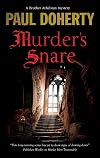
Murder's Snare is one of those mysteries that's actually multiple mysteries so, which solutions keep appearing at points in the book, *the* solution doesn't arrive until the end. Sometimes this frustrates, but in the case of Murder's Snare, I found it deeply enjoyable. Hovering on that knowing.not knowing brink can be an entertaining place for a reader to spend some time.
Let me backtrack for a moment to say a bit about the Brother Athelstan mysteries. Brother Athelstan is the long-suffering, show more mostly good-natured priest for St. Erconwald's, a church is one of the less salubrious neighborhoods of 14th Century London. Much of his parish live "mostly legal" lives, while moving into the occasional illegal activity when risk seems low and reward likely. Athelstan serves as secretarius to coroner Sir John Cranston, so he often finds himself helping in criminal investigations, which sometimes involve members of Athelstan's parish.
The first victim in Murder's Snare is a tax collector (and that's never been a popular sort) who is stabbed and left dead inside a locked room in an Inn close by St. Erconwald's. The issue isn't who might want to kill him, but how to narrow down the generous list of suspects. And, of course, how did the victim wind up alone in that locked room?
That murder is followed by the killing of a former member of the Via Crucis—an English "free company" that made its members wealthy by running riot during the 100 years' war, murdering, torturing, and assaulting at will, seizing and riches they came across. The members of Via Crucis are now living in England, enjoying the wealth they brutally gathered.
This first killing of a Via Crucis member is essentially an execution. The victim's household is gathered to see him quickly beheaded by a group of unidentified attackers who first announce the crimes he committed in France. There's another similar killing. But then, other members of the Via Crucis are being killed in much more unusual and vicious ways.
Is the same group behind all the killings or are two different groups/assailants involved? Are the killings connected to the members of the "Society of Babylon," French children who were orphaned during the war, then taken to England and raised there?
Murder's Snare is one of my favorite recent Brother Athelstan volumes. The multiple intersecting plot lines provide alternating moments of reward and frustration, the cast of characters is broad, and, as always, St. Erconwald's parishioners seem to be involved, but to what extent.
This is a series that is probably best read in order, but if you're good at picking up contextual information, you can begin with whichever volume you want. You'll be in for an engaging time with a wide cast of characters.
I received a free electronic review copy of this title from the publisher via NetGalley; the opinions are my own. show less
Let me backtrack for a moment to say a bit about the Brother Athelstan mysteries. Brother Athelstan is the long-suffering, show more mostly good-natured priest for St. Erconwald's, a church is one of the less salubrious neighborhoods of 14th Century London. Much of his parish live "mostly legal" lives, while moving into the occasional illegal activity when risk seems low and reward likely. Athelstan serves as secretarius to coroner Sir John Cranston, so he often finds himself helping in criminal investigations, which sometimes involve members of Athelstan's parish.
The first victim in Murder's Snare is a tax collector (and that's never been a popular sort) who is stabbed and left dead inside a locked room in an Inn close by St. Erconwald's. The issue isn't who might want to kill him, but how to narrow down the generous list of suspects. And, of course, how did the victim wind up alone in that locked room?
That murder is followed by the killing of a former member of the Via Crucis—an English "free company" that made its members wealthy by running riot during the 100 years' war, murdering, torturing, and assaulting at will, seizing and riches they came across. The members of Via Crucis are now living in England, enjoying the wealth they brutally gathered.
This first killing of a Via Crucis member is essentially an execution. The victim's household is gathered to see him quickly beheaded by a group of unidentified attackers who first announce the crimes he committed in France. There's another similar killing. But then, other members of the Via Crucis are being killed in much more unusual and vicious ways.
Is the same group behind all the killings or are two different groups/assailants involved? Are the killings connected to the members of the "Society of Babylon," French children who were orphaned during the war, then taken to England and raised there?
Murder's Snare is one of my favorite recent Brother Athelstan volumes. The multiple intersecting plot lines provide alternating moments of reward and frustration, the cast of characters is broad, and, as always, St. Erconwald's parishioners seem to be involved, but to what extent.
This is a series that is probably best read in order, but if you're good at picking up contextual information, you can begin with whichever volume you want. You'll be in for an engaging time with a wide cast of characters.
I received a free electronic review copy of this title from the publisher via NetGalley; the opinions are my own. show less
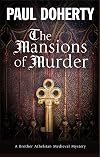
'A bubbling broth of murder, theft, blasphemy and sacrilege.’!
Once again Doherty plunged me into the colorful firmament of medieval London of 1381. The starkness of an age where danger encroaches from every side is vividly portrayed. Doherty's descriptions of the hanging fields and the dark depths of the London alleyways are worthy of an Hieronymus Bosch painting. London Hades is a fitting title given the area where the action takes place.
This time Athelstan and his friend Sir John show more Cranston, Lord High Coroner of London, otherwise known as ‘Sir Jack,’ are enmeshed in the dark doings of the gangs of London.
Simon Makepeace, the 'Flesher', leader of 'London’s most vicious and notorious [gang, the] rifflers', an abhorrent person as his moniker surmises, and his minions are unstoppable, backed as they are by Lord Arundel. When the bodies of a priest, Parson Reynaud, and two others are discovered mysteriously slain within the church of St Benet's, the Flesher's mother's body stolen from her coffin, and the Flesher's treasure taken from the church's iron-bound strongbox, Athelstan is pressed into service.
Things appear to harken back to when the Twelve Apostles (wonderful gem stones) in their Rose Casket were stolen from the King's barge some eighteen years ago. They were never seen again. The French are taking a keen interest.
Meanwhile another mystery linked to a recent death and a strange discovery in Athelstan's parish of St Erconwald’s sits patiently in Athelstan's mind.
Court politics as always are always lurking in the background.
A mystery that once again puzzles and delights. I did not see the ending coming until the full disclosure was given. show less
Once again Doherty plunged me into the colorful firmament of medieval London of 1381. The starkness of an age where danger encroaches from every side is vividly portrayed. Doherty's descriptions of the hanging fields and the dark depths of the London alleyways are worthy of an Hieronymus Bosch painting. London Hades is a fitting title given the area where the action takes place.
This time Athelstan and his friend Sir John show more Cranston, Lord High Coroner of London, otherwise known as ‘Sir Jack,’ are enmeshed in the dark doings of the gangs of London.
Simon Makepeace, the 'Flesher', leader of 'London’s most vicious and notorious [gang, the] rifflers', an abhorrent person as his moniker surmises, and his minions are unstoppable, backed as they are by Lord Arundel. When the bodies of a priest, Parson Reynaud, and two others are discovered mysteriously slain within the church of St Benet's, the Flesher's mother's body stolen from her coffin, and the Flesher's treasure taken from the church's iron-bound strongbox, Athelstan is pressed into service.
Things appear to harken back to when the Twelve Apostles (wonderful gem stones) in their Rose Casket were stolen from the King's barge some eighteen years ago. They were never seen again. The French are taking a keen interest.
Meanwhile another mystery linked to a recent death and a strange discovery in Athelstan's parish of St Erconwald’s sits patiently in Athelstan's mind.
Court politics as always are always lurking in the background.
A mystery that once again puzzles and delights. I did not see the ending coming until the full disclosure was given. show less
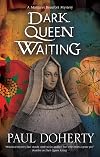
I was given a free advance copy of this manuscript in exchange for writing an impartial review. (Publication Date: 2/4/20) As a devotee of all kinds of historical fiction, as someone who has a particular passion for English history, and as someone who thinks Margaret Beaufort (mother to King Henry VII) is one of most fascinating and shrewd women in English history -- you can imagine how much I was looking forward to this book. And how much I wanted to enjoy it. Alas, it was not to be.
This show more VERY prolific author (of no less than 100 historical novels) has created a wildly convoluted mystery based around the rivalry and deception so central to the Wars of the Roses. So, let me begin by setting the scene.
King Edward IV, of the House of York, sits on the throne. But Lady Margaret Beaufort (mother of the rival House of Lancaster's surviving heir) still hopes to see HER son on the throne. Around her are a loyal band of retainers - Reginald Bray (real historical figure), Christopher Urswicke (real), and Gareth Morgan (fictional as best I can tell). That all sounds promising enough.
Unfortunately, despite the book's title, Margaret Beaufort is more of a secondary character. Primarily either as a figurehead that attracts loyal Lancaster followers or as a focal point for York hatred. Most of the action of the novel involves men, brutal murders, some torture, and the relationship between a father and son who are on opposite sides of the York-Lancaster rivalry.
But aside from feeling misled by the book's title, and turned off by the blasé violence, my chief criticisms are two-fold:
PROBLEM ONE. The story is slow partly because it is so over-burdened by the kind of description authors often insert when they have done TOO much research and feel the need to include everything.
Here, by way of example, is an excerpt when Reginald Bray is being followed in a marketplace:
"Bray moved purposefully. He fully acknowledged he was being followed, if not by some hooded figure then by one or two of the flocks of street sparrows who darted along the narrow gaps between the many stalls. Bray felt an acute sense of danger. He recalled the two murderous assaults on him and wondered if these were all part of a well-laid plot to dig up and destroy the very roots of all those who supported Countess Margaret and her exiled son. Bray then wondered how his mistress and Urswicke were faring. As he crossed Cheapside, Bray glimpsed a finely carved statue of Our Lady of Walsingham standing on its plinth. He murmured a swift prayer to the 'Fragrantly beautiful Queen of Heaven' for the safety of the countess and those who served her. Now and again Bray would pause, as if to buy from a stall or listen to a storyteller fresh from Outremer chanting a tale about a strange creature which had the head of a hare, the neck of an ox, the winds of a dragon, the feel of a camel and so on. On this occasion Bray glanced around and caught two men at a nearby stall; they were studying him closely then quickly looked away."
Really? While he's being followed, he considers street sparrows, Margaret Beaufort, Urswicke, a statue, and listens to a storyteller? After two attempts on his life, wasn't the adrenaline helping him focus exclusively on who might be following him? Or, perhaps I am being uncharitable and Bray was simply a victim of a Medieval case of ADHD.
PROBLEM TWO. Way too much of the plot is explained by characters sitting around a meal together. Long, and frankly unrealistic monologues that make sure every aspect of the relevant history of the Wars of the Roses is covered. Including an exceptionally long-winded final scene where Margaret Beaufort and her friends confront a traitor and painstakingly review all the evidence of his guilt. Assuming, I can only guess, that the reader needs to have everything explained in order to successfully tie up the mystery. Instead, it felt more like an Agatha Christie mystery where the reader can't possibly solve it alone and needs Miss Marple to point out unimportant but key details that the author intentionally meant readers to overlook.
Okay, I think you get the idea. If you are interested in the still-remarkable historical figure of Margaret Beaufort, there are better historical novels around than this one. show less
This show more VERY prolific author (of no less than 100 historical novels) has created a wildly convoluted mystery based around the rivalry and deception so central to the Wars of the Roses. So, let me begin by setting the scene.
King Edward IV, of the House of York, sits on the throne. But Lady Margaret Beaufort (mother of the rival House of Lancaster's surviving heir) still hopes to see HER son on the throne. Around her are a loyal band of retainers - Reginald Bray (real historical figure), Christopher Urswicke (real), and Gareth Morgan (fictional as best I can tell). That all sounds promising enough.
Unfortunately, despite the book's title, Margaret Beaufort is more of a secondary character. Primarily either as a figurehead that attracts loyal Lancaster followers or as a focal point for York hatred. Most of the action of the novel involves men, brutal murders, some torture, and the relationship between a father and son who are on opposite sides of the York-Lancaster rivalry.
But aside from feeling misled by the book's title, and turned off by the blasé violence, my chief criticisms are two-fold:
PROBLEM ONE. The story is slow partly because it is so over-burdened by the kind of description authors often insert when they have done TOO much research and feel the need to include everything.
Here, by way of example, is an excerpt when Reginald Bray is being followed in a marketplace:
"Bray moved purposefully. He fully acknowledged he was being followed, if not by some hooded figure then by one or two of the flocks of street sparrows who darted along the narrow gaps between the many stalls. Bray felt an acute sense of danger. He recalled the two murderous assaults on him and wondered if these were all part of a well-laid plot to dig up and destroy the very roots of all those who supported Countess Margaret and her exiled son. Bray then wondered how his mistress and Urswicke were faring. As he crossed Cheapside, Bray glimpsed a finely carved statue of Our Lady of Walsingham standing on its plinth. He murmured a swift prayer to the 'Fragrantly beautiful Queen of Heaven' for the safety of the countess and those who served her. Now and again Bray would pause, as if to buy from a stall or listen to a storyteller fresh from Outremer chanting a tale about a strange creature which had the head of a hare, the neck of an ox, the winds of a dragon, the feel of a camel and so on. On this occasion Bray glanced around and caught two men at a nearby stall; they were studying him closely then quickly looked away."
Really? While he's being followed, he considers street sparrows, Margaret Beaufort, Urswicke, a statue, and listens to a storyteller? After two attempts on his life, wasn't the adrenaline helping him focus exclusively on who might be following him? Or, perhaps I am being uncharitable and Bray was simply a victim of a Medieval case of ADHD.
PROBLEM TWO. Way too much of the plot is explained by characters sitting around a meal together. Long, and frankly unrealistic monologues that make sure every aspect of the relevant history of the Wars of the Roses is covered. Including an exceptionally long-winded final scene where Margaret Beaufort and her friends confront a traitor and painstakingly review all the evidence of his guilt. Assuming, I can only guess, that the reader needs to have everything explained in order to successfully tie up the mystery. Instead, it felt more like an Agatha Christie mystery where the reader can't possibly solve it alone and needs Miss Marple to point out unimportant but key details that the author intentionally meant readers to overlook.
Okay, I think you get the idea. If you are interested in the still-remarkable historical figure of Margaret Beaufort, there are better historical novels around than this one. show less
A Shrine of Murders: Being the First of the Canterbury Tales of Kathryn Swinbrooke, Leech, and Physician by C. L. Grace

One of the worst-written books I’ve ever read all the way through. Clumsy, adverb-burdened prose riddled with high-falutin’ malapropisms, a sloppy potluck of affected historicisms with bald anachronism, and not even a compelling mystery plot. But I had to keep reading just to watch the train wreck unfold.
Lists
Awards

You May Also Like


Associated Authors
Statistics
- Works
- 138
- Also by
- 15
- Members
- 13,253
- Popularity
- #1,763
- Rating
- 3.7
- Reviews
- 297
- ISBNs
- 1,018
- Languages
- 13
- Favorited
- 12

