
Daniel Ellsberg (1931–2023)
Author of Secrets: A Memoir of Vietnam and the Pentagon Papers
About the Author
Daniel Ellsberg, a Harvard graduate, ex-Marine, and Rand Corporation analyst, was recruited to serve in the Pentagon during the Johnson administration. Now a prominent speaker, writer, and activist, Ellsberg lives in California and Washington, D.C.
Image credit: Daniel Ellsberg, à Dresde (Allemagne), en février 2016
Works by Daniel Ellsberg
Associated Works
Blood on the Tracks: The Life and Times of S. Brian Willson (2011) — Introduction — 53 copies, 1 review
Tagged
Common Knowledge
- Birthdate
- 1931-04-07
- Date of death
- 2023-06-16
- Gender
- male
- Education
- Harvard University (PhD | Economics | 1962)
Harvard College (AB, summa cum laude | Economics | 1952)
Cranbrook School
King's College, Cambridge - Occupations
- strategic analyst
special assistant to Assistant Secretary of Defense for International Security Affairs
activist
writer - Organizations
- Nuclear Age Peace Foundation
RAND Corporation
US Defense Department
US Marine Corps - Awards and honors
- Right Livelihood Award (2006)
Ridenhour Courage Prize (2004)
Olof Palme Prize (2018)
Sam Adams Award (2022) - Relationships
- Ellsberg, Robert (son)
Ellsberg, Michael (son)
Ellsberg, Mary (daughter)
Ellsberg, Patricia Marx (spouse) - Cause of death
- pancreatic cancer
- Nationality
- USA
- Birthplace
- Chicago, Illinois, USA
- Places of residence
- Detroit, Michigan, USA
Cambridge, Massachusetts, USA
Santa Monica, California, USA
Vietnam
Kensington, Calfornia, USA - Place of death
- Kensington, California, USA
- Associated Place (for map)
- USA
Members
Reviews
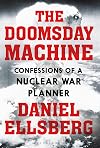
Wow. I went into this just thinking Ellsberg was a random functionary who had leaked the Pentagon Papers; I also discounted him as a generic antiwar/leftist/commie scum. I was wrong. Overall, this is a very good book, and presents both the issues of the US nuclear/national security establishment and Ellsberg as a person pretty fairly.
Ellsberg was an intelligent RAND analyst with both interest in making nuclear war planning more sane, and access to a lot of information due to his position show more (and then seeking more access using his knowledge). He used his power to route information from the military (which was tightly controlling it) to civilian leaders in the DOD and White House, and overall on nuclear policy was pretty unambiguously good. He'd been a USMC officer and cold war "true believer" earlier in his career, and became more concerned as he learned more about the war plans and how badly they'd been structured. (Crazy stuff like all-or-nothing plans, such that any attack would be responded to by destroying both USSR and China (and a bunch of other countries), war plans with inherent flaws in timing and coordination, and unexamined couplings in failure modes such that a simple decision to order an alert could have easily led to complete nuclear war.)
I do think he oversold nuclear winter/nuclear cooling as an existential threat, and has some other generic left ideas, but overall I think he did the right thing within government on nuclear matters.
Ironically he tried to exfiltrate a bunch of highly classified nuclear documents, similar to how he'd copied the Pentagon Papers, but let a friend store them for him, losing them in a comedy of incompetence (if he's to be believed). show less
Ellsberg was an intelligent RAND analyst with both interest in making nuclear war planning more sane, and access to a lot of information due to his position show more (and then seeking more access using his knowledge). He used his power to route information from the military (which was tightly controlling it) to civilian leaders in the DOD and White House, and overall on nuclear policy was pretty unambiguously good. He'd been a USMC officer and cold war "true believer" earlier in his career, and became more concerned as he learned more about the war plans and how badly they'd been structured. (Crazy stuff like all-or-nothing plans, such that any attack would be responded to by destroying both USSR and China (and a bunch of other countries), war plans with inherent flaws in timing and coordination, and unexamined couplings in failure modes such that a simple decision to order an alert could have easily led to complete nuclear war.)
I do think he oversold nuclear winter/nuclear cooling as an existential threat, and has some other generic left ideas, but overall I think he did the right thing within government on nuclear matters.
Ironically he tried to exfiltrate a bunch of highly classified nuclear documents, similar to how he'd copied the Pentagon Papers, but let a friend store them for him, losing them in a comedy of incompetence (if he's to be believed). show less
Well, this is a terrifying book. Ellsberg began as a committed Cold Warrior, before his disillusionment led him to leak the Pentagon Papers and become an antiwar activist. What I didn’t know was that he had a larger cache of secret documents about US nuclear policy, though they apparently got lost when he tried to conceal them from the feds. Still, he worked for RAND and had a lot of access, so his accounts of how, in practice, individual base commanders and even individual pilots could show more have launched their nuclear missiles—despite what we’ve told the world about the “nuclear football”—were credible. We know a few stories about how individual Soviets averted nuclear war, but not nearly as much about similar decisions by Americans. Luck is not a great strategy, but it’s what we’ve been using and will continue to use as long as America retains a first-strike capability. Ellsberg also writes persuasively about how Presidents, and especially their representatives in private negotiations, have used the threat of nuclear war in political confrontations, and ended up thinking that it worked, to the continued risk of the world. show less
Daniel Ellsberg will always be the patron saint of whistleblowers. He earned his place in history by leaking the Pentagon Papers, documenting that the American government knew the war in Vietnam was based on lies and going poorly long before it admitted anything of that sort to the public. Vietnam was the end of Ellsberg's official career. He real passion was nuclear war, and trying to make sure that one never occurred. In a twist of fate, the nuclear documents that Ellsberg also copied in show more the 1970s were lost in a landslide, but decades later much of that material has become available through FOIA and similar requests.
I thought I knew a fair bit about the Cold War and nuclear brinksmanship, and even so this book was astounding. The conventional wisdom is that nuclear war is MAD-Mutually Assured Destruction. Peace is preserved in a tense equilibrium where each side knows that any nuclear exchange will lead to annihilation of it's own population via a sure retaliation. The paradoxical credibility of peace by violence is restrained by the twin promises that nothing can stop the fire and that nukes will only be launched in response to a nuclear attack. The first point is true, the second point is a lie.
As Ellsberg points out, the American government has never disavowed the first use of nuclear weapons, or the potential of a nuclear first strike (First use is any unprovoked use. First strike is massive first use intended to prevent retaliation). Every American president since Truman has used the nuclear arsenal like a robber with a gun. That the gun has not been fired yet is secondary to the basic fact that it is loaded, aimed, and used to compel obedience.
This book is best when it hews closest to Ellsberg's work at RAND and in the White House. Coming out of the Marines and Harvard with a PhD in decision-making under uncertainty, he embarked on a survey of nuclear strategy in the Pacific in 1959 or so, and what he found was incredibly alarming. President Eisenhower had delegated the authority to launch a nuclear strike to CINCPAC in Honolulu, who had further devolved authority to theater commanders on Okinawa, Guam, Korea, and various ships. All of these commands were routinely out of contact with higher headquarters due to distance and poor radio communications. While there was in theory a 'two man rule' that prevented any single officer from broadcasting the order to launch a nuclear strike, in reality every ship and base had procedures for bypassing the two man rule.
Bases practiced alerts on a daily basis and were capable of launching aircraft on 10 minute notice, a stated objective of the attack plan. The attack plan was "fail-safe", in that if an aircraft had not received a go order by the time it reached bingo fuel and had to either commit to the attack or return to base, it would return to base. Strategic Air Command (SAC) practiced full alerts with armed bombers flying to their holding points. In the Pacific, Tactical Air Command merely taxied to the flightlines with bombs. This was both to save fuel and maintenance, and also because the bombs used were not one-point safe, and F-100s were difficult airplanes to flying, meaning there was a small but real chance a plane crash could lead to a nuclear detonation.
As Ellsberg pointed out, visiting a small airbase in the ass-end of Korea, a real alert would be the first time that these pilots had taken off with live bombs. There was also a non-zero chance that plane 8 of 12 would crash on take-off, and the remaining pilots would find themselves out of communications with command, their base enveloped in a mushroom cloud, and with the fate of their world in their hands.
Ellsberg asked the officer in command, a major, what would happen. Would the pilots returned to base as planned? "Yes they would. They're good boys. Well, probably... Hell, if one goes, they might as well all go!" The end of the world could be triggered by an honorable and dutiful officer at the very low rank of major, on his own orders, based on his own very partial understanding of the strategic situation. And there was nothing the entire chain of command, from the President on down, could do to stop it.
Worse than accidents was the actual proper plan. The effort involved in coordinating thousands of aircraft and bombs and avoiding mutual fratricide meant that there was only one plan, a massive all-out attack on the Soviet Union, Communist China, and the Warsaw Pact that would drop thousands of hydrogen bombs in a single spasm until nothing remained in the American arsenal. This plan was to be activated on the event of general war, a conflict with the Soviet Union larger than a skirmish. The plan itself, the Joint Strategic Capabilities Plan, was so secret that it was concealed from the President and the White House staff, the anodyne JSCP acronym also kept secret. It was a plan for genocide. The initial bombardment would kill hundreds of millions. Fire effects were too difficult to estimate, so they were assumed to cause zero casualties. Radioactive fallout would kill an estimated another five hundred million or so, wiping out allies and neutrals in Western Europe and South Asia. Plumes of fallout would drift around the globe, and ash lofted into the stratosphere would trigger a nuclear winter and years-long famine.
In one rather acid summary of his career, Ellsberg describes his life's mission as moving a piece of paper from one desk to a desk with higher authority. The truth about the Vietnam War shifted from the Pentagon to the public. JSCP from the Air Force to the President. Ellsberg joined the Kennedy administration on a part-time leave from RAND, and drafted a new nuclear war plan that proposed leaving cities untouched, hostages for a second round, and reducing the triggering events for nuclear war. There is a lot of canny bureaucratic knife fighting, and great descriptions of the proper deployment of informational memos around the Cuban missile crisis, for those who care about those sorts of things.
The latter half of the book weapons lags as Ellsberg discusses general nuclear strategy, rather than his own experience, but he makes an ironclad case that current nuclear policy in the United States is inherently unsafe and that the soft power gained by joining international arms controls norms would override the veiled, and not-so-veiled threats, made by American Presidents. We've been lucky that there have been no fatal technical glitches, and that at moments of maximum tension people who understood the consequences had the last word, but luck is not enough. Something has to change before the doomsday machine goes off.
As the motto of the Soviet Strategic Rocket Forces goes, "After us - silence". show less
I thought I knew a fair bit about the Cold War and nuclear brinksmanship, and even so this book was astounding. The conventional wisdom is that nuclear war is MAD-Mutually Assured Destruction. Peace is preserved in a tense equilibrium where each side knows that any nuclear exchange will lead to annihilation of it's own population via a sure retaliation. The paradoxical credibility of peace by violence is restrained by the twin promises that nothing can stop the fire and that nukes will only be launched in response to a nuclear attack. The first point is true, the second point is a lie.
As Ellsberg points out, the American government has never disavowed the first use of nuclear weapons, or the potential of a nuclear first strike (First use is any unprovoked use. First strike is massive first use intended to prevent retaliation). Every American president since Truman has used the nuclear arsenal like a robber with a gun. That the gun has not been fired yet is secondary to the basic fact that it is loaded, aimed, and used to compel obedience.
This book is best when it hews closest to Ellsberg's work at RAND and in the White House. Coming out of the Marines and Harvard with a PhD in decision-making under uncertainty, he embarked on a survey of nuclear strategy in the Pacific in 1959 or so, and what he found was incredibly alarming. President Eisenhower had delegated the authority to launch a nuclear strike to CINCPAC in Honolulu, who had further devolved authority to theater commanders on Okinawa, Guam, Korea, and various ships. All of these commands were routinely out of contact with higher headquarters due to distance and poor radio communications. While there was in theory a 'two man rule' that prevented any single officer from broadcasting the order to launch a nuclear strike, in reality every ship and base had procedures for bypassing the two man rule.
Bases practiced alerts on a daily basis and were capable of launching aircraft on 10 minute notice, a stated objective of the attack plan. The attack plan was "fail-safe", in that if an aircraft had not received a go order by the time it reached bingo fuel and had to either commit to the attack or return to base, it would return to base. Strategic Air Command (SAC) practiced full alerts with armed bombers flying to their holding points. In the Pacific, Tactical Air Command merely taxied to the flightlines with bombs. This was both to save fuel and maintenance, and also because the bombs used were not one-point safe, and F-100s were difficult airplanes to flying, meaning there was a small but real chance a plane crash could lead to a nuclear detonation.
As Ellsberg pointed out, visiting a small airbase in the ass-end of Korea, a real alert would be the first time that these pilots had taken off with live bombs. There was also a non-zero chance that plane 8 of 12 would crash on take-off, and the remaining pilots would find themselves out of communications with command, their base enveloped in a mushroom cloud, and with the fate of their world in their hands.
Ellsberg asked the officer in command, a major, what would happen. Would the pilots returned to base as planned? "Yes they would. They're good boys. Well, probably... Hell, if one goes, they might as well all go!" The end of the world could be triggered by an honorable and dutiful officer at the very low rank of major, on his own orders, based on his own very partial understanding of the strategic situation. And there was nothing the entire chain of command, from the President on down, could do to stop it.
Worse than accidents was the actual proper plan. The effort involved in coordinating thousands of aircraft and bombs and avoiding mutual fratricide meant that there was only one plan, a massive all-out attack on the Soviet Union, Communist China, and the Warsaw Pact that would drop thousands of hydrogen bombs in a single spasm until nothing remained in the American arsenal. This plan was to be activated on the event of general war, a conflict with the Soviet Union larger than a skirmish. The plan itself, the Joint Strategic Capabilities Plan, was so secret that it was concealed from the President and the White House staff, the anodyne JSCP acronym also kept secret. It was a plan for genocide. The initial bombardment would kill hundreds of millions. Fire effects were too difficult to estimate, so they were assumed to cause zero casualties. Radioactive fallout would kill an estimated another five hundred million or so, wiping out allies and neutrals in Western Europe and South Asia. Plumes of fallout would drift around the globe, and ash lofted into the stratosphere would trigger a nuclear winter and years-long famine.
In one rather acid summary of his career, Ellsberg describes his life's mission as moving a piece of paper from one desk to a desk with higher authority. The truth about the Vietnam War shifted from the Pentagon to the public. JSCP from the Air Force to the President. Ellsberg joined the Kennedy administration on a part-time leave from RAND, and drafted a new nuclear war plan that proposed leaving cities untouched, hostages for a second round, and reducing the triggering events for nuclear war. There is a lot of canny bureaucratic knife fighting, and great descriptions of the proper deployment of informational memos around the Cuban missile crisis, for those who care about those sorts of things.
The latter half of the book weapons lags as Ellsberg discusses general nuclear strategy, rather than his own experience, but he makes an ironclad case that current nuclear policy in the United States is inherently unsafe and that the soft power gained by joining international arms controls norms would override the veiled, and not-so-veiled threats, made by American Presidents. We've been lucky that there have been no fatal technical glitches, and that at moments of maximum tension people who understood the consequences had the last word, but luck is not enough. Something has to change before the doomsday machine goes off.
As the motto of the Soviet Strategic Rocket Forces goes, "After us - silence". show less
This book is a compelling but truly terrifying account of U.S. nuclear plans and policies from the Manhattan Project to the present. Why terrifying? Because it is a thoroughly-documented history of deceit, military obstinacy and insubordination, miscommunication and brinkmanship. According to Ellsberg, that history continues today. He also confesses his role in the nuclear stalemate which has continued from the 1950s to today and issues a call for a popular movement aimed eventually at show more abolition but initially at dismantling what Ellsberg, after Herman Kahn, calls the Doomsday Machine, the mechanisms for automatic launch and the system of values, assumptions and policies that hold the entire world at risk of nuclear annihilation. For those who are not policy wonks or nuclear weapons nerds, the going can be slow at times, but Ellsberg is often arresting, especially in his accounts of the Cuban Missile Crisis and the evolution of U.S. values from abhorrence at the bombing of civilians to dismissing civilian deaths as a necessary component of strategy. show less
Lists
Awards


You May Also Like


Associated Authors
Statistics
- Works
- 11
- Also by
- 3
- Members
- 1,238
- Popularity
- #20,730
- Rating
- 4.1
- Reviews
- 19
- ISBNs
- 30
- Languages
- 2
- Favorited
- 1


