
Nuruddin Farah
Author of Maps
About the Author
MAPS, Nuruddin Farah, 0-14-029643-3 The 1998 laureate of the Neustadt International Prize for Literature, Nuruddin Farah has been described as "one of the finest contemporary African novelists" (Salman Rushdie). Farah was born in 1945, in what is now Somalia (what was then the Italian Somaliland), show more in Baidoa, and grew up in Kallafo, under Ethiopian rule in Ogaden. The ethnically and linguistically mixed area of his childhood contributred to his early fascination with literature. He spoke Somali at his home but at school learned Amharic, Italian, Arabic, and English. Farah worked for the Ministry of Education in Somalia before leaving for India to study philosophy and literature. His first novel, From a "Crooked Rib", was published in 1970; it has since achieved worldwide cult status, admired for its empathetic portrait of a Somali woman struggling with the restraints of traditional Somali society. It was followed by "A Naked Needle" (1976). Farah's next three novels, "Sweet and Sour Milk" (1979), "Sardines" (1981) and "Close Sesame" (1983), form the trilogy collectively known as "Variations on the Theme of an African Dictatorship". Upon the publication of "Sweet and Sour Milk", which won the English Speaking Union Literary Award, Farah became persona non grata in his native Somalia. In exile, Farah began what has become a lifelong literary project: "to keep my country alive by writing about it." The "Variations" trilogy was followed by the "Blood in the Sun" trilogy, which consists of "Maps" (1986), "Gifts" (1992), and "Secrets" (1998). Farah lives in Cape Town, South Africa, with his wife and two children. show less
Image credit: Philippe Matsas
Series
Works by Nuruddin Farah
Associated Works
The Art of the Story: An International Anthology of Contemporary Short Stories (1999) — Contributor — 394 copies, 5 reviews
Timbuktu, Timbuktu : a selection of works from the Caine Prize for African wriiting 2001 (2003) — Contributor — 5 copies
Tagged
Common Knowledge
- Other names
- Nuuradiin Faarax
نور الدين فرح - Birthdate
- 1945-11-24
- Gender
- male
- Education
- Institutio Magistrale (Mogadishu)
- Occupations
- novelist
- Awards and honors
- Neustadt International Prize for Literature (1998)
South African Literary Award Lifetime Achievement (2014) - Nationality
- Somalia
- Birthplace
- Baidoa, Somalia
- Places of residence
- Cape Town, South Africa
- Associated Place (for map)
- Somalia
Members
Reviews
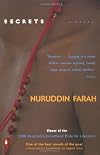
Secrets, Farah's 8th novel and the first one of his I've read, is in many ways a fascinating work - but also a frustrating one. It's a family drama set against the backdrop of the collapse of Somalia in the early 90. 30-something Kalaman is living a modern life as a computer programmer in Mogadishu, when suddenly his childhood crush Sholoongo comes back to Somalia from exile in the US to demand that he make her pregnant. He won't have to raise the child; as a much-repeated saying goes, a show more mother is everything, a father is nothing. And her arrival becomes the catalyst that makes all the old family secrets come bubbling to the surface as Kalaman starts questioning his parents and grandfather about his history while the country they live in starts falling apart.
Farah is a poet at heart, and his prose is beautiful even when dealing with violent subjects; multi-layered, mixing dreams and harsh reality, with enough clever little clues and symbolism to make it something more than just a standard soap opera. One thing that strikes me is the way he seems to strive to capture - without getting too obvious - a purely Somalian perspective, as opposed to a general African or post-colonial one; there are roots here reaching back past the 20th century, past Islam, back into ancient times; the Italians and the Brits might not be blameless, but the fault of the impending anarchy still lies with people's inability to stop using each other against each other. And while one may wonder whether the long-exiled Farah paints a perfectly realistic picture of Somalia (especially when it comes to sexual habits - at times, he makes this muslim country sound like a free love festival) it's still one of those novels that manages quite well to have personal issues mirror the political ones.
Still, that's not necessarily enough to carry a 330-page novel. Secrets doesn't keep its secrets as well as it might have - and by "well", I mean the thing you go to until the bucket breaks. While Farah makes good use of POV shifts to tell the same story from different angles and gradually uncover Kalaman's family's secrets, setting the story up in the first half and then slowly tying it all together in the second, the final pay-off simply isn't rewarding enough to justify the way he drags it out. The novel tends to plod, veering off into long monologues that sound too rehearsed, too constructed to really draw you in and care what happens; just makes you wish he'd get to the point already. show less
Farah is a poet at heart, and his prose is beautiful even when dealing with violent subjects; multi-layered, mixing dreams and harsh reality, with enough clever little clues and symbolism to make it something more than just a standard soap opera. One thing that strikes me is the way he seems to strive to capture - without getting too obvious - a purely Somalian perspective, as opposed to a general African or post-colonial one; there are roots here reaching back past the 20th century, past Islam, back into ancient times; the Italians and the Brits might not be blameless, but the fault of the impending anarchy still lies with people's inability to stop using each other against each other. And while one may wonder whether the long-exiled Farah paints a perfectly realistic picture of Somalia (especially when it comes to sexual habits - at times, he makes this muslim country sound like a free love festival) it's still one of those novels that manages quite well to have personal issues mirror the political ones.
Still, that's not necessarily enough to carry a 330-page novel. Secrets doesn't keep its secrets as well as it might have - and by "well", I mean the thing you go to until the bucket breaks. While Farah makes good use of POV shifts to tell the same story from different angles and gradually uncover Kalaman's family's secrets, setting the story up in the first half and then slowly tying it all together in the second, the final pay-off simply isn't rewarding enough to justify the way he drags it out. The novel tends to plod, veering off into long monologues that sound too rehearsed, too constructed to really draw you in and care what happens; just makes you wish he'd get to the point already. show less
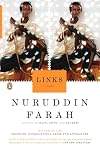
My first book by Farah who, it appears, often (always?) writes about Somalia and the effect of its civil war on both those who have stayed and those who have left but later returned. The book is (intentionally) disorienting from the very beginning, reflecting the experience of the Somali protagonist who has been exiled to the US and is coming home for the first time in twenty years to visit his mother’s grave. The capital is divided into zones ruled by competing clan warlords and Farah’s show more gift is his ability to convey in fine detail the impact of this situation on those who live there and their daily struggle for survival. Farah never overtly philosophizes but is largely concerned with the issue of meting out justice—who has the right, who has the ability, and who can even say what it means—and the subject of responsibility. The story starts with our protagonist stepping off the plane and follows him through his decision to stay and involve himself in a search for two young girls who have vanished. Although the story never wavers (though it has tangents), it is rivetingly told and I look forward to reading my next book by him. show less
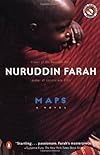
Maps is a novel by Nuruddin Farah, a chronicler of modern Africa's sociopolitical turbulence and growth who has lived in exile from his native Somalia since 1974. The first in a trilogy of novels, Maps is rich in concept and execution, beautifully worked in the dense, intricate prose. It tells the story of Askar, orphaned as a child, who is rescued from his dead mother's side and raised in a small village by Misra, an older woman who develops a mysterious, protective bond with him.
Eventually show more he moves to the capital to live with his prosperous Uncle Hilaal; however, Askar's origins continue to preoccupy him, and he grows into a serious, introspective youth fixed on the urgent question of his identity. Thus we have the central theme of this novel - identity - a theme that is woven with complexity as Askar begins with close ties to Misra, his substitute mother, and as he grows into young manhood with ties to the land, Somalia, metaphorically represented by maps which he studies and learns about first from Misra and later from Hilaal. It is with Misra that the boy Askar begins his journey toward becoming a man.
"Indubitably, she had done a most commendable job, training him in the nomadic lore of climatic and geographic importance -- that it was the earth which received the rains, the sky from whose loins sprang water and therefore life; that the earth was the womb upon whose open fields men and women grew food for themselves and for their animals. And man raised huts and women bore children and the cows grazed on the nearby pastures, the goats likewise; and the boy became a man," (p 134)
There are unique and striking images presented as Askar lives with Misra. Those of water and of blood, dreams of a future that is yet unknown.
"Water: I associate with joy; blood: not so much with pain as with lost tempers and beatings. But I associate something else with blood -- future as read by Misra. Once I even made a pun -- my future is in my blood." (p 36)
It gradually becomes true that Askar's blood and future are indelibly connected with Somalia. But her continues his search for identity. His father had died for the future of Somalia and Askar is taught about the past:
"'Whose are the unburied corpses?' Then the man smiled. He said: 'Our memories, our collective or if you like, our individual pasts. We leave our bodies in order that we may travel light -- we are hope personified. After all, we are the dream of a nation." (p 129)
Hilaal, the cook and nurturer in his city home of Mogadiscio, is able to provide some answers for his baffled nephew on the subjects of African tradition, Somalian manhood and selflessness. Employing a poetic, imaginative style, Farah skillfully juxtaposes Askar's emotional turmoil and the struggles of his beloved Somalia under siege, as the characters try to understand why blood must be shed for territorial gain. In the end, Askar must choose between avenging his soldier father's death by joining the army, or pursuing his academic studies, but the choice is taken out of his hands by powerful external forces.
This is a poetic coming-of-age story, following in the tradition of Dickens and many others. Farah makes it new with his poetic style, a unique narrative voice using different points of view, and with the complex relationships between family, friends, and the land. The result is a wonderful tale of searching for the identity of one's inner and outer self in a difficult world. show less
Eventually show more he moves to the capital to live with his prosperous Uncle Hilaal; however, Askar's origins continue to preoccupy him, and he grows into a serious, introspective youth fixed on the urgent question of his identity. Thus we have the central theme of this novel - identity - a theme that is woven with complexity as Askar begins with close ties to Misra, his substitute mother, and as he grows into young manhood with ties to the land, Somalia, metaphorically represented by maps which he studies and learns about first from Misra and later from Hilaal. It is with Misra that the boy Askar begins his journey toward becoming a man.
"Indubitably, she had done a most commendable job, training him in the nomadic lore of climatic and geographic importance -- that it was the earth which received the rains, the sky from whose loins sprang water and therefore life; that the earth was the womb upon whose open fields men and women grew food for themselves and for their animals. And man raised huts and women bore children and the cows grazed on the nearby pastures, the goats likewise; and the boy became a man," (p 134)
There are unique and striking images presented as Askar lives with Misra. Those of water and of blood, dreams of a future that is yet unknown.
"Water: I associate with joy; blood: not so much with pain as with lost tempers and beatings. But I associate something else with blood -- future as read by Misra. Once I even made a pun -- my future is in my blood." (p 36)
It gradually becomes true that Askar's blood and future are indelibly connected with Somalia. But her continues his search for identity. His father had died for the future of Somalia and Askar is taught about the past:
"'Whose are the unburied corpses?' Then the man smiled. He said: 'Our memories, our collective or if you like, our individual pasts. We leave our bodies in order that we may travel light -- we are hope personified. After all, we are the dream of a nation." (p 129)
Hilaal, the cook and nurturer in his city home of Mogadiscio, is able to provide some answers for his baffled nephew on the subjects of African tradition, Somalian manhood and selflessness. Employing a poetic, imaginative style, Farah skillfully juxtaposes Askar's emotional turmoil and the struggles of his beloved Somalia under siege, as the characters try to understand why blood must be shed for territorial gain. In the end, Askar must choose between avenging his soldier father's death by joining the army, or pursuing his academic studies, but the choice is taken out of his hands by powerful external forces.
This is a poetic coming-of-age story, following in the tradition of Dickens and many others. Farah makes it new with his poetic style, a unique narrative voice using different points of view, and with the complex relationships between family, friends, and the land. The result is a wonderful tale of searching for the identity of one's inner and outer self in a difficult world. show less
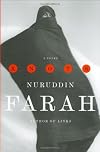
Meh. I just could not get into this book. The characters neither acted nor sounded like real people. They all talked the same way and all made long speeches with big words -- even the character Gacal, who I think was only about ten years old. Cambara, the protagonist, goes to Somalia to escape a horrible marriage, grieve her dead son and reclaim her family's property which has been taken by a warlord. She shows up and right away half of Mogadishu comes to her saying, "We will help you! We show more will do anything you want, at risk of our lives, and you won't have to pay us! In fact, we'll even foot your bills! You can do whatever you want, no matter how strange it seems, and no one will ask you any questions! You can even go to your family property, get a plumber to make improvements, and take the warlord's pregnant girlfriend to the hospital, and she won't even inquire who the heck you are and what are you doing in her house! And then she will conveniently disappear from the story, never to be mentioned again!"
Cambara also pulls two random urchins off the street and basically adopts them -- which I can buy, given the recent loss of her son -- and miraculously they both turn out to be good, sweet, well-behaved boys who only needed a bath and a change of clothes to become normal children. This in spite of the fact that one of the boys is a child soldier and the other has been living on the streets of Mogadishu for two years.
I do not understand why Nuruddin Farah is so highly regarded as an author. Perhaps his other books are better than this? I'm not going to bother to find out. show less
Cambara also pulls two random urchins off the street and basically adopts them -- which I can buy, given the recent loss of her son -- and miraculously they both turn out to be good, sweet, well-behaved boys who only needed a bath and a change of clothes to become normal children. This in spite of the fact that one of the boys is a child soldier and the other has been living on the streets of Mogadishu for two years.
I do not understand why Nuruddin Farah is so highly regarded as an author. Perhaps his other books are better than this? I'm not going to bother to find out. show less
Lists
Somalia (4)
Awards


You May Also Like


Associated Authors
Statistics
- Works
- 23
- Also by
- 6
- Members
- 1,946
- Popularity
- #13,220
- Rating
- 3.4
- Reviews
- 43
- ISBNs
- 162
- Languages
- 11
- Favorited
- 6