
Christopher Finch (1939–2022)
Author of The Art of Walt Disney: From Mickey Mouse to the Magic Kingdoms
About the Author
Christopher Finch, as a young child, believed that he was the Christopher Robin of the wonderful stories his mother read to him at bedtime. It is only fitting that Finch adds this book to the list of more than twenty titles he has authored, including The Art of Walt Disney and The Art of the Lion show more King show less
Works by Christopher Finch
The Art of Walt Disney: From Mickey Mouse to the Magic Kingdoms (1973) — Author — 1,292 copies, 6 reviews
America's Best Beers/a Complete Guide to the More Than 350 Microbreweries and Brewpubs Across America (1994) 26 copies, 1 review
Associated Works
Inside the Personal Computer: An Illustrated Introduction in 3 Dimensions (1984) — Line drawings — 85 copies
Tagged
Common Knowledge
- Canonical name
- Finch, Christopher
- Legal name
- Finch, Christopher Robin
- Birthdate
- 1939-12-31
- Date of death
- 2022-04-01
- Gender
- male
- Education
- Chelsea Art School
- Occupations
- curator (Walker Art Center 1968-1969)
writer
art critic
painter
photographer - Organizations
- Walker Art Center
- Agent
- Bent Agency
- Relationships
- Rosenkrantz, Linda (wife)
- Nationality
- UK
- Birthplace
- Guernsey, British Channel Islands
- Places of residence
- Los Angeles, California, USA
Minneapolis, Minnesota, USA
Paris, Île-de-France, France
London, Middlesex, England, UK - Place of death
- Los Angeles, California, USA
Members
Reviews
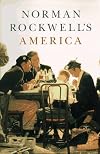
Rethinking Norman Rockwell
Often when some think of Norman Rockwell they picture illustration of an idealized America and sentimentality. Certainly, some of Rockwell’s work is like this; however, some provides deeper insights into American life and Americans, especially during and after World War II. Christopher Finch, in this really very nice volume first published in the Seventies when Rockwell was living, and by the Reader’s Digest, the very epitome of Americana, focuses on show more Rockwell’s Saturday Evening Post magazine covers from his first for the October 27, 1917, issue to his last on the December 14, 1963, issue (a portrait of John F. Kennedy, recently assassinated).
The large format book provides a broad perspective on Rockwell’s work, concentrating on his Post illustrations, with Finch to not only analyzing various and many of Rockwell’s best known pictures but also tracing and highlighting how Rockwell’s art changed over the years, from idealistic and romantic to more realistic and naturalistic. It’s an enlightening journey, particularly for those who have a one-dimensional view of Rockwell, and perhaps negative at that. Whatever your impressions of Rockwell, after reading and perusing this volume you will gain a new, maybe better, impression of the man, and with this another way of looking at America in the 20th century.
Finch organizes Rockwell’s cover art into these categories: Growing Up in America; Young Love; Home and Family; Growing Old in America; The American Past in Fact and Fiction; Democracy; Americans in Uniform; Americans at Work; The Sporting Life; An American Portrait Gallery; and Christmas. You’ll find the collection contains illustrations you’ve probably seen over the years, here presented in many color plates of decent quality, accompanied by Finch commentary. The back of the book contains small reproductions of every Post cover illustrated by Rockwell from first to last.
For a different and sometimes controversial perspective on Rockwell, the man and his work, you might also find Deborah Solomon’s American Mirror: The Life and Art of Norman Rockwell of interest. In addition to Rockwell’s work, Solomon probes much more deeply into Rockwell’s psyche, including his sexuality, and how it may have influenced his work. show less
Often when some think of Norman Rockwell they picture illustration of an idealized America and sentimentality. Certainly, some of Rockwell’s work is like this; however, some provides deeper insights into American life and Americans, especially during and after World War II. Christopher Finch, in this really very nice volume first published in the Seventies when Rockwell was living, and by the Reader’s Digest, the very epitome of Americana, focuses on show more Rockwell’s Saturday Evening Post magazine covers from his first for the October 27, 1917, issue to his last on the December 14, 1963, issue (a portrait of John F. Kennedy, recently assassinated).
The large format book provides a broad perspective on Rockwell’s work, concentrating on his Post illustrations, with Finch to not only analyzing various and many of Rockwell’s best known pictures but also tracing and highlighting how Rockwell’s art changed over the years, from idealistic and romantic to more realistic and naturalistic. It’s an enlightening journey, particularly for those who have a one-dimensional view of Rockwell, and perhaps negative at that. Whatever your impressions of Rockwell, after reading and perusing this volume you will gain a new, maybe better, impression of the man, and with this another way of looking at America in the 20th century.
Finch organizes Rockwell’s cover art into these categories: Growing Up in America; Young Love; Home and Family; Growing Old in America; The American Past in Fact and Fiction; Democracy; Americans in Uniform; Americans at Work; The Sporting Life; An American Portrait Gallery; and Christmas. You’ll find the collection contains illustrations you’ve probably seen over the years, here presented in many color plates of decent quality, accompanied by Finch commentary. The back of the book contains small reproductions of every Post cover illustrated by Rockwell from first to last.
For a different and sometimes controversial perspective on Rockwell, the man and his work, you might also find Deborah Solomon’s American Mirror: The Life and Art of Norman Rockwell of interest. In addition to Rockwell’s work, Solomon probes much more deeply into Rockwell’s psyche, including his sexuality, and how it may have influenced his work. show less
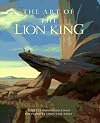
For such a simple little volume, this collection of artwork from the Lion King does a wonderful job of bringing back the magic of the film. It has a well-balanced selection of different styles, from rough sketches to finished animation stills with a few selections of concept artwork, that tell the emotional story much better than would be done by a restriction to finished animation. Lots of the Disney stories were transfered into book format this way successfully, but the wild setting of the show more Savannah and the nature of the lion pride is perfectly suited to something a little less polished. Clearly the images were chosen with care, since the choice of art style often evokes a certain mood from the film itself that is tied up in more than just imagery. I found myself remembering snatches of the soundtrack and the unique tones of characters' voices (Jeremy Irons' Scar or the drumbeats that accompany Simba up Pride Rock especially), so I might have to go watch the film again soon, show less
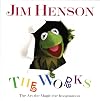
A couple of months ago, I went to a local museum to see a traveling exhibit on Jim Henson and the Muppets. (You know, back in the distant Before Times, when museums were open and humans were permitted to congregate in groups.) I enjoyed it very much, which was no surprise to me at all. Like many people, I have adored the Muppets since I was a small child, and there is almost nothing that brings me as much pure, childlike glee as The Muppet Show. So of course when I saw this book in the show more museum gift shop, I picked it up. Although, to be honest, if I'd paid more attention to the price tag before I got to the register, I might not have. This is not a cheap book. But I can't regret buying it. It's a nice treat for Muppet fans: a big, colorful coffee table book full of great pictures, covering Henson's entire career and including lots of comments from (and lots of well-deserved appreciation for) the various talented people who worked beside him.
If you've read Jim Henson: The Biography, which I recommend, this makes a really nice companion piece to that. show less
If you've read Jim Henson: The Biography, which I recommend, this makes a really nice companion piece to that. show less

This authorized history of Pooh is okay in its bland, corporate way. It's amusing to read it as a complement to Brian Sibley's Three Cheers for Pooh: The Best Bear in All the World as that book lingers on the Milne family and only mentions Walt Disney once parenthetically. Meanwhile, this book rushes past Milne in the first chapter and spends the rest of the book giving the history of Disney's four Pooh short films, showing tons of art and behind-the-scenes sketches from the productions, and show more recapping the plots of the films (with unintended humor from some odd word choice decisions).
FOR REFERENCE:
Contents:
• Chapter One: In Which The Origins of Winnie the Pooh Are Discussed
• Chapter Two: In Which Walt Disney Becomes Involved
• Chapter Three: In Which The Characters Are Presented: Christopher Robin, Winnie the Pooh, Piglet, Tigger, Rabbit, Eeyore, Kanga & Roo, Owl, Gopher
• Chapter Four: In Which The Films Are Presented: Winnie the Pooh and the Honey Tree, Winnie the Pooh and the Blustery Day, Winnie the Pooh and Tigger Too, Winnie the Pooh and a Day for Eeyore
• Chapter Five: In Which The Popularity of Pooh Continues
• Index
• Film Credits
(My Pooh Project: I love Winnie the Pooh, and so does my wife. Having a daughter gave us a chance to indoctrinate her into the cult by buying and reading her every Pooh book we came across. How many is that? I’m going to count them this year by reading and reviewing one every day and seeing which month I finally run out. Track my progress here:
https://www.goodreads.com/review/list/23954351-rod-brown?ref=nav_mybooks&she... ) show less
FOR REFERENCE:
Contents:
• Chapter One: In Which The Origins of Winnie the Pooh Are Discussed
• Chapter Two: In Which Walt Disney Becomes Involved
• Chapter Three: In Which The Characters Are Presented: Christopher Robin, Winnie the Pooh, Piglet, Tigger, Rabbit, Eeyore, Kanga & Roo, Owl, Gopher
• Chapter Four: In Which The Films Are Presented: Winnie the Pooh and the Honey Tree, Winnie the Pooh and the Blustery Day, Winnie the Pooh and Tigger Too, Winnie the Pooh and a Day for Eeyore
• Chapter Five: In Which The Popularity of Pooh Continues
• Index
• Film Credits
(My Pooh Project: I love Winnie the Pooh, and so does my wife. Having a daughter gave us a chance to indoctrinate her into the cult by buying and reading her every Pooh book we came across. How many is that? I’m going to count them this year by reading and reviewing one every day and seeing which month I finally run out. Track my progress here:
https://www.goodreads.com/review/list/23954351-rod-brown?ref=nav_mybooks&she... ) show less
You May Also Like


Associated Authors
Statistics
- Works
- 37
- Also by
- 5
- Members
- 3,913
- Popularity
- #6,467
- Rating
- 4.1
- Reviews
- 35
- ISBNs
- 106
- Languages
- 6
- Favorited
- 1

