
bell hooks (1952–2021)
Author of All About Love: New Visions
About the Author
A cultural critic, an intellectual, and a feminist writer, bell hooks best known for classic books including Ain't I a Woman, Bone Black, All About Love, Rock My Soul, Belonging, We Real Cool, Where We Stand, Teaching to Transgress, Teaching Community, Outlaw Culture, and Reel to Real, hooks is show more Distinguished Professor in Residence in Appalachian Studies at Berea College, and resides in her home state of Kentucky. show less
Disambiguation Notice:
bell hooks (uncapitalized intentionally) is the pen name of social and feminist activist and author Gloria Jean Watkins.
Series
Works by bell hooks
bell hooks: The Last Interview: and Other Conversations (The Last Interview Series) (2023) 37 copies, 1 review
Understanding Patriarchy 8 copies
In Solidarity: A Conversation 3 copies
Revolutionary Parenting 3 copies
Communion. Aimer en féministes 2 copies
Theory as Liberatory Practice 2 copies
Tivoli Turnhalle 3/5/04 2 copies
Hermanas del ñame 1 copy
Postmodern Blackness 1 copy
Hooks, Bel Archive 1 copy
Associated Works
Booknotes: America's Finest Authors on Reading, Writing, and the Power of Ideas (1997) — Contributor — 457 copies, 5 reviews
Mirror, Mirror on the Wall: Women Writers Explore Their Favorite Fairy Tales (1998) — Contributor — 312 copies, 4 reviews
Words of Fire: An Anthology of African-American Feminist Thought (1995) — Contributor — 265 copies, 1 review
Wise Women: Over Two Thousand Years of Spiritual Writing by Women (1996) — Contributor — 231 copies, 1 review
Daughters of Africa: An International Anthology of Words and Writings by Women of African Descent from the Ancient Egyptian to the Present (1992) — Contributor — 186 copies
Let Nobody Turn Us Around: An African American Anthology (1999) — Contributor — 174 copies, 1 review
The Raft Is Not the Shore: Conversations Toward a Buddhist-Christian Awareness (1975) — Foreword, some editions — 168 copies, 5 reviews
Black on White: Black Writers on What It Means to Be White (1998) — Contributor — 129 copies, 2 reviews
Writing Women's Lives: An Anthology of Autobiographical Narratives by Twentieth-Century American Women Writers (1994) — Contributor — 128 copies, 3 reviews
In Search of Color Everywhere: A Collection of African-American Poetry (1994) — Contributor — 106 copies
The Colors of Nature: Culture, Identity, and the Natural World (2002) — Contributor — 103 copies, 1 review
Bearing Witness: Selections from African-American Autobiography in the Twentieth Century (1991) — Contributor — 74 copies
Black Genius: African American Solutions to African American Problems (1999) — Contributor — 72 copies
Black Male: Representations of Masculinity in Contemporary American Art (1994) — Contributor — 71 copies, 1 review
The Feminist Standpoint Theory Reader: Intellectual and Political Controversies (2004) — Contributor, some editions — 69 copies
Inspired Lives: The Best of Real Life Yoga from Ascent Magazine (2005) — Contributor, some editions — 12 copies
The Bluelight Corner: Black Women Writing on Passion, Sex, and Romantic Love (1998) — Contributor — 10 copies
UpSouth Catalogue for the Exhibition "UpSouth", 24 January -29 March, 1999 (1999) — Contributor — 2 copies
Tagged
Common Knowledge
- Canonical name
- hooks, bell
- Other names
- Watkins, Gloria Jean (birth)
- Birthdate
- 1952-09-25
- Date of death
- 2021-12-15
- Gender
- female
- Education
- Stanford University (BA|1973 - English)
University of Wisconsin–Madison (MA|1976 - English)
University of California, Santa Cruz (Ph.D|1983 - English)
Hopkinsville High School, Hopkinsville, Kentucky, USA - Occupations
- scholar of English language and literature
university professor
cultural critic
poet - Organizations
- University of Southern California
University of California, Santa Cruz
San Francisco State University
Yale University
Oberlin College
City College of New York (show all 7)
Berea College - Awards and honors
- Kentucky Writers Hall of Fame (2018)
- Cause of death
- kidney failure
- Nationality
- USA
- Birthplace
- Hopkinsville, Kentucky, USA
- Places of residence
- Hopkinsville, Kentucky, USA
Berea, Kentucky, USA - Place of death
- Berea, Kentucky, USA
- Disambiguation notice
- bell hooks (uncapitalized intentionally) is the pen name of social and feminist activist and author Gloria Jean Watkins.
- Associated Place (for map)
- Kentucky, USA
Members
Reviews

White male scholars who examined the black family by attempting to see in what ways it resembled the white family structure were confident that their data was not biased by their own personal prejudices against women assuming an active role in family decision-making. But it must be remembered that these white males were educated in an elite institutional world that excluded both black people and many white women, institutions that were both racist and sexist.
Calling myself racist show more accomplishes nothing. Calling society racist accomplishes nothing. Calling the world racist accomplishes nothing, and in fact solipsistically applies the framework of United States oppression theory to a vast spectra of bigotry, each impacting the other but never, ever, the same. In a word, calling out an observation does nothing. Appropriating the patriarchal scientific method for a moment, one hypothesizes, experiments, hypothesizes, experiments, ad infinitum. Call out your observations, wonder why, go forth, call out, wonder, go forth. Never, ever, stop.
Historically, white patriarchs rarely referred to the racial identity of white women because they believed that the subject of race was political and therefore would contaminate the sanctified domain of “white” women’s reality. By verbally denying white women racial identity, that is by simply referring to them as women when what they really meant was white women, their status was reduced to that of non-person.
White feminists did not challenge the racist-sexist tendency to use the word “woman” to refer solely to white women; they supported it. For them it served two purposes. First, it allowed them to proclaim white men world oppressors while making it appear linguistically that no alliance existed between white women and white men based on shared racial imperialism. Second, it made it possible for white women to act as if alliances did exist between themselves and non-white women in our society, and by doing so they could deflect attention away from their classism and racism.
hooks called out both feminists I've read and feminists I'm planning to read, and yet I will continue to use the information I have learned and will seek out more of the same. An answer to the wherefore lies in my inherently valuing the critical process far more than the perfection of the accumulated tidbits, a holistic rejection of the freeze frame, the weighing, the hierarchy of the patriarchy implying white imperialism and androcentrism and so much else. It is far easier to hate everything else than it is to incorporate that everything else into a deconstruction of that hate, but if you proclaim yourself an agent of justice, that is what you must do.
We cannot form an accurate picture of woman’s status by simply calling attention to the role assigned females under patriarchy. More specifically, we cannot form an accurate picture of the status of black women by simply focusing on racial hierarchies.
Scholars have argued further that by not allowing black men to assume their traditional patriarchal status, white men effectively emasculated them, reducing them to an effeminate state. Implicit in this assertion is the assumption that the worst that can happen to a man is that he be made to assume the social status of woman.
I'll rest when a black trans lesbian, a recovering addict who grew up in poverty and was once a sex worker, is the President of the United States. Inconceivable enough to almost everyone as of now, but that list of characteristics will only grow longer during my lifetime of reading, writing, and thinking, for the lack of academic discourse on that particular combination of bigotry does not prevent me from being aware of the existence of individuals who, by sheer coincidence of birth, fit the bill. That coincidence should not choke aspirations of leadership in the highest echelons from the get go. What must change is not the aspirations, but the choking.
“I know of more than one colored woman who was openly importuned by white women to become the mistresses of their white husbands, on the grounds that they, the white wives, were afraid that, if their husbands did not associate with colored women, they would certainly do so with outside white women, and the white wives, for reasons which ought to be perfectly obvious, preferred to have their husbands do wrong with the colored women in order to keep their husbands straight.”
I interviewed a black woman usually employed as a clerk who was living in near poverty, yet she continually emphasized the fact that black woman was matriarchal, powerful, in control of her life; in fact she was nearly having a nervous breakdown trying to make ends meet.
hooks did not touch on queer theory. She did not call out the disrespectful and dehumanizing view of China and its culture in one of her used quotes. She did not cite her sources as explicitly as most, although the very concept of citations evolves from the quick and easy rhetoric of the patriarchy that engulfs its oppression in seeming ethos while in reality making the rules so as to have something to mewl and puke about when the institution is threatened, as if the rules themselves as with racism were anything but conjured out of thin air and as such can be treated accordingly (similar to how Goodreads keeps capitalizing her name aka disrespecting her autonomy in the effort to preserve the fragile sanctity of its holy search function). However, her holistic breakdown of white, black, male, female, without ever playing one off the other, is a lesson of criticizing the complex web of indoctrination oppression that can be applied to any intersectional social justice. The patriarchy is a bloated blight, spanning from its emphasis on capitalism to its compromised inheritance, all in the effort to reduce humanity to ciphers of privilege for this or that or any old reason of difference, difference, difference. Life is politics is life is a multifarious thing, and will not limit its splintered evolution for the sake of your self-help book view of life.
Feminism as a political ideology advocating social equality for all women was and is acceptable to many black women. They rejected the women’s movement when it became apparent that middle and upper class college-educated white women who were its majority participants were determined to shape the movement so that it would serve their own opportunistic ends.
To those who saw feminism solely as a way to demand entrance into the white male power structure, it simplified matters to make all men oppressors and all women victims.
Any idea can be abused. What matters is the willingness to pay heed to the consequences and the neverending effort to push that idea to its ultimate limits of inclusiveness of every being deserving of life, liberty, and the pursuit of happiness. And then some.
Racism is the barrier that prevents positive communication and it is not eliminated or challenged by separation. White women supported the formation of separate groups because it confirmed their preconceived racist-sexist notion that no connection existed between their experiences and those of black women.
It in no way diminishes our concern about racist oppression for us to acknowledge that our human experience is so complex that we cannot understand it if we only understand racism.
The Internet enables me to say these words without fear of physical retribution. Words words words, of course, but I am a writer, and once upon a time my words were not so good. Once upon a time, everything I stood for and how I stood for it was not so good. The memory of that, if nothing else, is what keeps me going.
A feminism so rooted in envy, fear, and idealization of male power cannot expose the de-humanizing effect of sexism on men and women in American society.
Our willingness to assume responsibility for the elimination of racism need not be engendered by feelings of guilt, moral responsibility, victimization, or rage. It can spring from a heartfelt desire for sisterhood and the personal, intellectual realization that racism among women undermines the potential radicalism of feminism.
That sisterhood cannot be forged by the mere saying of words. It is the outcome of continued growth and change. It is a goal to be reached, a process of becoming. The process begins with action, with the individual woman’s refusal to accept any set of myths, stereotypes, and false assumptions that deny the shared commonness of her human experience; that deny her capacity to experience the Unity of all life, that deny her capacity to bridge gaps created by racism, sexism, or classism; that deny her ability to change. The process begins the the individual woman’s acceptance that American women, without exception, are socialized to be racist, classist, and sexist, in varying degrees, and that labeling ourselves feminists does not change the fact that we must consciously work to rid ourselves of the legacy of negative socialization.
She wrote this at nineteen. Imagine that. Now go forth. show less
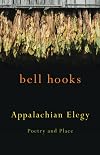
I picked this up for much the same reason I picked up Communion: I already admired bell hooks' work, and I remain mildly motivated by spite whenever I see certain public figures becoming associated with ideas and places that deserve a broader range of voices.
That said, I am a far bigger admirer of hooks' essays than her poetry. This is less a criticism of the collection than an acknowledgment that poetry is one of the few genres where I am both unusually picky and difficult to impress.
Even show more so, I found much to appreciate here. The poems are rooted in place, memory, and belonging, and they engage with Appalachia in a way that feels humane and attentive rather than reductive. One of the collection's strengths is its refusal to flatten the region into either stereotype or mythology. That alone makes it more thoughtful than many discussions of Appalachia that reach a wider audience (like some other elegy of Appalachian "hillbillies".. *cough cough) .
While this did not resonate with me as deeply as hooks' nonfiction, I still found it rewarding and worthwhile. Readers who are more receptive to poetry than I am may well connect with it even more strongly. show less
That said, I am a far bigger admirer of hooks' essays than her poetry. This is less a criticism of the collection than an acknowledgment that poetry is one of the few genres where I am both unusually picky and difficult to impress.
Even show more so, I found much to appreciate here. The poems are rooted in place, memory, and belonging, and they engage with Appalachia in a way that feels humane and attentive rather than reductive. One of the collection's strengths is its refusal to flatten the region into either stereotype or mythology. That alone makes it more thoughtful than many discussions of Appalachia that reach a wider audience (like some other elegy of Appalachian "hillbillies".. *cough cough) .
While this did not resonate with me as deeply as hooks' nonfiction, I still found it rewarding and worthwhile. Readers who are more receptive to poetry than I am may well connect with it even more strongly. show less
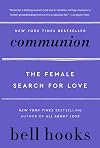
A beautiful and quietly radical exploration of love as something learned, practised, and often distorted by the structures we live in.
This is part of hooks’ broader engagement with love as an ethical and political practice, and it sits firmly in that space between critique and care. What I find most compelling is the insistence that love is not an accident or a reward, but something that requires attention and responsibility, particularly in contexts shaped by patriarchy and inequality.
I show more did not always need to agree with every repetition or emphasis to feel the strength of the underlying argument. The book is less interested in novelty than in returning, insistently, to what love might actually demand of us if taken seriously.
I also picked this up in part because I admire hooks’ work more generally, and in part—less nobly—because of the recurring frustration of seeing similar ideas reappear in contemporary discourse without acknowledgment of their origins or, in more blatant instances, the title and ideas reused by troglodytes that lack the intellectual or emotional depth for even their ghostwriter to make a passable imitation (but this is not directed at anyone in particular...). There is something motivating, even if slightly spite-driven, about returning to the source. show less
This is part of hooks’ broader engagement with love as an ethical and political practice, and it sits firmly in that space between critique and care. What I find most compelling is the insistence that love is not an accident or a reward, but something that requires attention and responsibility, particularly in contexts shaped by patriarchy and inequality.
I show more did not always need to agree with every repetition or emphasis to feel the strength of the underlying argument. The book is less interested in novelty than in returning, insistently, to what love might actually demand of us if taken seriously.
I also picked this up in part because I admire hooks’ work more generally, and in part—less nobly—because of the recurring frustration of seeing similar ideas reappear in contemporary discourse without acknowledgment of their origins or, in more blatant instances, the title and ideas reused by troglodytes that lack the intellectual or emotional depth for even their ghostwriter to make a passable imitation (but this is not directed at anyone in particular...). There is something motivating, even if slightly spite-driven, about returning to the source. show less
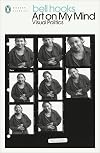
Like much of bell hooks' work, this book asks you to reconsider things you may have taken for granted and then quietly makes it impossible to return to your previous assumptions.
The essays examine art, representation, power, and identity with hooks' characteristic clarity and conviction. Even when I did not fully agree with every argument, I found the collection consistently thought-provoking and rewarding.
The essay that stayed with me most was "Being the Subject of Art." As someone deeply show more interested in questions of representation, documentation, and the ways people are seen and interpreted by others, I found it particularly powerful. Hooks' discussion of who gets to be represented, who controls that representation, and what it means to become the subject rather than merely the object of another's gaze felt both intellectually engaging and personally resonant.
A thoughtful and insightful collection that rewards careful reading. show less
The essays examine art, representation, power, and identity with hooks' characteristic clarity and conviction. Even when I did not fully agree with every argument, I found the collection consistently thought-provoking and rewarding.
The essay that stayed with me most was "Being the Subject of Art." As someone deeply show more interested in questions of representation, documentation, and the ways people are seen and interpreted by others, I found it particularly powerful. Hooks' discussion of who gets to be represented, who controls that representation, and what it means to become the subject rather than merely the object of another's gaze felt both intellectually engaging and personally resonant.
A thoughtful and insightful collection that rewards careful reading. show less
Lists
el (1)
Poetry Corner (1)
Read (1)
Female Author (1)
Read These Too (1)
Sociology (1)
Reading LIst (1)
Black Authors (4)
South End Press (3)
The Zora Canon (2)
Zora Canon (2)
Sapph-Lit (2)
Taylor & Francis (1)
important (1)
Awards


You May Also Like


Associated Authors
Statistics
- Works
- 80
- Also by
- 50
- Members
- 23,088
- Popularity
- #916
- Rating
- 4.1
- Reviews
- 367
- ISBNs
- 442
- Languages
- 17
- Favorited
- 76

