

Ed Husain
Author of The Islamist
About the Author
Works by Ed Husain
Tagged
Common Knowledge
- Birthdate
- 1974-12-25
- Gender
- male
- Education
- University of London (M.A. ∙ Middle Eastern Studies)
University of Damascus
Sir William Borough School
Stepney Green School - Occupations
- writer
- Organizations
- Council on Foreign Relations (Senior Fellow for Middle Eastern Studies)
Quilliam Foundation (co-founder) - Nationality
- UK
- Birthplace
- London, England, UK
- Places of residence
- London, England, UK
Damascus, Syria
Saudi Arabia
New York, New York, USA
Essex, England, UK - Associated Place (for map)
- London, England, UK
Members
Reviews
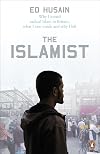
An insightful and humane book about the dangers of extremist ideology. Ed Husain focuses on Islamic extremism but his book offers lessons into the extremist mind more generally, no matter religion or ideology.
Husain writes beautifully about the humane, spiritual qualities of traditional Islam as contrasted with the cold, brutalising political ideology of *Islamism.* It is a crucially important thing to make this distinction between Islam as a faith and Islamism as a political ideology show more because Husain superbly demonstrates over 300 pages that the latter often has very little to do with the former. Political Islamism often consists of a crude, anti-intellectual and ahistorical form of religious literalism mixed with the political tactics of Gramsci and a bastardised version of Hegelian teleology. When combined with the violent impulses of Wahhabism it produces an incredibly incendiary mix. This is basically Husain’s thesis and it is very convincing.
Husain writes that we have to help intellectuals, moderates and reformers within the Muslim world win the battle of ideas against extremists who operate a formidable propaganda machine which is global in reach. He’s absolutely right. In the West we have been too insular and arrogant in neglecting to pay attention to the great debates roiling other cultures different to our own.
We are too quick to resort to infantilising Orientalism, writing off vast sections of the world as hopeless “lost causes.” The Western right often does this in a pig-headed, racist and ignorant way. The Western left is no better with their infantilising cultural relativism which often employs racially condescending tropes in an unknowing way - who are we to judge or critique other cultures victimised by Western imperialism etc etc. Brutal ultra-reactionary movements like Hizb ut-Tahrir, Hamas, Al-Qaeda, ISIS will be treated as the inevitable byproduct of Western imperialism, as though Muslims have no agency and must instinctively resort to violence as a response to historical injustices.
We in the West have to change our entire approach to the Arab and Muslim world. We need to get interested in the great debates that animate other cultures and we need to recognise their agency. Contrary to what some on the Western left think, the West is not the sole actor with historical agency in the world or the sole embodiment of reaction and violence and evil. Every group and nation and culture will produce people who fight for justice and people who fight to impose violent reaction. We need to stand on the side of those Muslims fighting against those who wish to impose violent reaction on their communities. show less
Husain writes beautifully about the humane, spiritual qualities of traditional Islam as contrasted with the cold, brutalising political ideology of *Islamism.* It is a crucially important thing to make this distinction between Islam as a faith and Islamism as a political ideology show more because Husain superbly demonstrates over 300 pages that the latter often has very little to do with the former. Political Islamism often consists of a crude, anti-intellectual and ahistorical form of religious literalism mixed with the political tactics of Gramsci and a bastardised version of Hegelian teleology. When combined with the violent impulses of Wahhabism it produces an incredibly incendiary mix. This is basically Husain’s thesis and it is very convincing.
Husain writes that we have to help intellectuals, moderates and reformers within the Muslim world win the battle of ideas against extremists who operate a formidable propaganda machine which is global in reach. He’s absolutely right. In the West we have been too insular and arrogant in neglecting to pay attention to the great debates roiling other cultures different to our own.
We are too quick to resort to infantilising Orientalism, writing off vast sections of the world as hopeless “lost causes.” The Western right often does this in a pig-headed, racist and ignorant way. The Western left is no better with their infantilising cultural relativism which often employs racially condescending tropes in an unknowing way - who are we to judge or critique other cultures victimised by Western imperialism etc etc. Brutal ultra-reactionary movements like Hizb ut-Tahrir, Hamas, Al-Qaeda, ISIS will be treated as the inevitable byproduct of Western imperialism, as though Muslims have no agency and must instinctively resort to violence as a response to historical injustices.
We in the West have to change our entire approach to the Arab and Muslim world. We need to get interested in the great debates that animate other cultures and we need to recognise their agency. Contrary to what some on the Western left think, the West is not the sole actor with historical agency in the world or the sole embodiment of reaction and violence and evil. Every group and nation and culture will produce people who fight for justice and people who fight to impose violent reaction. We need to stand on the side of those Muslims fighting against those who wish to impose violent reaction on their communities. show less
Despite other reviews finding this book dry or difficult to follow, I found it a riveting read from start to finish. Yes you need to reread the odd phrase and definition a couple of times to understand the concepts but that would be the same for any book of this sort.
I was motivated to read this book as research for something I am writing myself but I wish I had been able to read this when I was working full time with people from diverse backgrounds including many Muslims. It gives show more sufficient context to understand the different strands and beliefs of Islam. Before, I had rather assumed that Islam was a single faith with all adherents believing basically the same thing but it turns out that there are a bewildering number of sects and schools of thought within Islam.
Husain’s argument is that the brand of Islam followed in many British mosques and particularly as promoted on British university campuses is of a hardline variety that often leads to extremist views. He characterises those who follow this brand as “Islamists” to distinguish them from more moderate Muslims. He also argues that Islamists are promoting a politicised version of Islam which, at least in his interpretation, is not a true reflection of the original faith. I am too new to this subject to judge the truth of his arguments but he writes very persuasively and with reference to his own experience of becoming an extreme Islamist before rejecting it in later life.
This is an impassioned plea to reject extremist views and sets some difficult challenges for proponents of free speech, of whom I include myself. My only niggling doubt about Husain is that I’d like to know how someone, who says he has come to oppose extremists of all kinds, can yet be an advisor to the Tony Blair faith foundation. Blair is, in many people’s opinion, one of the most dangerous extremists the West has ever produced. show less
I was motivated to read this book as research for something I am writing myself but I wish I had been able to read this when I was working full time with people from diverse backgrounds including many Muslims. It gives show more sufficient context to understand the different strands and beliefs of Islam. Before, I had rather assumed that Islam was a single faith with all adherents believing basically the same thing but it turns out that there are a bewildering number of sects and schools of thought within Islam.
Husain’s argument is that the brand of Islam followed in many British mosques and particularly as promoted on British university campuses is of a hardline variety that often leads to extremist views. He characterises those who follow this brand as “Islamists” to distinguish them from more moderate Muslims. He also argues that Islamists are promoting a politicised version of Islam which, at least in his interpretation, is not a true reflection of the original faith. I am too new to this subject to judge the truth of his arguments but he writes very persuasively and with reference to his own experience of becoming an extreme Islamist before rejecting it in later life.
This is an impassioned plea to reject extremist views and sets some difficult challenges for proponents of free speech, of whom I include myself. My only niggling doubt about Husain is that I’d like to know how someone, who says he has come to oppose extremists of all kinds, can yet be an advisor to the Tony Blair faith foundation. Blair is, in many people’s opinion, one of the most dangerous extremists the West has ever produced. show less
We've all made stupid mistakes while young. Whose of Ed Husain, young Londoner coming from a Muslim family who had immigrated from Bangladesh, was to have joined radical Islam. Here's a stupid youthful journey, then, but upon which, following 7/7, he made himself his duty to retell so as to better make understand how young people, seemingly perfectly integrated and coming from families where Islam is everything but used as a political tool, can be seduced by such hateful trends.
He delves show more back upon his own evolution -the passionate journey of a young man who didn't even speak Arabic, but whose passions and youthful ardour would be manipulated by fanatics. Beyond his experience, of course very personal on many aspects (e.g. his family background, as his grandfather was a highly respected imam back in Bangladesh) we are given to see here how some scandalous European policies had terrible consequences, especially upon Muslim populations themselves. In fact, going from radical groups to radical groups, some illegal in the Arabic world but whose leaders found asylum upon our soils (despite being violently anti-Westerners!) he describes the Kafkaesque situation of lslam in Europe.
Of course, such fanatics are clearly described here like nothing more than a bunch of hot-headed yet confused extremists, far from being united in their cause, and whose understanding of Islam is appallingly poor. Nevertheless, Ed Husain shows how such looneys managed to take advantage of a Western world completely ignorant of Islam so as to pass themselves off as the representative of the Muslim world, infiltrating thus from Mosques to universities. Far more than the meandering of a lost teenager going through an identity crisis, we discover here a violent underworld, hateful, opportunist and hypocrite yet which was dangerously gangrening our landscapes.
Getting back to his family, the discovery of different imams, historical studies, and, a trip to Arabic countries (Syria, Saudi Arabia) helped opening his eyes upon such dangerous mumbo jumbo. Ed Husain's odyssey, though, remains insightful for anyone wishing to understand the psyche of such groups, and how they managed to hijack a whole part of our youths. Fascinating! show less
He delves show more back upon his own evolution -the passionate journey of a young man who didn't even speak Arabic, but whose passions and youthful ardour would be manipulated by fanatics. Beyond his experience, of course very personal on many aspects (e.g. his family background, as his grandfather was a highly respected imam back in Bangladesh) we are given to see here how some scandalous European policies had terrible consequences, especially upon Muslim populations themselves. In fact, going from radical groups to radical groups, some illegal in the Arabic world but whose leaders found asylum upon our soils (despite being violently anti-Westerners!) he describes the Kafkaesque situation of lslam in Europe.
Of course, such fanatics are clearly described here like nothing more than a bunch of hot-headed yet confused extremists, far from being united in their cause, and whose understanding of Islam is appallingly poor. Nevertheless, Ed Husain shows how such looneys managed to take advantage of a Western world completely ignorant of Islam so as to pass themselves off as the representative of the Muslim world, infiltrating thus from Mosques to universities. Far more than the meandering of a lost teenager going through an identity crisis, we discover here a violent underworld, hateful, opportunist and hypocrite yet which was dangerously gangrening our landscapes.
Getting back to his family, the discovery of different imams, historical studies, and, a trip to Arabic countries (Syria, Saudi Arabia) helped opening his eyes upon such dangerous mumbo jumbo. Ed Husain's odyssey, though, remains insightful for anyone wishing to understand the psyche of such groups, and how they managed to hijack a whole part of our youths. Fascinating! show less
A book to be read for its content - a window into the world of Islamist organizations in the UK - rather than for its style - dry and rather impersonal. Husain's experiences are thought provoking and worrying, but the early part of his account detailing his radical years is sadly lacking in depth or feeling.
Awards


You May Also Like


Statistics
- Works
- 4
- Members
- 488
- Popularity
- #50,612
- Rating
- 3.7
- Reviews
- 15
- ISBNs
- 19
- Languages
- 2