
Cixin Liu
Author of The Three-Body Problem
About the Author
Cixin Liu is the author of The Three Body Problem, which won Best Novel at the Hugo Awards 2015. (Bowker Author Biography)
Series
Works by Cixin Liu
Sun of China {story} — Author — 12 copies
The Wages of Humanity {story} — Author — 5 copies
The Wandering Earth, Part 2 of 2 — Author — 5 copies
Cannonball 2 copies
For the Benefit of Mankind 2 copies
The Poetry Cloud {short story} — Author — 2 copies
Sea Of Dreams 2 copies
三体 2 copies
三体全集(签章典藏版)(套装共3册) 1 copy
Beyond Time 1 copy
الجنين الخالد 1 copy
(54) 三体III:死神永生 1 copy
Moonlight 1 copy
2018-04-01 {short story} 1 copy
Contraction {short story} 1 copy
Ode to Joy {short story} 1 copy
The Circle {short story} — Author — 1 copy
Three Body Mystery 1 copy
2016 1 copy
Associated Works
Invisible Planets: Contemporary Chinese Science Fiction in Translation (2016) — Contributor — 678 copies, 27 reviews
The Big Book of Science Fiction: The Ultimate Collection (2016) — Contributor — 520 copies, 7 reviews
Broken Stars: Contemporary Chinese Science Fiction in Translation (2019) — Contributor — 455 copies, 11 reviews
Carbide Tipped Pens: Seventeen Tales of Hard Science Fiction (2016) — Contributor — 108 copies, 6 reviews
The Reincarnated Giant: An Anthology of Twenty-First-Century Chinese Science Fiction (2018) — Contributor — 52 copies
Asimov's Science Fiction: Vol. 42, No. 1 & 2 [January/February 2018] (2018) — Contributor — 12 copies
Lightspeed Magazine, Issue 113 • October 2019 (2019) — Contributor, some editions — 7 copies, 2 reviews
Terra Nova vol. 3: Antología de ciencia ficción contemporánea (2014) — Contributor — 6 copies, 1 review
SFが読みたい! 2020年版 — Contributor — 1 copy
Tagged
Common Knowledge
- Canonical name
- Cixin Liu
- Legal name
- 劉慈欣
- Other names
- 刘慈欣
- Birthdate
- 1963-06-23
- Gender
- male
- Education
- North China University of Water Conservancy and Electric Power
- Occupations
- science fiction writer
power plant computer engineer - Organizations
- Beijing Guomi Digital Technology
- Short biography
- Liu Cixin, born in June 1963, is a representative of the new generation of Chinese science fiction authors and recognized as a leading voice in Chinese science fiction. He was awarded the China Galaxy Science Fiction Award for eight consecutive years, from 1999 to 2006 and again in 2010. His representative work The Three-body Problem is the BEST STORY of 2015 Hugo Awards, the 3rd of 2015 Campbell Award finalists, and nominee of 2015 Nebulas Award.
His works have received wide acclaim on account of their powerful atmosphere and brilliant imagination. Liu Cixin's stories successfully combine the exceedingly ephemeral with hard reality, all the while focussing on revealing the essence and aesthetics of science. He has endeavoured to create a distinctly Chinese style of science fiction. Liu Cixin is a member of the China Writers' Association and the Shanxi Writers' Association. - Nationality
- China
- Birthplace
- Henan, China
- Places of residence
- Beijing, China
Shanxi, China
Luoshan County, Henan Province, China - Map Location
- China
Members
Discussions
Jeff's 2019 Reads in The Green Dragon (April 2021)
Reviews
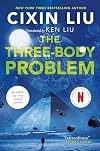
During China's cultural revolution, a physics professor is killed because he refuses to apologize for teaching scientific theories with supposedly reactionary content. Years later, his daughter is recruited to join a secret military base. And forty years after that? Scientists are killing themselves, and the military, along with representatives from NATO, claim there's a war going on. A scientist working with nanomaterials is asked to dig for information without being given the full story. show more The investigation leads him to a strange video game, a mysterious group, and the understanding of why so many of his colleagues have been taking their own lives. As it turns out, the fate of the entire world is at stake.
The Three-Body Problem is a science fiction novel that starts in a way entirely different from what I expected based on the description I read. The one I gave above is more accurate to what you'll find in the book's opening chapters, although I've failed to convey just how violent the first chapter is. I imagine those familiar with China's history, and in particular with the cultural revolution seen here, might find it less shocking, but I'm sure it is meant to leave a strong impression. The purpose of which won't be understood until far into the novel.
This is one of those books you have to be patient with. In my case, I had to read far beyond the point at which I'm usually hooked to see how all the pieces were coming together and finally get it. There is a purpose to the first chapter, and the whole first section that doesn't include the main character of the novel. The early parts of his investigation, which seemed inconsequential to me at first, turn out to be anything but.
It's also the type of sci-fi that seems to depend on the reader having a certain amount of scientific knowledge. If you don't understand at least the basics of particle colliders, for instance, you'll likely be confused about a major plot point. I, with my background in computer science, particularly enjoyed seeing concepts I studied play out as part of a unique and (to me) fascinating solution to a particular problem. On the other hand, the book started to lose me near the very end, when it either exceeded what I'd learned through high school physics and a handful of documentaries, or it introduced concepts that the author invented. Due to my lack of expertise, I unfortunately can't tell the difference.
The book also suffered in my estimation because of certain character portrayals. For example, the main character agrees to join the investigation partially because of a female scientist who turns out to be among those who killed themselves. Did he know her? Well, he thinks he did. He saw her from a distance once and found himself attracted to her, so now he's upset enough to be inspired to act. Upon first reading this, I of course interpreted it as a classic case of an entire female scientist being invented just to be reduced to the object of a man's affections, a woman who wasn't strong enough to handle the difficult truth that I predicted the main character was surely going to. As I continued reading, I began to suspect that this may be more emblematic of a different problem, but it didn't help that the main character ignores his wife almost entirely and even has a scene where he actively avoids her rather than explain what's going on after she becomes frightened to the point of tears. He never tells her what's he's gotten involved with or asks for her opinion on anything despite the fact that she's a doctor and therefore presumably has a different set of expertise that could be relevant for all he knows. And none of this is presented as if they have a problematic relationship.
But the bigger problem I hinted at seems to be just a classic case of the author pushing the characters where the plot needs them to go, then propping it up with explanations that don't fully track. The death of the female scientist turns out to be the main character's connection to another female scientist, and she actually is important to the story. Vitally important, in fact. But the way the main character connects with her involves a second link, which is even more tenuous than a married man acting out of attraction towards a woman he never even spoke to. Throughout the story, many things he does seem to be just... things he's doing. If explanations were given, they weren't ones I picked up on.
I can't rule out the possibility that I'm misunderstanding character actions and motivations due to the cultural differences at play, however. Maybe he sometimes is doing the expected thing for people in China, which simply isn't expected where I live. You absolutely shouldn't be taking this review as an expert opinion. It's just my experience with the book as a woman from the US reading in translation. If you have a similar background, your experience may be similar to mine. If you don't, it would be great for you to write your own review!
Regardless, when the pieces of the puzzle come together, this book does start to shine. I don't think this is the type of book you read for the characters so much as for the science-based concepts and the exploration of some big ideas about the world and the nature of humanity and what sort of future we might have. It's a book that requires your patience but rewards you for your focus and concentration as it builds and builds up to its big reveals. If you like that kind of sci-fi, you'll find this book a treat. Just go into it with the understanding that such rewards require a long and detailed setup. show less
The Three-Body Problem is a science fiction novel that starts in a way entirely different from what I expected based on the description I read. The one I gave above is more accurate to what you'll find in the book's opening chapters, although I've failed to convey just how violent the first chapter is. I imagine those familiar with China's history, and in particular with the cultural revolution seen here, might find it less shocking, but I'm sure it is meant to leave a strong impression. The purpose of which won't be understood until far into the novel.
This is one of those books you have to be patient with. In my case, I had to read far beyond the point at which I'm usually hooked to see how all the pieces were coming together and finally get it. There is a purpose to the first chapter, and the whole first section that doesn't include the main character of the novel. The early parts of his investigation, which seemed inconsequential to me at first, turn out to be anything but.
It's also the type of sci-fi that seems to depend on the reader having a certain amount of scientific knowledge. If you don't understand at least the basics of particle colliders, for instance, you'll likely be confused about a major plot point. I, with my background in computer science, particularly enjoyed seeing concepts I studied play out as part of a unique and (to me) fascinating solution to a particular problem. On the other hand, the book started to lose me near the very end, when it either exceeded what I'd learned through high school physics and a handful of documentaries, or it introduced concepts that the author invented. Due to my lack of expertise, I unfortunately can't tell the difference.
The book also suffered in my estimation because of certain character portrayals. For example, the main character agrees to join the investigation partially because of a female scientist who turns out to be among those who killed themselves. Did he know her? Well, he thinks he did. He saw her from a distance once and found himself attracted to her, so now he's upset enough to be inspired to act. Upon first reading this, I of course interpreted it as a classic case of an entire female scientist being invented just to be reduced to the object of a man's affections, a woman who wasn't strong enough to handle the difficult truth that I predicted the main character was surely going to. As I continued reading, I began to suspect that this may be more emblematic of a different problem, but it didn't help that the main character ignores his wife almost entirely and even has a scene where he actively avoids her rather than explain what's going on after she becomes frightened to the point of tears. He never tells her what's he's gotten involved with or asks for her opinion on anything despite the fact that she's a doctor and therefore presumably has a different set of expertise that could be relevant for all he knows. And none of this is presented as if they have a problematic relationship.
But the bigger problem I hinted at seems to be just a classic case of the author pushing the characters where the plot needs them to go, then propping it up with explanations that don't fully track. The death of the female scientist turns out to be the main character's connection to another female scientist, and she actually is important to the story. Vitally important, in fact. But the way the main character connects with her involves a second link, which is even more tenuous than a married man acting out of attraction towards a woman he never even spoke to. Throughout the story, many things he does seem to be just... things he's doing. If explanations were given, they weren't ones I picked up on.
I can't rule out the possibility that I'm misunderstanding character actions and motivations due to the cultural differences at play, however. Maybe he sometimes is doing the expected thing for people in China, which simply isn't expected where I live. You absolutely shouldn't be taking this review as an expert opinion. It's just my experience with the book as a woman from the US reading in translation. If you have a similar background, your experience may be similar to mine. If you don't, it would be great for you to write your own review!
Regardless, when the pieces of the puzzle come together, this book does start to shine. I don't think this is the type of book you read for the characters so much as for the science-based concepts and the exploration of some big ideas about the world and the nature of humanity and what sort of future we might have. It's a book that requires your patience but rewards you for your focus and concentration as it builds and builds up to its big reveals. If you like that kind of sci-fi, you'll find this book a treat. Just go into it with the understanding that such rewards require a long and detailed setup. show less

When you were a child, did you ever dream of a world with no adults? What would you do if they all disappeared? Set up the worlds largest model train set? Let all the animals out of the zoo? Learn to drive a bulldozer and start knocking things down? Chinese science fiction author Cixin Liu – who’s received favorable reviews from both Barack Obama and George R.R. Martin – uses this situation for Supernova Era. A nearby supernova (Liu provides an arguably plausible explanation as to why show more no one has noticed the precursor star) eliminates all humans more than 13 years old. The results are interesting, not so much for the physics, but for what contemporary (the book was originally published in 2004 and reissued in light of the popularity of Liu’s Remembrance of Earth’s Past series) Chinese thought of themselves and of the rest of the world – or at least what got past the censors. Liu’s Chinese kids are (after an initial period of fun and drunkenness) dutiful and thoughtful; the American kids are gun-crazy populists. It is a gift to see ourselves as others see us. (I note when I was 13, I was, in fact, pretty interested in guns. But I was even more interested in 13-year-old girls, a topic Liu doesn’t explore. Maybe the censors forbid it). show less
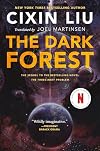
What an epic novel. I haven’t read such satisfying sci-fi in the classic mould for a long while. I actually enjoyed it more than [b:The Three-Body Problem|20518872|The Three-Body Problem (Remembrance of Earth’s Past #1)|Liu Cixin|https://images.gr-assets.com/books/1415428227s/20518872.jpg|25696480]. While not everything about it was perfect (some of the female characters were a little troubling), the overall momentum of the plot was incredibly well sustained. Having set up the threat of show more Trisolaris in the previous book, ‘The Dark Forest’ plays it out in a spectacular fashion. About a third of the way in, I realised that one reason the response of humanity to alien threat rings so true is that it’s an excellent climate change allegory. A long-term threat, seemingly hundreds of years away, posing a very real chance of wiping out humanity as a species, while the specific risks are fundamentally uncertain. The threat is global, yet humanity has no global structures to handle it so there is conflict between those who think technology will save us, those who think politics and society must change, and those who think we should just ignore it and enjoy the time we have, not to mention those who think we should flee to another planet and those who put faith in a few messianic men to fix everything. I was pleased to find that the narrative includes the actual existence of catastrophic climate change, too.
I was impressed by Liu’s insight and effortless handle on massive timescales and epic events. Although the characters are interesting, they mainly struck me as tools for depicting wider happenings. Some had agency, but it existed within wider sociopolitical contexts even when ostensibly unbound. Liu’s detailed examination of the Wallfacer Project was an utterly fascinating and nuanced deconstruction of Great Man history. To me it seemed clear that Luo Ji’s role was purely a matter of chance: he was in the right place at the right time; it could easily have been someone else . There is a great deal of technology in ‘The Dark Forest’, yet this too emerges and develops in cleverly defined sociopolitical contexts. Liu shows very clearly that technological change isn’t a linear and inevitable process: it involves policy choices, dead ends, and meandering paths. Moreover, over-reliance on technology can dangerously undermine resilience.
In the past I’ve read several sci-fi series of this nature: weighty thought experiments beginning in the near future and propelling humanity into space. All of them centred on America and/or Europe, while ‘The Dark Forest’ is emphatically China-centric. The political and philosophical grounding was thus different to what I’m used to, which illuminated the usual presumptions underlying Western conceptions of the future. I found this especially thought-provoking when the narrative turned to the military and their concept of duty. The treatment of generation gaps was also notably distinctive. And practically everyone smoked, which was disconcerting.
For a 550 page book that tackles complex philosophical and sociopolitical questions, ‘The Dark Forest’ is a tense and exciting read. The space scenes are vivid and thrilling, although my favourite moments were the Wallfacer vs Wallbreaker showdowns. I’m not quite sure what to think about the final twist thathumanity’s secret weapon was love. I think the book treated the range of ideas that can be used as weapons with great subtlety, though. The results were often horrifying, but the thought experiments themselves were extremely compelling. Undoubtedly, ‘The Dark Forest’ gave me a great deal to think about and I’m impatient to read [b:Death's End|25451264|Death's End (Remembrance of Earth’s Past #3)|Liu Cixin|https://images.gr-assets.com/books/1430330507s/25451264.jpg|18520265] before other reading dulls the memory of its specifics. show less
I was impressed by Liu’s insight and effortless handle on massive timescales and epic events. Although the characters are interesting, they mainly struck me as tools for depicting wider happenings. Some had agency, but it existed within wider sociopolitical contexts even when ostensibly unbound. Liu’s detailed examination of the Wallfacer Project was an utterly fascinating and nuanced deconstruction of Great Man history. To me it seemed clear that Luo Ji’s role was purely a matter of chance
In the past I’ve read several sci-fi series of this nature: weighty thought experiments beginning in the near future and propelling humanity into space. All of them centred on America and/or Europe, while ‘The Dark Forest’ is emphatically China-centric. The political and philosophical grounding was thus different to what I’m used to, which illuminated the usual presumptions underlying Western conceptions of the future. I found this especially thought-provoking when the narrative turned to the military and their concept of duty. The treatment of generation gaps was also notably distinctive. And practically everyone smoked, which was disconcerting.
For a 550 page book that tackles complex philosophical and sociopolitical questions, ‘The Dark Forest’ is a tense and exciting read. The space scenes are vivid and thrilling, although my favourite moments were the Wallfacer vs Wallbreaker showdowns. I’m not quite sure what to think about the final twist that
***GENERAL PLOT SPOILERS***
This is a rather unusual book, that starts with a Cultural Revolution and ends with an impeding alien invasion and meets people from different generations and various personal backgrounds. I liked the story very much - it has a strong internal logic, it is nicely told and it is "Chinese" enough to be just a little bit strange. But even more than that I loved the subtlety in rising all sorts of moral questions: what's a betrayal and who is the betrayer, what's the show more purpose of person's life and is there one to human existence. While at the end the heroes know for sure the alien invasion will come, they see the future outcome differently and in complete consistency with their previous actions and believes. show less
This is a rather unusual book, that starts with a Cultural Revolution and ends with an impeding alien invasion and meets people from different generations and various personal backgrounds. I liked the story very much - it has a strong internal logic, it is nicely told and it is "Chinese" enough to be just a little bit strange. But even more than that I loved the subtlety in rising all sorts of moral questions: what's a betrayal and who is the betrayer, what's the show more purpose of person's life and is there one to human existence. While at the end the heroes know for sure the alien invasion will come, they see the future outcome differently and in complete consistency with their previous actions and believes. show less
Lists
"the china pill" (1)
Finished in 2021 (1)
Best Audiobooks (1)
Wishlist (1)
. (1)
2023 (1)
Very Very Bad (1)
Five star books (1)
io9 Book Club (1)
Favourite Books (1)
Next in Series (1)
Obama Reads (1)
Overdue Podcast (1)
um actually (1)
2010s (2)
Awards


You May Also Like


Associated Authors
Statistics
- Works
- 88
- Also by
- 16
- Members
- 26,001
- Popularity
- #801
- Rating
- 3.9
- Reviews
- 981
- ISBNs
- 483
- Languages
- 23
- Favorited
- 21