
Thomas Malory (1405–1471)
Author of Le Morte d'Arthur
About the Author
Sir Thomas Malory, 1405 - 1471 Sir Thomas Malory's works (consisting of the legends of Sir Lancelot, Sir Gareth, Sir Tristram, and the Holy Grail, as well as the stories of King Arthur's coming to the throne, his wars with the Emperor Lucius, and his death) are the most influential expression of show more Arthurian material in English. The author's sources are principally French romances; his own contributions are substantial, however, and the result is a vigorous and resonant prose. "Le Morte d'Arthur," finished between March 1469 and March 1470, was first printed in 1485 by William Caxton, the earliest English printer. Malory is presumed to have been a knight from an old Warwickshire family, who inherited his father's estates about 1433 and spent 20 years of his later life in jail accused of various crimes. The discovery of a manuscript version of "Le Morte d'Arthur" in 1934 in the library of Winchester College, supported the identification of Malory the author with Malory the traitor, burglar, and rapist. It showed that many of the inconsistencies in the printed text were traceable to the printing house rather than to the author. The most reliable modern version, therefore, is one like Eugene Vinaver's that is based on the Winchester manuscript. (Bowker Author Biography) show less
Works by Thomas Malory
King Arthur and His Knights of the Round Table (Illustrated Junior Library) (1950) 745 copies, 6 reviews
The Boy's King Arthur: Sir Thomas Malory's History of King Arthur and His Knights of the Round Table (1880) 652 copies, 4 reviews
King Arthur and the Knights of the Round Table (Treasury of Illustrated Classics) (2004) 246 copies, 1 review
King Arthur and the Knights of the Round Table {Rupert S. Holland, editor} (1860) 209 copies, 1 review
Le Morte d'Arthur: King Arthur & The Knights of The Round Table (Knickerbocker Classics) (2017) 63 copies
King Arthur and His Knights: A Selection From What Has Been Known As Le Mort D'Arthur (1967) 16 copies, 1 review
Le morte d'Arthur Vol 1 13 copies
Le Morte Darthur: Selections: A Broadview Anthology of British Literature Edition (Broadview Anthology of British Literature Editions) (2014) 12 copies
Le Morte d'Arthur [abridged] 11 copies
The Tale of King Arthur 9 copies
Sir Tristram de Lyonesse 8 copies
KING ARTHUR AND HIS KNIGHTS OF THE ROUND TABLE. FROM SIR THOMAS MALORYS LE MORTE DARTHUR / EDITED BY SIDNEY LANIER. ILLUSTRATED BY FLORIAN (1950) 6 copies
The book of Merlin; The book of Sir Balin, from Malory's King Arthur, with Caxton's preface 5 copies
The Book of Marvellous Adventures and Other Books of the Morte d'Arthur (Camelot series) (1912) 4 copies
Reading & Training : Sir Thomas Malory : Le Morte d'Arthur [book+ sound recording] (2008) — Writer — 4 copies
The Works of Sir Thomas Mallory 3 copies
Norrœna Anglo-Saxon Classics Volume 14: The Arthurian Tales — Author — 2 copies
Stories of King Arthur and his knights;: As told in Malory's Morte Darthur, (Childrens favorite classics) (2012) 2 copies
The Tale of the Sankgreal 2 copies
Le Morte Darthur ( Easton Press 4 Volumes ) The Book of King Arthur and of His Noble Knights of the Round Table (2004) 2 copies
MUERTE DE ARTURO 2 2 copies
The Boys King Arthur: Sir Thomas Malory's History of King Arthur and His Knights of the Round Table 2 copies
Los caballeros del Rey Arturo 2 copies
Le Morte D’Arthur: King Arthur and of his Noble Knights of the Round Table IN TWO VOLS.—VOL. II 1 copy
Le Morte D’Arthur: King Arthur and of his Noble Knights of the Round Table - IN TWO VOLS.—VOL. I 1 copy
Le Morte Darthur or The Hoole Book of Kyng Arthur and of His Noble Knyghtes of The Round Table 1 copy
A Morte de Artur I 1 copy
Le Morte D'Arthur Vol. 2 1 copy
LE MORTE D-ARTHUR VOLUME II 1 copy
Le Morte Darthur, Vol. 1 of 4: The Book of King Arthur and of His Noble Knights of the Round Table (Classic Reprint) (2015) 1 copy
Le Morte Darthur, Vol. 4: The Book of King Arthur and of His Noble Knights of the Round Table (Classic Reprint) (2016) 1 copy
Le Morte D'Arthurt 1 copy
Le Morte of DArthur, Part Ii 1 copy
Смерть Артура [роман] 1 copy
Le Morte D'arthur Vols 1-4 1 copy
King Arthur — Author — 1 copy
King Arthur - Ultimate Collection: 10 Books of Myths, Tales & the History Behind the Legendary King and His Knights (2018) 1 copy
Le Morte D'Arthur : Volume 2 1 copy
The story of Sir Galahad 1 copy
LE MORTE D'ARTHUR...Introduction by Prof. Rhys and a note on Aubrey Beardsley by Aymer Vallance (1927) 1 copy
Koning Arthur se ridders 1 copy
King Aurthur and His Knights 1 copy
Le Morte Darthur IV 1 copy
Le Morte Darthur III 1 copy
Lancelot & Guinevere 1 copy
Le Morte d'Arthur,Vol 1 1 copy
Le morte darthur: The history of King Arthur and of his noble knights of the round table, Vol 2 1 copy
König Artus' Tafelrunde 1 copy
King Aurthur and His Knights: based on Sir Thomas Malory's Morte d'Arthus, Calvert School (1927) 1 copy
Le Morte Darthur I 1 copy
Morte Darthur : Sir Thomas Malory's book of King Arthur and his noble knights of the Round table 1 copy
Le Morte D'Arthur Vol. IV 1 copy
The Morte Darthur by Syr Thomas Malory : the original edition of William Caxton now reprinted ... / by H. Oskar Sommer 1 copy, 1 review
The Arthurian tales, the greatest of romances ... / compiled by Thomas Malory and ed. from the text of the edition of 1634 1 copy, 1 review
CMEPTb APTYPA 1 copy
Stories of King Arthur and his knights: Retold from Malory's "Morte Darthur" (Told through the ages) 1 copy
Sit Tristram de Lyonesse 1 copy
Associated Works
The Graphic Canon, Vol. 1: From the Epic of Gilgamesh to Shakespeare to Dangerous Liaisons (2012) — Contributor — 304 copies, 7 reviews
Vampires, Wine and Roses: Chilling Tales of Immortal Pleasure (1997) — Contributor — 170 copies, 2 reviews
The Roads from Bethlehem: Christmas Literature from Writers Ancient and Modern (1993) — Contributor — 34 copies, 1 review
Tagged
Common Knowledge
- Canonical name
- Malory, Thomas
- Legal name
- Malory, Sir Thomas
- Birthdate
- 1405
- Date of death
- 1471-03-14
- Gender
- male
- Occupations
- writer
soldier
politician - Organizations
- Member of Parliament
- Awards and honors
- Knighted (1441)
- Nationality
- England
- Places of residence
- Newbold Revel, Warwickshire, England
London, England - Place of death
- Newgate Prison, London, England
- Burial location
- Christ Church Greyfriars, London, England, UK
- Map Location
- England, UK
Members
Reviews
Le Morte D'Arthur: King Arthur and the Legends of the Round Table (Signet Classics) by Thomas Malory
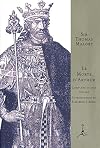
I know Le Mort d'Arthur is supposed to be a great classic and the definitive Arthur, but damn it, I'm 377 pages in and I can't do it anymore. It is just too much of the same flipping story over and over and over and over again. And not just the same story (knight jousts with knight), but almost the same exact wording with each battle.
The only thing to have sparked my interest in about 200 pages was this line: "The King Arthur overtook her [a false lady and sorceress], and with the same show more sword he smite off her head, and the Lady of the Lake took up her head and hung it up by the hair to her saddle-bow." THAT is pretty damn awesome, but it's also just one line out of all those 200 pages, and it made me long for a Lady of the Lake story, not more and more of these knights smacking each other around and talking about how knightly and courtly they are because they are big strong men who can politely knock another guy off a horse.
I am so wonderfully wroth at this book that I'm about to come at all of these damn knights like thunder and smote them down with their own damn lances. (PS. If I never see the words "wroth", "smote", or "came together like thunder" again, it will be too soon.) Seriously, don't these guys have anything better to do than run around the forests or hang out a bridges and joust with each other? Isn't there farming or something to be done? Anything? Please? I mean, I'll read about the wheat in the fields at this point.
Did I also mention that it's over 900 pages? Well, it is, and apparently this is the SHORT version. The other version is in like three volumes or something. Since it's getting the point that I'm starting to hate Arthur and his knights, I need to just put in the towel and read something — anything — else for a while.
Right now, I'm really looking forward to rereading Simon Armitag's translation of Sir Gawain and the Green Knight, because I need something to remind me why I used to love Arthurian stories so much. show less
The only thing to have sparked my interest in about 200 pages was this line: "The King Arthur overtook her [a false lady and sorceress], and with the same show more sword he smite off her head, and the Lady of the Lake took up her head and hung it up by the hair to her saddle-bow." THAT is pretty damn awesome, but it's also just one line out of all those 200 pages, and it made me long for a Lady of the Lake story, not more and more of these knights smacking each other around and talking about how knightly and courtly they are because they are big strong men who can politely knock another guy off a horse.
I am so wonderfully wroth at this book that I'm about to come at all of these damn knights like thunder and smote them down with their own damn lances. (PS. If I never see the words "wroth", "smote", or "came together like thunder" again, it will be too soon.) Seriously, don't these guys have anything better to do than run around the forests or hang out a bridges and joust with each other? Isn't there farming or something to be done? Anything? Please? I mean, I'll read about the wheat in the fields at this point.
Did I also mention that it's over 900 pages? Well, it is, and apparently this is the SHORT version. The other version is in like three volumes or something. Since it's getting the point that I'm starting to hate Arthur and his knights, I need to just put in the towel and read something — anything — else for a while.
Right now, I'm really looking forward to rereading Simon Armitag's translation of Sir Gawain and the Green Knight, because I need something to remind me why I used to love Arthurian stories so much. show less
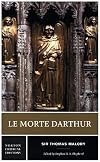
And so the cry was made in Ingelonde, Walys, Scotlonde, Irelonde, and Cornuayle, and in all the Oute Iles, and in Bretayne and many contraye, that at Oure Lady Day the Assumption next folowynge, men sholde com to the Castell Perelus besyde the Ile of Avylon.
Well, I didn't mean to put ten months into this. It's just so wordy. But, I mean, it’s fun. Tales of knights and damsels doing crazy and (to them) honorable or dishonorable things, all in this lovely 1400’s prose with this charming show more 1400’s spelling (partially modernized). Heads and limbs are lopped off, swords go in to the brain, or to the teeth, or, one even might “clave his hede unto the pappys”. I usually didn’t so much care what happened, although the ridiculousness of it can be entertaining, or annoying, but just enjoyed watching it happen. Still it’s moving when Malory changes the tone to be moving, when Arthur or Trystram or Lancelot gets morosely nostalgic at the end of various things.
Arthurian Romance have a long history through the Middle Ages, along with the stories of Roland and others. Malory marks a watershed moment because it's complete, very charming in its "parataxis" style, but mainly because it was printed, first in 1485. There are more copies of Malory in existence than of everything on the Arthurian tales beforehand, combined. Malory in English has dominated the mythology by sheer numbers. And everything afterward is influenced by him. However, I didn’t read this printed version by William Caxton. My Norton edition used a manuscript by Malory, the Winchester Manuscript discovered in 1934, that predates the printing. The manuscript is incomplete, so Norton uses the Caxton version to fill in holes (or make corrections)
There is an oddity about Thomas Malory in that we are not quite sure who he was. That is, we are not sure which person named Thomas Malory was the author. There are a few options. But the general consensus is that he was knight and that wrote most of these tales while locked up in prison. Which leaves a lot of questions on how he accessed his sources. Most of this is clearly sourced from previous Old French works, as Malory tells us, even as he tends to say so in places where he diverges from known sources. There is a color here that seems to reflect the violent political chaos of the English 1400’s, the era of the War of Roses, maybe especially in the convenient alliances with unpalatable people, or how quickly knights change sides, or work against their own king. Or maybe in the might makes right ethic that is presented here as the basic reality of legal process in dark ages England.
So, what’s inside? There are twelve defined books that cover Arhtur's lineage, and his incest with his sister, Morgan le Fey, leading to the birth of his son and nephew, Mordred. His marriage to Gwenyvere. His guidance by Merlin, who helps him create the knights of the Round Table, but who predicts his fall and then disappears. But then there are several miscellaneous tales. The tale of Bayln and Balan, the story of Lancelot’s early life, the story of Gareth, which has no pre-Malory source and may have been created by him, The tale of Trystram and Isolde, who was the queen of King Mark of Cornwall who Trystram served. The quest of the Grail, or Sangreal, focusing on Lancelot’s son Sir Galahad, along with Sir Percival, and Sir Bors, as well as few knights who were not worthy. The tragedy of Lancelot and Gwenyvere, with its romantic moments, and its role in bringing down Arthur. When Arthur is forced to confront Lancelot for his affair with Gwenyvere, his army is weakened as his knights must fight each other. And this allows Mordred to try to take advantage. So we see Arthur's fall and his sort of death. He is carried, still alive, by "a lytyll barge wyth many fayre ladyes in hit; and amonge hem all was a quene, and all they had blak hoodis". The list of characters in these tales includes Sir Gawaine, hero of The Green Knight, here Arthur's rather disreputable nephew. But as much as we readers hate Sir Gawain and all the bad things he does and problems he causes, he never breaks the mutual loyalty between him and Arthur. King Pellinore and the Saracen, Palomydes, both in pursuit of "the Questing Beast". Sir Ector de Maris, brother of Lancelot. The dame Elaine of Corbin, who tricks Lancelot into getting her pregnant, and gives birth to Sir Galahad. Who later tells Lancelot "I have gyvyn the the grettyst ryches in the fayryst floure that ever I had, and that is my maydynhode that I should never have agayn" And dame Elaine le Blank, who dies of love for Lancelot. Sir Meliagrance, who kidnaps Gwenyvere, and then, when Lancelot comes to her rescue again, can't convince anyone when he discovers Lancelot has slept with her. Lancelot kills Meliagrance in a trial by duel.
Most of these stories have a sense of humor, especially the Tale of Sir Gareth, who pledges to help a woman who despises him. They travel and she constantly berates him as a bad knight. Much of the tales is action, one thing happens and then another. The quest for the grail is different in the interiority sort of pursued. Suddenly might is not right, but knights must be pure in their mind and heart and actions. Lancelot confronts his failure. Gawain is merely chastised by religious figures.
There is an odd mixture of fun and deranged morality in this lawless world where the peace is kept by knights who are supposed to be noble, but are not always so. They are common criminals and liars, but also they kill innocent people, have affairs with damsels leading to more crimes with other offended knights. The rule of law always comes down to might. Legal trials are settled by duels, with each party essentially hiring the best knight they can to fight for them. So, Lancelot will save Arthur over and over, and save Gwenyvere's honor and life, which are inseparable, even when he's the actual cause of her true dishonor. Mixed in are several tournaments, with winners and honorable actions and failures. One thing I found odd was how often a story is centered on a knight who hides their identity and then joins a tournament for a side against their own king. Although the hidden identities make sense as knights in armor were covered head to toe, an easy place to hide in the open.
In any case, I have moved on and completed this chapter in my literary path from Gilgamesh to some unclear future finale.
2026
https://www.librarything.com/topic/378447#9170674 show less
Highly recommended for fans of Arthurian lore.
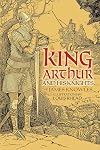
Inspired by the 19th century popularity of Tennyson’s Idylls of the King (the introduction makes much of the author’s friendship with Tennyson), this retelling is based on Malory's Le Morte d'Arthur. I grew up on the Malory edition edited by Pollard (with Arthur Rackham’s wonderful illustrations), so these two books ought to be quite similar. Are they? Hmm. I haven’t read my old book in a while – though it’s now available free from show more archive.org: https://archive.org/details/ofkingartromance00malorich
From a quick perusal – yes, there’s a similarity, but not so much that it’s not worthwhile to read both books. Both update and abridge the text, making it bit easier for a modern audience to read, while maintaining the medieval flavor of the language.
Even if the text were identical, this edition would be worthwhile just for the illustrations. Louis Rhead was an extremely popular illustrator, up until the 1920s, and the images here show why. He does a great job of meshing the romantic style of the day with historical detail and Celtic design elements. Absolutely gorgeous.
Revisiting the content for the first time in many years reminds one how many layers have been laid over the original legends. While the illustrations reflect the romance and chivalry that we expect from these stories, the stories themselves are another thing. These are not stories that reflect the romantic ideals of the 19th century, and certainly not the attitudes of the 21st. The attitudes displayed here are literally right out of the middle ages. His knights pay lip service to honor and courtesy, and not much more. These are petty, jealous, violent men. They quarrel constantly and for no reason. It’s dishonorable to kill your own brother, but pretty much anyone else is fair game. Women are frequently treated as property. Combat is the expected way to resolve any dispute, and a way to prove one’s worth. (Although noble blood is also expected to ‘tell’ – a low-born boy who shows talent at knightly pursuit must, of course, actually be a knight’s bastard.) These attitudes are woven in with a mystical/magical view of Christianity which is also very alien to a modern conception of the religion. It’s fascinating!
Aside from giving an accurate glimpse into the culture and issues of another time, this book would also lend itself quite well to a drinking game. A shot every time someone’s head is either ‘smote’ directly off or cleaved in two, would get you wasted pretty quickly! ;-)
A copy of this Dover e-book edition was provided by NetGalley - which affects my opinion not at all. THANKS! show less
Inspired by the 19th century popularity of Tennyson’s Idylls of the King (the introduction makes much of the author’s friendship with Tennyson), this retelling is based on Malory's Le Morte d'Arthur. I grew up on the Malory edition edited by Pollard (with Arthur Rackham’s wonderful illustrations), so these two books ought to be quite similar. Are they? Hmm. I haven’t read my old book in a while – though it’s now available free from show more archive.org: https://archive.org/details/ofkingartromance00malorich
From a quick perusal – yes, there’s a similarity, but not so much that it’s not worthwhile to read both books. Both update and abridge the text, making it bit easier for a modern audience to read, while maintaining the medieval flavor of the language.
Even if the text were identical, this edition would be worthwhile just for the illustrations. Louis Rhead was an extremely popular illustrator, up until the 1920s, and the images here show why. He does a great job of meshing the romantic style of the day with historical detail and Celtic design elements. Absolutely gorgeous.
Revisiting the content for the first time in many years reminds one how many layers have been laid over the original legends. While the illustrations reflect the romance and chivalry that we expect from these stories, the stories themselves are another thing. These are not stories that reflect the romantic ideals of the 19th century, and certainly not the attitudes of the 21st. The attitudes displayed here are literally right out of the middle ages. His knights pay lip service to honor and courtesy, and not much more. These are petty, jealous, violent men. They quarrel constantly and for no reason. It’s dishonorable to kill your own brother, but pretty much anyone else is fair game. Women are frequently treated as property. Combat is the expected way to resolve any dispute, and a way to prove one’s worth. (Although noble blood is also expected to ‘tell’ – a low-born boy who shows talent at knightly pursuit must, of course, actually be a knight’s bastard.) These attitudes are woven in with a mystical/magical view of Christianity which is also very alien to a modern conception of the religion. It’s fascinating!
Aside from giving an accurate glimpse into the culture and issues of another time, this book would also lend itself quite well to a drinking game. A shot every time someone’s head is either ‘smote’ directly off or cleaved in two, would get you wasted pretty quickly! ;-)
A copy of this Dover e-book edition was provided by NetGalley - which affects my opinion not at all. THANKS! show less
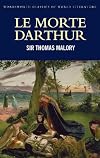
I didn't read it so much as scanned each of the chapter headings for the last 400 pages to bypass all the instances of redundant redundancy, such as the two million instances of "and man and horse fell to the earth" or the genius of "much blood they bled both, that all the place there as they fought was overbled with blood." I could never in good conscience recommend this to anyone as something to read for entertainment purposes. Malory destroys souls.
Lists
Awards


You May Also Like


Associated Authors
Statistics
- Works
- 234
- Also by
- 22
- Members
- 17,822
- Popularity
- #1,233
- Rating
- 3.9
- Reviews
- 133
- ISBNs
- 417
- Languages
- 16
- Favorited
- 29