
Robert Byron (1905–1941)
Author of The Road to Oxiana
About the Author
Robert Byron serving as a correspondent for a London newspaper during World War II
Works by Robert Byron
Associated Works
Tagged
Common Knowledge
- Birthdate
- 1905-02-26
- Date of death
- 1941-02-24
- Gender
- male
- Education
- Eton College, Eton, Berkshire, England, UK
University of Oxford (Merton College) - Occupations
- travel writer
art critic - Relationships
- Sykes, Christopher (travel companion)
Parsons, Desmond (living companion)
Butler, Lucy (sister) - Nationality
- United Kingdom
- Birthplace
- Wembley, Middlesex, England, UK
- Places of residence
- England, UK
Peking, China - Place of death
- At sea (off the coast of Scotland)
- Associated Place (for map)
- England, UK
Members
Reviews
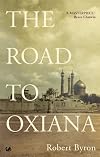
Reading a bit of back story on Robert Byron along with this book, it seems he was once met, never forgotten. Expelled from Oxford for his 'rebellious and hedonistic ways', he evidently was fascinating and tiresome in equal measure. Labelled as one of the 'Brideshead generation' by a number of biographers, he was unapologetically snobbish and outspoken, often full of vitriol for places and people so often revered by others. 13 years after his death, Evelyn Waugh was quoted as saying "It is show more not yet the time to say so but I greatly disliked Robert in his last years & think he was a dangerous lunatic better off dead."
It is his character that makes his writing in this iconic travel book all the more wonderful. The success of this book is the very thing that got him sent down from Oxford - his natural recklessness and single-mindedness. Although only 27 when he embarked on this trip through the Middle East, Byron had firm surety in himself, his social position and his travel goals, and as a result had gumption in spades.
Travel through 1930s Persia and Afghanistan was not for the faint-hearted. To begin with, political tensions in the Middle East were... well, tense. Whilst political facts could be bad enough, the rumours were almost always worse, therefore paranoia and suspicion abounded wherever he went. Byron's travel progress was often hampered by the bureaucracy of waiting for letters to be sent here and there so he had permission to travel, and managing guards who were regularly sent to escort him to ensure he didn't take photographs or infringe any other supposed priceless intellectual property they imagined he was going to make away with. This was all handled with brilliant abject disregard by Byron which was comedy gold. Dealing often with armed and potentially volatile locals, it's impossible not to admire his total chutzpah. He was so intent on his travel goals that no one or no thing was going to get in his way, and with an old-fashioned British colonial attitude he bulldozed through any resistance he encountered. For sure he was prejudiced in many of his opinions which would not be acceptable by 21st century standards, but I took that as an interestingly honest window to social thought and class divide from a bygone era.
In addition to the political hurdles, Byron encountered numerous physical hurdles on his journey, from perilous overhangs to weak bridges made extra lethal by floods of biblical proportions. En route axles broke on cars and lorries skidded towards the edge of precipices, and when destinations were reached there were mosquitos and bed bugs and difficult hosts to deal with. What I loved most about this book was Byron being Byron. All of these were minor trifles and inconveniences which he hardly took under his notice, such was his fascination with the physical natural beauty he encountered and the architectural wonder of the archaeological sites he visited. He was almost a parody of that upper-class no-nonsense British gentleman seen in so many black and white movies, and his intolerance for annoyances is recounted with superb dry wit.
My own travels in the Middle East have been limited to those of the touristy type in Israel and Egypt, therefore I read The Road to Oxiana with a profound sense of regret that my limited personal knowledge of Iran and Afghanistan - so tainted by the news headlines - means I can never appreciate this book to the fullness that it deserves. It would be wonderful to be able to compare the sights Byron saw with one's own experiences, but like many readers I am limited to the power of Google, which at least I should be grateful for. Various civil wars in the Middle East over the past few decades have meant that sadly a number of the archaeological sites Byron visited have now been destroyed, such as the giant Buddhas of Bamiyan, dating from the 6th century, which were destroyed by the Taliban in 2001 for being 'heretical idols'. I don't think Byron would be too upset though. Describing them he said:
"Neither has any artistic value. But one could bear that; it is their negation of sense, the lack of any pride in their monstrous flaccid bulk, that sickens. Even their material is unbeautiful, for the cliff is made, not of stone, but of compressed gravel. A lot of monastic navvies were given picks and told to copy some frightful semi-Hellenistic image from India or China. The result has not even the dignity of labour."
Such is Byron - say what you think.
I admit to glazing over a little at times when he went into over-detail of some of the architecture he encountered on his travels, but overall this book was a wonderful armchair ride, not only into an unknown (for me) land but also into a past era. Interestingly, many of the sites Byron visited were already in ruins, destroyed by previous conflicts and mad men in previous centuries, and he describes many times unprecedented weather patterns. I couldn't help but ponder that observed with modern eyes we would approach this with a completely different attitude, theorising to the nth degree until we convince ourselves that this is all evidence of us being on the peak of self-destruction. Alternatively, perhaps such events have happened since the beginning of time and are simply part of the crazy circle of life here in Earth.*
*Before anyone shoots me down, I do know that climate change is a thing... I'm just noting that Byron encountered many crazy weather patterns which were more extreme than anything that had been seen for a very long time, and they just took it for what it was - the unpredictability of Mother Earth.
4 stars - a wonderful and amusing experience (for to read this book is to feel like you've had a travel experience). show less
It is his character that makes his writing in this iconic travel book all the more wonderful. The success of this book is the very thing that got him sent down from Oxford - his natural recklessness and single-mindedness. Although only 27 when he embarked on this trip through the Middle East, Byron had firm surety in himself, his social position and his travel goals, and as a result had gumption in spades.
Travel through 1930s Persia and Afghanistan was not for the faint-hearted. To begin with, political tensions in the Middle East were... well, tense. Whilst political facts could be bad enough, the rumours were almost always worse, therefore paranoia and suspicion abounded wherever he went. Byron's travel progress was often hampered by the bureaucracy of waiting for letters to be sent here and there so he had permission to travel, and managing guards who were regularly sent to escort him to ensure he didn't take photographs or infringe any other supposed priceless intellectual property they imagined he was going to make away with. This was all handled with brilliant abject disregard by Byron which was comedy gold. Dealing often with armed and potentially volatile locals, it's impossible not to admire his total chutzpah. He was so intent on his travel goals that no one or no thing was going to get in his way, and with an old-fashioned British colonial attitude he bulldozed through any resistance he encountered. For sure he was prejudiced in many of his opinions which would not be acceptable by 21st century standards, but I took that as an interestingly honest window to social thought and class divide from a bygone era.
In addition to the political hurdles, Byron encountered numerous physical hurdles on his journey, from perilous overhangs to weak bridges made extra lethal by floods of biblical proportions. En route axles broke on cars and lorries skidded towards the edge of precipices, and when destinations were reached there were mosquitos and bed bugs and difficult hosts to deal with. What I loved most about this book was Byron being Byron. All of these were minor trifles and inconveniences which he hardly took under his notice, such was his fascination with the physical natural beauty he encountered and the architectural wonder of the archaeological sites he visited. He was almost a parody of that upper-class no-nonsense British gentleman seen in so many black and white movies, and his intolerance for annoyances is recounted with superb dry wit.
My own travels in the Middle East have been limited to those of the touristy type in Israel and Egypt, therefore I read The Road to Oxiana with a profound sense of regret that my limited personal knowledge of Iran and Afghanistan - so tainted by the news headlines - means I can never appreciate this book to the fullness that it deserves. It would be wonderful to be able to compare the sights Byron saw with one's own experiences, but like many readers I am limited to the power of Google, which at least I should be grateful for. Various civil wars in the Middle East over the past few decades have meant that sadly a number of the archaeological sites Byron visited have now been destroyed, such as the giant Buddhas of Bamiyan, dating from the 6th century, which were destroyed by the Taliban in 2001 for being 'heretical idols'. I don't think Byron would be too upset though. Describing them he said:
"Neither has any artistic value. But one could bear that; it is their negation of sense, the lack of any pride in their monstrous flaccid bulk, that sickens. Even their material is unbeautiful, for the cliff is made, not of stone, but of compressed gravel. A lot of monastic navvies were given picks and told to copy some frightful semi-Hellenistic image from India or China. The result has not even the dignity of labour."
Such is Byron - say what you think.
I admit to glazing over a little at times when he went into over-detail of some of the architecture he encountered on his travels, but overall this book was a wonderful armchair ride, not only into an unknown (for me) land but also into a past era. Interestingly, many of the sites Byron visited were already in ruins, destroyed by previous conflicts and mad men in previous centuries, and he describes many times unprecedented weather patterns. I couldn't help but ponder that observed with modern eyes we would approach this with a completely different attitude, theorising to the nth degree until we convince ourselves that this is all evidence of us being on the peak of self-destruction. Alternatively, perhaps such events have happened since the beginning of time and are simply part of the crazy circle of life here in Earth.*
*Before anyone shoots me down, I do know that climate change is a thing... I'm just noting that Byron encountered many crazy weather patterns which were more extreme than anything that had been seen for a very long time, and they just took it for what it was - the unpredictability of Mother Earth.
4 stars - a wonderful and amusing experience (for to read this book is to feel like you've had a travel experience). show less

Like most travellers, Robert Byron spends a good deal of his time in this account of his 1937 journey to Iran and Afghanistan uncomfortable, inconvenienced, and indignant. Byron is irritated in roughly equal measure by the foreignness of foreigners and the Britishness of his compatriots. He finds a great deal to be irritated by in Iran, in particular Reza Shah (whom he calls "Marjoribanks" throughout, as a sort of code-name to protect himself in case someone reads his diary) and his show more modernisation programme. In Afghanistan he is, if anything, even more uncomfortable, but marginally less irritated, because what he encounters from the Afghan authorities is good honest obstruction and inefficiency, somehow more attractive to him than the political paranoia he finds in Iran.
On one level, you do have to wonder why he didn't just stay at home, if he dislikes travel so much, but you're rather glad he didn't: there's a very engaging quality about his artfully spontaneous prose, which really sounds as though it has been taken straight from his diary (he spent about a year selecting and polishing to get this effect). You can't help seeing things fleetingly from his point of view, even though you probably would consider him opinionated, snobbish, self-centred, or just plain arrogant if you had the misfortune to be stuck somewhere remote with him.
Theoretically, we are reading the book for his account of the remnants of Timurid architecture that he finds in Herat and northern Afghanistan, but I suspect that most of us skate over the details of this, just revelling in his rare moments of pleasure when he finds a building that satisfies his exacting standards. What we really read the book for, apart from the wonderfully vivid descriptions of upsets and accidents along the way, is the superb irritation, which makes even Dr Johnson and George Borrow (no slouches when it comes to losing their patience with foreigners) look positively mild-mannered. Colin Thubron points out in his introduction (to the current Penguin edition) that there are at least three incidents where Byron resorts to physical violence - remarkably, no-one seems to have had the nerve to hit him back. show less
On one level, you do have to wonder why he didn't just stay at home, if he dislikes travel so much, but you're rather glad he didn't: there's a very engaging quality about his artfully spontaneous prose, which really sounds as though it has been taken straight from his diary (he spent about a year selecting and polishing to get this effect). You can't help seeing things fleetingly from his point of view, even though you probably would consider him opinionated, snobbish, self-centred, or just plain arrogant if you had the misfortune to be stuck somewhere remote with him.
Theoretically, we are reading the book for his account of the remnants of Timurid architecture that he finds in Herat and northern Afghanistan, but I suspect that most of us skate over the details of this, just revelling in his rare moments of pleasure when he finds a building that satisfies his exacting standards. What we really read the book for, apart from the wonderfully vivid descriptions of upsets and accidents along the way, is the superb irritation, which makes even Dr Johnson and George Borrow (no slouches when it comes to losing their patience with foreigners) look positively mild-mannered. Colin Thubron points out in his introduction (to the current Penguin edition) that there are at least three incidents where Byron resorts to physical violence - remarkably, no-one seems to have had the nerve to hit him back. show less

I had to buy Europe in the Looking Glass due to the wonderfully evocative cover on the Hesperus Press edition.
Europe in the Looking Glass is written in a digressive, conversational style by a 20 year old about driving through Europe in 1925 and is full of humour (sometimes unintended), both in Byron's strongly held artistic convictions and for arch one-liners, such as "The Romans were vulgar before the rest of Europe had even become refined."
However, Byron opens a window into a lost past, show more where our narrator travels from name dropping hotel to hotel, automobiles are still a novelty in themselves and the Italian fascists are a source of amusement.
There is perception of the ugly side of current affairs, as when the Great Fire of Smyrna of 1922 is discussed in the context of the influx of refugees to Greece, and in particular Piraeus (I had previously read of Smyrna in The Mask of Dimitrios). Also the Dodecanese islands, which I had not realised had been acquired from the Ottoman empire in 1912 (during an Italian-Turkish war over Libya). Chapter XVII on the Wandervogel, who are early German backpackers, is enjoyable as it explains characters who appear along the roadside and as stowaways on the boat to Patras.
However, it is the descriptions of their travails whilst travelling that make this book a joy to read. For example, the descriptions of the difficulties of transporting their car, Diana, from Corfu to Patras and then onwards by train to Corinth (they had not realised that there were no roads from Patras to Corinth) or the descriptions of the roads when finding their way out of Naples ("By the time we reached Salerno, we had taken two hours to go thirty miles. But then, as we turned inland, the road became easier, narrowing as it ascended the mountains and developing at the same time a smoother surface, by the reason of the simple fact that it had never experienced any traffic to disturb it. From now until Brindisi, 240 miles, we met one motor-drawn vehicle."
Read it and enjoy a glimpse of a time just before mass tourist travel, as seen through the eyes of an upper class Englishman, who can see the humour in their daily travels as well as the classical beauty of Italy and Greece. show less
Europe in the Looking Glass is written in a digressive, conversational style by a 20 year old about driving through Europe in 1925 and is full of humour (sometimes unintended), both in Byron's strongly held artistic convictions and for arch one-liners, such as "The Romans were vulgar before the rest of Europe had even become refined."
However, Byron opens a window into a lost past, show more where our narrator travels from name dropping hotel to hotel, automobiles are still a novelty in themselves and the Italian fascists are a source of amusement.
There is perception of the ugly side of current affairs, as when the Great Fire of Smyrna of 1922 is discussed in the context of the influx of refugees to Greece, and in particular Piraeus (I had previously read of Smyrna in The Mask of Dimitrios). Also the Dodecanese islands, which I had not realised had been acquired from the Ottoman empire in 1912 (during an Italian-Turkish war over Libya). Chapter XVII on the Wandervogel, who are early German backpackers, is enjoyable as it explains characters who appear along the roadside and as stowaways on the boat to Patras.
However, it is the descriptions of their travails whilst travelling that make this book a joy to read. For example, the descriptions of the difficulties of transporting their car, Diana, from Corfu to Patras and then onwards by train to Corinth (they had not realised that there were no roads from Patras to Corinth) or the descriptions of the roads when finding their way out of Naples ("By the time we reached Salerno, we had taken two hours to go thirty miles. But then, as we turned inland, the road became easier, narrowing as it ascended the mountains and developing at the same time a smoother surface, by the reason of the simple fact that it had never experienced any traffic to disturb it. From now until Brindisi, 240 miles, we met one motor-drawn vehicle."
Read it and enjoy a glimpse of a time just before mass tourist travel, as seen through the eyes of an upper class Englishman, who can see the humour in their daily travels as well as the classical beauty of Italy and Greece. show less
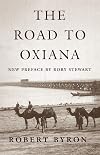
This book tells of Byron’s travel through the Middle East, particularly Persia (Iran) and Afghanistan in search of architecture. It’s more than the normal travelogue, more like a detailed diary of culture observations. Byron can be witty, snobbish, and even cruel (speaking). His traveling partner, Christopher Sykes, seems to be the exact opposite, he seems to be Jerry Lewis to the author’s Dean Martin. His descriptions of the mosques are particularly “breathtaking.” However, he is show more very opinionated, and his judgements of cultures would today be classified as almost racist, but for 1937, I feel that it would be labeled “harsh.” In addition to harsh, I would also suggest that his writing at times could also be apologetic or dismissive towards the local people and customs. If one wants to read an interesting book about Middle Eastern travel, this is it. If one wants to read an unbiased book about Middle Eastern travel, this is NOT it. I listened to this on audio, 11 hours 26 mins (322 pages) show less
Lists
Awards


You May Also Like


Associated Authors
Statistics
- Works
- 16
- Also by
- 4
- Members
- 1,807
- Popularity
- #14,237
- Rating
- 3.9
- Reviews
- 21
- ISBNs
- 81
- Languages
- 9
- Favorited
- 4