
David Sheff
Author of Beautiful Boy: A Father's Journey Through His Son's Addiction
About the Author
David Sheff is currently a contributing editor of Playboy, Wired, and Yahoo! Internet Life and is on assignment for Fortune and Vanity Fair. He was formerly an editor of New West and California magazines. His articles and interviews have appeared in Playboy, The New York Times Magazine, Rolling show more Stone, Wired, Outside, Forbes ASAP, The Los Angeles Times Magazine, and Esquire. His current book, Beautiful Boy: A Father's Journey Through His Son's Addiction, tells the personal story of his own family's fight with addiction. He attended the University of California at Berkeley, where he received a degree in social science. He lives in San Francisco, California with his wife and three children. (Bowker Author Biography) show less
Works by David Sheff
The Playboy Interviews with John Lennon & Yoko Ono: The Final Testament (1957) 158 copies, 4 reviews
All We Are Saying: The Last Major Interview with John Lennon and Yoko Ono (2000) 120 copies, 1 review
The Buddhist on Death Row: How One Man Found Light in the Darkest Place (2018) 112 copies, 9 reviews
Associated Works
Alone Together: Love, Grief, and Comfort in the Time of COVID-19 (2020) — Contributor — 68 copies, 7 reviews
Tagged
Common Knowledge
- Birthdate
- 1955
- Gender
- male
- Education
- University of California, Berkeley
- Occupations
- journalist
- Organizations
- New West
California (magazine)
Men's Life
Yahoo! Internet Life
Playboy - Relationships
- Sheff, Nic (son)
- Nationality
- USA
- Places of residence
- Inverness, California, USA
- Associated Place (for map)
- California, USA
Members
Reviews

Ultimately, Sean said, “It’s one of my mom’s most powerful talents: that she had this ability to overcome difficulty with positive thinking. She really wanted to teach the world to do that. She taught my dad to do that.” from Yoko by David Sheff
She took the trauma of her life–the distant parents, the war with its starvation and bombing of Tokyo, the sexual abuse, the social ostracism, misogyny and racism, the drug addiction, the loss of a child stolen by her ex, the murder of her show more soul mate, the betrayal by trusted confidences–and turned it into visionary art, and an anthem that transformed the world.
I was not a “Beatlemaniac” but remembered the gossip surrounding Yoko Ono, the famous photographs. When offered this biography, I was drawn to learn about Yoko. The woman I encountered in these pages is a remarkable survivor of unimaginable tragedy since childhood. She took that pain into her art, exposing her vulnerability.
David Sheff was a trusted family friend to Yoko and John Lennon, and his biography is sympathetic while revealing troubling insights.
“As usual, there’s a great woman behind every idiot” John Lennon, quoted in Yoko by David Sheff
Yoko’s art and music is described in depth. Shocking or dismissed at the time, her art became formative to later musicians and artists.
John Lennon was depressed and unhappy when he met Yoko at one of her art exhibits. He became deeply dependent on Yoko. It took years and a separation for their marriage to settle into a mutually supportive and happy one, then John was murdered. Not only did she have to deal with that loss, she received death threats for her and Sean. And people she trusted stole money and memorabilia from her. She found solace in tarot cards and psychics.
It was heartbreaking to read.
But she was a survivor.
Yoko committed to keep John’s legacy and music alive. She performed new music with Sean and was now recognized as a pioneer in conceptual art. She reconnected with her daughter from her first marriage.
“I’m not really that optimistic. I am trying to make us survive. And in the course of survival, we don’t have the luxury to be negative. That’s a luxury we can’t afford.” Yoko Ono quoted in Yoko by David Sheff
Yoko’s contribution to Imagine was finally recognized. The message “had always been central to Yoko’s life and work–the basis of her conceptual art and thinking, and indeed, her survival,” Sheff writes;”Yoko imagines a better world–and she worked to create one.”
Thanks to the publisher for a free book through NetGalley. show less
She took the trauma of her life–the distant parents, the war with its starvation and bombing of Tokyo, the sexual abuse, the social ostracism, misogyny and racism, the drug addiction, the loss of a child stolen by her ex, the murder of her show more soul mate, the betrayal by trusted confidences–and turned it into visionary art, and an anthem that transformed the world.
I was not a “Beatlemaniac” but remembered the gossip surrounding Yoko Ono, the famous photographs. When offered this biography, I was drawn to learn about Yoko. The woman I encountered in these pages is a remarkable survivor of unimaginable tragedy since childhood. She took that pain into her art, exposing her vulnerability.
David Sheff was a trusted family friend to Yoko and John Lennon, and his biography is sympathetic while revealing troubling insights.
“As usual, there’s a great woman behind every idiot” John Lennon, quoted in Yoko by David Sheff
Yoko’s art and music is described in depth. Shocking or dismissed at the time, her art became formative to later musicians and artists.
John Lennon was depressed and unhappy when he met Yoko at one of her art exhibits. He became deeply dependent on Yoko. It took years and a separation for their marriage to settle into a mutually supportive and happy one, then John was murdered. Not only did she have to deal with that loss, she received death threats for her and Sean. And people she trusted stole money and memorabilia from her. She found solace in tarot cards and psychics.
It was heartbreaking to read.
But she was a survivor.
Yoko committed to keep John’s legacy and music alive. She performed new music with Sean and was now recognized as a pioneer in conceptual art. She reconnected with her daughter from her first marriage.
“I’m not really that optimistic. I am trying to make us survive. And in the course of survival, we don’t have the luxury to be negative. That’s a luxury we can’t afford.” Yoko Ono quoted in Yoko by David Sheff
Yoko’s contribution to Imagine was finally recognized. The message “had always been central to Yoko’s life and work–the basis of her conceptual art and thinking, and indeed, her survival,” Sheff writes;”Yoko imagines a better world–and she worked to create one.”
Thanks to the publisher for a free book through NetGalley. show less
Gotta say, I was pleasantly surprised by this biography. I was interested in reading it, but I didn't think I'd enjoy it—or find as much insight—as I did.
Did I think Sheff may have glossed over some things? Certainly. Anyone who's been a close friend for almost fifty years likely can't help but do that.
But do I agree with Sheff that Yoko isn't quite the dragon lady and Beatles buster and screaming banshee she's almost always been portrayed as? Completely agree. While her music has never show more been my cup of tea, she's absolutely been ahead of her time with what she produced over the years, and the same can be said for all of her artwork.
She was influential on John—like it or not—and I think she opened first his eyes, and then the world's, to different views that, while they may not always have been pleasant, they were true.
This book is illuminating. Recommended. show less
Did I think Sheff may have glossed over some things? Certainly. Anyone who's been a close friend for almost fifty years likely can't help but do that.
But do I agree with Sheff that Yoko isn't quite the dragon lady and Beatles buster and screaming banshee she's almost always been portrayed as? Completely agree. While her music has never show more been my cup of tea, she's absolutely been ahead of her time with what she produced over the years, and the same can be said for all of her artwork.
She was influential on John—like it or not—and I think she opened first his eyes, and then the world's, to different views that, while they may not always have been pleasant, they were true.
This book is illuminating. Recommended. show less
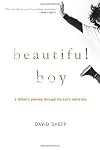
I have an older cousin who was addicted to methamphetamine for about a decade but made it through the recovery process a few years ago. That's not why I read this book (a decision which was based on impulse and a vague memory of reading good reviews), but it definitely made this book somewhat revelatory for me.
David Sheff details the life of his son, Nic, who in his teenage years went from a precocious and charismatic kid to a full-blown meth addict by age 18. Methamphetamine is apparently show more the worst drug to become addicted to and the hardest to recover from and Nic goes through several bouts of rehab and relapse over the course of several years. Beautiful Boy isn't Nic's story though (which is told in his own book, Tweak, which I haven't read); it's the story of what his family, particularly his father, step-mother, and younger siblings, go through as they witness his self-destructive behavior and experience the feelings of hopelessness and powerlessness that family and friends of addicts must deal with. I nearly cried at least a half dozen times while reading this--several times in public places, actually--and it's been quite a while since a book elicited that kind of response from me. It has also made me better appreciate the kind of willpower it took for my cousin to get clean again, especially since she had almost no support from her family (her mother is, or at least was, also a meth addict), and has inspired me to write to her to express my admiration. We've never been close, since she's about ten years older than me, but, after reading what Nic Sheff and his family went through, I think that she, and anyone else who manages to beat a potentially life-destroying addiction, deserves some applause. show less
David Sheff details the life of his son, Nic, who in his teenage years went from a precocious and charismatic kid to a full-blown meth addict by age 18. Methamphetamine is apparently show more the worst drug to become addicted to and the hardest to recover from and Nic goes through several bouts of rehab and relapse over the course of several years. Beautiful Boy isn't Nic's story though (which is told in his own book, Tweak, which I haven't read); it's the story of what his family, particularly his father, step-mother, and younger siblings, go through as they witness his self-destructive behavior and experience the feelings of hopelessness and powerlessness that family and friends of addicts must deal with. I nearly cried at least a half dozen times while reading this--several times in public places, actually--and it's been quite a while since a book elicited that kind of response from me. It has also made me better appreciate the kind of willpower it took for my cousin to get clean again, especially since she had almost no support from her family (her mother is, or at least was, also a meth addict), and has inspired me to write to her to express my admiration. We've never been close, since she's about ten years older than me, but, after reading what Nic Sheff and his family went through, I think that she, and anyone else who manages to beat a potentially life-destroying addiction, deserves some applause. show less
***NO SPOILERS***
This is so much more than a straightforward memoir about a father struggling to save his drug-addicted son. Most strikingly, it’s a heartrending testament to the unconditional and powerful love a parent has for a child. I was deeply moved by Beautiful Boy and know I’ll never forget it.
The account is made even more tragic by how journalist David Sheff set up the narrative. He started from the very beginning, when his beloved son, Nic, was born, showing well how this show more all-American golden boy, who was whip-smart and well-liked, seemed destined for the happiest and most successful of futures. Sheff implied that Nic was the kind of kid no one expected would become a drug addict. This account underscores well the important maxim that addiction doesn’t discriminate.
Beautiful Boy is a tremendous accomplishment and a revelation. Sheff held nothing back, from trying to survive each day to his most vulnerable moments: the tense and sometimes heated conversations with Nic, his paralyzing fear, self-blame, desperation, and the torturous worry—his most loyal companion. As Sheff says later in the book, Nic’s addiction became Sheff’s obsession, an addiction all his own.
The memoir’s poignance comes from a raw candor. Sheff is a humble narrator who shoulders some of the blame (probably more than he should) for Nic’s addiction, and he spoke with openness:
Sheff’s son was primarily addicted to methamphetamine, and in the course of trying to save him, Sheff researched meth. “Know your enemy,” was his thinking. He included much of that research in Beautiful Boy. The drug is unlike any other—more destructive, especially difficult to quit. Research has proven that it’s “neurotoxic, physically changing the brain far more than cocaine and most other drugs do.” The brain damage may be permanent, rendering the addict unable to ever recover. Reading this, knowing how hopelessly addicted Sheff’s son was, pushes Beautiful Boy into the realm of frightening.
Many addicts have written memoirs about their struggles, but how their loved ones struggle is more of a mystery. This memoir fills an important void, because, as Sheff revealed, their suffering is life-altering and nightmarish too, just in a very different way. They need validation and support. Addiction hurts more than just the addict. Beautiful Boy is a profoundly moving experience. show less
This is so much more than a straightforward memoir about a father struggling to save his drug-addicted son. Most strikingly, it’s a heartrending testament to the unconditional and powerful love a parent has for a child. I was deeply moved by Beautiful Boy and know I’ll never forget it.
The account is made even more tragic by how journalist David Sheff set up the narrative. He started from the very beginning, when his beloved son, Nic, was born, showing well how this show more all-American golden boy, who was whip-smart and well-liked, seemed destined for the happiest and most successful of futures. Sheff implied that Nic was the kind of kid no one expected would become a drug addict. This account underscores well the important maxim that addiction doesn’t discriminate.
Beautiful Boy is a tremendous accomplishment and a revelation. Sheff held nothing back, from trying to survive each day to his most vulnerable moments: the tense and sometimes heated conversations with Nic, his paralyzing fear, self-blame, desperation, and the torturous worry—his most loyal companion. As Sheff says later in the book, Nic’s addiction became Sheff’s obsession, an addiction all his own.
The memoir’s poignance comes from a raw candor. Sheff is a humble narrator who shoulders some of the blame (probably more than he should) for Nic’s addiction, and he spoke with openness:
When I am alone, however, I weep in a way that I have not wept since I was a young boy. Nic used to tease me about my inability to cry. On the rare occasions when my eyes welled up, he joked about my “constipated tears.” Now tears come at unexpected moments for no obvious reason, and they pour forth with ferocity. They scare the hell out of me. It scares the hell out of me to be so lost and helpless and out of control and afraid.Al-Anon meetings, where he cried on more than one occasion, became a lifeline. All the while, his son lived on the streets of San Francisco, a shadow of his former self.
Sheff’s son was primarily addicted to methamphetamine, and in the course of trying to save him, Sheff researched meth. “Know your enemy,” was his thinking. He included much of that research in Beautiful Boy. The drug is unlike any other—more destructive, especially difficult to quit. Research has proven that it’s “neurotoxic, physically changing the brain far more than cocaine and most other drugs do.” The brain damage may be permanent, rendering the addict unable to ever recover. Reading this, knowing how hopelessly addicted Sheff’s son was, pushes Beautiful Boy into the realm of frightening.
Many addicts have written memoirs about their struggles, but how their loved ones struggle is more of a mystery. This memoir fills an important void, because, as Sheff revealed, their suffering is life-altering and nightmarish too, just in a very different way. They need validation and support. Addiction hurts more than just the addict. Beautiful Boy is a profoundly moving experience. show less
Lists
Awards


You May Also Like


Associated Authors
Statistics
- Works
- 12
- Also by
- 1
- Members
- 3,668
- Popularity
- #6,900
- Rating
- 4.0
- Reviews
- 115
- ISBNs
- 120
- Languages
- 8
- Favorited
- 1