
Patrick Süskind
Author of Perfume: The Story of a Murderer
About the Author
Patrick Suskind was born in Germany in 1949. Kurt Cobain, singer and songwriter for Nirvana, was a fan of Suskind's work and based a song on Perfume, a novel that had already developed a cult following in Europe and America. (Bowker Author Biography)
Disambiguation Notice:
Patrick Suskind is the normally used English form of his name Patrick Süskind.
Works by Patrick Süskind
Süskind Patrick 1 copy
Herr Sommer'in Öyküsü 1 copy
Le parfum 1 copy
الكونتراباص 1 copy
حكاية السيد زومر 1 copy
Chỉ Tại Con Chim Bồ Câu 1 copy
Ein Hausierer 1 copy
Jutta 1 copy
A pomba 1 copy
Associated Works
Urlaubsträume. Geschichten für die schönste Zeit des Jahres — Author — 1 copy
Tagged
Common Knowledge
- Canonical name
- Süskind, Patrick
- Legal name
- Süskind, Patrick
- Other names
- Suskind, Patrick
- Birthdate
- 1949-03-26
- Gender
- male
- Education
- University of Munich (Medieval and Modern History)
Aix-en-Provence - Occupations
- playwright
author - Awards and honors
- Refused several literary prizes
- Relationships
- Süskind, W.E. (father)
- Nationality
- Germany
- Birthplace
- Ambach am Starnberger See, Germany
- Places of residence
- Ambach am Starnberger See, Germany
Munich, Bavaria, Germany
Aix-en-Provence, France - Map Location
- Germany
- Disambiguation notice
- Patrick Suskind is the normally used English form of his name Patrick Süskind.
- Associated Place (for map)
- Germany
Members
Discussions
Folio Archives 327: Perfume by Patrick Süskind 2008 in Folio Society Devotees (June 2023)
Reviews

An exquisite miniature. A day of existential torment, even terror. Death, or pre-death, or post-death — it’s all one. And all of it set in motion by the pigeon. One pigeon that Jonathan Noel, a bank security guard in Paris, cannot accommodate or banish from his circumscribed existence. One pigeon that serves as catalyst to the most horrific day of Jonathan’s life. Perhaps.
“Perhaps,” because it is clear from the paragraph-long summary of his life to date that Jonathan Noel has show more suffered so many horrific days including the disappearance and presumed death of his mother, and then his father. A miserable childhood followed by a miserable youth and early manhood, a miserable national service that leaves him wounded, and now a miserable life, day by day, year by year, in a mindlessly miserable little job. All of which Jonathan has accepted sanguinely. Until today.
Süskind has woven an absolute masterpiece here. Truly remarkable and highly recommended. show less
“Perhaps,” because it is clear from the paragraph-long summary of his life to date that Jonathan Noel has show more suffered so many horrific days including the disappearance and presumed death of his mother, and then his father. A miserable childhood followed by a miserable youth and early manhood, a miserable national service that leaves him wounded, and now a miserable life, day by day, year by year, in a mindlessly miserable little job. All of which Jonathan has accepted sanguinely. Until today.
Süskind has woven an absolute masterpiece here. Truly remarkable and highly recommended. show less

It's hard to decide whether this book is just famous for being famous, or whether there's really something there apart from 18th century costume-drama, gratuitous slaughter of virgins and a lot of lyrical description.
The basic idea is a magic-realist conceit that makes scent into the essential external projection of our humanity: Süskind's central character, Grenouille, has no human social attributes at all (he sees other people only as an inconvenience, or occasionally as a resource to be show more exploited) and therefore no scent, but he learns to synthesize, and later to steal, scents that can make other people relate to him as a person.
All very clever, no doubt, but I'm not sure what it's supposed to prove. Grenouille, a stunted, deformed and not very intelligent bastard born under a fish-stall, is obviously intended at least in part as a grotesque parody of the Nietzschean Übermensch, a being who has risen above the delusions of morality and religion. And presumably the 18th century setting is supposed to bring in associations with the Marquis de Sade; we certainly get a lot of hints of the approaching death and destruction of the French revolution.
This has obviously been an enormously successful book, possibly simply because it was made into an American film (which I haven't seen). Without knowing of that success, I would have guessed that it's far too lyrically self-indulgent to succeed as a literary novel, and too lacking in sympathetic characters (or characters of any sort, really) to be enjoyable as a historical novel or a crime story. But maybe there is something to it, after all? show less
The basic idea is a magic-realist conceit that makes scent into the essential external projection of our humanity: Süskind's central character, Grenouille, has no human social attributes at all (he sees other people only as an inconvenience, or occasionally as a resource to be show more exploited) and therefore no scent, but he learns to synthesize, and later to steal, scents that can make other people relate to him as a person.
All very clever, no doubt, but I'm not sure what it's supposed to prove. Grenouille, a stunted, deformed and not very intelligent bastard born under a fish-stall, is obviously intended at least in part as a grotesque parody of the Nietzschean Übermensch, a being who has risen above the delusions of morality and religion. And presumably the 18th century setting is supposed to bring in associations with the Marquis de Sade; we certainly get a lot of hints of the approaching death and destruction of the French revolution.
This has obviously been an enormously successful book, possibly simply because it was made into an American film (which I haven't seen). Without knowing of that success, I would have guessed that it's far too lyrically self-indulgent to succeed as a literary novel, and too lacking in sympathetic characters (or characters of any sort, really) to be enjoyable as a historical novel or a crime story. But maybe there is something to it, after all? show less
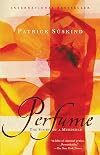
Suskind's writing paints such a vivid story, and engages the senses so beautifully, that there's a great deal to admire in this book. Getting swept along by the language, it's easy to fall into the grip of Suskind's storytelling skills and read a hundred pages of this book at a stretch. For that, I truly admire it. At the same time, I admit I felt a bit of a disconnect from this one, and as much as I could get swept along by the writing once I picked it up, I never felt any particular pull show more to come back to the novel once I'd put it down--in fact, if I hadn't been reading this quickly for a book club, I imagine it might have lingered on my reading shelf for months rather than only a week.
The story here is simple, but the character is so unsympathetic that I think one almost has to be compelled to keep going by the language, the incredible world- and character-building, and simple inertia. There's also a great deal of humor to be found in the book, and in the end, I'm glad to have read it. On some level, it felt like what Flannery O'Connor might have written if told to write a horror novel or gothic set in 18th-century Paris, but with as flowery a style as she could force herself to adopt. And I love O'Connor, so that's a compliment... but this book did read as a bit overly long for me, and I wish I'd felt more connected or had a better understanding of the main character.
All told, I'm glad to have read it, but I'm not sure I'll pick up another of Suskind's works. show less
The story here is simple, but the character is so unsympathetic that I think one almost has to be compelled to keep going by the language, the incredible world- and character-building, and simple inertia. There's also a great deal of humor to be found in the book, and in the end, I'm glad to have read it. On some level, it felt like what Flannery O'Connor might have written if told to write a horror novel or gothic set in 18th-century Paris, but with as flowery a style as she could force herself to adopt. And I love O'Connor, so that's a compliment... but this book did read as a bit overly long for me, and I wish I'd felt more connected or had a better understanding of the main character.
All told, I'm glad to have read it, but I'm not sure I'll pick up another of Suskind's works. show less
One of those books that cracks you open like ice. Disturbing, intriguing, horrifying and educational all at once. A new kind of historical fiction that brings the world of smell into a sharp focus while showing you what life was like in another time. The voice was distinctly modern in that it was a tortured modernist hero in conflict about the love of others and love of self, both cynically existentialist and cripplingly nihilistic. Yet you find yourself continuing to turn the page to see show more what happens next. The ending is both surprising and beautifully circles to the beginning. show less
Lists
True Crime (1)
Favourite Books (1)
essays (1)
French Books (1)
Europe (1)
1980s (1)
To Be Read (1)
Unread books (1)
BBC Big Read (1)
Magic Realism (1)
Page Turners (1)
One Day (1)
To Read - Horror (1)
TBR Insta (1)
Test List (1)
Reading Globally (1)
Cult Classics (1)
A Novel Cure (1)
Wishlist (1)
Awards


You May Also Like


Associated Authors
Statistics
- Works
- 32
- Also by
- 12
- Members
- 24,144
- Popularity
- #867
- Rating
- 3.9
- Reviews
- 576
- ISBNs
- 484
- Languages
- 32
- Favorited
- 58


