
P. L. Travers (1899–1996)
Author of Mary Poppins
About the Author
Born in Australia to an Irish father and a Scottish mother, Helen Lyndon Goff aka. P. L. Travers was a voracious reader and began to write while she was still a child. She did some acting but quickly moved into literary and dramatic criticism; she wrote some highly respected poetry as well. show more However, it is her series of books for children, starting with Mary Poppins (1934), on which her fame rests. The prim, kindly, and enchanting nanny takes charge of the Banks's household and brings the children a seemingly endless stream of fantasy adventures. The book was an immediate success. Walt Disney's (see Vol. 3) musical version, in 1964, brought the stories to an even wider audience. Subsequent books about Mary Poppins include Mary Poppins Comes Back, Mary Poppins Opens the Door, Mary Poppins in the Park, Mary Poppins from A to Z, and Mary Poppins and the House Next Door. Other more recent books include About Sleeping Beauty (1975) and Two Pair of Shoes (1980). Travers was made an Officer of the Order of the British Empire in 1977. She lived into advanced old age, but her health was declining toward the end of her life. Travers died in London on April 23,1996 at the age of 96. (Bowker Author Biography) show less
Image credit: Courtesy of the NYPL Digital Gallery (image use requires permission from the New York Public Library)
Series
Works by P. L. Travers
Mary Poppins / Mary Poppins Comes Back / Mary Poppins Opens the Door / Mary Poppins in the Park (2014) 519 copies, 6 reviews
AH WONG 2 copies
Mary Poppins and the Banks Family 2 copies
The Fox at the Manger 1 copy
On Not Writing for Children 1 copy
Walt Disney's Story of Mary Poppins with songs from the film [book and record] - See, Hear, Read (1977) 1 copy
2017 1 copy
Happy ever after 1 copy
Associated Works
The Graphic Canon of Children's Literature: The World's Greatest Kids' Lit as Comics and Visuals (2014) — Contributor — 101 copies, 1 review
Parabola: Myth and the Quest for Meaning, Vol. 7, No. 3: Ceremonies (1982) — Contributor — 14 copies
Cricket Magazine, Vol. 1, No. 4, December 1973 — Contributor — 5 copies
Tagged
Common Knowledge
- Canonical name
- Travers, P. L.
- Legal name
- Travers, Pamela Lyndon
- Other names
- Goff, Helen Lyndon (birth name)
- Birthdate
- 1899-08-09
- Date of death
- 1996-04-26
- Gender
- female
- Education
- Normanhurst Girls' School, Ashfield, Sydney, Australia
- Occupations
- dancer
actor
journalist
novelist
writer-in-residence (Harvard University) - Organizations
- Harvard University
- Awards and honors
- Order of the British Empire (Officer, 1977)
- Relationships
- Travers, Camillus (son)
Butler, Hubert (friend) - Nationality
- Australia
- Birthplace
- Maryborough, Queensland, Australia
- Places of residence
- Maryborough, Queensland, Australia
Dublin, Ireland
London, England, UK
Bowral, New South Wales, Australia
New York, New York, USA
Allora, Queensland, Australia - Place of death
- London, England, UK
- Burial location
- St. Mary the Virgin's Church, Twickenham, England, UK
- Associated Place (for map)
- Australia
Members
Reviews

P.L. Travers, author of the beloved novels about that magical nanny, Mary Poppins, turns her attention to the Christmas story in this lovely little volume. Narrated by an unnamed woman - perhaps Travers herself? - The Fox at the Manger details how three young boys are brought to St. Paul's cathedral in London, shortly after the end of World War II, to attend the traditional Christmas Eve service there. The first part of the book concerns the service itself, and the (hilarious) questions the show more boys have about what they are experiencing. Responding to the hymn of The Friendly Beasts, which forms an important part of the service, and of the narrative, the boys afterward question the narrator, wanting to know whether the wild animals also brought gifts to the Christ Child. There follows an inset story, told by the narrator to the boys, concerning the Fox, and the extraordinary gift he gave...
Such is the beauty and power of Travers' tale here, and such was the strength of my response to it, that when I finished reading it yesterday, sitting in the Rose Reading Room of the New York Public Library, I could only sit there, gazing into space. I had planned, as is my custom on the weekend, to spend the entire day reading various titles, designated as in-library use only, but after The Fox at the Manger I found that I simply couldn't stomach the idea of reading anything else at that moment. I needed time to digest. Time to ponder. Travers' narrative is beautifully written, with passages I needed to read time and again, to appreciate them fully. The scene in which the narrator imagines London past, present and future, with all the times and generations bleeding into one another, and co-existing, was magical. The entire story of the fox, with its references to Reynardian lore, and its sensitive understanding of the conflicting and yet complementary nature of wild and domestic animals, was poignant and powerful. As someone with an interest in foxes - I wrote my masters dissertation on retellings of the History of Reynard for English-language children - I was pretty much guaranteed to find this one interesting. What I didn't expect was to find it so beautiful, so moving, and so thought-provoking. I have never seen Christ compared to a fox before, but when the vulpine character here tells the Child that "it is you who are the fox now, alone against the world," it felt so perfectly right! I had never really considered the meaning and significance of those Biblical passages which speak of the "lion lying down with lamb," but Travers made me think of them, and invested them with a power of which I had not dreamed. Here, from the concluding scenes of the Fox's tale, are some passages that spoke to me most directly:
"His yellow eyes were fixed unblinkingly on the Child and the Child's eyes shone unblinkingly back at him. With a look that seemed to unwind time the two gazed at each other. What they said in that look no one can tell. They might have lived a lifetime in it - thirty-three years of life maybe - stretching away from this winter night to a far-off day in spring."
"This is the way the wheel turns, coming at last to full circle, with wild as well as tame at the crib; lion and turtle-dove together and barnyard beasts lying down with the fox. For wild and tame are but two halves and here, where all begins and ends, everything must be whole."
There is a sharpness of pain here, and an understanding of sacrifice, that make The Fox at the Manger one of the best Nativity Stories I have ever read. I am so very glad that, after many years of meaning to get to this one, I finally did, and I know that it will linger with me for a long time. show less
Such is the beauty and power of Travers' tale here, and such was the strength of my response to it, that when I finished reading it yesterday, sitting in the Rose Reading Room of the New York Public Library, I could only sit there, gazing into space. I had planned, as is my custom on the weekend, to spend the entire day reading various titles, designated as in-library use only, but after The Fox at the Manger I found that I simply couldn't stomach the idea of reading anything else at that moment. I needed time to digest. Time to ponder. Travers' narrative is beautifully written, with passages I needed to read time and again, to appreciate them fully. The scene in which the narrator imagines London past, present and future, with all the times and generations bleeding into one another, and co-existing, was magical. The entire story of the fox, with its references to Reynardian lore, and its sensitive understanding of the conflicting and yet complementary nature of wild and domestic animals, was poignant and powerful. As someone with an interest in foxes - I wrote my masters dissertation on retellings of the History of Reynard for English-language children - I was pretty much guaranteed to find this one interesting. What I didn't expect was to find it so beautiful, so moving, and so thought-provoking. I have never seen Christ compared to a fox before, but when the vulpine character here tells the Child that "it is you who are the fox now, alone against the world," it felt so perfectly right! I had never really considered the meaning and significance of those Biblical passages which speak of the "lion lying down with lamb," but Travers made me think of them, and invested them with a power of which I had not dreamed. Here, from the concluding scenes of the Fox's tale, are some passages that spoke to me most directly:
"His yellow eyes were fixed unblinkingly on the Child and the Child's eyes shone unblinkingly back at him. With a look that seemed to unwind time the two gazed at each other. What they said in that look no one can tell. They might have lived a lifetime in it - thirty-three years of life maybe - stretching away from this winter night to a far-off day in spring."
"This is the way the wheel turns, coming at last to full circle, with wild as well as tame at the crib; lion and turtle-dove together and barnyard beasts lying down with the fox. For wild and tame are but two halves and here, where all begins and ends, everything must be whole."
There is a sharpness of pain here, and an understanding of sacrifice, that make The Fox at the Manger one of the best Nativity Stories I have ever read. I am so very glad that, after many years of meaning to get to this one, I finally did, and I know that it will linger with me for a long time. show less
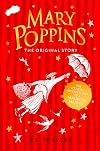
This would have been a four-star review, except for the lack of a plot. The chapters are loosen episodes, which is handy when it comes to story-telling in an afterschool; simply, I did expect the book to tell me a story worth of the name.
This said, the magical adventures are brilliant, Mary Poppins' personality is quirky and not sweet-honey at all, and there is a strange air of eeriness around a couple of episodes, such as the abusive tiny candy-seller who psychologically tortures her show more gigantic daughters; Mary Poppins herself is half a self-enamoured teenager, half a mytical creature whose eon-ancient age is hinted at in more than one occasion. Definitely worth reading! show less
This said, the magical adventures are brilliant, Mary Poppins' personality is quirky and not sweet-honey at all, and there is a strange air of eeriness around a couple of episodes, such as the abusive tiny candy-seller who psychologically tortures her show more gigantic daughters; Mary Poppins herself is half a self-enamoured teenager, half a mytical creature whose eon-ancient age is hinted at in more than one occasion. Definitely worth reading! show less

More adventures with everyone's favourite passive-aggressive, manic-depressive nanny as she takes her five charges on one psychedelic adventure after another (perhaps drugs per se are not involved but she does "sniff" a lot and the children's favourite candies are "acid drops"). By this, the third book, Poppins' supernatural ways and habit of accusing the kids of lying about where she takes them is getting just a little bit tired...but the writing remains crisp and the chapters fly by in a show more flurry of fantastical creatures, chimney sweeps, and hallucinatory landscapes. show less
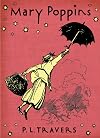
Hadn't read the original till now; indeed, the new movie (Mary Poppins Returns) seems to stay quite true to the capricious, vain, forbidding, cold, and kind (in turns) Mary Poppins of the book. She arrives on the East Wind and leaves on the West Wind, and in between she visits all kinds of bewildering wonders on the Banks children, Jane and Michael (and the infant twins Barbara and John). After each adventure or observed oddity that leaves Jane and Michael marveling, Mary Poppins insists she show more has no idea what they're talking about - a bit like Ms. Frizzle after a field trip, only somehow more sinister.
"Don't you know," she said pityingly, "that everybody's got a Fairyland of their own?" (28)
"But Grown-ups never mean what they say, it seems to me." (Barbara to John, 140)
"It's no good asking her. She knows everything, but she never tells," said Jane. (153)
"We are all made of the same stuff, remember..." (Hamadryad to Jane and Michael, 174)
"Could we have imagined it?"
"Perhaps...We imagine strange and lovely things, my darling." (Michael and Mother, 194) show less
"Don't you know," she said pityingly, "that everybody's got a Fairyland of their own?" (28)
"But Grown-ups never mean what they say, it seems to me." (Barbara to John, 140)
"It's no good asking her. She knows everything, but she never tells," said Jane. (153)
"We are all made of the same stuff, remember..." (Hamadryad to Jane and Michael, 174)
"Could we have imagined it?"
"Perhaps...We imagine strange and lovely things, my darling." (Michael and Mother, 194) show less
Lists
Nifty Fifties (1)
Female Author (1)
Comfort Reads (1)
Overdue Podcast (1)
Favourite Books (1)
Favorite Series (1)
Christmas Books (2)
1930s (2)
Ambleside Y2 (1)
Five star books (1)
Ambleside Books (1)
Awards


You May Also Like


Associated Authors
Statistics
- Works
- 63
- Also by
- 16
- Members
- 16,891
- Popularity
- #1,324
- Rating
- 3.9
- Reviews
- 296
- ISBNs
- 491
- Languages
- 29
- Favorited
- 18