
Robert Trivers (1943–2026)
Author of The Folly of Fools: The Logic of Deceit and Self-Deception in Human Life
About the Author
Robert Trivers is a professor of anthropology and biological sciences at Rutgers University. Winner of the Crafoord Prize, he was recognized for "his fundamental analysis of social evolution, conflict, and cooperation." Trivers lives in Somerset, New Jersey, and in Jamaica.
Works by Robert Trivers
The Folly of Fools: The Logic of Deceit and Self-Deception in Human Life (2011) 330 copies, 7 reviews
Associated Works
Tagged
Common Knowledge
- Other names
- Trivers, Robert Ludlow
Trivers, Bob - Birthdate
- 1943-02-19
- Date of death
- 2026-03-12
- Gender
- male
- Education
- Harvard University (PhD|Biology|1972)
Harvard College (AB|History|1965) - Occupations
- evolutionary biologist
sociobiologist
university professor - Organizations
- Rutgers University
- Awards and honors
- Crafoord Prize (2007)
- Short biography
- I have been an evolutionary biologist since the fall of 1965 when I first learned that natural selection is the key to understanding life and that it favors traits that give individuals an advantage (in producing surviving offspring). Spring of 1966 I learned Hamilton’s kinship theory, which extended one’s self-interest to include not only one’s own offspring but also those of relatives, each devalued by the appropriate degree of relatedness.
I was eager to contribute to building social theory based on natural selection, because a scientific system of social theory must, by logic be based on natural selection, and getting the foundations correct would have important implications for understanding our own psyches and social systems. A general system of logic that applies to all creatures also vastly extends the range of relevant evidence.
I then published a series of papers on social topics: reciprocal altruism (1971), parental investment and sexual selection (1972), the sex ratio (1973), parent-offspring conflict (1974), kinship and sex ratio in the social insects (1976), summarized in my book on social evolution (1985). All of these papers can be downloaded from my ‘bibliography’ and a link to the book can be found under ‘books’.
I devoted 1990 to 2005 to mastering genetics, in particular,
selfish genetic elements, which typically are harmful to the organism as a whole but spread through within-individual genetic conflict. They infect all known organisms, including ourselves and come in many different forms. This entire subject is reviewed in my book with Austin Burt (2006), a link to which can be found under ‘books’ and various papers on the subject can also be found in my ‘bibliography’.
Finally, I have recently attempted to master the scientific literature on self-deception and to sketch out some of the many applications of the resulting view. Links to this book are found here on the front page. Links to earlier papers on the subject can be found in the ‘publications’.
http://roberttrivers.com/Robert_Trive... - Nationality
- USA
- Places of residence
- Santa Cruz, California, USA
Somerset, New Jersey, USA
Jamaica - Associated Place (for map)
- USA
Members
Reviews
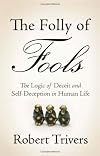
Does it take one to know one? Or does it take a fool to fool one?
Deception is, without question, a key feature of evolution. A small mammal fluffs up its fur to look bigger, and so scare off a predator or a rival. A small male fish takes on the appearance of a female, and so sneaks past a larger male standing guard over females and is able to mate. A butterfly from a tasty species adopts the coloration of a nasty, or even poisonous, species to cause birds to leave it alone. This sort of show more deception is everywhere.
And, of course, it's found in humans in a different and exaggerated form, called "lying." Or "fraud," or many other names. Yes, most people are very good at it, and yes, it tends to advantage them. ("A creampuff," says the used car salesman as he hands you the keys of the lemon....) What's more, it's clear that the better one is at deception, the more advantage one gains from it. Indeed, it has been proposed that one of the reasons the human brain has gotten bigger and bigger, over the years, is that a big brain is a weapon in the arms race between those who are trying to deceive and their victims who are trying not to be deceived.
So far, so uncontroversial, at least if you believe in evolution. Robert Trivers goes beyond that, suggesting that lying with a straight face isn't nearly as good as believing your own lies. After all, if you believe it yourself, you can't possibly give away the fact that you are lying. Thus, he suggests, self-deception is an adaptive advantage.
It's a very interesting thesis, which (approached simply from a logical standpoint) is certainly true if self-deception has no down side. And, sometimes, it doesn't. Take a simple example: a town dance with 51 eligible men and only 50 eligible women. If everyone just lines up and takes the most suitable available partner (so the best and fittest guy gets the best girl, and the #2 guy gets the #2 girl, and so forth), guy #51 isn't going to have a dance partner. But if he lies to himself and says, "Well, maybe I'm not #51, maybe I'm #50, and if I really try to dress up and look my best, I can get girl #50, or even #49," he has nothing to lose. Meanwhile, guy #50 says to himself, "All right, I'm the next-to-worst guy, but still, girl #50 has to go with me or else her only choice is #51" -- and he makes no effort at all, and guy #51 gets the last girl. Self-deception that makes you take a chance when you have nothing to lose is entirely worth doing -- and so the human race is basically optimistic and active and (let's face it) self-deceptive, because it pays off.
But sometimes it doesn't pay off. If you see the ground fall away, and say, "well, it might be a 500 foot cliff, but it might be a gentle slope, and I'm going to keep walking because it's too much work to look" -- there's a pretty good chance you'll end up a very flat stain at the bottom of the cliff, and you won't breed. So self-deception has to have its limits. The question is, where are they?
And, at this point, we get into psychology. And I am disturbed about this. Robert Trivers in this book reveals himself as a petty thief and a drug user and prone to gambling and often a not-very-helpful person -- on its face, something very close to a psychopath. Is he right about self-deception -- or is he deceiving us (or at least himself) to cover his own bad habits? We cannot really tell from pure logic. We can only look at the evidence Trivers offers.
And, here, we see a disturbing tendency. I don't know enough about biology to argue the examples Trivers cites. I know he makes a lot of physics goofs, though -- to give just one blatant example, on p. 202 he claims that there is no reason to experiment with growing plants in microgravity, because "gravity-free zones can be produced on Earth at a fraction of the cost." Um -- no, they can't. Not for more than thirty seconds at a time, anyway, which isn't an experimental environment. You can only get free fall in something that's falling freely (like a plane or elevator falling toward the ground) -- or in an unaccelerated spacecraft in orbit.
There are other errors of this type, and some which mix science and history (Columbus massacred the Indians, yes, but not by using big guns mounted on ships -- remember, the War of the Spanish Armada, the first major engagement of ships using artillery, took place a century after Columbus!). There are also examples of Trivers taking cases from modern politics which are not relevant to his thesis. I agree with him on most of these, but so what? He isn't arguing his case, he's just stating his opinions. Similarly, many of Trivers's examples, such as his ragging on NASA and various airlines, are genuine examples of irrational behavior but are not examples of the sort of irrational behavior he is talking about; they are relics of the heuristics of the animal brain.
Bottom line: A very provocative thesis. A reasonable thesis, even. And Robert Trivers is a genius who reshaped our understanding of evolution, so that his ideas deserve tremendous respect. But, in this book, I don't think he has proved his point. It will take experiment to do so. And that raises the question: Can we perform the experiments without deceiving ourselves? show less
Deception is, without question, a key feature of evolution. A small mammal fluffs up its fur to look bigger, and so scare off a predator or a rival. A small male fish takes on the appearance of a female, and so sneaks past a larger male standing guard over females and is able to mate. A butterfly from a tasty species adopts the coloration of a nasty, or even poisonous, species to cause birds to leave it alone. This sort of show more deception is everywhere.
And, of course, it's found in humans in a different and exaggerated form, called "lying." Or "fraud," or many other names. Yes, most people are very good at it, and yes, it tends to advantage them. ("A creampuff," says the used car salesman as he hands you the keys of the lemon....) What's more, it's clear that the better one is at deception, the more advantage one gains from it. Indeed, it has been proposed that one of the reasons the human brain has gotten bigger and bigger, over the years, is that a big brain is a weapon in the arms race between those who are trying to deceive and their victims who are trying not to be deceived.
So far, so uncontroversial, at least if you believe in evolution. Robert Trivers goes beyond that, suggesting that lying with a straight face isn't nearly as good as believing your own lies. After all, if you believe it yourself, you can't possibly give away the fact that you are lying. Thus, he suggests, self-deception is an adaptive advantage.
It's a very interesting thesis, which (approached simply from a logical standpoint) is certainly true if self-deception has no down side. And, sometimes, it doesn't. Take a simple example: a town dance with 51 eligible men and only 50 eligible women. If everyone just lines up and takes the most suitable available partner (so the best and fittest guy gets the best girl, and the #2 guy gets the #2 girl, and so forth), guy #51 isn't going to have a dance partner. But if he lies to himself and says, "Well, maybe I'm not #51, maybe I'm #50, and if I really try to dress up and look my best, I can get girl #50, or even #49," he has nothing to lose. Meanwhile, guy #50 says to himself, "All right, I'm the next-to-worst guy, but still, girl #50 has to go with me or else her only choice is #51" -- and he makes no effort at all, and guy #51 gets the last girl. Self-deception that makes you take a chance when you have nothing to lose is entirely worth doing -- and so the human race is basically optimistic and active and (let's face it) self-deceptive, because it pays off.
But sometimes it doesn't pay off. If you see the ground fall away, and say, "well, it might be a 500 foot cliff, but it might be a gentle slope, and I'm going to keep walking because it's too much work to look" -- there's a pretty good chance you'll end up a very flat stain at the bottom of the cliff, and you won't breed. So self-deception has to have its limits. The question is, where are they?
And, at this point, we get into psychology. And I am disturbed about this. Robert Trivers in this book reveals himself as a petty thief and a drug user and prone to gambling and often a not-very-helpful person -- on its face, something very close to a psychopath. Is he right about self-deception -- or is he deceiving us (or at least himself) to cover his own bad habits? We cannot really tell from pure logic. We can only look at the evidence Trivers offers.
And, here, we see a disturbing tendency. I don't know enough about biology to argue the examples Trivers cites. I know he makes a lot of physics goofs, though -- to give just one blatant example, on p. 202 he claims that there is no reason to experiment with growing plants in microgravity, because "gravity-free zones can be produced on Earth at a fraction of the cost." Um -- no, they can't. Not for more than thirty seconds at a time, anyway, which isn't an experimental environment. You can only get free fall in something that's falling freely (like a plane or elevator falling toward the ground) -- or in an unaccelerated spacecraft in orbit.
There are other errors of this type, and some which mix science and history (Columbus massacred the Indians, yes, but not by using big guns mounted on ships -- remember, the War of the Spanish Armada, the first major engagement of ships using artillery, took place a century after Columbus!). There are also examples of Trivers taking cases from modern politics which are not relevant to his thesis. I agree with him on most of these, but so what? He isn't arguing his case, he's just stating his opinions. Similarly, many of Trivers's examples, such as his ragging on NASA and various airlines, are genuine examples of irrational behavior but are not examples of the sort of irrational behavior he is talking about; they are relics of the heuristics of the animal brain.
Bottom line: A very provocative thesis. A reasonable thesis, even. And Robert Trivers is a genius who reshaped our understanding of evolution, so that his ideas deserve tremendous respect. But, in this book, I don't think he has proved his point. It will take experiment to do so. And that raises the question: Can we perform the experiments without deceiving ourselves? show less
I picked up Robert Trivers' book, "The Folly of Fools," because the title attracted me. My action demonstrates the power of a good title, and I am overjoyed the contents of the book lived up to the promise of the book's title.
In the musical Jesus Christ Superstar, Pontius Pilate asked Jesus the following question: "And what is 'truth?' Is truth unchanging law? We both have truths. Are mine the same as yours?"
Since then, many philosophers have spoken about truth, as have everyday citizens, show more corporate CEOs, warriors, kings, and politicians. Yet, as we discover, humans and the natural world are hard-wired for deception.
Deception is necessary for survival, but problems occur when we continue the game too far, resulting in chaos, destruction, and often bloodshed.
Robert Trivers started with a general introduction to deception, including self-deception. We are as prone to deceiving ourselves as we are to deceiving others. From there, he described the causes and factors that prompt us toward deception.
Then, he dedicated chapters to specific aspects, or arenas, where we practice deception, sometimes with innocent results and often resulting in disaster. He focused on the individual, the family, the role of deception in sex, and career. Then, he moved on to deeper issues, where self-deception and deception have caused great calamities, like airplane disasters, war, national myths, and religion. He ended with two chapters, one on deceit and the social sciences and how we can combat deception daily.
His language is direct, active, and forceful, and I like this aspect of the book, which makes it an enjoyable read. I only wish he had included a section on the role of social media and how citizens and influential people misuse the medium's reach to spread lies. show less
In the musical Jesus Christ Superstar, Pontius Pilate asked Jesus the following question: "And what is 'truth?' Is truth unchanging law? We both have truths. Are mine the same as yours?"
Since then, many philosophers have spoken about truth, as have everyday citizens, show more corporate CEOs, warriors, kings, and politicians. Yet, as we discover, humans and the natural world are hard-wired for deception.
Deception is necessary for survival, but problems occur when we continue the game too far, resulting in chaos, destruction, and often bloodshed.
Robert Trivers started with a general introduction to deception, including self-deception. We are as prone to deceiving ourselves as we are to deceiving others. From there, he described the causes and factors that prompt us toward deception.
Then, he dedicated chapters to specific aspects, or arenas, where we practice deception, sometimes with innocent results and often resulting in disaster. He focused on the individual, the family, the role of deception in sex, and career. Then, he moved on to deeper issues, where self-deception and deception have caused great calamities, like airplane disasters, war, national myths, and religion. He ended with two chapters, one on deceit and the social sciences and how we can combat deception daily.
His language is direct, active, and forceful, and I like this aspect of the book, which makes it an enjoyable read. I only wish he had included a section on the role of social media and how citizens and influential people misuse the medium's reach to spread lies. show less
Author explores the field of self-deception; does it have any evolutionary advantage to balance the obvious downside? It concludes that for individuals it may, by contributing self confidence, which may contribute to success in various endeavors, including finding a mate. For societies and groups, however self-deception leads to disasters such as the Challenger explosion or the invasion of Iraq (they will love us and throw flowers).
Some great science fact and speculation plus some honest looks at his own frailty unfortunately mixed in with tons of political rants and tirades against soft-science disciplines like cultural anthropology and economics. I actually agree with him on many of the rants & tirades but I thought it totally detracted from the main points of the book.
Lists
Awards


You May Also Like


Associated Authors
Statistics
- Works
- 11
- Also by
- 1
- Members
- 647
- Popularity
- #39,005
- Rating
- 3.8
- Reviews
- 11
- ISBNs
- 28
- Languages
- 5
- Favorited
- 3


