
Amy Waldman
Author of The Submission
About the Author
Works by Amy Waldman
Associated Works
Tagged
Common Knowledge
- Birthdate
- 1969
- Gender
- female
- Education
- Yale University
- Nationality
- USA
- Birthplace
- Los Angeles, California, USA
- Associated Place (for map)
- California, USA
Members
Reviews
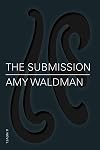
Ten years after 9/11, it's still exceptionally difficult to write about the many issues the United States confronted in the aftermath and continues to work through in a way that does not offend one side or the other. Phrases such as "tolerance for all" and "protect our values" are simplistic and intended to be all inclusive, but any exploration of those expressions leads to a discovery of undercurrents unrealized that perhaps live only deep within the subconscious or for which we are show more privately ashamed or unabashedly supportive of. What Ms. Waldman has done with her debut novel is probe these undercurrents through a brilliant premise with multi-faceted characters who are worth cheering for and worth detesting.
The premise is thus: what if there were a jury assigned to choose a memorial for the 9/11 attacks, with the process for choosing the memorial completely anonymous, and in the end the jury selected a Muslim architect? No doubt building on the public's reaction to a mosque being built near the WTC site, Ms. Waldman creates an unforgettable cast of characters. You have Mohammad Khan, the architect who does not pray but does not make any attempt to disclaim himself as a Muslim or explain his selection; Claire Burwell, a 9/11 widow and juror who supports and champions Khan's design until she finds she can no longer trust him; Sean Gallagher, a brother of a deceased 9/11 firefighter who feels compelled to fight against the project but at the same time conflicted over how to do this, and that's just for starters.
At the bottom of this book is a tale about what happens when ambition, whether it be the governor's, a reporter's or even the architect's, collides with a collective conflicted intolerance and our human sense of decency. Ms. Waldman makes it perfectly clear how each of these characters feel about their own actions and explains them in a perfectly reasonable way, which is quite a feat considering many of them have polar motivations. I sympathized strongly with Khan, who feels under attack but out of principle does not want to go out of his way to deflect these attacks, but I also felt for Claire Burwell, who is struggling to find a way to mourn and be true to her dead husband while also withstanding the onslaught of controversy that she finds herself in. I even understood the reporter and the governor who were simply trying to make the best of the situation for their own careers. These are all people we hear on the news and experience in our lives, and each of their perspectives feels organic and true.
In no other book, or any other medium, have I felt the issues of 9/11 addressed with such an understanding of each perspective. For this I applaud Ms. Waldman, and I wonder how she can possibly follow up this excellent first effort. show less
The premise is thus: what if there were a jury assigned to choose a memorial for the 9/11 attacks, with the process for choosing the memorial completely anonymous, and in the end the jury selected a Muslim architect? No doubt building on the public's reaction to a mosque being built near the WTC site, Ms. Waldman creates an unforgettable cast of characters. You have Mohammad Khan, the architect who does not pray but does not make any attempt to disclaim himself as a Muslim or explain his selection; Claire Burwell, a 9/11 widow and juror who supports and champions Khan's design until she finds she can no longer trust him; Sean Gallagher, a brother of a deceased 9/11 firefighter who feels compelled to fight against the project but at the same time conflicted over how to do this, and that's just for starters.
At the bottom of this book is a tale about what happens when ambition, whether it be the governor's, a reporter's or even the architect's, collides with a collective conflicted intolerance and our human sense of decency. Ms. Waldman makes it perfectly clear how each of these characters feel about their own actions and explains them in a perfectly reasonable way, which is quite a feat considering many of them have polar motivations. I sympathized strongly with Khan, who feels under attack but out of principle does not want to go out of his way to deflect these attacks, but I also felt for Claire Burwell, who is struggling to find a way to mourn and be true to her dead husband while also withstanding the onslaught of controversy that she finds herself in. I even understood the reporter and the governor who were simply trying to make the best of the situation for their own careers. These are all people we hear on the news and experience in our lives, and each of their perspectives feels organic and true.
In no other book, or any other medium, have I felt the issues of 9/11 addressed with such an understanding of each perspective. For this I applaud Ms. Waldman, and I wonder how she can possibly follow up this excellent first effort. show less
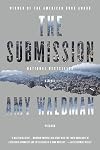
The Submission was like a good Tom Wolfe novel without the excessive description. It presents a kaleidoscopic view of New York as it deals with a controversy after a jury in a blind selection process chose a design for the 9/11 memorial that was done by an (atheist, non-believing) Muslim. The characters are all familiar New Yorkers: the urbane architect, the widow who was married to an investment banker, the distinguished former head of an investment bank who chairs the jury as a step show more towards even better boards, the dead firefighter's brother whose reinfuses his life with purpose by rallying against the memorial design, the Iranian lawyer with a foot in the Muslim community and a foot in publicity, the New York Post's sensationalist reporter, the ambitious governor and most poignantly an undocumented Bangladeshi widow of a janitor who dies on 9/11.
Every one of these characters are familiar, almost a stereotype, but they are also all presented with an impressive degree of sympathy, understanding of their motives, and a presentation of how they are unsure of what they are doing.
Amy Waldman also does an impressive job of taking what seems like a clever concept and turning it into a full novel, as the plot develops and incident builds on incident, culminating in a every effective ending. And she takes what I still think of as a morally black-and-white issue but finds interesting ambiguities and questions and dilemmas that emerge from it.
The Submission has a lot of good writing and interesting phrases, but it is not an exercise in flashy writing or novel storytelling methods, instead it is more about its range of subjects and the dilemmas it presents. It is not meant as an insult to the book to say that it would be a good choice as required reading in high schools where you could picture the endless discussions of the various dilemmas it poses, as well as a lesson in intolerance and bigotry. show less
Every one of these characters are familiar, almost a stereotype, but they are also all presented with an impressive degree of sympathy, understanding of their motives, and a presentation of how they are unsure of what they are doing.
Amy Waldman also does an impressive job of taking what seems like a clever concept and turning it into a full novel, as the plot develops and incident builds on incident, culminating in a every effective ending. And she takes what I still think of as a morally black-and-white issue but finds interesting ambiguities and questions and dilemmas that emerge from it.
The Submission has a lot of good writing and interesting phrases, but it is not an exercise in flashy writing or novel storytelling methods, instead it is more about its range of subjects and the dilemmas it presents. It is not meant as an insult to the book to say that it would be a good choice as required reading in high schools where you could picture the endless discussions of the various dilemmas it poses, as well as a lesson in intolerance and bigotry. show less
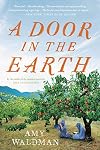
A young American Afghan woman has just read a very popular book about life in Afghanistan and decides her life's calling is to go and help the people in a small village. The village is the subject of the book and the author has supposedly built a clinic for women in the village. After Parveen arrives, she finds a much different story than she anticipated. The clinic is there, but the doctor is only there one day a week, if that.
As the story progresses, things get more complicated as Parveen show more gets a real lesson in cultural differences and the effects of "doing good" when not totally understanding the culture. The war in Afghanistan is progressing so American soldiers are involved. Is a road to the village progress or a source of more problems to come.
This is s thought-provoking novel which presents many of the difficulties involved in working in third-world countries where the culture is so different from the western world. It is very obvious that the author was referencing the "Three Cups of Tea" book which has been discredited. I would definitely read more by this author. show less
As the story progresses, things get more complicated as Parveen show more gets a real lesson in cultural differences and the effects of "doing good" when not totally understanding the culture. The war in Afghanistan is progressing so American soldiers are involved. Is a road to the village progress or a source of more problems to come.
This is s thought-provoking novel which presents many of the difficulties involved in working in third-world countries where the culture is so different from the western world. It is very obvious that the author was referencing the "Three Cups of Tea" book which has been discredited. I would definitely read more by this author. show less

The premise is intriguing. A contest is held to select a design for a 9/11 memorial where the two towers stood. The winner, a design for a garden, is chosen anonymously, but once it has been selected, they realize the designer is Muslim and there is an immediate outcry from the public.
The cast of characters is diverse. There’s Paul, a Jewish lawyer who is in charge of the jury that selects the design for the memorial. Then we have Mohammad Khan, the architect whose design is chosen. He show more was born in Virginia and is an American. Asma is the widow of a man who was killed in the two towers on 9/11. She is living in America illegally, but her son was born in the USA.
Claire is also a 9/11 widow and is a member of the jury that selects the memorial design and is the garden’s earliest advocate. Alyssa is a reporter who continually weasels her way into each breaking story, throwing gas on the fire. Sean lost his brother on 9/11, but the tragedy has finally given him some focus in life. He now lends his time and energy to 9/11 causes.
The book’s greatest strength is that it shows the issue from such wonderfully different perspectives. Allowing the readers to see it from so many angles fleshing out the controversy and gives it real weight. We meet a wide variety of people from diverse walks of life. Seeing it through their eyes opens our own. Writing it this way is essential to make the story work. It becomes a stepping stone to open discussions instead of preaching one view point at us. There is no hero or villain, just people struggling with an impossible situation where emotions are raw with grief and everyone is tense.
The controversy isn't really about his design, it's about his religion. As one reporter thinks,
“No one cared about the design, didn’t her get that?”
I was really glad that Mo wasn’t turned into a saint that’s simply caught in the cross hairs. I thinks it’s important he feels like a real person, flawed, like anyone else, with selfish thoughts and a flaring temper. He’s a normal guy with ambitions. The only subplot I wasn't a fan of was Sean's. I felt like his whole story was weak and uninteresting.
SPOILERS
For me, it was crucial that the book end the way it did. If it had ended in the midst of the pressure and stress of the situation, I don’t think it would have meant so much to me. I needed to know what the characters felt about the situation once they had some distance from it and they weren’t caught up in the fury of the events. I wanted to know what happened to Asma’s son and what he thought about what happened. Ending it 20 years later gave me closure and felt just right.
SPOILERS OVER
The book makes you wonder what you would do in this situation. It’s not black and white and there’s no clear right and wrong because there are so many feelings involved. One New Yorker (in the book) talks about his mind thinking one thing and his heart feeling another, he’s ashamed to feel suspicious, but he can’t help it. What is America if not a melting pot that defies labels? When you mix such incredibly different cultures together, you’re bound to have underlying prejudices based on centuries of feuds. The plot also makes you look at what your own assumptions about people are and it makes you question how easily you are swayed by sensational news coverage.
I think this is a wonderful book, one of my favorites so far this year. I don’t think this is a book that everyone will enjoy. It’s tense and political. I think you could also say it manipulates your emotions, but for me, it was excellent.
“‘It’s falling down, it’s falling down,’the nursery-rhyme words, then the mobile network went dead. ‘Hello? Hello? Honey?’ all around, then a silence of Pompeian density.”
“Jealousy clings to love’s underside like bats to a bridge.”
“… which had seemed so monumental at the time, had turned out to be only a small fragment of the mosaic of his life.”
“Perhaps this was the secret to being at peace: want nothing but what is given to you.” show less
The cast of characters is diverse. There’s Paul, a Jewish lawyer who is in charge of the jury that selects the design for the memorial. Then we have Mohammad Khan, the architect whose design is chosen. He show more was born in Virginia and is an American. Asma is the widow of a man who was killed in the two towers on 9/11. She is living in America illegally, but her son was born in the USA.
Claire is also a 9/11 widow and is a member of the jury that selects the memorial design and is the garden’s earliest advocate. Alyssa is a reporter who continually weasels her way into each breaking story, throwing gas on the fire. Sean lost his brother on 9/11, but the tragedy has finally given him some focus in life. He now lends his time and energy to 9/11 causes.
The book’s greatest strength is that it shows the issue from such wonderfully different perspectives. Allowing the readers to see it from so many angles fleshing out the controversy and gives it real weight. We meet a wide variety of people from diverse walks of life. Seeing it through their eyes opens our own. Writing it this way is essential to make the story work. It becomes a stepping stone to open discussions instead of preaching one view point at us. There is no hero or villain, just people struggling with an impossible situation where emotions are raw with grief and everyone is tense.
The controversy isn't really about his design, it's about his religion. As one reporter thinks,
“No one cared about the design, didn’t her get that?”
I was really glad that Mo wasn’t turned into a saint that’s simply caught in the cross hairs. I thinks it’s important he feels like a real person, flawed, like anyone else, with selfish thoughts and a flaring temper. He’s a normal guy with ambitions. The only subplot I wasn't a fan of was Sean's. I felt like his whole story was weak and uninteresting.
SPOILERS
For me, it was crucial that the book end the way it did. If it had ended in the midst of the pressure and stress of the situation, I don’t think it would have meant so much to me. I needed to know what the characters felt about the situation once they had some distance from it and they weren’t caught up in the fury of the events. I wanted to know what happened to Asma’s son and what he thought about what happened. Ending it 20 years later gave me closure and felt just right.
SPOILERS OVER
The book makes you wonder what you would do in this situation. It’s not black and white and there’s no clear right and wrong because there are so many feelings involved. One New Yorker (in the book) talks about his mind thinking one thing and his heart feeling another, he’s ashamed to feel suspicious, but he can’t help it. What is America if not a melting pot that defies labels? When you mix such incredibly different cultures together, you’re bound to have underlying prejudices based on centuries of feuds. The plot also makes you look at what your own assumptions about people are and it makes you question how easily you are swayed by sensational news coverage.
I think this is a wonderful book, one of my favorites so far this year. I don’t think this is a book that everyone will enjoy. It’s tense and political. I think you could also say it manipulates your emotions, but for me, it was excellent.
“‘It’s falling down, it’s falling down,’the nursery-rhyme words, then the mobile network went dead. ‘Hello? Hello? Honey?’ all around, then a silence of Pompeian density.”
“Jealousy clings to love’s underside like bats to a bridge.”
“… which had seemed so monumental at the time, had turned out to be only a small fragment of the mosaic of his life.”
“Perhaps this was the secret to being at peace: want nothing but what is given to you.” show less
Lists
Awards


You May Also Like


Associated Authors
Statistics
- Works
- 2
- Also by
- 2
- Members
- 1,174
- Popularity
- #21,919
- Rating
- 3.8
- Reviews
- 82
- ISBNs
- 50
- Languages
- 7