Rebeccanyc Reads in 2012, Part 2
This is a continuation of the topic Rebeccanyc Reads in 2012, Part 1.
This topic was continued by Rebeccanyc Reads in 2012, Part 3.
Talk Club Read 2012
Join LibraryThing to post.
This topic is currently marked as "dormant"—the last message is more than 90 days old. You can revive it by posting a reply.
1rebeccanyc
I am starting a new thread for May.
* means the book was a favorite
Books Read in July
64. Globalectics: Theory and the Politics of Knowing by Ngũgĩ wa Thiong'o
63. Phantoms on the Bookshelf by Jacques Bonnet
62. White Guard by Mikhail Bulgakov*
61. Ashes and Diamonds by Jerzy Andrzejewski*
60. Escape from Camp 14: One Man's Remarkable Odyssey from North Korea to Freedom in the West by Blaine Harden
59. Almost Transparent Blue by Ryū Murakami
58. The Expendable Man by Dorothy B. Hughes*
57. Distant View of a Minaret, and Other Stories by Alifah Rifaat
56. The Lyre of Orpheus by Robertson Davies*
55. What's Bred in the Bone by Robertson Davies*
54. The Rebel Angels by Robertson Davies*
53. Memoirs of a Revolutionary by Victor Serge*
52. The Age of Doubt by Andrea Camilleri
Books Read in June
51. Dreams and Stones by Magdalena Tulli
50. The Mansion of Happiness: A History of Life and Death by Jill Lepore*
49. The Potter's Field by Andrea Camilleri
48. The Dream of the Celt by Mario Vargas Llosa
47. The Track of Sand by Andrea Camilleri
46. The Wings of the Sphinx by Andrea Camilleri
45. The Box Man by Kōbō Abe
44. Children inf Reindeer Woods by Kristín Ómarsdóttir
43. August Heat by Andrea Camilleri
42. Paper Moon by Andrea Camilleri
Books Read in May
41. The Patience of the Spider by Andrea Camilleri
40. The Master and Margarita by Mikhail Bulgakov* (reread)
39. Rounding the Mark by Andrea Camilleri
38. The Smell of the Night by Andrea Camilleri
37. Excursion to Tindari by Andrea Camilleri
36. Voice of the Violin by Andrea Camilleri
35. Europe Central by William T. Vollman
34. The Snack Thief by Andrea Camilleri
33. The Terra-Cotta Dog by Andrea Camilleri
32. World War Z: An Oral History of the Zombie War by Max Brooks
31. Day of the Oprichnik by Vladimir Sorokin
30. The Shape of Water by Andrea Camilleri
* means the book was a favorite
Books Read in July
64. Globalectics: Theory and the Politics of Knowing by Ngũgĩ wa Thiong'o
63. Phantoms on the Bookshelf by Jacques Bonnet
62. White Guard by Mikhail Bulgakov*
61. Ashes and Diamonds by Jerzy Andrzejewski*
60. Escape from Camp 14: One Man's Remarkable Odyssey from North Korea to Freedom in the West by Blaine Harden
59. Almost Transparent Blue by Ryū Murakami
58. The Expendable Man by Dorothy B. Hughes*
57. Distant View of a Minaret, and Other Stories by Alifah Rifaat
56. The Lyre of Orpheus by Robertson Davies*
55. What's Bred in the Bone by Robertson Davies*
54. The Rebel Angels by Robertson Davies*
53. Memoirs of a Revolutionary by Victor Serge*
52. The Age of Doubt by Andrea Camilleri
Books Read in June
51. Dreams and Stones by Magdalena Tulli
50. The Mansion of Happiness: A History of Life and Death by Jill Lepore*
49. The Potter's Field by Andrea Camilleri
48. The Dream of the Celt by Mario Vargas Llosa
47. The Track of Sand by Andrea Camilleri
46. The Wings of the Sphinx by Andrea Camilleri
45. The Box Man by Kōbō Abe
44. Children inf Reindeer Woods by Kristín Ómarsdóttir
43. August Heat by Andrea Camilleri
42. Paper Moon by Andrea Camilleri
Books Read in May
41. The Patience of the Spider by Andrea Camilleri
40. The Master and Margarita by Mikhail Bulgakov* (reread)
39. Rounding the Mark by Andrea Camilleri
38. The Smell of the Night by Andrea Camilleri
37. Excursion to Tindari by Andrea Camilleri
36. Voice of the Violin by Andrea Camilleri
35. Europe Central by William T. Vollman
34. The Snack Thief by Andrea Camilleri
33. The Terra-Cotta Dog by Andrea Camilleri
32. World War Z: An Oral History of the Zombie War by Max Brooks
31. Day of the Oprichnik by Vladimir Sorokin
30. The Shape of Water by Andrea Camilleri
2rebeccanyc
Here are the books I read from January through April.
* means the book was a favorite
Read in April
29. How to Write a Sentence and How to Read One by Stanley Fish
28. Narcopolis by Jeet Thayil
27. Where China Meets India: Burma and the New Crossroads of Asia by Thant Myint-U
26. The Woman in the Dunes by Kobo Abé
Read in March
25. Every Man for Himself by Beryl Bainbridge
24. The Jokers by Albert Cossery
23. The Sea and Poison by Shūsaku Endō
22. Binocular Vision: New and Selected Stories by Edith Pearlman*
21. The First Crusade: The Call from the East by Peter Frankopan
20. Sanshirō by Natsume Sōseki
19. The Emotional Life of Your Brain by Richard J. Davidson with Sharon Begley
18. The Ministry of Pain by Dubravka Ugrešić
17. Vesuvius by Gillian Darley
Read in February
16. Adventures of Mottel, the Cantor's Son by Sholem Aleichem
15. The Corner That Held Them by Sylvia Townsend Warner*
14. A Tomb for Boris Davidovich by Danilo Kiš
13. GB84 by David Peace*
12. The Snow Child by Eowyn Ivey
11. Kokoro by Natsume Sōseki*
10. Cleopatra: A Life by Stacy Schiff*
Read in January
9. The Letter Killers Club by Sigizmund Krzhizhanovsky
8. The Kingdom of This World by Alejo Carpentier*
7. An Ermine in Czernopol by Gregor von Rezzori*
6. This Body of Death by Elizabeth George
5. Armies of Heaven: The First Crusade and the Quest for Apocalypse by Jay Rubinstein
4. To the Finland Station by Edmund Wilson*
3. The Colors of Infamy by Albert Cossery*
2. The Murderess by Alexandros Papadiamantis
1. Proud Beggars by Albert Cossery*
* means the book was a favorite
Read in April
29. How to Write a Sentence and How to Read One by Stanley Fish
28. Narcopolis by Jeet Thayil
27. Where China Meets India: Burma and the New Crossroads of Asia by Thant Myint-U
26. The Woman in the Dunes by Kobo Abé
Read in March
25. Every Man for Himself by Beryl Bainbridge
24. The Jokers by Albert Cossery
23. The Sea and Poison by Shūsaku Endō
22. Binocular Vision: New and Selected Stories by Edith Pearlman*
21. The First Crusade: The Call from the East by Peter Frankopan
20. Sanshirō by Natsume Sōseki
19. The Emotional Life of Your Brain by Richard J. Davidson with Sharon Begley
18. The Ministry of Pain by Dubravka Ugrešić
17. Vesuvius by Gillian Darley
Read in February
16. Adventures of Mottel, the Cantor's Son by Sholem Aleichem
15. The Corner That Held Them by Sylvia Townsend Warner*
14. A Tomb for Boris Davidovich by Danilo Kiš
13. GB84 by David Peace*
12. The Snow Child by Eowyn Ivey
11. Kokoro by Natsume Sōseki*
10. Cleopatra: A Life by Stacy Schiff*
Read in January
9. The Letter Killers Club by Sigizmund Krzhizhanovsky
8. The Kingdom of This World by Alejo Carpentier*
7. An Ermine in Czernopol by Gregor von Rezzori*
6. This Body of Death by Elizabeth George
5. Armies of Heaven: The First Crusade and the Quest for Apocalypse by Jay Rubinstein
4. To the Finland Station by Edmund Wilson*
3. The Colors of Infamy by Albert Cossery*
2. The Murderess by Alexandros Papadiamantis
1. Proud Beggars by Albert Cossery*
3rebeccanyc
30. The Shape of Water by Andrea Camilleri

I owe thanks to several people on LT for recommending Camilleri's Inspector Montalbano crime novels to me. This, the first in the series, was delightful for its wit, satire, characterization, and portrayal of a Sicilian town and its social environment as much as for the mystery and its several twists and turns. It made for a fun and light read at a time when I'm too busy to concentrate on some of the more serious and grim books I usually read. I've already ordered some more Montalbano books.

I owe thanks to several people on LT for recommending Camilleri's Inspector Montalbano crime novels to me. This, the first in the series, was delightful for its wit, satire, characterization, and portrayal of a Sicilian town and its social environment as much as for the mystery and its several twists and turns. It made for a fun and light read at a time when I'm too busy to concentrate on some of the more serious and grim books I usually read. I've already ordered some more Montalbano books.
5rebeccanyc
31. Day of the Oprichnik by Vladimir Sorokin

Far more accessible than the other works by Sorokin that I've read -- the experimental The Queue and the massive and stunning Ice Trilogy -- this book nonetheless exhibits Sorokin's dazzling writing and paints a damning portrait of power. It is 2028 in Russia and a new tsar is in power, with a regime that combines the worst of the original tsarist reign, Stalin's terror, and the corruption of the post-communist era. Russia has built walls around its boundaries and limits the flow of oil to other countries, while buying virtually all its products from China, now the other great power in the world. And the tsar has recreated the oprichniks, a secret police force modeled on the one employed in the 16th century by Ivan the Terrible; the 21st century oprichniks combine medieval methods of killing and torture with ray-guns, and drive around with the heads of freshly killed dogs on the hoods of their cars.
The novel portrays one day in the life of a high-up oprichnik, Andrei Danilovich Komiaga, from the time he staggers out of bed, massively hungover, until the time he falls unconscious back into it at 4 the next morning. In between, he participates in several executions, travels to Siberia and back, ingests a massive amount of drugs (including some bizarre hallucinogenic fish) and alcohol, oversees a cultural performance, visits a fortune-teller and the seductive wife of the tsar, negotiates "insurance" with Chinese truckers, bonds with his fellow oprichniks both mentally and physically, and reflects on his importance and his love of Russia. As Sorokin portrays them, the oprichniks are almost a cult, albeit an extremely powerful and extremely vicious one, getting together frequently to share meals and vices, and tossing out a variety of repeated phrases such as "Work and Word," "Hail," and "Thank God." Futuristic technology merges with old-fashioned fist fighting, as the oprichniks serve the tsar by putting down "sedition" while enriching themselves at the same time. Religion has made a comeback, and swearing is forbidden, but there seems to be no limit on killing, raping, pillaging, and indulging bodily desires, at least for the elite oprichniks. Power continues to corrupt.
Sorokin intersperses the novel with poems and songs, and I am quite sure that there are many references to Russian literature and history that I completely missed.

Far more accessible than the other works by Sorokin that I've read -- the experimental The Queue and the massive and stunning Ice Trilogy -- this book nonetheless exhibits Sorokin's dazzling writing and paints a damning portrait of power. It is 2028 in Russia and a new tsar is in power, with a regime that combines the worst of the original tsarist reign, Stalin's terror, and the corruption of the post-communist era. Russia has built walls around its boundaries and limits the flow of oil to other countries, while buying virtually all its products from China, now the other great power in the world. And the tsar has recreated the oprichniks, a secret police force modeled on the one employed in the 16th century by Ivan the Terrible; the 21st century oprichniks combine medieval methods of killing and torture with ray-guns, and drive around with the heads of freshly killed dogs on the hoods of their cars.
The novel portrays one day in the life of a high-up oprichnik, Andrei Danilovich Komiaga, from the time he staggers out of bed, massively hungover, until the time he falls unconscious back into it at 4 the next morning. In between, he participates in several executions, travels to Siberia and back, ingests a massive amount of drugs (including some bizarre hallucinogenic fish) and alcohol, oversees a cultural performance, visits a fortune-teller and the seductive wife of the tsar, negotiates "insurance" with Chinese truckers, bonds with his fellow oprichniks both mentally and physically, and reflects on his importance and his love of Russia. As Sorokin portrays them, the oprichniks are almost a cult, albeit an extremely powerful and extremely vicious one, getting together frequently to share meals and vices, and tossing out a variety of repeated phrases such as "Work and Word," "Hail," and "Thank God." Futuristic technology merges with old-fashioned fist fighting, as the oprichniks serve the tsar by putting down "sedition" while enriching themselves at the same time. Religion has made a comeback, and swearing is forbidden, but there seems to be no limit on killing, raping, pillaging, and indulging bodily desires, at least for the elite oprichniks. Power continues to corrupt.
Sorokin intersperses the novel with poems and songs, and I am quite sure that there are many references to Russian literature and history that I completely missed.
6Linda92007
Fabulous review of Day of the Oprichnik, Rebecca. I have Ice Trilogy on my Kindle waiting to be read and I will probably be adding this one soon. I'm finding my e-book TBR pile to be dangerous, as it just doesn't seem to loom quite as large as the physical one.
7StevenTX
Day of the Oprichnik is now on my wishlist. I got the Ice Trilogy not long ago but haven't gotten to it yet.
8labfs39
Day of the Oprichnik sounds fascinating. Like Linda and Steven, I would like to read Ice Trilogy first, I think.
9rebeccanyc
Thanks, Linda, Steven, and Lisa (and Dan for stopping by). You should definitely read Ice Trilogy first. It is a remarkable book. I liked Day of the Oprichnik, but it isn't in the same league.
10DieFledermaus
A very informative review. Day of the Oprichnik has been on my radar for awhile since I have the first book in the Ice Trilogy. Will have to read that one soon.
11rebeccanyc
Oh, interesting. My copy of Ice Trilogy had all three books in one volume, and I think it would be strange to read it any other way, since it really is one long novel in three parts.
13rebeccanyc
32. World War Z: An Oral History of the Zombie War by Max Brooks

I have no interest in zombies, and have never read anything about them before, so why did I read this book? The answer is that wandering_star gave it such an intriguing review that I decided to get it, and found it mostly very absorbing. Written as a series of interviews with survivors of a global war against the zombies, including people who fought against them in various ways and people who are dealing with the aftermath, the book is roughly chronological, starting with the first and mysterious appearance of the zombies, and continuing through initial reactions, the "Great Panic," and then the war. At the time of the interviews, the earth has mostly but not entirely been reclaimed for humanity, but pockets of zombies remain both on the earth and in the oceans.
This book is really about people and how we respond to crisis; the zombies are the crisis, but thankfully for me they were not the focus of the book because they are really disgustingly creepy. As wandering_star noted in her review, the stories of individual people and their actions and thoughts are far more interesting than the somewhat stereotyped geopolitical reactions. Some of the sections were quite moving, many were exciting, and a few were a little overly military-techy for me, but all in all I think Brooks achieved a good mixture of types of people and types of situations, as well as covering the globe, and sea, air, and space as well as earth itself. His thinking about how zombies and a war against them would affect the environment was interesting too.
As a novel that is a lot about psychology, of course it speaks to how we would respond to any global crisis -- and with increasing globalization, crises, whether they be infectious disease, war, environmental degradation, economic, or whatever, are increasingly global. There is food for thought in this book.

I have no interest in zombies, and have never read anything about them before, so why did I read this book? The answer is that wandering_star gave it such an intriguing review that I decided to get it, and found it mostly very absorbing. Written as a series of interviews with survivors of a global war against the zombies, including people who fought against them in various ways and people who are dealing with the aftermath, the book is roughly chronological, starting with the first and mysterious appearance of the zombies, and continuing through initial reactions, the "Great Panic," and then the war. At the time of the interviews, the earth has mostly but not entirely been reclaimed for humanity, but pockets of zombies remain both on the earth and in the oceans.
This book is really about people and how we respond to crisis; the zombies are the crisis, but thankfully for me they were not the focus of the book because they are really disgustingly creepy. As wandering_star noted in her review, the stories of individual people and their actions and thoughts are far more interesting than the somewhat stereotyped geopolitical reactions. Some of the sections were quite moving, many were exciting, and a few were a little overly military-techy for me, but all in all I think Brooks achieved a good mixture of types of people and types of situations, as well as covering the globe, and sea, air, and space as well as earth itself. His thinking about how zombies and a war against them would affect the environment was interesting too.
As a novel that is a lot about psychology, of course it speaks to how we would respond to any global crisis -- and with increasing globalization, crises, whether they be infectious disease, war, environmental degradation, economic, or whatever, are increasingly global. There is food for thought in this book.
14wandering_star
Ah, I'm glad you found the book intriguing!
15rebeccanyc
I'm leaving for a train trip to Boston tomorrow (family event) and won't be back until Monday afternoon, so you won't see much of me until then as I'll only have my iphone with me. However, this will give me two wonderful opportunities to read . . .
I'm bringing Europe Central, which I'm determined to finish, as well as several shorter books that I haven't quite decided on. I'm debating among Children in Reindeer Woods, Dreams and Stones, an Andrea Camilleri or two now that I've become addicted to Inspector Montalbano, Silence, and the just bought Bring up the Bodies. I guess I'll see what I feel like tomorrow morning.
I'm bringing Europe Central, which I'm determined to finish, as well as several shorter books that I haven't quite decided on. I'm debating among Children in Reindeer Woods, Dreams and Stones, an Andrea Camilleri or two now that I've become addicted to Inspector Montalbano, Silence, and the just bought Bring up the Bodies. I guess I'll see what I feel like tomorrow morning.
16labfs39
I'm glad your copy of Children in Reindeer Woods finally came. Good luck deciding what to bring. I tend to overpack books out of a desperate fear of having nothing to read.
17DieFledermaus
Have a safe trip and happy reading!
18rebeccanyc
#16 I always overpack books for exactly the same reason, especially after a horrible experience some 20 years ago when I ran out of reading material in Merida, on the Yucatan peninsula, because it was so hot I spent more time at the hotel pool and less at the Maya ruins I came to visit. I couldn't even find a Spanish language bookstore in the town (not that I read Spanish, but I could have tried to teach myself!). By the time I got to the airport in Mexico City, I was so desperate I bought The Silence of the Lambs (which actually is a great airplane/airport read)!
#17 Thanks!
#17 Thanks!
19The_Hibernator
I listened to the audiobook version of World War Z and it was fantastic. I think it won the Audie award. Each section had a different reader.
20rebeccanyc
That sounds great having each section read by a different reader. What did they do with the parts that were the questions from the interviewer, who was consistent through all the sections?
21avaland
I just finished Children in Reindeer Woods myself, so I'll be interested to know how you liked it. I've not written on it yet (backed up, as usual).
22rebeccanyc
I think I'm going to start that next. I finished a bunch of Camilleris and, finally, Europe Central, on the train to and from Boston, but I'm kind of on a Camilleri kick right now, especially since my life is stressfully busy and they are relaxing to read!
24rebeccanyc
Thanks, Dan. It was a long haul and i would have gotten more out of it if I had had enough reading time to concentrate on it over a shorter time period Now that I'm back, I have a busy day tomorrow but I'll try to post a review on Wednesday if I can.
25rachbxl
I've been reading a bit of Camilleri on the train to work everyday for the last couple of weeks, for exactly the reasons you describe. I love the gentle wit, and I really feel that I'm in another world.
26rebeccanyc
33. The Terra-Cotta Dog by Andrea Camilleri
34. The Snack Thief by Andrea Camilleri
36. Voice of the Violin by Andrea Camilleri
37. Excursion to Tindari by Andrea Camilleri
What can I say? I'm hooked! After reading my first Inspector Montalbano mystery, I became entranced by the characters, the place, the humor (both gentle, as Rachel says in #25, and more pointed), the food, and of course by Salvo Montalbano himself and his ways of subverting bureaucracy to do the right thing for people, thinking of literary references at the oddest times, and refusing to talk while he's eating. They are light but substantive at the same time, so that even thought I'm reading them to avoid concentrating on anything more serious, I don't feel I'm consuming fluff. Camillleri is particularly skilled at pacing and at creating memorable characters, and I was a little disappointed that one of my favorite characters from the first book was killed in the second, and that another retired after the third book, but I'm sure he'll keep other interesting ones coming.
34. The Snack Thief by Andrea Camilleri
36. Voice of the Violin by Andrea Camilleri
37. Excursion to Tindari by Andrea Camilleri
What can I say? I'm hooked! After reading my first Inspector Montalbano mystery, I became entranced by the characters, the place, the humor (both gentle, as Rachel says in #25, and more pointed), the food, and of course by Salvo Montalbano himself and his ways of subverting bureaucracy to do the right thing for people, thinking of literary references at the oddest times, and refusing to talk while he's eating. They are light but substantive at the same time, so that even thought I'm reading them to avoid concentrating on anything more serious, I don't feel I'm consuming fluff. Camillleri is particularly skilled at pacing and at creating memorable characters, and I was a little disappointed that one of my favorite characters from the first book was killed in the second, and that another retired after the third book, but I'm sure he'll keep other interesting ones coming.
27rebeccanyc
35. Europe Central by William T. Vollman

This is an extremely ambitious novel that is at times breathtaking and fascinating and at times tedious and boring. Vollman attempts to interweave the history of Soviet Russia from the time of the revolution with that of Germany from the post-world war I period, through the second world war and into the cold war era as a way of illustrating how people confront horror and evil, totalitarianism and moral decisions. He introduces a cast of hundreds, focusing on a group of fictionalized real people -- artists and musicians (including, most extensively, Shostakovitch) as well as generals, revolutionaries, and party leaders. Hitler ("the Sleepwalker) and Stalin themselves play a role too, largely offstage.
I am glad I finished this book, and yet I feel I didn't get as much out of it as I could have. It demands careful, concentrated reading, and because it is a tome (not portable on the subway) and because real life was very busy, I read it in discrete bursts, over the course of nearly two months. Thus, I lost some of the connectedness between people and sections, because I just couldn't hold everything and everyone in my mind between reading binges. Furthermore, the book is full of references to history, people, classical literature and music, etc., and at first I was checking the dictionary and Wikipedia every page or so, but after a while I gave up because it interfered with reading. So I missed a lot that way too. Also confusing is the changing narrator, different for Russia and Germany, different even for different sections; I was often unclear about who was telling the tale and what his perspective was (however, I think this was intentional on Vollmann's part). Finally, music is very important to this book, with lengthy sections devoted to the creation of several of Shostakovitch's compositions as well as metaphoric allusions to Wagner's ring cycle and Parzifal, and I didn't think I was completely in tune with what Vollmann was trying to accomplish.
Yet, despite these feelings of not getting it, I found much of the book stunning. Vollmann did a phenomenal amount of research, including among original sources (some of which is noted in his endnotes), but somehow synthesized it into amazing, often poetic, writing and a story that very rarely seems forced. I found many of the individual human stories compelling, and occasionally moving. The novel has a broad sweep both geographically and temporally ("Far and Wide My Country Stretches" is the title of one section and of a movie by Roman Karmen, a Soviet documentary film maker who is one of the characters) and also probes into the intimate thoughts of its characters. The novel brings home the destruction and horror of the 20th century, particularly its middle part, in central Europe.
And what of Europe Central? I confess I'm not entirely sure what Vollman is getting at here, but from the very beginning of the book a telephone, and the whole idea of a switchboard, sometimes connected, sometimes not, at the heart of central Europe, i.e., Europe Central, is prominent. The means of communication? The source of death and chaos? There is a lot of food for thought in this book, and I know I only scratched the surface.

This is an extremely ambitious novel that is at times breathtaking and fascinating and at times tedious and boring. Vollman attempts to interweave the history of Soviet Russia from the time of the revolution with that of Germany from the post-world war I period, through the second world war and into the cold war era as a way of illustrating how people confront horror and evil, totalitarianism and moral decisions. He introduces a cast of hundreds, focusing on a group of fictionalized real people -- artists and musicians (including, most extensively, Shostakovitch) as well as generals, revolutionaries, and party leaders. Hitler ("the Sleepwalker) and Stalin themselves play a role too, largely offstage.
I am glad I finished this book, and yet I feel I didn't get as much out of it as I could have. It demands careful, concentrated reading, and because it is a tome (not portable on the subway) and because real life was very busy, I read it in discrete bursts, over the course of nearly two months. Thus, I lost some of the connectedness between people and sections, because I just couldn't hold everything and everyone in my mind between reading binges. Furthermore, the book is full of references to history, people, classical literature and music, etc., and at first I was checking the dictionary and Wikipedia every page or so, but after a while I gave up because it interfered with reading. So I missed a lot that way too. Also confusing is the changing narrator, different for Russia and Germany, different even for different sections; I was often unclear about who was telling the tale and what his perspective was (however, I think this was intentional on Vollmann's part). Finally, music is very important to this book, with lengthy sections devoted to the creation of several of Shostakovitch's compositions as well as metaphoric allusions to Wagner's ring cycle and Parzifal, and I didn't think I was completely in tune with what Vollmann was trying to accomplish.
Yet, despite these feelings of not getting it, I found much of the book stunning. Vollmann did a phenomenal amount of research, including among original sources (some of which is noted in his endnotes), but somehow synthesized it into amazing, often poetic, writing and a story that very rarely seems forced. I found many of the individual human stories compelling, and occasionally moving. The novel has a broad sweep both geographically and temporally ("Far and Wide My Country Stretches" is the title of one section and of a movie by Roman Karmen, a Soviet documentary film maker who is one of the characters) and also probes into the intimate thoughts of its characters. The novel brings home the destruction and horror of the 20th century, particularly its middle part, in central Europe.
And what of Europe Central? I confess I'm not entirely sure what Vollman is getting at here, but from the very beginning of the book a telephone, and the whole idea of a switchboard, sometimes connected, sometimes not, at the heart of central Europe, i.e., Europe Central, is prominent. The means of communication? The source of death and chaos? There is a lot of food for thought in this book, and I know I only scratched the surface.
28dchaikin
Very thought-provoking comments. Taking note of the challenges of the book. You have left me thinking about pulling it off my shelf...and perhaps, if I was home, I might just have done that right now.
29Mr.Durick
I also didn't understand that central telephone image. But like you I felt the book to be a powerful evocation; I thought it was an evocation of how the person of ordinary good virtue reacts to totalitarian barbarity and some of what might happen to that person. I found it difficult to read but informative of what might have stirred a character, whom we know at least a little, like Shostakovitch. Throw in a few fictional characters of the same sort, and they are believable.
I recommended Europe Central widely after I read it, but my qualifier that it was difficult to read kept everybody that I know of from reading it.
Robert
I recommended Europe Central widely after I read it, but my qualifier that it was difficult to read kept everybody that I know of from reading it.
Robert
30DieFledermaus
Very informative review of Europe Central. I decided I wanted to read it after reading steven's comments but I'll probably wait to pick it up. Haven't been in a tome mood lately.
31rebeccanyc
#28, Dan, Thanks!
#29, Robert, Glad to know I'm not alone in not understanding the telephone symbolism!
#30, DieF, It's not only a tome; it's a tome that requires concentrated reading.
#29, Robert, Glad to know I'm not alone in not understanding the telephone symbolism!
#30, DieF, It's not only a tome; it's a tome that requires concentrated reading.
32rebeccanyc
38. The Smell of the Night by Andrea Camilleri
39. Rounding the Mark by Andrea Camilleri
I'm addicted! I have three more on order, but I'm going to do my best to read something else.
39. Rounding the Mark by Andrea Camilleri
I'm addicted! I have three more on order, but I'm going to do my best to read something else.
33StevenTX
I'm not alone in not understanding the telephone symbolism!
I think Vollmann is just using the telephone switchboard, with its every-changing tangle of wires and plugs connecting people at different locations, as a metaphor for the way he is drawing together disparate people and events into a single story. Hitler and Stalin are the switchboard operators who make the connections happen.
Telephone exchanges used to be known as "central offices," and the operators, when you dialed 0, didn't respond with "Operator," but instead said "Central" (at least in the U.S.). So "Europe Central" refers to an imaginary switchboard controlling all the connections in Europe.
I think Vollmann is just using the telephone switchboard, with its every-changing tangle of wires and plugs connecting people at different locations, as a metaphor for the way he is drawing together disparate people and events into a single story. Hitler and Stalin are the switchboard operators who make the connections happen.
Telephone exchanges used to be known as "central offices," and the operators, when you dialed 0, didn't respond with "Operator," but instead said "Central" (at least in the U.S.). So "Europe Central" refers to an imaginary switchboard controlling all the connections in Europe.
34rebeccanyc
Thanks, Steven. I'm old enough to have recognized the allusion to a central switchboard, but I didn't think of the tangle and the disparate people talking/thinking about the telephone as a way of pulling it all together. I appreciate the insight.
35baswood
Excellent thoughts on Europe Central Rebecca. I shall approach this one with caution.
36rebeccanyc
There's a lot to like about it, Barry, but it's slow going and some of it, as I said, is just plain tedious.
37SassyLassy
When I read Europe Central, I am now afraid I will have to suppress this ridiculous image of Lily Tomlin as an apparatchik operator with an unidentifiable eastern European accent. Maybe it will help with the tedious parts.
On a more serious side, your review has moved this further up the list, helped by the fact that I already have it.
On a more serious side, your review has moved this further up the list, helped by the fact that I already have it.
38rebeccanyc
Sassy, there don't seem to be any operators at Europe Central -- maybe Lily created a mess and left!
39labfs39
Hmm, I seem to have lost the message I thought I posted earlier about Europe Central. Maybe it's on your other thread. *scurries off to check*
40QuentinTom
Great stuff on Europe Central. One of the best contemporary novels I've read. I found the sections on Kathe Kollowitz and Akhmatova especially moving. I think it's a book that only one reading of just scrapes the surface.
41rebeccanyc
40. The Master and Margarita by Mikhail Bulgakov

I really enjoyed rereading this (for the group read), and first I will link to my original review because I really don't have a lot to add to it.
I did find myself thinking more, on this read, about the role of the Pontius Pilate story, beyond serving as a counterpoint to the Moscow story and commenting on it. That is, is there more to make of the religious aspect of the story as opposed to the political and the personal? And also, I thought more about about the role of Ivan Homeless who, as the translator Richard Pevear points out in the introduction to my edition, appears from the very beginning of the book to its very end and is the one person who hears both Woland's version of the Pontius Pilate and the master's. I can't say I came to any conclusions, but I'd be interested in what anyone else thinks.

I really enjoyed rereading this (for the group read), and first I will link to my original review because I really don't have a lot to add to it.
I did find myself thinking more, on this read, about the role of the Pontius Pilate story, beyond serving as a counterpoint to the Moscow story and commenting on it. That is, is there more to make of the religious aspect of the story as opposed to the political and the personal? And also, I thought more about about the role of Ivan Homeless who, as the translator Richard Pevear points out in the introduction to my edition, appears from the very beginning of the book to its very end and is the one person who hears both Woland's version of the Pontius Pilate and the master's. I can't say I came to any conclusions, but I'd be interested in what anyone else thinks.

43Linda92007
>41 rebeccanyc: Rebecca, for some reason I was from the beginning much more drawn to the story of Pontius Pilate than the political aspects of the novel. Your observation about Ivan the Homeless is interesting. Ivan and Woland do seem to have been the "anchor" characters that pulled the story along. Much more so than the title characters.
For me, this was definitely a book that would benefit from a re-read. I'm sure I did not get all the connections the first time through, but I also found it somewhat interrupted the flow of the story when I would stop to try to analyze.
For me, this was definitely a book that would benefit from a re-read. I'm sure I did not get all the connections the first time through, but I also found it somewhat interrupted the flow of the story when I would stop to try to analyze.
44avaland
>27 rebeccanyc: Very interesting comments on Europe Central and also Murr's later comments mentioning Kollwitz and Akhmatova intrigue me (the former especially, having once been an Art History research project).
45rebeccanyc
#43 Linda, I'm curious about why you were drawn to the Pontius Pilate story because I'm not sure I understood what it was trying to say from a religious point of view.
#42 Lois, Akhmatova and Kollwitz are featured towards the beginning of the book and, I hasten to point out, like all the "real" characters are fictionalized (although with a strong basis in fact). I'm not sure that this is your kind of book, though. For that matter, I'm not sure it was mine, either.
#42 Lois, Akhmatova and Kollwitz are featured towards the beginning of the book and, I hasten to point out, like all the "real" characters are fictionalized (although with a strong basis in fact). I'm not sure that this is your kind of book, though. For that matter, I'm not sure it was mine, either.
46avaland
>45 rebeccanyc: That uncertainity is what makes the review so interesting!
47rebeccanyc
42. Paper Moon by Andrea Camilleri
43. August Heat by Andrea Camilleri
Wondering what I'll do when I get to the end!
43. August Heat by Andrea Camilleri
Wondering what I'll do when I get to the end!
48rebeccanyc
44. Children in Reindeer Woods by Kristín Ómarsdóttir

I wanted to like this book better than I did, both because I was taken by the title and because two LTers (Lisa and Lois) wrote intriguing reviews of it. There were parts of it I really enjoyed, but I wasn't completely drawn into the story or its location, and the ending completely turned around what I was thinking about one aspect of the book and left me puzzled.
The novel tells the story of an 11-year-old girl, Billie, who is sent to what appears to be some sort of small summer camp in a remote, idyllic, and bucolic farming valley, which nevertheless is in a war zone. One day the war intrudes, and Billie is left alone in the farmhouse with a young soldier, Rafael, who no longer wants to be a soldier but who can't entirely give up his soldierly ways even though he has taken on the role of the farmer, and in some ways the protector of Billie. On the surface, Billie seems largely unperturbed by this change, just as she hasn't seemed to miss her mother and father, although she thinks about them frequently. Her father is described as a puppet whose individual limbs are controlled by beings from another planet, and who is writing a book of laws of the earth/humans for those people on another planet, while her mother works as a doctor and organizes the household. Billie also thinks about a former ballet dancer, Marius, who used to work at the farm, and who had been in love with someone named Maria. As the novel progresses, various people drop by the remote farm, and the reader sees some evolution in Rafael's attitudes in how he deals with these intrusions. Billie, too, evolves a little as summer drifts into fall.
The best parts of this book for me were some of the details: Billie's play with her Barbie dolls reflects the violence of the world outside the farm, the chickens at the farm act like chickens and the cow acts like a cow, Billie reflects on the invisibility of children or on how her mother taught her to act with other people. But for me, the story and plot, such as it is, were confused by the remoteness of the farm (which still appears to be in a contemporary European country), by the characters of Billie and Rafael, neither of who feels completely "real" to me, and by the puppetry imagery which I took to be metaphoric and psychological, but which may not be.
The cover describes the book as "a lyrical and continually surprising take on the absurdity of war and the mysteries of childhood." Although some horrifying things occur in the book, the war in many ways feels far away (at least for someone who has read other books about war) and the farm life seems much more real, and the depiction of Billie's behavior seems remote as well. Just as the beings from another planet appear to control Billie's father, so the telling of this story seems distanced from the lives of Billie and Rafael and the chickens and the cow.

I wanted to like this book better than I did, both because I was taken by the title and because two LTers (Lisa and Lois) wrote intriguing reviews of it. There were parts of it I really enjoyed, but I wasn't completely drawn into the story or its location, and the ending completely turned around what I was thinking about one aspect of the book and left me puzzled.
The novel tells the story of an 11-year-old girl, Billie, who is sent to what appears to be some sort of small summer camp in a remote, idyllic, and bucolic farming valley, which nevertheless is in a war zone. One day the war intrudes, and Billie is left alone in the farmhouse with a young soldier, Rafael, who no longer wants to be a soldier but who can't entirely give up his soldierly ways even though he has taken on the role of the farmer, and in some ways the protector of Billie. On the surface, Billie seems largely unperturbed by this change, just as she hasn't seemed to miss her mother and father, although she thinks about them frequently. Her father is described as a puppet whose individual limbs are controlled by beings from another planet, and who is writing a book of laws of the earth/humans for those people on another planet, while her mother works as a doctor and organizes the household. Billie also thinks about a former ballet dancer, Marius, who used to work at the farm, and who had been in love with someone named Maria. As the novel progresses, various people drop by the remote farm, and the reader sees some evolution in Rafael's attitudes in how he deals with these intrusions. Billie, too, evolves a little as summer drifts into fall.
The best parts of this book for me were some of the details: Billie's play with her Barbie dolls reflects the violence of the world outside the farm, the chickens at the farm act like chickens and the cow acts like a cow, Billie reflects on the invisibility of children or on how her mother taught her to act with other people. But for me, the story and plot, such as it is, were confused by the remoteness of the farm (which still appears to be in a contemporary European country), by the characters of Billie and Rafael, neither of who feels completely "real" to me, and by the puppetry imagery which I took to be metaphoric and psychological, but which may not be.
The cover describes the book as "a lyrical and continually surprising take on the absurdity of war and the mysteries of childhood." Although some horrifying things occur in the book, the war in many ways feels far away (at least for someone who has read other books about war) and the farm life seems much more real, and the depiction of Billie's behavior seems remote as well. Just as the beings from another planet appear to control Billie's father, so the telling of this story seems distanced from the lives of Billie and Rafael and the chickens and the cow.
49baswood
Fascinating review of children in Reindeer Woods quite different from other reviews I have read.
50rebeccanyc
It's possible that I just didn't get it, but thanks!
51DieFledermaus
Interesting to see another take on Children in Reindeer Woods. I have it on the pile but not sure when I'll get to it.
52rebeccanyc
45. The Box Man by Kōbō Abe

This is almost certainly the most mystifying book I have ever read! At the start of it, the narrator (or one of them) describes what a box man is (a man who lives with a box over his head that reaches to his hips and that contains the various items he needs for daily life) and says: at this juncture, the box man is me. It gets less clear from there.
In the first part of the novel, the box man describes how to make a box, his life as a box man, how someone else (?) became a box man, being attacked with an air gun, and so on. I found this section even more claustrophobic than I found Abe's The Woman in the Dunes and was almost ready to give up. Then more characters enter the novel including a woman who acts as a nurse and a doctor who may be the person who shot him and may be a fake box man and may be a figment of the box man's imagination. The narrator box man believes, or dreams, or writes, or fantasizes that the nurse has made a deal with him to pay him for the box, but he wants to return the money she has given him. The scene switches to the hospital and its housing area where the doctor and nurse work and live -- either it really shifts or it shifts in the box man's imagination.
There the box man's feelings about sex and love start to emerge. He seems to want contact with the nurse, but mainly just to see her naked. He was formerly a photographer and the idea of seeing without being seen is threaded through the novel in various ways, from taking pictures, to living in a box, to turning out the light, to hiding and looking, and more.
Later we learn a little more about the history of the doctor and the nurse (and another doctor who the doctor is pretending to be and who became addicted to morphine, and who may or not be the same doctor, or even the box man himself), and then there is a box man corpse too. Although some of this is told in a more realistic tone, it is unclear who the narrator is. At the very end, there is a revelation about an event in the box man's childhood that may shed light on his sexual psychology and psychology in general. In fact, there is a lot about sex in the book, including the narrator box man's idea that the legs are the most erotic part of a woman because they enclose her sexual parts (and I note that the box of a box man stops at his hips, so just his legs are exposed). In addition, the book includes grainy dark photographs with captions that are seemingly unrelated to the story.
I've read other reviews of this book, but I still really don't know what to make of it. It is clear that Abe is commenting in some way on how we try to hide ourselves, how repression eventually expresses itself, how we avoid looking at some people and long to look at others. But what this all means, and how to sort out the confusion of characters, narrators, real box men, fake box men, and so on, and whether in fact this is all some sort of drug-induced dream, or all the male characters are aspects of one character, is beyond me.

This is almost certainly the most mystifying book I have ever read! At the start of it, the narrator (or one of them) describes what a box man is (a man who lives with a box over his head that reaches to his hips and that contains the various items he needs for daily life) and says: at this juncture, the box man is me. It gets less clear from there.
In the first part of the novel, the box man describes how to make a box, his life as a box man, how someone else (?) became a box man, being attacked with an air gun, and so on. I found this section even more claustrophobic than I found Abe's The Woman in the Dunes and was almost ready to give up. Then more characters enter the novel including a woman who acts as a nurse and a doctor who may be the person who shot him and may be a fake box man and may be a figment of the box man's imagination. The narrator box man believes, or dreams, or writes, or fantasizes that the nurse has made a deal with him to pay him for the box, but he wants to return the money she has given him. The scene switches to the hospital and its housing area where the doctor and nurse work and live -- either it really shifts or it shifts in the box man's imagination.
There the box man's feelings about sex and love start to emerge. He seems to want contact with the nurse, but mainly just to see her naked. He was formerly a photographer and the idea of seeing without being seen is threaded through the novel in various ways, from taking pictures, to living in a box, to turning out the light, to hiding and looking, and more.
Later we learn a little more about the history of the doctor and the nurse (and another doctor who the doctor is pretending to be and who became addicted to morphine, and who may or not be the same doctor, or even the box man himself), and then there is a box man corpse too. Although some of this is told in a more realistic tone, it is unclear who the narrator is. At the very end, there is a revelation about an event in the box man's childhood that may shed light on his sexual psychology and psychology in general. In fact, there is a lot about sex in the book, including the narrator box man's idea that the legs are the most erotic part of a woman because they enclose her sexual parts (and I note that the box of a box man stops at his hips, so just his legs are exposed). In addition, the book includes grainy dark photographs with captions that are seemingly unrelated to the story.
I've read other reviews of this book, but I still really don't know what to make of it. It is clear that Abe is commenting in some way on how we try to hide ourselves, how repression eventually expresses itself, how we avoid looking at some people and long to look at others. But what this all means, and how to sort out the confusion of characters, narrators, real box men, fake box men, and so on, and whether in fact this is all some sort of drug-induced dream, or all the male characters are aspects of one character, is beyond me.
53Linda92007
>45 rebeccanyc: I have been thinking about your question, Rebecca, but I’m not sure I have very good answers.
I'm curious about why you were drawn to the Pontius Pilate story
It may have been largely the result of simply feeling that I "got it" better than some of the other sections. I did also appreciate the more realistic style of those sections, as I am not always as attracted to magical realism, although Bulgakov's is certainly nothing short of brilliant.
I'm not sure I understood what it was trying to say from a religious point of view.
Despite Bulgakov's anger regarding Soviet anti-religion policies and the pervasiveness of religious references in the book, I did not come away feeling that his primary intent was to address religious themes. One explanation I have read that made sense to me is that the Pontius Pilate story was included because he could not directly criticize the Soviet Union, so he accomplished this through parallels with a biblical story, where he could freely criticize.
Richard Pevear’s introduction also mentions Bulgakov's own sense of guilt for compromising with the Soviet bureaucracy. Bulgakov may have strongly identified with Pilate, who had also made compromises that he regretted. In this context, it is interesting that he forgave Pilate in the end and sent him off to his best reward.
I also thought the whole Pilate piece wrapped in nicely with the overarching theme of both good and evil being coexistent and necessary in the world.
I'm curious about why you were drawn to the Pontius Pilate story
It may have been largely the result of simply feeling that I "got it" better than some of the other sections. I did also appreciate the more realistic style of those sections, as I am not always as attracted to magical realism, although Bulgakov's is certainly nothing short of brilliant.
I'm not sure I understood what it was trying to say from a religious point of view.
Despite Bulgakov's anger regarding Soviet anti-religion policies and the pervasiveness of religious references in the book, I did not come away feeling that his primary intent was to address religious themes. One explanation I have read that made sense to me is that the Pontius Pilate story was included because he could not directly criticize the Soviet Union, so he accomplished this through parallels with a biblical story, where he could freely criticize.
Richard Pevear’s introduction also mentions Bulgakov's own sense of guilt for compromising with the Soviet bureaucracy. Bulgakov may have strongly identified with Pilate, who had also made compromises that he regretted. In this context, it is interesting that he forgave Pilate in the end and sent him off to his best reward.
I also thought the whole Pilate piece wrapped in nicely with the overarching theme of both good and evil being coexistent and necessary in the world.
54rebeccanyc
Thanks, Linda. I didn't think the primary purpose was to address religious themes either, but I felt maybe I was missing something. I do agree that the Pontius Pilate story was a way of commenting on the Soviet regime and on the fact that state terror is not an invention of the 20th century, and that both good and evil have always existed and will always exist. I do think that in some way the appearance of the devil is meant as commentary on the atheism of the Soviet regime since you can't have the devil without also having God.
55baswood
I chuckled at your review of The Box Man rebecca. It sounds like you really tried hard to make some sense of it all and your review will certainly prepare any would be reader for the experience. I get the feeling you kind of enjoyed it, although you have not given it a star rating.
56rebeccanyc
I can't say I liked it, Barry, but I found it fascinating in a bizarre sort of way. I wouldn't have read it if Abe weren't thus quarter's author for the Author Theme Reads group, and I almost certainly won't read any more Abe after this and The Woman in the Dunes. But I'm glad I read it. (By the way, I don't give star ratings because I feel the rating system is too subjective, although I do use a star in my book lists to note a book that is a favorite.)
57pamelad
Your review of The Box Man made me think of Beckett, the people in the rubbish bins in Endgame. The Box Man makes Endgame seem transparent!
58DieFledermaus
A very informative review of The Box Man. Makes me torn on whether I want to read it or not but if I do, I'll get it as a library ebook. They have that one, The Woman in the Dunes, The Ruined Man and The Face of Another.
>54 rebeccanyc: - I had similar thoughts about The Master and Margarita - that the state-enforced atheism had created a vacuum that Wotan and co were responding to as well as the situation with the Master.
>54 rebeccanyc: - I had similar thoughts about The Master and Margarita - that the state-enforced atheism had created a vacuum that Wotan and co were responding to as well as the situation with the Master.
59rebeccanyc
I think I read Endgame in high school, Pam, and I still have a copy, but I have absolutely no recollection of it!
Thanks, DieF. I think lilisin over in Author Theme Reads said she thought The Face of Another was more accessible than Abe's other works.
Thanks, DieF. I think lilisin over in Author Theme Reads said she thought The Face of Another was more accessible than Abe's other works.
60rebeccanyc
46. The Wings of the Sphinx by Andrea Camilleri
47. The Track of Sand by Andrea Camilleri


Only two more left! I'm going to hold off on them for a while until I next hit a period of needing something light. (Or at least that's what I'm telling myself this morning!)
47. The Track of Sand by Andrea Camilleri


Only two more left! I'm going to hold off on them for a while until I next hit a period of needing something light. (Or at least that's what I'm telling myself this morning!)
61rebeccanyc
Over on Paul Cranswick's 75 Books thread, people have been posting their favorite books by decade (plus or minus) of publication. So far, we've done books published from 2000 on, 1990s books, and 1980s books. I thought I'd post them here too, so I can keep track of them better.
If I had to pick my favorite books written in this millennium, which I guess I would distinguish from the best, my top favorites would be (not in order):
Favorites of this Millennium (so far)
Ice Trilogy by Vladimir Sorokin
Wizard of the Crow by Ngugi wa Thiong'o
Great House by Nicole Krauss
Lord of Misrule by Jaimy Gordon
Matterhorn by Karl Marlantes
Half of a Yellow Sun by Chimamanda Ngozi Adichie
Wolf Hall by Hilary Mantel
Tree of Smoke by Denis Johnson
GB84 by David Peace
Shadow Country by Peter Matthiessen
Runners Up
A Visit from the Goon Squad by Jennifer Egan
Let the Great World Spin by Colum McCann
Lush Life by Richard Price
Netherland by Joseph O'Neill
Sacred Games by Vikram Chandra
Runners Up to the Runners Up
The Savage Detectives by Roberto Bolano
The Last Brother by Nathacha Appanah
American Salvage by Bonnie Jo Campbell
The Moldavian Pimp by Edgardo Cozarinsky
The Condition by Jennifer Haigh
The Boys in the Trees by Mary Swan
The Clothes on Their Backs by Linda Grant
The View from Castle Rock by Alice Munro
Where the God of Love Hangs Out by Amy Bloom
Beyond Black by Hilary Mantel
Favorites of the 1990s
American Pastoral by Phillip Roth
The Things They Carried by Tim O'Brien
A Place of Greater Safety by Hilary Mantel
A Suitable Boy by Vikram Seth
Death in the Andes by Mario Vargas Llosa
She Drove without Stopping by Jaimy Gordon
In Red by Magdalena Tulli
Favorites of the 1980s
The Transit of Venus by Shirley Hazzard
The Scapegoat and The Killing Ground by Mary Lee Settle (the last two books of her Beulah Quintet)
Devil on the Cross by Ngugi wa Thiong'o
Matigari by Ngugi wa Thiong'o
The War of the End of the World by Mario Vargas Llosa
A Month in the Country by J. L. Carr
Between the Woods and the Water by Patrick Lee Fermor
The Unbearable Lightness of Being by Milan Kundera
Maus by Art Spiegelman
A Perfect Spy by John le Carre
The Golden Gate by Vikram Seth
The Prospector by J. M. G. Le Clezio
The History of the Siege of Lisbon by Jose Saramago
The Queue by Vladimir Sorokin
Vacant Possession by Hilary Mantel
If I had to pick my favorite books written in this millennium, which I guess I would distinguish from the best, my top favorites would be (not in order):
Favorites of this Millennium (so far)
Ice Trilogy by Vladimir Sorokin
Wizard of the Crow by Ngugi wa Thiong'o
Great House by Nicole Krauss
Lord of Misrule by Jaimy Gordon
Matterhorn by Karl Marlantes
Half of a Yellow Sun by Chimamanda Ngozi Adichie
Wolf Hall by Hilary Mantel
Tree of Smoke by Denis Johnson
GB84 by David Peace
Shadow Country by Peter Matthiessen
Runners Up
A Visit from the Goon Squad by Jennifer Egan
Let the Great World Spin by Colum McCann
Lush Life by Richard Price
Netherland by Joseph O'Neill
Sacred Games by Vikram Chandra
Runners Up to the Runners Up
The Savage Detectives by Roberto Bolano
The Last Brother by Nathacha Appanah
American Salvage by Bonnie Jo Campbell
The Moldavian Pimp by Edgardo Cozarinsky
The Condition by Jennifer Haigh
The Boys in the Trees by Mary Swan
The Clothes on Their Backs by Linda Grant
The View from Castle Rock by Alice Munro
Where the God of Love Hangs Out by Amy Bloom
Beyond Black by Hilary Mantel
Favorites of the 1990s
American Pastoral by Phillip Roth
The Things They Carried by Tim O'Brien
A Place of Greater Safety by Hilary Mantel
A Suitable Boy by Vikram Seth
Death in the Andes by Mario Vargas Llosa
She Drove without Stopping by Jaimy Gordon
In Red by Magdalena Tulli
Favorites of the 1980s
The Transit of Venus by Shirley Hazzard
The Scapegoat and The Killing Ground by Mary Lee Settle (the last two books of her Beulah Quintet)
Devil on the Cross by Ngugi wa Thiong'o
Matigari by Ngugi wa Thiong'o
The War of the End of the World by Mario Vargas Llosa
A Month in the Country by J. L. Carr
Between the Woods and the Water by Patrick Lee Fermor
The Unbearable Lightness of Being by Milan Kundera
Maus by Art Spiegelman
A Perfect Spy by John le Carre
The Golden Gate by Vikram Seth
The Prospector by J. M. G. Le Clezio
The History of the Siege of Lisbon by Jose Saramago
The Queue by Vladimir Sorokin
Vacant Possession by Hilary Mantel
62pamelad
I cannot see Andrea Camilleri in that list, Rebecca.
63rebeccanyc
Very funny, Pam! I am thoroughly enjoying his novels, but I wouldn't necessarily consider them "best books" of the 90s or this century.
64DieFledermaus
Good to see another list! Clearly, I need to get Matterhorn sooner rather than later. Also enjoyed the Runners Up and Runners Up to the Runners Up. I've only read Half of a Yellow Sun from the 2000s but Wolf Hall, Wizard of the Crow and, uh, 1/3 of the Ice Trilogy are on the shelf.
65dchaikin
I just did my 2000 to present list. Now, you've made me want to go back and do other decades - not even sure I've read ten good books from the 80's...
66rebeccanyc
As I made my lists, I was surprised by how few great books from the 90s I've read. The 80s were better, and I think if I went further back in time I'd find even more books I loved.
67dchaikin
I just looked through, my 1990's are awful. My 1980's are way better for me, but I didn't read any of them in the 1980's.
68rebeccanyc
I just looked through for the 70s. This includes both books that were influential for me then (e.g., Fear of Flying and Small Change) and books I've read later.
Terra Nostra by Carlos Fuentes
Dog Soldiers by Robert Stone
Light Years by James Salter
Captain Pantoja and the Secret Service by Mario Vargas Llosa
Troubles and The Siege of Krishnapur by J. G. Farrell
A Time of Gifts by Patrick Leigh Fermor by Danilo Kiš
A Tomb for Boris Davidovich
The Raj Quartet by Paul Scott (started in the 60s)
Prisons by Mary Lee Settle (one book of The Beulah Quintet)
Fear of Flying by Erica Jong
Small Change by Marge Piercy
Ragtime by E.L. Doctorow
The Deptford Trilogy by Robertson Davies
One of the interesting aspects of making these lists is that I see that I have increasingly been reading international writers, books from earlier times, and books by women as I've grown older.
Terra Nostra by Carlos Fuentes
Dog Soldiers by Robert Stone
Light Years by James Salter
Captain Pantoja and the Secret Service by Mario Vargas Llosa
Troubles and The Siege of Krishnapur by J. G. Farrell
A Time of Gifts by Patrick Leigh Fermor by Danilo Kiš
A Tomb for Boris Davidovich
The Raj Quartet by Paul Scott (started in the 60s)
Prisons by Mary Lee Settle (one book of The Beulah Quintet)
Fear of Flying by Erica Jong
Small Change by Marge Piercy
Ragtime by E.L. Doctorow
The Deptford Trilogy by Robertson Davies
One of the interesting aspects of making these lists is that I see that I have increasingly been reading international writers, books from earlier times, and books by women as I've grown older.
69SassyLassy
These lists have been an interesting exercise. I don't think you need to have read the book in the decade in which it was published; I've been approaching it more as a look at how books from different decades have held up.
Rebecca, do you think you would have read more international writers earlier if they had been available in translation? It seems that there are more languages represented in translation now than the old European standbys from earlier years and that this has helped broaden the range available to us. It's also possible that this is the case with women writers; there are more being published in more countries.
Rebecca, do you think you would have read more international writers earlier if they had been available in translation? It seems that there are more languages represented in translation now than the old European standbys from earlier years and that this has helped broaden the range available to us. It's also possible that this is the case with women writers; there are more being published in more countries.
70rebeccanyc
Sassy, I had to give that question some thought. I think it has to do both with availability and with my reading tastes evolving. In the early 70s, I was in college, so I read mostly light stuff like mysteries for fun. In the later 70s and the 80s, I still read a lot of mysteries and I read a lot of the women writers who were very popular then, like Ann Tyler, Margaret Drabble, Marge Piercy, and Doris Lessing. I still read a lot of mysteries in the early 90s, largely because I moved to a neighborhood that had a mystery book store just a few blocks away, and I continued to read a lot of recently published fiction, as well as nonfiction which I've always read. But after the mystery book storewent out of business, I didn't really miss the mysteries much (my recent addiction to Camilleri notwithstanding). So it was probably in the mid=90s or so, after I turned 40, that I started reading more classics and older works, and I really started reading a lot more varied works when I discovered the NYRB books and especially after joining LT. Of course, that coincided with a lot more varied fiction being available and with being able to obtain more obscure books online even if good bookstores didn't have them.
71labfs39
In order to find your favs of each decade, did you sort your books by date or by rating? I'm tired just at the thought of scrolling through all the books...
72rebeccanyc
First I selected my fiction tag. Then I sorted by date. But then I had to check original pub dates either on Common Knowledge here on LT or on Wikipedia because sometimes the date LT shows aren't original pub dates. Also, for earlier decades, I looked at later decades too because sometimes, for example, a book originally published in the 70s would have a 90s date on LT. I don't rate books, and I haven't gone back and marked pre-LT reads as favorites, so I had to do it this cumbersome way. I'm sure I missed some.
73StevenTX
#71-72: I haven't done this particular exercise because I'm not sure where it started or what the parameters are, but you can easily customize one of your viewing styles on the "Your Books" screen to add a column for "CK: orig. pub. date" which will allow you to view the publication date from Common Knowledge without going from screen to screen. You can't sort by it, though.
74Trifolia
Hi, Rebecca, it's been a while but I notice you're under a Camilleri-spell lately. I haven't tried any of his books, but after seeing your thread I'm even more reluctant to start, because I'm sure I'll succomb too.
Interesting lists of the decades. They read like wishlists to me :-)
Interesting lists of the decades. They read like wishlists to me :-)
75rebeccanyc
Steve, I did add in the CK pub date column, but since it's incomplete and you can't sort by it, it was helpful but not super helpful.
As for the "exercise," it started on Paul Cranswick's 75 Book thread, and I was intrigued. I don't think there are parameters, except that the original pub date of the book should be in the decade in question, not when you read it. So far, it's only been fiction.
JJ, they are addictive, but they are very quick reads!
As for the "exercise," it started on Paul Cranswick's 75 Book thread, and I was intrigued. I don't think there are parameters, except that the original pub date of the book should be in the decade in question, not when you read it. So far, it's only been fiction.
JJ, they are addictive, but they are very quick reads!
76StevenTX
Wow, that 75 book group is huge and busy! I don't think I could ever keep up with it and still have time to read. Maybe I'll do my best books by decade some time.
77dchaikin
#76 - every now in then I pop over the the 75ers...too busy for me. I usually can't keep up here.
About the sorting, my first tag on every book is the publication year (or best guess). It makes my sorting for something like these decade lists very easy. :)
About the sorting, my first tag on every book is the publication year (or best guess). It makes my sorting for something like these decade lists very easy. :)
78rebeccanyc
I still keep a thread in 75 Books because that's where I started out before Club Read and some people are only over there. But I star the threads of people I want to follow (as I do here) and just read those. If someone posts on my thread, I try to go over and look at his or her thread and that's how I found the lists.
As for tagging every book by pub year, WOW! That's a lot of work. I would like to think I could go back and do that, but I know I would never have the time. (My current project is replacing Amazon covers with user-uploaded covers, which is daunting enough.) I do tag by century!
As for tagging every book by pub year, WOW! That's a lot of work. I would like to think I could go back and do that, but I know I would never have the time. (My current project is replacing Amazon covers with user-uploaded covers, which is daunting enough.) I do tag by century!
79SassyLassy
>70 rebeccanyc: Thanks for your answer. It's close to my reading development, except that I read epic family sagas from the best seller lists for light stuff in college and turned to detective fiction in the last decade for escape. Classics were what was available in the house when I was a child, so that was what I read, but yes, it was the '90s when it seemed the range of fiction available from other countries suddenly expanded.
80LolaWalser
I'm glad you like Camilleri, Rebecca, and I agree that it's not necessarily the "mystery" that makes his books interesting (and pleasant). It's good to see that his quality comes through even without the charm of the language. Although they are written in Sicilian-lite, what dialect there is makes the text so jaunty and funny I'd fear about stripping it away. I don't suppose his word games can survive? One dottore Lattes is consistently spoofed as "latte e miele" (milk and honey), because he's so oozy-schmoozy; last names are shortened among pals (Montalbano to Montalbà, Catarella to Catarè etc., stress on the last syllable)
About translations into English, whether they were more or less numerous before--do you know, I think it's actually hard to tell. I'd be tempted to think that more is available now (if for no other reason than there's "everything" more available now), but the experience I had helping out with the library sales makes me think otherwise. I have a feeling--and I could be completely misled, of course--that translations into English were more plentiful (relatively to all books) before WWII than in any later period. I price mostly antiquarian books and I'm regularly amazed at the range of the translated titles. (Some of them have been recently reprinted or reissued by publishers such as NYRB and others specialising in "forgotten classics").
If I'm right, I think some of the reasons may be that Continental (oh yes, and it is pretty much always European) culture was more important to the Anglo-world before WWII. In the New World, there were also still many fresh immigrants who tended carefully links to Europe. Lots of Germans, for instance, whose children may not have read German, but who will have insisted on German literature as a standard. I come across Polish, Danish, Swedish, Greek titles that are rather difficult to imagine as popular bestsellers--and yet apparently they were, typically in Europe, and THEN they got translated into English. But it seems it was also easier to imagine that such fare COULD sell.
Of course, the big progress nowadays is in covering non-European literature.
About translations into English, whether they were more or less numerous before--do you know, I think it's actually hard to tell. I'd be tempted to think that more is available now (if for no other reason than there's "everything" more available now), but the experience I had helping out with the library sales makes me think otherwise. I have a feeling--and I could be completely misled, of course--that translations into English were more plentiful (relatively to all books) before WWII than in any later period. I price mostly antiquarian books and I'm regularly amazed at the range of the translated titles. (Some of them have been recently reprinted or reissued by publishers such as NYRB and others specialising in "forgotten classics").
If I'm right, I think some of the reasons may be that Continental (oh yes, and it is pretty much always European) culture was more important to the Anglo-world before WWII. In the New World, there were also still many fresh immigrants who tended carefully links to Europe. Lots of Germans, for instance, whose children may not have read German, but who will have insisted on German literature as a standard. I come across Polish, Danish, Swedish, Greek titles that are rather difficult to imagine as popular bestsellers--and yet apparently they were, typically in Europe, and THEN they got translated into English. But it seems it was also easier to imagine that such fare COULD sell.
Of course, the big progress nowadays is in covering non-European literature.
81rebeccanyc
Lola, I think the translator tries to "translate" some of the language quality. Lattes is spoofed as caffe latte, i.e., sweetened coffee (although without the honey), Catarella (one of my favorite characters) is often shortened to "cat," the speech of people who I assume are talking more in Sicilian than in Italian, or who are speaking in some non-standard way, is translated in poor English, and so on. I regret that reading Camilleri in Italian or Sicilian-lite is completely beyond me, but I do find the humor of the writing comes through, even if all the word games don't.
Interesting thoughts about books translated into English. You may well be right about European novels translated into English pre-World War II, and I certainly agree it's possible that immigrants may have wanted their children to read works in translation in the old country. I think most people in the US were more oriented towards Europe as a source of culture until well into the 20th century, although of course this included England as well. In addition to more US writing since World War II, I think there has more recently (post-colonialism???) been an interest in translating authors from Africa, Asia, and South America, as you point out.
Anecdotally, I remember being struck, in a bookstore in Paris in the 80s, by how many contemporary books by English and US authors were available in French translation, compared to how few contemporary French works were available in the US in English translation.
Interesting thoughts about books translated into English. You may well be right about European novels translated into English pre-World War II, and I certainly agree it's possible that immigrants may have wanted their children to read works in translation in the old country. I think most people in the US were more oriented towards Europe as a source of culture until well into the 20th century, although of course this included England as well. In addition to more US writing since World War II, I think there has more recently (post-colonialism???) been an interest in translating authors from Africa, Asia, and South America, as you point out.
Anecdotally, I remember being struck, in a bookstore in Paris in the 80s, by how many contemporary books by English and US authors were available in French translation, compared to how few contemporary French works were available in the US in English translation.
82rebeccanyc
48. The Dream of the Celt by Mario Vargas Llosa

If I hadn't seen Mario Vargas Llosa's name on the cover of this book, I would not necessarily have known he was the author, even though I have read nearly all of his previous novels. A fictionalized biography of Roger Casement, The Dream of the Celt has few of the hallmarks of Vargas Llosa's writing that I have come to love. Instead of moving back and forth in time and from character to character, often within the same paragraph if not within the same sentence, the narrative is completely straightforward, although chapters dealing with Casement's final days as he waits to be hanged for treason are alternated with chapters covering his earlier life. Instead of creating vivid characters, even his imagined Casement feel flat. Instead of immersing the reader in the action (in a way that can often be confusing), Vargas Llosa provides dates and facts in a more obvious way than many history books. (Note: I haven't read his other fictionalized biography, of Gauguin, in The Way to Paradise.)
Where this book does feel like Vargas Llosa is in the themes: the exploitation of indigenous people in Africa and the Peruvian Amazon by European companies (specifically rubber companies), the brutality of absolute power and the corruption it engenders, and the horrors of colonialism. It is thus easy to see why he would be interested in Casement, who was born in Ireland, served as a British consul in what was then the Belgian Congo and eventually, after he came to see the destruction, human and environmental, caused by the rubber industry, was charged with investigating and reporting on it for the British government, first in the Congo and later in the Peruvian Amazon. He was knighted for this work by the British. However, as he worked on these human rights investigations, he connected more and more with his Irishness and latent Catholicism (he was raised Protestant, but his mother had him secretly baptized as a Catholic) and to a view of Britain as a colonial power in Ireland. Thus, he came to know and work with many of the Irish leaders, in Ireland and in exile, who were working for Irish independence, and was one of the Irish leaders who collaborated with the Germans at the outbreak of World War I to encourage them to support an Irish rebellion against the British. (The enemy of my enemy is my friend?) He traveled to Germany and tried both to enlist Irish prisoners of war in an Irish brigade and to have the Germans ship guns and other weapons secretly to the Irish planning the Easter 1916 uprising. Believing in the end that the Germans would not support the uprising, he traveled to Britain on a German sub to try to stop it, but was captured and sentenced to death for treason. Friends and colleagues appealed for mercy, but much of this support melted away after the British discovered some diaries, alleged to be Casement's, which detailed homosexual encounters; over the years, there has been controversy about whether these were real, but I believe they are now believed to be, and Vargas LLosa does too.
This could have been a fascinating biography, and it could have been a fascinating novel, but as a hybrid of the two this book didn't really work for me. It had too many facts and details for a novel, and too much of Casement's imagined thoughts for a biography. Vargas Llosa is such a brilliant writer, and many of his novels are among my favorite reads, but he is better when he lets his imagination run and when he creates worlds that seem real than when, as in this book, he does extensive research (a page and a half of thanks at the end of the book) and seems to feel he has to show he read it all instead of integrating what he learned in a creative way. For me, the best section was the section on the Peruvian Amazon, which he knows better, and which therefore seemed more "real" than the Africa and Ireland sections; it makes me want to go back and read The Green House, a novel about the same region that I found both compelling and mystifying when I first read it.

If I hadn't seen Mario Vargas Llosa's name on the cover of this book, I would not necessarily have known he was the author, even though I have read nearly all of his previous novels. A fictionalized biography of Roger Casement, The Dream of the Celt has few of the hallmarks of Vargas Llosa's writing that I have come to love. Instead of moving back and forth in time and from character to character, often within the same paragraph if not within the same sentence, the narrative is completely straightforward, although chapters dealing with Casement's final days as he waits to be hanged for treason are alternated with chapters covering his earlier life. Instead of creating vivid characters, even his imagined Casement feel flat. Instead of immersing the reader in the action (in a way that can often be confusing), Vargas Llosa provides dates and facts in a more obvious way than many history books. (Note: I haven't read his other fictionalized biography, of Gauguin, in The Way to Paradise.)
Where this book does feel like Vargas Llosa is in the themes: the exploitation of indigenous people in Africa and the Peruvian Amazon by European companies (specifically rubber companies), the brutality of absolute power and the corruption it engenders, and the horrors of colonialism. It is thus easy to see why he would be interested in Casement, who was born in Ireland, served as a British consul in what was then the Belgian Congo and eventually, after he came to see the destruction, human and environmental, caused by the rubber industry, was charged with investigating and reporting on it for the British government, first in the Congo and later in the Peruvian Amazon. He was knighted for this work by the British. However, as he worked on these human rights investigations, he connected more and more with his Irishness and latent Catholicism (he was raised Protestant, but his mother had him secretly baptized as a Catholic) and to a view of Britain as a colonial power in Ireland. Thus, he came to know and work with many of the Irish leaders, in Ireland and in exile, who were working for Irish independence, and was one of the Irish leaders who collaborated with the Germans at the outbreak of World War I to encourage them to support an Irish rebellion against the British. (The enemy of my enemy is my friend?) He traveled to Germany and tried both to enlist Irish prisoners of war in an Irish brigade and to have the Germans ship guns and other weapons secretly to the Irish planning the Easter 1916 uprising. Believing in the end that the Germans would not support the uprising, he traveled to Britain on a German sub to try to stop it, but was captured and sentenced to death for treason. Friends and colleagues appealed for mercy, but much of this support melted away after the British discovered some diaries, alleged to be Casement's, which detailed homosexual encounters; over the years, there has been controversy about whether these were real, but I believe they are now believed to be, and Vargas LLosa does too.
This could have been a fascinating biography, and it could have been a fascinating novel, but as a hybrid of the two this book didn't really work for me. It had too many facts and details for a novel, and too much of Casement's imagined thoughts for a biography. Vargas Llosa is such a brilliant writer, and many of his novels are among my favorite reads, but he is better when he lets his imagination run and when he creates worlds that seem real than when, as in this book, he does extensive research (a page and a half of thanks at the end of the book) and seems to feel he has to show he read it all instead of integrating what he learned in a creative way. For me, the best section was the section on the Peruvian Amazon, which he knows better, and which therefore seemed more "real" than the Africa and Ireland sections; it makes me want to go back and read The Green House, a novel about the same region that I found both compelling and mystifying when I first read it.
83Linda92007
Excellent review, Rebecca. I'm sorry to hear that it didn't really work for you, as I have had my eye on this one.
84StevenTX
A fine review, Rebecca. The subject sounds fascinating even if the book didn't measure up as a novel. I was not aware that this title had even come out.
85baswood
I suppose I find it strange that a Peruvian writer should be doing a biography of Roger Casement.
Excellent review Rebecca
Excellent review Rebecca
86rebeccanyc
Thanks, Linda, Steven, and Barry. My guess is that MVL got interested in Casement because of his time in the Peruvian Amazon, but I could be wrong. And Steven, I think it only came out very recently; I snapped it up when I saw it in my favorite bookstore a few weeks ago.
88rebeccanyc
I'll be interested in what you think about it, Darryl, as I think you and I are the biggest MVL fans here on LT.
89janeajones
Interesting review -- it does seem that Casement was a bit of a stretch of a subject for MVL.
90rebeccanyc
I've updated some of my favorites lists in 60 and 67 after going through my library in a different way. I can see I have some tag updating to do, because although I've been tagging by century for some time, I didn't always do that in my early days of entering books on LT. I'm trying to work on lists for earlier decades too, and I think I'll adopt Steven's wiki page idea so I can keep updating them easily, both as I read more books and as I figure out better ways to find them in my library.
91dchaikin
Great review and a good reminder to keep MVL on my to read list, although I won't start with this book.
#90 - a good excuse to look over your lists again.
#90 - a good excuse to look over your lists again.
92DieFledermaus
A really thorough review of The Dream of the Celt. I have yet to read anything by MVL (War of the End of the World is on the pile and is looking out at me tome-ishly) but it sounds like there are a lot to read before considering that one.
93rebeccanyc
The War of the End of the World is my favorite, DieF, but it is decidedly tome-ish and also difficult to follow at first. But it was my first MVL read and it hooked me. If you want something easier to start, but that will still give you a feel for how MVL mixes characters and time, you could try Death in the Andes, or if you want nothing but fun (but this may spoil you for more serious works) try Captain Pantoja and the Special Service.

95rebeccanyc
50. The Mansion of Happiness: A History of Life and Death by Jill Lepore
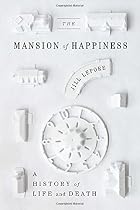
Be virtuous then and forward press,
To gain the seat of happiness.
Historian Jill Lepore begins her entertaining, enlightening, and disturbing "history of life and death" with the story of "games of life," board games initially designed to instill moral and Christian values in children; hence the one called "The Mansion of Happiness" from whose instructions comes the above quote. In 1860, Milton Bradley (yes, that Milton Bradley) introduced the Checkered Game of Life, which takes players from birth or just after to "happy old age." In earlier games, players advanced through virtue and fell back through sin, but in Bradley's game they lose by failing to take advantage of opportunities to succeed. As Lepore writes, "he took a game imported from India and made it into the story of America. He turned a game of knowledge into the path to prosperity." She goes on to note that with "the secularization of progress and the rise of individualism . . . the shape of a life was changing. . . . The sun still set at the end of every day, but now you could turn on the lights and day would never end. . . Novelty replaced redemption."
And so begins the collection of interconnected essays that, through portraits of individuals, their work, and their social environments, plot changes in our thinking, largely from the mid-1800s through the early and mid-20th century, about everything from birth to death, with mother's milk, children's literature, learning about sex, contraception, eugenics, marriage counseling, household efficiency, instructions for parents, old age, the right to die, and cryonics in between. In the course of these essays, she discusses the politicization of issues relating to the "rights" to life and death.
Lepore has the wonderful ability to take a point that seems obvious once she mentions it and then develop its implications. One that particularly struck me is that for centuries there was no concept of "parenthood" because adulthood implied parenthood since adults had lots of children and often died while there were still children at home. Older siblings helped care for younger siblings, and thus learned about baby and child care. But once women, especially educated and middle class women, started delaying marriage and children and reducing the size of their families, children grew up without the experience of caring for younger children and thus, when they became parents themselves, felt at a loss about what to do. Enter the concept of parenthood, the creation of Parents magazine, and the beginning of articles that promised to tell parents how they could avoid perils they previously never knew existed. Similarly, and largely for marketing purposes, the classical three ages of man (youth, adulthood, old age) have been extended to include adolescence (and now "tweens"), middle age, and more
I've been a fan of Jill Lepore since reading her more conventionally historical New York Burning: Liberty, Slavery, and Conspiracy in Eighteenth-Century Manhattan and her pointed and extremely witty The Whites of Their Eyes: The Tea Party's Revolution and the Battle over American History in which she debunks the founder obsession and anti-historical approach of the Tea Partiers. In fact, one of the things I love about Lepore is how witty she is, in addition to being insightful, thought-provoking, and readable. So I will end this review by quoting from the book, first from her introduction and then from her conclusion.
"A great many questions about life and death have no answers, including, notably, these three: How does life begin? What does it mean? What happens when you're dead? These questions are ancient; they riddle myths and legends; they lie at the heart of every religion; they animate a great deal of scientific research. No one has ever answered them and no one ever will, but everyone tries: trying is the human condition. All anyone can do is ask." (pp. xvi -xvii)
"I have come to believe that what people think about life and death has a good deal to do with how they think about the present and the past. Hiding between the covers of this book, then, lies a theory of history itself, and it is this: if history is the art of making an argument by telling a story about the dead, which is how I see it, the dead never die; they are merely forgotten or, especially if they are loved, remembered, quick as ever." p. 192
Be virtuous then and forward press,
To gain the seat of happiness.
Historian Jill Lepore begins her entertaining, enlightening, and disturbing "history of life and death" with the story of "games of life," board games initially designed to instill moral and Christian values in children; hence the one called "The Mansion of Happiness" from whose instructions comes the above quote. In 1860, Milton Bradley (yes, that Milton Bradley) introduced the Checkered Game of Life, which takes players from birth or just after to "happy old age." In earlier games, players advanced through virtue and fell back through sin, but in Bradley's game they lose by failing to take advantage of opportunities to succeed. As Lepore writes, "he took a game imported from India and made it into the story of America. He turned a game of knowledge into the path to prosperity." She goes on to note that with "the secularization of progress and the rise of individualism . . . the shape of a life was changing. . . . The sun still set at the end of every day, but now you could turn on the lights and day would never end. . . Novelty replaced redemption."
And so begins the collection of interconnected essays that, through portraits of individuals, their work, and their social environments, plot changes in our thinking, largely from the mid-1800s through the early and mid-20th century, about everything from birth to death, with mother's milk, children's literature, learning about sex, contraception, eugenics, marriage counseling, household efficiency, instructions for parents, old age, the right to die, and cryonics in between. In the course of these essays, she discusses the politicization of issues relating to the "rights" to life and death.
Lepore has the wonderful ability to take a point that seems obvious once she mentions it and then develop its implications. One that particularly struck me is that for centuries there was no concept of "parenthood" because adulthood implied parenthood since adults had lots of children and often died while there were still children at home. Older siblings helped care for younger siblings, and thus learned about baby and child care. But once women, especially educated and middle class women, started delaying marriage and children and reducing the size of their families, children grew up without the experience of caring for younger children and thus, when they became parents themselves, felt at a loss about what to do. Enter the concept of parenthood, the creation of Parents magazine, and the beginning of articles that promised to tell parents how they could avoid perils they previously never knew existed. Similarly, and largely for marketing purposes, the classical three ages of man (youth, adulthood, old age) have been extended to include adolescence (and now "tweens"), middle age, and more
I've been a fan of Jill Lepore since reading her more conventionally historical New York Burning: Liberty, Slavery, and Conspiracy in Eighteenth-Century Manhattan and her pointed and extremely witty The Whites of Their Eyes: The Tea Party's Revolution and the Battle over American History in which she debunks the founder obsession and anti-historical approach of the Tea Partiers. In fact, one of the things I love about Lepore is how witty she is, in addition to being insightful, thought-provoking, and readable. So I will end this review by quoting from the book, first from her introduction and then from her conclusion.
"A great many questions about life and death have no answers, including, notably, these three: How does life begin? What does it mean? What happens when you're dead? These questions are ancient; they riddle myths and legends; they lie at the heart of every religion; they animate a great deal of scientific research. No one has ever answered them and no one ever will, but everyone tries: trying is the human condition. All anyone can do is ask." (pp. xvi -xvii)
"I have come to believe that what people think about life and death has a good deal to do with how they think about the present and the past. Hiding between the covers of this book, then, lies a theory of history itself, and it is this: if history is the art of making an argument by telling a story about the dead, which is how I see it, the dead never die; they are merely forgotten or, especially if they are loved, remembered, quick as ever." p. 192
96pamelad
Witty, insightful and thought-provoking might be a bit hard to resist. Adding it to the wishlist.
97rebeccanyc
51. Dreams and Stones by Magdalena Tulli

When I read Tulli's In Red last year, I was so absorbed in her creation of an unreal world filled with clearly envisioned people, beautiful writing, and illusion and allusion that I nearly missed my subway stop twice. This novella, her first, also is filled with beautifully poetic writing and illusion and allusion, but I never got that absorbed in it. I am impressed by what Tulli has accomplished, but I am quite sure that I really didn't understand a lot of it.
The book describes the creation, life, and decay of an unnamed city which, as the novella progresses, appears to be a mythical version of Warsaw (described as a city with the straight lines of W's and A's in its name). In the beginning, the dichotomy of tree-like growth (natural, uncontrolled, always branching, balanced by an equally large root system) versus machine-made growth (human-directed, controlled, always increasing, balanced by an "anti-city") is established, and later the dichotomy of dreams and stones. At times the city seems to grow to encompass the world, and the skies and the stars; at times later in the book, it both seems to contain other (named) cities and to be apart from them. There are times when the mood of the people is described, but they are always spoken of generally; there are no individual characters. This description is much more straightforward than the book itself!
As the city grows, there were places where I felt Tulli was commenting on some of the history and politics of Warsaw and Poland itself, although I am not familiar enough with that to catch more than a few allusions. Certainly the determination to destroy the anti-city could allude to the communist era, as could the awards for manual and machine workers who accomplished a lot in little time. The choice of train lines heading east (to Russia) or west (to Paris) could refer to different pulls on the Polish people. But I have to stress that all of this happens in the most allusive way, so it is possible to understand it in different ways.
Tulli's writing is poetic, and a delight to read, and this book is more a collection of imagery and a parable than a novel. Some of the recurring images and ideas are architecture and lines (straight versus meandering), shifts in time and space (also true of In Red), the ephemeral quality of dreams (and us?) and the permanence of stone. Other readers have commented that Tulli has translated Calvino and that there are echoes of his Invisible Cities in this book; I have that on the TBR and will get to it soon.
All in all, I am glad I read this book, but I'm especially glad I read In Red first, as I would not have been so enthusiastic about Tulli I had come to this one first.

When I read Tulli's In Red last year, I was so absorbed in her creation of an unreal world filled with clearly envisioned people, beautiful writing, and illusion and allusion that I nearly missed my subway stop twice. This novella, her first, also is filled with beautifully poetic writing and illusion and allusion, but I never got that absorbed in it. I am impressed by what Tulli has accomplished, but I am quite sure that I really didn't understand a lot of it.
The book describes the creation, life, and decay of an unnamed city which, as the novella progresses, appears to be a mythical version of Warsaw (described as a city with the straight lines of W's and A's in its name). In the beginning, the dichotomy of tree-like growth (natural, uncontrolled, always branching, balanced by an equally large root system) versus machine-made growth (human-directed, controlled, always increasing, balanced by an "anti-city") is established, and later the dichotomy of dreams and stones. At times the city seems to grow to encompass the world, and the skies and the stars; at times later in the book, it both seems to contain other (named) cities and to be apart from them. There are times when the mood of the people is described, but they are always spoken of generally; there are no individual characters. This description is much more straightforward than the book itself!
As the city grows, there were places where I felt Tulli was commenting on some of the history and politics of Warsaw and Poland itself, although I am not familiar enough with that to catch more than a few allusions. Certainly the determination to destroy the anti-city could allude to the communist era, as could the awards for manual and machine workers who accomplished a lot in little time. The choice of train lines heading east (to Russia) or west (to Paris) could refer to different pulls on the Polish people. But I have to stress that all of this happens in the most allusive way, so it is possible to understand it in different ways.
Tulli's writing is poetic, and a delight to read, and this book is more a collection of imagery and a parable than a novel. Some of the recurring images and ideas are architecture and lines (straight versus meandering), shifts in time and space (also true of In Red), the ephemeral quality of dreams (and us?) and the permanence of stone. Other readers have commented that Tulli has translated Calvino and that there are echoes of his Invisible Cities in this book; I have that on the TBR and will get to it soon.
All in all, I am glad I read this book, but I'm especially glad I read In Red first, as I would not have been so enthusiastic about Tulli I had come to this one first.
98janeajones
Thoughtful review of Dreams and Stones, Rebecca -- I'd like to read it, but I think I'm with you in being grateful for having read In Red first. Still it's good that her books are being translated into English.
99rebeccanyc
I agree, Jane. I'll probably succumb and buy her other novels that have been translated into English, but I think I'll try to read the Calvino first.
100baswood
Intriguing review of Dreams and Stones, but I note that you say that In Red is the better book
101DieFledermaus
Excellent review of The Mansion of Happiness which sounds very intriguing.
I read Dreams and Stones also and really loved it - I ordered Flaw and Moving Parts soon after. It's not, as you say, straightforward and couldn't really be said to have much of a plot or characters but the writing was wonderful. It probably helped that I read the whole book over one weekend - not a lot of breaks in the book so a bit hard to pick up again. It did indeed remind me of Calvino - also Bruno Schulz, who similarly combines gorgeous prose with surreal and plotless plots. I will definitely have to get In Red soon.
A good review - it sounds to me like you understood a lot of it and I'm sure the author meant for the book to be open to multiple interpretations.
I read Dreams and Stones also and really loved it - I ordered Flaw and Moving Parts soon after. It's not, as you say, straightforward and couldn't really be said to have much of a plot or characters but the writing was wonderful. It probably helped that I read the whole book over one weekend - not a lot of breaks in the book so a bit hard to pick up again. It did indeed remind me of Calvino - also Bruno Schulz, who similarly combines gorgeous prose with surreal and plotless plots. I will definitely have to get In Red soon.
A good review - it sounds to me like you understood a lot of it and I'm sure the author meant for the book to be open to multiple interpretations.
102rebeccanyc
Thanks, DieF. I too read it over the weekend, and I don't feel I understood it, but I'm glad you think I did!
Barry, In Red was certainly more comprehensible, and included actual characters, which helped. Dreams and Stones was her first work, and I believe In Red her most recent.
Barry, In Red was certainly more comprehensible, and included actual characters, which helped. Dreams and Stones was her first work, and I believe In Red her most recent.
103bragan
The Mansion of Happiness sounds fascinating. I think that's one to add to the wishlist.
104dchaikin
Terrific reviews this past weekend - I agree with pamelad, DieFledermaus, bragan, baswood, your review of The Mansion of Happiness, and its efforts to "plot changes in our thinking" has made it very attractive.
105rebeccanyc
I'm reposting here the message I posted over in the Best Reads of the 2nd Quarter thread, and adding some thoughts about my reading below. It's unlikely that I'll finish any of of the books I'm reading before the end of the month.
Before anyone expresses shock that I read 26 books this quarter, I'll point out that 13 of them were the Inspector Montalbano mysteries by Andrea Camilleri that I became addicted to and devoured (only one left . . . but I see there are four more that haven't been translated into English yet, so there's hope). Other than them, and a few others, I had more than the usual number of reading disappointments over the past three months. I'm hopeful that I'm turning that around, as I'm in the midst of two very compelling reads that I won't finish in the days that remain of this month, Memoirs of a Revolutionary by Victor Serge and The Rebel Angels, the first volume of Robertson Davies's The Cornish Trilogy.
So here's the way I come out for the quarter.
Favorite Contemporary Fiction
The Inspector Montalbano mysteries by Andrea Camilleri Wonderful characters, a wry sense of humor, luscious food, and a detective who tries to do the right thing.
Favorite Reread of a Classic
The Master and Margarita by Mikhail Bulgakov One of my all-time favorites that certainly bore rereading.
Most Ambitious but Mystifying Reads
Dreams and Stones by Magdalena Tulli Beautiful prose, interesting ideas.
The Box Man by Kobo Abe Endlessly puzzling, and not entirely to my taste.
Most Ambitious yet Flawed Read
Europe Central by William T. Vollman At times breathtaking, at times tedious.
Less Ambitious but Flawed Read
Narcopolis by Jeet Thayil A poetic portrait of a former world of opium dens in Bombay which failed (for me) when it tried to make changes in drug use into a metaphor for broader changes.
Favorite Nonfiction
The Mansion of Happiness: A History of Life and Death by Jill Lepore One of my favorite writers, with fascinating insights and history.
Runner-Up Nonfiction
Where China Meets India: Burma and the New Crossroads of Asia by Thant Myint-U Fascinating exploration of a little known area, although not quite what the title suggests.
Most Surprising Read That I Actually Enjoyed
World War Z: An Oral History of the Zombie War Yes, there are zombies, but it's more about how people react to disaster.
Books That Weren't as Great as I Had Hoped Based on the Author's Previous Work
The Dream of the Celt by Mario Vargas Llosa Not quite biography, not quite fiction, and more straightforward than Vargas Llosa's usual work.
Day of the Oprichnik by Vladimir Sorokin It would be hard to top Ice Trilogy, and Sorokin didn't.
Biggest Dud
How to Write a Sentence; and How to Read One by Stanley Fish I really only skimmed this because it annoyed me so.
As to thoughts about my reading, clearly I've been consumed by Camilleri, which throws all the statistics off. Counting all 13 of them as one, for a total of 14 reads:
9 were by non-US, non-UK authors, nearly all European: Poland (1), Italy ("1"), Iceland (1), Russia (2), Peru (1), India (1), Japan (2). I would like to read more widely around the world.
3 were by women, a disturbingly low number.
3 were nonfiction.
Only 3 books, aside from my reread, had been on my TBR for more than 3 months, and only 2 for more than 6 months, another sad statistic.
Before anyone expresses shock that I read 26 books this quarter, I'll point out that 13 of them were the Inspector Montalbano mysteries by Andrea Camilleri that I became addicted to and devoured (only one left . . . but I see there are four more that haven't been translated into English yet, so there's hope). Other than them, and a few others, I had more than the usual number of reading disappointments over the past three months. I'm hopeful that I'm turning that around, as I'm in the midst of two very compelling reads that I won't finish in the days that remain of this month, Memoirs of a Revolutionary by Victor Serge and The Rebel Angels, the first volume of Robertson Davies's The Cornish Trilogy.
So here's the way I come out for the quarter.
Favorite Contemporary Fiction
The Inspector Montalbano mysteries by Andrea Camilleri Wonderful characters, a wry sense of humor, luscious food, and a detective who tries to do the right thing.
Favorite Reread of a Classic
The Master and Margarita by Mikhail Bulgakov One of my all-time favorites that certainly bore rereading.
Most Ambitious but Mystifying Reads
Dreams and Stones by Magdalena Tulli Beautiful prose, interesting ideas.
The Box Man by Kobo Abe Endlessly puzzling, and not entirely to my taste.
Most Ambitious yet Flawed Read
Europe Central by William T. Vollman At times breathtaking, at times tedious.
Less Ambitious but Flawed Read
Narcopolis by Jeet Thayil A poetic portrait of a former world of opium dens in Bombay which failed (for me) when it tried to make changes in drug use into a metaphor for broader changes.
Favorite Nonfiction
The Mansion of Happiness: A History of Life and Death by Jill Lepore One of my favorite writers, with fascinating insights and history.
Runner-Up Nonfiction
Where China Meets India: Burma and the New Crossroads of Asia by Thant Myint-U Fascinating exploration of a little known area, although not quite what the title suggests.
Most Surprising Read That I Actually Enjoyed
World War Z: An Oral History of the Zombie War Yes, there are zombies, but it's more about how people react to disaster.
Books That Weren't as Great as I Had Hoped Based on the Author's Previous Work
The Dream of the Celt by Mario Vargas Llosa Not quite biography, not quite fiction, and more straightforward than Vargas Llosa's usual work.
Day of the Oprichnik by Vladimir Sorokin It would be hard to top Ice Trilogy, and Sorokin didn't.
Biggest Dud
How to Write a Sentence; and How to Read One by Stanley Fish I really only skimmed this because it annoyed me so.
As to thoughts about my reading, clearly I've been consumed by Camilleri, which throws all the statistics off. Counting all 13 of them as one, for a total of 14 reads:
9 were by non-US, non-UK authors, nearly all European: Poland (1), Italy ("1"), Iceland (1), Russia (2), Peru (1), India (1), Japan (2). I would like to read more widely around the world.
3 were by women, a disturbingly low number.
3 were nonfiction.
Only 3 books, aside from my reread, had been on my TBR for more than 3 months, and only 2 for more than 6 months, another sad statistic.
106labfs39
Thank you for sharing your statistics, Rebecca. I love tallying my own stats and reading other people's. Don't be too hard on yourself about the European men factor. We all have fluctuations in what we read. Think how boring it would be to assign ourselves books solely on the stat factor! I look forward to seeing what next quarter brings.
P.S. I love your categories up above.
P.S. I love your categories up above.
107zenomax
Looking forward to your review of Victor Serge. I read Conquered City whilst at university but haven't come across any of his books since.
Tulli sounds really interesting - I will try to follow up, you made Dreams and Stones sound quite an attractive book to me, despite your reservations...
Tulli sounds really interesting - I will try to follow up, you made Dreams and Stones sound quite an attractive book to me, despite your reservations...
108rebeccanyc
106 Thanks, Lisa. I tend to pick up books based on which ones are "calling to me" and somewhat lighter reads have been calling to me lately. As for the categories, I made them up to fit the books, since I didn't feel I could do the usual five, or ten, or whatever best.
107 Thanks, Zeno. The first Serge I read was The Case of Comrade Tulayev, and I subsequently read Unforgiving Years and Conquered City. All of these are available in NYRB editions, as is the very recently released Memoirs of a Revolutionary (an earlier release was abridged, because the original English language publisher felt the entire manuscript was too long). It is particularly interesting because I've read a fair amount about the Russian revolution and the Stalinist era over the past several years, both fiction and nonfiction. It is my subway read, and I'm not sure whether I'll convert it to a regular read when I'm not working next week.
As for Tulli, I understood In Red a lot better than Dreams and Stones, and was quite captivated by it.
107 Thanks, Zeno. The first Serge I read was The Case of Comrade Tulayev, and I subsequently read Unforgiving Years and Conquered City. All of these are available in NYRB editions, as is the very recently released Memoirs of a Revolutionary (an earlier release was abridged, because the original English language publisher felt the entire manuscript was too long). It is particularly interesting because I've read a fair amount about the Russian revolution and the Stalinist era over the past several years, both fiction and nonfiction. It is my subway read, and I'm not sure whether I'll convert it to a regular read when I'm not working next week.
As for Tulli, I understood In Red a lot better than Dreams and Stones, and was quite captivated by it.
109mdoris
Just finished a gobble of Camilleri's The Age of Doubt. I see that you are a big fan. Have you seen all the episodes (22 in total so far) made from his books into DVDs? They are wonderful. Our local library has them all.
110rebeccanyc
109, Yes, I've become addicted to Camilleri just over the past two months, and only have one left! I tried to rent the Montalbano series from Netflix, but Netflix doesn't even know they exist. I balked at the price of buying them, so I may have to check the library (don't even know if it has DVDs as, I blush to admit, I haven't been in it in years).
111rebeccanyc
52. The Age of Doubt by Andrea Camilleri

Interrupting my tome reading with some lighter fare, I've now finished the most recent Montalbano mystery to be translated into English. Fortunately, LT's series page tells me there are four more that are as yet untranslated. Camilleri has also written a variety of other works, but none of them have been translated into English . . .yet!

Interrupting my tome reading with some lighter fare, I've now finished the most recent Montalbano mystery to be translated into English. Fortunately, LT's series page tells me there are four more that are as yet untranslated. Camilleri has also written a variety of other works, but none of them have been translated into English . . .yet!
112Trifolia
Hi Rebecca, given the enthusiasm with which you have read the Camillieri-books, you might want to learn Italian, just in case the books don't get translated anymore :-). It's a relief to see that even a "serious reader" like yourself does enjoy the lighter stuff as well. It makes me feel less guilty.
113rebeccanyc
Very funny, Monica! I'm not concerned about the remaining Montalbanos being translated into English, but I tend to doubt the others will be. Not sure if I'm up to learning Italian seriously. I learned a little before I visited Italy back in the 80s and between that and my knowledge of French (much better then than it is now), I could read descriptions in galleries, etc. For talking however, I had to resort to English or French (which a lot of people in Italy seemed to know, sort of, back then), and this mostly worked, except when I got something horrifying for dinner one night that wasn't at all what I thought I had ordered!
114rebeccanyc
53. Memoirs of a Revolutionary by Victor Serge

Victor Serge was born in exile in Belgium in 1890 and died in exile in Mexico in 1947. In between, he was jailed at least three times (once in France, twice in the Soviet Union) and internally deported to Orenburg in the the Ural Mountains, fled Paris just ahead of the Nazis, and barely made it out of occupied France. Also in between, he participated in the innermost circles of the Russian Revolution, fighting in one of the fiercest battles of the civil war, going on foreign missions for the Communist Party, and having access to both Lenin and Trotsky, before becoming disillusioned by the totalitarian turn the Communists took and, ultimately, by that same authoritarian trait in Trotsky. Throughout all this time, he was writing, with his work mostly published in western Europe.
Born of Russian parents who fled to the west because of their own revolutionary activities, Serge became interested in socialist and anarchist politics as a teenager and began his life-long connections with most of the European activists and revolutionaries of the first part of the 20th century. After being jailed in France, he traveled to Spain and met Catalan rebels, returned to Paris, and wound up in St. Petersburg (then Petrograd, later Leningrad), at the Finland Station, in 1919. In the course of his years in the Soviet Union, he not only clearly saw the perils and evils of the path the Bolsheviks were taking, but spoke up about them, as a member of the so-called Left Oppositionists that initially clustered around Trotsky. The inevitable happened: he was jailed, then released, jailed again, and then sent to Orenburg, where he was allowed his books and his family, but where starvation was never far away. Because of his western citizenship, and because his writing was published in France and elsewhere, the Soviets were under pressure to release him, and he was ultimately expelled to the west. Once there, his life was made difficult not only by the anti-communists but also by the left, because he was persona non grata for having criticized what was going on in the Soviet Union and both Stalin and Trotsky. Nonetheless, he maintained his connections to a vast network of socialists and others who, like him, believed in democracy, free speech, and the rights of the individual as well as social revolution.
What makes this book so fascinating, in addition to Serge's presence at some of the seminal events of the last century and in addition to his sparkling writing (also evident in his excellent novels), is his amazingly clear perception of what was really taking place, when the vision of so many others was clouded by wishful thinking; his total commitment to tolerance and individual freedom; his ability to continue to look to the future despite the horrors he personally endured; his remarkable prescience and psychological/political insight (e.g., of why Stalin had to kill off the entire first generation of Bolshevik revolutionaries, and of the direction the second world war would take); his sharp portraits of dozens and dozens of people, some I'd heard of and many more I hadn't; and the broad perspective it opened up for me of the extent of the revolutionary activity in Europe and the mixed reaction to that by the Soviets (e.g., they appeared to help the republicans in the Spanish Civil War by sending them arms, while at the same time killing all the leaders who didn't toe the Stalinist line).
Serge clearly saw that the world had changed after the First World War, and that it was once again heading to disaster with the Second. Nonetheless, he believed in progress, perhaps slow and halting, but inevitable. As he says in the final section of his memoirs:
"The men of my generation -- those born around 1890 -- above all the Europeans among them, cannot help the sensation of having lived on a frontier where one world ends and another begins. . . . I have seen the face of Europe change several times. . . .
"Here we are, with the nightmare of war behind us, but without peace having been made, without a feeling of man's deliverance, without even a vague reawakening of the great hopes that signaled the end of the First World War. We feel trapped between the aggressive crushing power of a totalitarianism born of born of a victorious socialist revolution and the routines of an old society committed, in spite of itself, to changes it refuses to recognize. On both sides, primitive man, barbaric and narrow-minded, greedy and mendacious, is working against better man. . . .
"The future seems to me, despite the clouds on the horizon, to be filled with possibilities vaster than any we have glimpsed in the past. The passion, the experience, and even the errors of my fighting generation may perhaps illumine the way forward, but on one condition, which has become a categorical imperative: never to give up the defense of man against systems whose plans crush the individual." pp. 446- 447, NYRB edition
The NYRB edition I read is the first complete translation of this book; the publisher of an earlier edition forced the translator to cut a significant portion of the text because he thought it was too long. For this edition, a new translator uncovered the deleted portions and retranslated them, but I couldn't tell where one translation merged into another. The edition is also enhanced by a lengthy glossary of people and revolutionary movements, and by drawings by Serge's son Vlady, an artist, as well as by photographs.

Victor Serge was born in exile in Belgium in 1890 and died in exile in Mexico in 1947. In between, he was jailed at least three times (once in France, twice in the Soviet Union) and internally deported to Orenburg in the the Ural Mountains, fled Paris just ahead of the Nazis, and barely made it out of occupied France. Also in between, he participated in the innermost circles of the Russian Revolution, fighting in one of the fiercest battles of the civil war, going on foreign missions for the Communist Party, and having access to both Lenin and Trotsky, before becoming disillusioned by the totalitarian turn the Communists took and, ultimately, by that same authoritarian trait in Trotsky. Throughout all this time, he was writing, with his work mostly published in western Europe.
Born of Russian parents who fled to the west because of their own revolutionary activities, Serge became interested in socialist and anarchist politics as a teenager and began his life-long connections with most of the European activists and revolutionaries of the first part of the 20th century. After being jailed in France, he traveled to Spain and met Catalan rebels, returned to Paris, and wound up in St. Petersburg (then Petrograd, later Leningrad), at the Finland Station, in 1919. In the course of his years in the Soviet Union, he not only clearly saw the perils and evils of the path the Bolsheviks were taking, but spoke up about them, as a member of the so-called Left Oppositionists that initially clustered around Trotsky. The inevitable happened: he was jailed, then released, jailed again, and then sent to Orenburg, where he was allowed his books and his family, but where starvation was never far away. Because of his western citizenship, and because his writing was published in France and elsewhere, the Soviets were under pressure to release him, and he was ultimately expelled to the west. Once there, his life was made difficult not only by the anti-communists but also by the left, because he was persona non grata for having criticized what was going on in the Soviet Union and both Stalin and Trotsky. Nonetheless, he maintained his connections to a vast network of socialists and others who, like him, believed in democracy, free speech, and the rights of the individual as well as social revolution.
What makes this book so fascinating, in addition to Serge's presence at some of the seminal events of the last century and in addition to his sparkling writing (also evident in his excellent novels), is his amazingly clear perception of what was really taking place, when the vision of so many others was clouded by wishful thinking; his total commitment to tolerance and individual freedom; his ability to continue to look to the future despite the horrors he personally endured; his remarkable prescience and psychological/political insight (e.g., of why Stalin had to kill off the entire first generation of Bolshevik revolutionaries, and of the direction the second world war would take); his sharp portraits of dozens and dozens of people, some I'd heard of and many more I hadn't; and the broad perspective it opened up for me of the extent of the revolutionary activity in Europe and the mixed reaction to that by the Soviets (e.g., they appeared to help the republicans in the Spanish Civil War by sending them arms, while at the same time killing all the leaders who didn't toe the Stalinist line).
Serge clearly saw that the world had changed after the First World War, and that it was once again heading to disaster with the Second. Nonetheless, he believed in progress, perhaps slow and halting, but inevitable. As he says in the final section of his memoirs:
"The men of my generation -- those born around 1890 -- above all the Europeans among them, cannot help the sensation of having lived on a frontier where one world ends and another begins. . . . I have seen the face of Europe change several times. . . .
"Here we are, with the nightmare of war behind us, but without peace having been made, without a feeling of man's deliverance, without even a vague reawakening of the great hopes that signaled the end of the First World War. We feel trapped between the aggressive crushing power of a totalitarianism born of born of a victorious socialist revolution and the routines of an old society committed, in spite of itself, to changes it refuses to recognize. On both sides, primitive man, barbaric and narrow-minded, greedy and mendacious, is working against better man. . . .
"The future seems to me, despite the clouds on the horizon, to be filled with possibilities vaster than any we have glimpsed in the past. The passion, the experience, and even the errors of my fighting generation may perhaps illumine the way forward, but on one condition, which has become a categorical imperative: never to give up the defense of man against systems whose plans crush the individual." pp. 446- 447, NYRB edition
The NYRB edition I read is the first complete translation of this book; the publisher of an earlier edition forced the translator to cut a significant portion of the text because he thought it was too long. For this edition, a new translator uncovered the deleted portions and retranslated them, but I couldn't tell where one translation merged into another. The edition is also enhanced by a lengthy glossary of people and revolutionary movements, and by drawings by Serge's son Vlady, an artist, as well as by photographs.
115janeajones
Great review, Rebecca.
116labfs39
Fascinating review. It sounds as though it would dovetail nicely with the more pedestrian John Russell series by David Downing that I have been reading. The main character, Russell, was born roughly the same time as Serge. Raised in England, Russell was drafted into the trench wars of WWI and completely disillusioned in his government, moved to Germany, became a communist, participated in the 1924 Soviet Party Congress, where things looked so hopeful, and then lived in Berlin throughout the Nazi years and subsequent Russian invasion. He reflects, less eloquently than Serge, on the changes his generation have wrought and had to live through in so few years.
117rebeccanyc
Thanks, Jane and Lisa. That does sound interesting, Lisa; I take it, it's fiction, right?
118labfs39
It is. So far there are five books, each named after a train station in 1940s Berlin: Zoo Station, Silesian Station, etc. Although they are okay historical fiction, only the third one was particularly good so far, IMO. I think there is potential for so much more substance. Yet I keep reading them. Good for planes and summer, I guess. I only brought them up because of the thematic connection with Memoirs of a Revolutionary, which I hope to find soon.
119baswood
Great review rebecca, Memoirs of a revolutionary sounds like a must read, especially for those of us whose politics are left of centre. I had not heard of Victor Serge, sounds to me he was a brave and courageous person, who wrote and talked a lot of sense. It's on my to buy list
120pamelad
The Case of Comrade Tulayev is already on my Book Depository wishlist after an earlier review of yours, Rebecca, and Memoirs of a Revolutionary will join it. Great review. NYRB is releasing some brilliant books.
121kidzdoc
Fabulous review of Memoirs of a Revolutionary, Rebecca. I was disappointed that I didn't receive it as part of my NYRB Book Club subscription; I was sent Confusion by Stefan Zweig instead, which was the least favorite book of his that I've read. I'll add Serge's book to my wish list.
122rebeccanyc
Thanks, Barry, Pam, and Darryl. I've been reading Victor Serge since I read The Case of Comrade Tulayev several years ago, and as NYRB has gradually been bringing out his books. I can also highly recommend Unforgiving Years and Conquered City. I am even more impressed by him now that I've read the Memoirs.
123JDHomrighausen
Interesting review, Rebecca. History and politics aren't my usual reading areas but it still sounds like a good read.
124DieFledermaus
Fantastic review of Memoirs of a Revolutionary - adding it to the list. I knew NYRB had been putting out more by Serge but I hadn't heard of this one. I enjoyed Unforgiving Years and have The Case of Comrade Tulayev on the shelf.
I'm currently reading Stalin: the Court of the Red Tsar, a look at Stalin's inner circle, which was based on copious letters and documents by Stalin and co. and it sounds like Memoirs of a Revolutionary would provide an interesting point of view on many of the people and actions covered.
I'm currently reading Stalin: the Court of the Red Tsar, a look at Stalin's inner circle, which was based on copious letters and documents by Stalin and co. and it sounds like Memoirs of a Revolutionary would provide an interesting point of view on many of the people and actions covered.
126rebeccanyc
Thanks, DieF. This one was only released this spring and I snapped it up (coincidentally, when I went to my catalog to note that I had finished it, I noticed that I bought it on May Day!). I can thoroughly recommend everything by Serge I've read.
Serge fell out with the ruling party even before Stalin took power from Lenin, so I'm not sure how many of the in crowd he may mention -- he hangs out more with the opposition. But I would like to read a newer biography of Stalin than Hitler and Stalin, fascinating though that was, as it was written before material from the Soviet archives was available. I'll be interested in your thoughts on Stalin: The Court of the Red Tsar
And thanks, lilbrattyteen, for stopping by. Oh, and Dan too -- you posted while I was posting.
Serge fell out with the ruling party even before Stalin took power from Lenin, so I'm not sure how many of the in crowd he may mention -- he hangs out more with the opposition. But I would like to read a newer biography of Stalin than Hitler and Stalin, fascinating though that was, as it was written before material from the Soviet archives was available. I'll be interested in your thoughts on Stalin: The Court of the Red Tsar
And thanks, lilbrattyteen, for stopping by. Oh, and Dan too -- you posted while I was posting.
127SassyLassy
Adding my applause for your review. This book is in the house and I'm anxious to read it.
128labfs39
I would like to read a newer biography of Stalin than Hitler and Stalin, fascinating though that was. I agree; let me know when you find one. ;-)
129rebeccanyc
Today is my 6th LT anniversary, and it is hard to believe that six years have passed since I discovered this wonderful site and then all you wonderful people who try so hard to increase my TBR pile! Seriously, I can't imagine how I ever lived without LT; I have enjoyed "meeting" so many of you and the scope of my reading has expanded thanks to all your reviews and recommendations. Thank you!
In LT tradition, I have visited a few bookstores over the past few days, and between them and an Amazon order I have acquired (or will, when Amazon delivers) the six books to celebrate these six years. Here they are.
Phantoms on the Bookshelves by Jacques Bonnot
The Expendable Man by Dorothy B. Hughes
The Colonel by Mahmoud Dowlatabadi
The New Jim Crow by Michelle Alexander
The Salterton Trilogy by Robertson Davies
Globalectics: Theory and the Politics of Knowing by Ngugi wa Thiong'o
Here's to the next six! Happy reading to all!
In LT tradition, I have visited a few bookstores over the past few days, and between them and an Amazon order I have acquired (or will, when Amazon delivers) the six books to celebrate these six years. Here they are.
Phantoms on the Bookshelves by Jacques Bonnot
The Expendable Man by Dorothy B. Hughes
The Colonel by Mahmoud Dowlatabadi
The New Jim Crow by Michelle Alexander
The Salterton Trilogy by Robertson Davies
Globalectics: Theory and the Politics of Knowing by Ngugi wa Thiong'o
Here's to the next six! Happy reading to all!
130rebeccanyc
Thanks, SL, and Lisa, I thought you might know of one! But I'll let you know if I find one.
131rebeccanyc
54 - 56 The Cornish Trilogy by Robertson Davies
54. The Rebel Angels
55. What's Bred in the Bone
56. The Lyre of Orpheus

Above all, Robertson Davies is a story teller. Even at his most scholarly (and he can be scholarly), his vividly drawn characters and wizardly plotting propel his narrative forward and delight the reader. While his subjects can be serious, he writes with verve and a wonderful sense of humor.
The three books in this trilogy are linked by the characters, particularly by Francis Cornish (who is dead for the entire first and third novels), as well as thematically. They focus on art in many of its forms (literature, painting and drawing, and music and theater), explore myth and the mystical, delve into psychology, theology, and history, educate the reader about subjects as diverse as gypsy techniques for restoring violins and art restorers' techniques for matching older paints, play with ideas about what is real and what is fake, treat readers to the conversations and thoughts of daimons and souls in limbo, and poke fun at the conventional and the respectable. Davies achieves the admirable goal of making the reader think and laugh at the same time, and become fond of the characters -- the major ones and the dozens of minor ones -- and their foibles.
I am going to briefly describe each of the novels, with the caveat that each could be discussed at infinite depth.
The Rebel Angels
The first novel introduces most of the major characters of the trilogy soon after Francis Cornish, an eccentric and rich art collector and connoisseur, has died. He had appointed three of the characters, all affiliated with the College of St. John and the Holy Ghost, affectionately known as Spook, to essentially act as his artistic executors. That narrative of one of them, Simon Darcourt, an Episcopal priest who has become a college professor, alternates with the narrative of Maria Theotoky, a brilliant and beautiful graduate student, the daughter of a gypsy mother, who is pining away for the professor she works for (another of the executors) while pursuing her studies of Rabelais. The plot thickens with a missing and valuable manuscript and the reappearance of a disgraced former professor.
The world of academia and the world of the gypsy mother and her tarot cards provide a fertile field for Davies as he explores, in various guises, the alchemical process of creating gold from base materials (some very literal base materials, in fact). As always with Davies, the story, which veers towards the melodramatic at the end of this novel, exists on several levels -- the literal, the psychological, and the mythical -- and gives him ample opportunity to skewer academic pretension and the implacable ignorance of those who think everything must serve a practical purpose.
What's Bred in the Bone
In the second novel of the trilogy, Davies steps back to explore (with the aid of the daimon Maimas and the Lesser Zadakiel, the Angel of Biography), the life of Francis Cornish from his beginnings in a remote and backwards logging town to his time in Europe before, during, and after the Second World War, and his subsequent return to Canada. It is a story of a child learning to understand his world and its secrets, largely on his own, and largely through drawing; of a young man who is introduced to secrets of other kinds, artistic and otherwise, while suffering from discovering some of the secrets of love. Again, we the see the transformation of material objects, from paintings that are mediocre to ones that are better, to an exchange for something still better, and we see Francis's transformation into an artist and a lover, both, however, briefly. And, again, we see Davies' wit and humor, and his penetrating psychological and mystical insight
The Lyre of Orpheus
In the final novel of the trilogy, Maria from the first novel has married Arthur Cornish, Francis Cornish's nephew and heir, and they have established a foundation to carry out Francis's legacy. Their first project is supporting an unformed but brilliant young musician who is attempting to fulfill the requirements for her doctorate by completing an unfinished opera about King Arthur by E. T. A. Hoffman. At the same time, Simon Darcourt, again from the first novel, is struggling with his biography of Francis, also commissioned by the foundation, because he doesn't know, what readers of the second novel know, about Francis's wartime years in Europe.
The creation of the opera gives Davies free rein to depict the artistic and theatrical processes, explore connections between the contemporary characters and those of the Arthurian legend, introduce some wonderful new characters to the mix, and allow some familiar characters the opportunity to grow and discover themselves. Towards the very end, Davies quotes Keats: "A Man's life of any worth is a continual allegory -- and very few can see the Mystery of his life." Davies' genius is that he lets us see the mystery and the allegorical aspects of his characters while keeping their feet firmly on the ground of this world.
54. The Rebel Angels
55. What's Bred in the Bone
56. The Lyre of Orpheus

Above all, Robertson Davies is a story teller. Even at his most scholarly (and he can be scholarly), his vividly drawn characters and wizardly plotting propel his narrative forward and delight the reader. While his subjects can be serious, he writes with verve and a wonderful sense of humor.
The three books in this trilogy are linked by the characters, particularly by Francis Cornish (who is dead for the entire first and third novels), as well as thematically. They focus on art in many of its forms (literature, painting and drawing, and music and theater), explore myth and the mystical, delve into psychology, theology, and history, educate the reader about subjects as diverse as gypsy techniques for restoring violins and art restorers' techniques for matching older paints, play with ideas about what is real and what is fake, treat readers to the conversations and thoughts of daimons and souls in limbo, and poke fun at the conventional and the respectable. Davies achieves the admirable goal of making the reader think and laugh at the same time, and become fond of the characters -- the major ones and the dozens of minor ones -- and their foibles.
I am going to briefly describe each of the novels, with the caveat that each could be discussed at infinite depth.
The Rebel Angels
The first novel introduces most of the major characters of the trilogy soon after Francis Cornish, an eccentric and rich art collector and connoisseur, has died. He had appointed three of the characters, all affiliated with the College of St. John and the Holy Ghost, affectionately known as Spook, to essentially act as his artistic executors. That narrative of one of them, Simon Darcourt, an Episcopal priest who has become a college professor, alternates with the narrative of Maria Theotoky, a brilliant and beautiful graduate student, the daughter of a gypsy mother, who is pining away for the professor she works for (another of the executors) while pursuing her studies of Rabelais. The plot thickens with a missing and valuable manuscript and the reappearance of a disgraced former professor.
The world of academia and the world of the gypsy mother and her tarot cards provide a fertile field for Davies as he explores, in various guises, the alchemical process of creating gold from base materials (some very literal base materials, in fact). As always with Davies, the story, which veers towards the melodramatic at the end of this novel, exists on several levels -- the literal, the psychological, and the mythical -- and gives him ample opportunity to skewer academic pretension and the implacable ignorance of those who think everything must serve a practical purpose.
What's Bred in the Bone
In the second novel of the trilogy, Davies steps back to explore (with the aid of the daimon Maimas and the Lesser Zadakiel, the Angel of Biography), the life of Francis Cornish from his beginnings in a remote and backwards logging town to his time in Europe before, during, and after the Second World War, and his subsequent return to Canada. It is a story of a child learning to understand his world and its secrets, largely on his own, and largely through drawing; of a young man who is introduced to secrets of other kinds, artistic and otherwise, while suffering from discovering some of the secrets of love. Again, we the see the transformation of material objects, from paintings that are mediocre to ones that are better, to an exchange for something still better, and we see Francis's transformation into an artist and a lover, both, however, briefly. And, again, we see Davies' wit and humor, and his penetrating psychological and mystical insight
The Lyre of Orpheus
In the final novel of the trilogy, Maria from the first novel has married Arthur Cornish, Francis Cornish's nephew and heir, and they have established a foundation to carry out Francis's legacy. Their first project is supporting an unformed but brilliant young musician who is attempting to fulfill the requirements for her doctorate by completing an unfinished opera about King Arthur by E. T. A. Hoffman. At the same time, Simon Darcourt, again from the first novel, is struggling with his biography of Francis, also commissioned by the foundation, because he doesn't know, what readers of the second novel know, about Francis's wartime years in Europe.
The creation of the opera gives Davies free rein to depict the artistic and theatrical processes, explore connections between the contemporary characters and those of the Arthurian legend, introduce some wonderful new characters to the mix, and allow some familiar characters the opportunity to grow and discover themselves. Towards the very end, Davies quotes Keats: "A Man's life of any worth is a continual allegory -- and very few can see the Mystery of his life." Davies' genius is that he lets us see the mystery and the allegorical aspects of his characters while keeping their feet firmly on the ground of this world.
132labfs39
Hmm... Interesting review. I have never read any Davies, would you suggest this as the best place to start? Would it be possible to read the second book in the trilogy as a standalone?
133SassyLassy
Happy Thingaversary! What a neat way to expand your six books by including a trilogy:)
Your Cornish Trilogy review reminded me of what an actual delight it is to read Robertson Davies. I think that in Canada he sometimes suffers from the image of being one of the grand old men of Canadian literature, with the consequent idea of stuffiness, and we forget how funny and biting he actually can be, and how he can bring his vast knowledge to the reader with such a light touch. Great review.
Your Cornish Trilogy review reminded me of what an actual delight it is to read Robertson Davies. I think that in Canada he sometimes suffers from the image of being one of the grand old men of Canadian literature, with the consequent idea of stuffiness, and we forget how funny and biting he actually can be, and how he can bring his vast knowledge to the reader with such a light touch. Great review.
134baswood
Great review of The Cornish Trilogy rebecca. I have seen many references to it on LT and it is firmly in my sights to read.
Happy anniversary and there is no better way to celebrate than buying more books.
Happy anniversary and there is no better way to celebrate than buying more books.
135rebeccanyc
Thanks, all.
Lisa, I think you could read What's Bred in the Bone alone, but I wouldn't read the third novel in the trilogy without having read the first one.
As to what's the best Robertson Davies to start with, I had never read him until I read Fifth Business several years ago as part of a group read who knew a lot about its symbolism. I then read the rest of The Deptford Trilogy and bought this one, and it sat on the shelf for four years until I felt like reading something that was a great read, and long. Sassy, "delight" is a good word for him, and he is the opposite of "stuffiness," despite how learned he is.
Lisa, I think you could read What's Bred in the Bone alone, but I wouldn't read the third novel in the trilogy without having read the first one.
As to what's the best Robertson Davies to start with, I had never read him until I read Fifth Business several years ago as part of a group read who knew a lot about its symbolism. I then read the rest of The Deptford Trilogy and bought this one, and it sat on the shelf for four years until I felt like reading something that was a great read, and long. Sassy, "delight" is a good word for him, and he is the opposite of "stuffiness," despite how learned he is.
136janeajones
Wonderful review of The Cornish Trilogy, Rebecca -- one of these days, I'm going to get to Davies.
137rebeccanyc
57. Distant View of a Minaret, and Other Stories by Alifa Rifaat
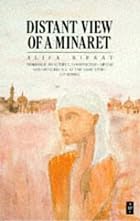
Alifa Rifaat was an Egyptian writer who wrote in the 1950s - 1980s and lived a largely very traditional life. Her stories focus on the lives of women, often in rural settings, and present a straightforward view of sex, love and its absence, and death Women's lives are hard, and Rifaat shows their struggles for happiness in a culture in which men often do not live up to the family and sexual obligations required by their religion. Some of the most moving stories involve the closeness some of the characters to the rural world and its animals, more so, perhaps, then to other people. The daily five calls to prayer set a rhythm for the book, and mark the passing of time. As with any collection, some stories are better than others, but taken together they provide a vivid sense of time and place and the limitations of a world in which a women's role is circumscribed not only by poverty but also by oppressive tradition.
Alifa Rifaat was an Egyptian writer who wrote in the 1950s - 1980s and lived a largely very traditional life. Her stories focus on the lives of women, often in rural settings, and present a straightforward view of sex, love and its absence, and death Women's lives are hard, and Rifaat shows their struggles for happiness in a culture in which men often do not live up to the family and sexual obligations required by their religion. Some of the most moving stories involve the closeness some of the characters to the rural world and its animals, more so, perhaps, then to other people. The daily five calls to prayer set a rhythm for the book, and mark the passing of time. As with any collection, some stories are better than others, but taken together they provide a vivid sense of time and place and the limitations of a world in which a women's role is circumscribed not only by poverty but also by oppressive tradition.
138rebeccanyc
58. The Expendable Man by Dorothy B. Hughes

Wow! I woke up in the middle of the night feeling I had to finish this book before I could go back to sleep! Hughes creates the tension felt by the protagonist, a young Los Angeles doctor driving to Phoenix for a family wedding, so well that I felt just as anxious as he did all the way through the book, starting at the very beginning in which his discomfort at picking up a young female hitchhiker might seem a little out of proportion. There is a reason, and it is the famous "surprise" of the book, which I will not reveal, although there is a lot I could say about it. Once in Phoenix, in the midst of a lovely family gathering and an introduction to a beautiful, poised, and intelligent young woman, he is still uneasy about the girl, and then finds out she has been killed. Soon, the police are after him, and it becomes up to him to find the real killer and prove his innocence. Throughout, Hughes masterfully creates the scene, the building tension, and the characters.
There was one thing that bothered me about this book, which was written in 1963, and I have to consider it an artifact of the times, but every single character in the book is utterly appalled and disgusted by the idea of abortion.

Wow! I woke up in the middle of the night feeling I had to finish this book before I could go back to sleep! Hughes creates the tension felt by the protagonist, a young Los Angeles doctor driving to Phoenix for a family wedding, so well that I felt just as anxious as he did all the way through the book, starting at the very beginning in which his discomfort at picking up a young female hitchhiker might seem a little out of proportion. There is a reason, and it is the famous "surprise" of the book, which I will not reveal, although there is a lot I could say about it. Once in Phoenix, in the midst of a lovely family gathering and an introduction to a beautiful, poised, and intelligent young woman, he is still uneasy about the girl, and then finds out she has been killed. Soon, the police are after him, and it becomes up to him to find the real killer and prove his innocence. Throughout, Hughes masterfully creates the scene, the building tension, and the characters.
There was one thing that bothered me about this book, which was written in 1963, and I have to consider it an artifact of the times, but every single character in the book is utterly appalled and disgusted by the idea of abortion.
139bragan
The Expendable Man sounds fantastic. I think that one is going on my wishlist.
140Nickelini
Yes, The Expendable Man sounds very interesting indeed. On to my wish list. And good to hear you liked Distant View of a Minaret, which I recently purchased after reading one of the stories online.
141rebeccanyc
59. Almost Transparent Blue by Ryū Murakami
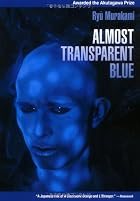
As I was reading this book, which I read for the Author Theme Reads group, I thought that the only thing I could say about it is that if I had ever wanted to lead a completely dissolute life this book would have dissuaded me. Page after page of impersonal and sometimes violent sex, drugs of all sorts, rotting food, and a variety of bodily fluids and bodily reactions. Who of my generation would have thought sex, drugs, and rock and roll could be so disgusting? But, on reflection, I realized that towards the end of this mercifully brief novel, the narrator, Ryū, reveals a remarkable observational and imaginative capability (although what is hallucination and what is real is hard to say), and some of the characters exhibit some fond feelings for their families or home regions. So maybe there's a glimmer of hope.
As an added note, I found the treatment of the African-American soldiers from the nearby US air base quite stereotypical.
As I was reading this book, which I read for the Author Theme Reads group, I thought that the only thing I could say about it is that if I had ever wanted to lead a completely dissolute life this book would have dissuaded me. Page after page of impersonal and sometimes violent sex, drugs of all sorts, rotting food, and a variety of bodily fluids and bodily reactions. Who of my generation would have thought sex, drugs, and rock and roll could be so disgusting? But, on reflection, I realized that towards the end of this mercifully brief novel, the narrator, Ryū, reveals a remarkable observational and imaginative capability (although what is hallucination and what is real is hard to say), and some of the characters exhibit some fond feelings for their families or home regions. So maybe there's a glimmer of hope.
As an added note, I found the treatment of the African-American soldiers from the nearby US air base quite stereotypical.
142baswood
Enjoying your reviews rebecca; The Expendable Man sounds like a real discovery, Almost Transparent Blue sounds like something steven03tx would like.
143dchaikin
I've added The Cornish Trilogy to my wishlist. I've been curious about Davies since ChocolateMuse started posting about him last year (along with Porius). Enjoyed all your new reviews here.
144rebeccanyc
Thanks, Barry and Dan. The Expendable Man was just reissued by NYRB and looked intriguing; on the whole, I'm a big fan of their selections.
145StevenTX
#142 - Yes, I did like it. (But, in defense of my reputation, I liked Little Women too.)
146rebeccanyc
My Mac has been sporadically acting weird when I type -- whether in Firefox, the Mail program, or Word -- and it's getting worse. What happens is sometimes the cursor seems to jump around on its own and insert what I'm typing not where I think I'm typing it, or delete text on its own, or (as of today) not let me input anything I'm typing. It seems to happen after the laptop's been on for a little while, and restarting it seems to help. Anyway, I'm taking it to the Apple Store tomorrow and I don't know if they'll want to keep it, so I may be only accessing LT from my iPhone for a day or two and so may be scarcer than usual. Fingers crossed.
By the way, my software is up to date, and I regularly check for viruses. Seems like something must be interfering . . . but what?
By the way, my software is up to date, and I regularly check for viruses. Seems like something must be interfering . . . but what?
148Nickelini
Rebecca - my husband's laptop does that (it's not a Mac) and it always has. It seems to be a design "feature," but it's one that I don't understand. You have my full sympathy.
149SassyLassy
One possibility is that it does not have enough room to vent, particularly if it is a laptop on a desk with things close to it. Computers of any make don't like hot weather any more than we do.
Someone told me that if your Mac lasts more than three years, someone at Apple is in trouble! Mine is now 18 months.
Someone told me that if your Mac lasts more than three years, someone at Apple is in trouble! Mine is now 18 months.
150rebeccanyc
Thanks for the ideas. I'm keeping my fingers crossed they'll figure it out. I love my Mac laptop and while I crave a newer one, I don't think I deserve one yet.
151Linda92007
Great reviews to catch up with here, Rebecca. Memoirs of a Revolutionary, The Cornish Trilogy and The Expendable Man have gone straight to the wishlist, but I am not tempted by the Murakami and its bodily fluids.
152wandering_star
#149 - makes me feel better about the fact I just bought a new MacBook because my old one was feeling creaky - I'd had it for 5 or 6 years!
154rebeccanyc
Thanks, and blushing, Lisa. I consider it a fluke, because I posted about six reviews over the course of two or three days, but still, it's gratifying. I'm glad so many people like my reviews, and I must say I'm often mystified about which reviews people will like!
Mac Update: The extremely youthful Dr. Mac at the Genius Bar of my local Apple store diagnosed my problem as caused by a swollen battery (which I could see, because the battery "door" on the bottom of my laptop didn't quite close). He said it was pressing on the trackpad, and causing the trackpad to do things on its own (and that he has seen this before, the most encouraging words I heard), even though I use a mouse 99.9% of the time. He prescribed a new battery ($99 + tax, because my laptop is no longer under warranty at 3 1/2 years old) and sent the patient and me on our way. So fingers crossed, that will do the trick. Thanks to all of you who made suggestions.
He also chastised me, as I have been chastised before, for keeping my laptop plugged in virtually all the time. He compared batteries to muscles, and said you have to use them for them to work well, and if you keep it plugged in all the time you are only using a small portion of the battery. OK! I promised to exercise my battery from now on!
Mac Update: The extremely youthful Dr. Mac at the Genius Bar of my local Apple store diagnosed my problem as caused by a swollen battery (which I could see, because the battery "door" on the bottom of my laptop didn't quite close). He said it was pressing on the trackpad, and causing the trackpad to do things on its own (and that he has seen this before, the most encouraging words I heard), even though I use a mouse 99.9% of the time. He prescribed a new battery ($99 + tax, because my laptop is no longer under warranty at 3 1/2 years old) and sent the patient and me on our way. So fingers crossed, that will do the trick. Thanks to all of you who made suggestions.
He also chastised me, as I have been chastised before, for keeping my laptop plugged in virtually all the time. He compared batteries to muscles, and said you have to use them for them to work well, and if you keep it plugged in all the time you are only using a small portion of the battery. OK! I promised to exercise my battery from now on!
155RidgewayGirl
You've reminded me how I always enjoy Robertson Davies. Time to dig one of his out.
And I've added The Expendable Man to my wish list.
And I've added The Expendable Man to my wish list.
158rebeccanyc
Well, I've heard of someone whose battery exploded, but I only noticed that my laptop wasn't sitting quite flat on the desk and when I turned it over I couldn't quite close the part where the battery goes. Dr. Mac tried to show me how it was swollen when he took it out of my computer, but honestly I couldn't see it. And I didn't really worry about it -- it was when I had the typing problem that I sprung into action. But now I know better.
Hope you enjoy The Expendable Man, RidgewayGirl, and happy Davies reading.
Hope you enjoy The Expendable Man, RidgewayGirl, and happy Davies reading.
159kidzdoc
>154 rebeccanyc: LOL about the diagnosis and treatment by Dr. Mac!
160rebeccanyc
60. Escape from Camp 14: One Man's Remarkable Odyssey from North Korea to Freedom in the West by Blaine Harden

Journalist Blaine Harden's story of Shin Dong-hyuk's escape from the North Korean slave labor camp in which he was born is by turns horrifying, shocking, deeply saddening, and modestly inspirational. Camp 14 is one of the six labor camps in North Korea, camps large enough to be visible on Google Earth that have, as Harden points out, "existed twice as long as the Soviet Gulag and about twelve times longer than the Nazi concentration camps." Estimates of the number of prisoners in these camps range from about 150,000 to 200,000. The camps vary in the degree of severity with which the prisoners are treated, but Shin's camp, number 14, was a "complete control district" for "irredeemables." According to Harden, it "holds an estimated 15,000 prisoners. About thirty miles long and fifteen miles wide, it has farms, mines, and factories threaded through steep mountain valleys."
In Camp 14, sex between the prisoners was forbidden, but Shin's mother was "given" to his father as a "reward marriage," essentially a means for rewarding prisoners who exceeded work demands as well as breeding new workers for the camp. Children born in the camp were sent to school, but received only a minimal education in writing and arithmetic from the guards who served as teachers (they didn't learn much reading because the only book in the classroom was the teacher's). They learned nothing about the world outside the camp, not even the usual North Korean propaganda, and there were no pictures of the Kim dynasty anywhere to be seen. Instead, they learned to inform on their peers and their parents, to obey the guards and meet work quotas, and (on their own) to scrounge for food without being caught (including rats and insects). They were always hungry. Mostly, as school children they were sent to help out at various work sites.
Remarkably, Shin's mother and brother tried to escape. He was tortured to "find out" what he knew (described in horrific detail, not for the faint-hearted) and ultimately witnessed their executions. The book, which is based on Harden's interviews with Shin, as well as a document Shin wrote for a South Korean human rights group, then describes the various kinds of work Shin was forced to do from the easy (working on a pig farm), to the the difficult but well fed (building a hydroelectric dam), to the challenging (repairing sewing machines in a textile factory). In Shin's world, nobody trusted anybody, but eventually he is paired with a new prisoner, one who had experience in the outside world, and his eyes are opened and he starts planning his escape.
Harden mixes his discussion of Shin's experiences in the camp and during his escape and subsequent attempt to adapt to a life of freedom with information about what was going on in North Korea during this time period and how it affected Shin's ability to escape; he also describes how South Korea is responding to the influx of North Korean escapees. Once free, Shin has to learn how people interact with each other when they are not terrorized and how to cope with his horrific experiences and newly developing conscience and sense of guilt. As he says towards the end of the book, "I did not know about sympathy or sadness. . . .They educated us from birth so that we were not capable of normal human emotions. Now that I am out, I am learning to be emotional. I have learned to cry. I feel like I am becoming human. . . . I escaped physically. I haven't escaped psychologically."
I snapped up this book when I saw it in a bookstore because I was so fascinated when I read Barbara Demick's Nothing to Envy. It is a compelling complement to the stories she told.

Journalist Blaine Harden's story of Shin Dong-hyuk's escape from the North Korean slave labor camp in which he was born is by turns horrifying, shocking, deeply saddening, and modestly inspirational. Camp 14 is one of the six labor camps in North Korea, camps large enough to be visible on Google Earth that have, as Harden points out, "existed twice as long as the Soviet Gulag and about twelve times longer than the Nazi concentration camps." Estimates of the number of prisoners in these camps range from about 150,000 to 200,000. The camps vary in the degree of severity with which the prisoners are treated, but Shin's camp, number 14, was a "complete control district" for "irredeemables." According to Harden, it "holds an estimated 15,000 prisoners. About thirty miles long and fifteen miles wide, it has farms, mines, and factories threaded through steep mountain valleys."
In Camp 14, sex between the prisoners was forbidden, but Shin's mother was "given" to his father as a "reward marriage," essentially a means for rewarding prisoners who exceeded work demands as well as breeding new workers for the camp. Children born in the camp were sent to school, but received only a minimal education in writing and arithmetic from the guards who served as teachers (they didn't learn much reading because the only book in the classroom was the teacher's). They learned nothing about the world outside the camp, not even the usual North Korean propaganda, and there were no pictures of the Kim dynasty anywhere to be seen. Instead, they learned to inform on their peers and their parents, to obey the guards and meet work quotas, and (on their own) to scrounge for food without being caught (including rats and insects). They were always hungry. Mostly, as school children they were sent to help out at various work sites.
Remarkably, Shin's mother and brother tried to escape. He was tortured to "find out" what he knew (described in horrific detail, not for the faint-hearted) and ultimately witnessed their executions. The book, which is based on Harden's interviews with Shin, as well as a document Shin wrote for a South Korean human rights group, then describes the various kinds of work Shin was forced to do from the easy (working on a pig farm), to the the difficult but well fed (building a hydroelectric dam), to the challenging (repairing sewing machines in a textile factory). In Shin's world, nobody trusted anybody, but eventually he is paired with a new prisoner, one who had experience in the outside world, and his eyes are opened and he starts planning his escape.
Harden mixes his discussion of Shin's experiences in the camp and during his escape and subsequent attempt to adapt to a life of freedom with information about what was going on in North Korea during this time period and how it affected Shin's ability to escape; he also describes how South Korea is responding to the influx of North Korean escapees. Once free, Shin has to learn how people interact with each other when they are not terrorized and how to cope with his horrific experiences and newly developing conscience and sense of guilt. As he says towards the end of the book, "I did not know about sympathy or sadness. . . .They educated us from birth so that we were not capable of normal human emotions. Now that I am out, I am learning to be emotional. I have learned to cry. I feel like I am becoming human. . . . I escaped physically. I haven't escaped psychologically."
I snapped up this book when I saw it in a bookstore because I was so fascinated when I read Barbara Demick's Nothing to Envy. It is a compelling complement to the stories she told.
162japaul22
Interesting. I also loved (though that doesn't seem the right word) Nothing to Envy. I'll keep an eye out for this book.
163rebeccanyc
Yes, very sad, Dan, and thank you both.
164baswood
Excellent review of Escape from camp 14 rebecca. It sounds a horrific story. Dis you believe every word of it?
165rebeccanyc
Barry, that's an excellent question. The author talks about the credibility of Shin in his introduction. Without giving too much away, Shin told one story about the execution of his mother and brother for a long time, but eventually emotionally came to terms with enough to tell a different story, which made Harden wonder about everything else Shin had told him. Harden also did a lot of checking with other sources, so even if some of the individual details are not true (and of course they're not verifiable), the general types of things Shin describes are know to have happened. While of course it is compelling as an individual's harrowing story, I took it more as a tale about the camps and the way very few people can escape than as literally true in every detail.
166janeajones
It's so difficult to fathom how such large numbers of people can be so oppressed and so controlled for so long.
167kidzdoc
Wow. Outstanding review of Escape from Camp 14, Rebecca. That sounds like a must read book, so I'll add it to my wish list.
Thanks for the reminder about Nothing to Envy; I'll plan to read it within the next few months.
Thanks for the reminder about Nothing to Envy; I'll plan to read it within the next few months.
168labfs39
I've been looking forward to this one since it came out. The author (and I think Shin) did an author talk at my favorite bookstore on June 15, but I was unable to attend. After reading your review, I'm doubly disappointed.
BTW, here's a blurb from Demick about Escape from Camp 14:
This is a story unlike any other... More so than any other book on North Korea, including my own, Escape from Camp 14 exposes the cruelty that is the underpinning of Kim Jong Il's regime. Blaine Harden, a veteran foreign correspondent from The Washington Post, tells this story masterfully...The integrity of this book shines through on every page.---Barbara Demick, author of Nothing to Envy: Ordinary Lives in North Korea
Interestingly, a NYTimes article about the book Camp 14 has this to say about accuracy:
Harden’s narrative is reinforced by more systematic studies. When David Hawk of the Committee for Human Rights in North Korea researched the first edition of his camp exposé “The Hidden Gulag” in 2003, some 3,000 North Koreans had found asylum in the South, including several score of former political prisoners. When he returned for the second edition, just published, the pool of refugees was 23,000, and included hundreds who had endured detention. The updated report is a vivid chronicle of horrors, illustrated by crisp Google Earth photos that make the slave camps as palpable as suburban real estate on Zillow.
Hawk's report is freely available online as a PDF. I haven't read it yet.
BTW, here's a blurb from Demick about Escape from Camp 14:
This is a story unlike any other... More so than any other book on North Korea, including my own, Escape from Camp 14 exposes the cruelty that is the underpinning of Kim Jong Il's regime. Blaine Harden, a veteran foreign correspondent from The Washington Post, tells this story masterfully...The integrity of this book shines through on every page.---Barbara Demick, author of Nothing to Envy: Ordinary Lives in North Korea
Interestingly, a NYTimes article about the book Camp 14 has this to say about accuracy:
Harden’s narrative is reinforced by more systematic studies. When David Hawk of the Committee for Human Rights in North Korea researched the first edition of his camp exposé “The Hidden Gulag” in 2003, some 3,000 North Koreans had found asylum in the South, including several score of former political prisoners. When he returned for the second edition, just published, the pool of refugees was 23,000, and included hundreds who had endured detention. The updated report is a vivid chronicle of horrors, illustrated by crisp Google Earth photos that make the slave camps as palpable as suburban real estate on Zillow.
Hawk's report is freely available online as a PDF. I haven't read it yet.
169rebeccanyc
Thanks for those links, Lisa. The Demick blurb is on the back of the book; it's one of the reasons I bought it.
170rebeccanyc
61. Ashes and Diamonds by Jerzy Andrzejewski

Originally published in 1948, and considered one of the best Polish postwar novels, Ashes and Diamonds takes place in a Polish town in the days just before and after the German surrender in May 1945. The Soviet army has liberated the town from the Nazis, and it is still unclear what exactly will happen. The town is awash in former Polish Home Army soldiers (although unnamed as such since the Soviets had already taken over by the time of publication), local and Soviet communists, bureaucrats looking to advance, a somewhat discomfited aristocracy, returnees from Nazi concentration camps, teenagers who grew up in the chaos of the war and seem to have no values, those who seek to make money no matter who is in power, and of course regular folks. The novel switches back and forth between various people and their stories, and it takes a little while to figure out who is who and how they are connected.
Essentially, Andrzewjewski portrays people who have had to confront issues of ethics and conscience during the war, or are continuing to confront them, and how they individually decide to act. There are plots to kill people, plots to betray people, and yet people are intertwined in ways that can be awkward, at best, in the fluid situation; for example, the head of the local communists, mourning the death of his wife in a concentration camp, has to tell her sister about her death, and the sister is one of the local aristocrats. Everyone comes together at the town's hotel, the Monopole, which is striving to recapture prewar days, and they all certainly drink as if there is no tomrrow.
The title of the novel comes from a poem by Cyprian Norwid, that asks:
"Will only ashes and confusion remain,
Leading into the abyss? -- or will there be
In the depths of the ash, a star-like diamond,
The dawning of eternal victory!
It is hard to see the diamond in these ashes.
The edition I read had two introductions: one, by Heinrich Böll, written for an earlier edition, before the Wall came down, and one written by Barbara Niemczyk in the post-Communist era. Both point out that, for Polish readers would have immediately understood the unexpressed reality that the Soviets who "liberated" Poland were the same Soviets who occupied it in the days of the Hitler-Stalin nonaggression pact. In addition, Niemczyk notes some errors in the translation, including two long sections that were omitted by the original translator. Finally, I found it disconcerting that the Polish names were "translated" into English (sometimes incorrectly as Niemczyk points out); for example, the Polish name Maciek becomes Michael and Jerzy becomes Julius. I would have preferred it if the translator kept the Polish names.

Originally published in 1948, and considered one of the best Polish postwar novels, Ashes and Diamonds takes place in a Polish town in the days just before and after the German surrender in May 1945. The Soviet army has liberated the town from the Nazis, and it is still unclear what exactly will happen. The town is awash in former Polish Home Army soldiers (although unnamed as such since the Soviets had already taken over by the time of publication), local and Soviet communists, bureaucrats looking to advance, a somewhat discomfited aristocracy, returnees from Nazi concentration camps, teenagers who grew up in the chaos of the war and seem to have no values, those who seek to make money no matter who is in power, and of course regular folks. The novel switches back and forth between various people and their stories, and it takes a little while to figure out who is who and how they are connected.
Essentially, Andrzewjewski portrays people who have had to confront issues of ethics and conscience during the war, or are continuing to confront them, and how they individually decide to act. There are plots to kill people, plots to betray people, and yet people are intertwined in ways that can be awkward, at best, in the fluid situation; for example, the head of the local communists, mourning the death of his wife in a concentration camp, has to tell her sister about her death, and the sister is one of the local aristocrats. Everyone comes together at the town's hotel, the Monopole, which is striving to recapture prewar days, and they all certainly drink as if there is no tomrrow.
The title of the novel comes from a poem by Cyprian Norwid, that asks:
"Will only ashes and confusion remain,
Leading into the abyss? -- or will there be
In the depths of the ash, a star-like diamond,
The dawning of eternal victory!
It is hard to see the diamond in these ashes.
The edition I read had two introductions: one, by Heinrich Böll, written for an earlier edition, before the Wall came down, and one written by Barbara Niemczyk in the post-Communist era. Both point out that, for Polish readers would have immediately understood the unexpressed reality that the Soviets who "liberated" Poland were the same Soviets who occupied it in the days of the Hitler-Stalin nonaggression pact. In addition, Niemczyk notes some errors in the translation, including two long sections that were omitted by the original translator. Finally, I found it disconcerting that the Polish names were "translated" into English (sometimes incorrectly as Niemczyk points out); for example, the Polish name Maciek becomes Michael and Jerzy becomes Julius. I would have preferred it if the translator kept the Polish names.
171rebeccanyc
Going back to Escape from Camp 14, this review lists some other additional resources for info about Shin's escape and Camp 14 (although the link for the video of Shin doesn't work).
172labfs39
Thanks for the additional information, Rebecca. I watched the first half of the CNN report, but I think I'll wait until I've read the book to watch the rest. The Google Earth maps were interesting too.
173DieFledermaus
Some really good recent reviews.
I have the Deptford trilogy sitting on the pile but sounds like I should definitely read the Cornish trilogy as well.
The Expendable Man looks like a must-read also. Another NYRB that I hadn't heard of - need to check out their website more often.
Thinking I'll skip Ryu Murakami after reading several reviews. I'm still planning on reading some Abe - his works sounded bizarre, but maybe not body fluids-bizarre.
Very informative review of Escape from Camp 14. I'd like to reading Nothing to Envy first though.
I had Ashes and Diamonds on the wishlist for awhile now because it's published by Northwestern University Press but I've never seen it in the used stores around here. I had a general idea of the plot but your very good review gave a lot more info.
I have the Deptford trilogy sitting on the pile but sounds like I should definitely read the Cornish trilogy as well.
The Expendable Man looks like a must-read also. Another NYRB that I hadn't heard of - need to check out their website more often.
Thinking I'll skip Ryu Murakami after reading several reviews. I'm still planning on reading some Abe - his works sounded bizarre, but maybe not body fluids-bizarre.
Very informative review of Escape from Camp 14. I'd like to reading Nothing to Envy first though.
I had Ashes and Diamonds on the wishlist for awhile now because it's published by Northwestern University Press but I've never seen it in the used stores around here. I had a general idea of the plot but your very good review gave a lot more info.
174StevenTX
Nice review of Ashes and Diamonds, Rebecca, but that's disconcerting about the translation. It's in my TBR, and even though my copy has a different cover I see it has the same introductions and errata.
175rebeccanyc
Thanks for your nice comments, DieF. The Expendable Man is a very recent NYRB release; my favorite bookstore always has the newest ones on their display table, so they're easy to snap up. I would definitely read Nothing to Envy first -- it gives you a broader perspective for understanding North Korea and is an amazing book.
As for Ashes and Diamonds, I got this book after I read my very old copy of Danilo Kis's A Tomb for Boris Davidovich and got interested in reading other books that had been part of the Writers from the Other Europe series edited by Philip Roth in the 1970s. This is still the original translation. I have a set of three of them, but there were others I don't have and not all are still in print.
As for Ashes and Diamonds, I got this book after I read my very old copy of Danilo Kis's A Tomb for Boris Davidovich and got interested in reading other books that had been part of the Writers from the Other Europe series edited by Philip Roth in the 1970s. This is still the original translation. I have a set of three of them, but there were others I don't have and not all are still in print.
176StevenTX
Here's a coincidence for you: I'm reading Sixty-Nine by Ryu Murakami and the novel's narrator mentions that a movie theater in Japan is showing a film adaptation of Ashes and Diamonds. Unfortunately that's all he says about it.
177rebeccanyc
That really IS quite a coincidence. From the Ryu Murakami I read (Almost Transparent Blue), it's hard to imagine one of his characters being aware of/interested in Ashes and Diamonds! Looking at the book page for Sixty Nine, I see he was in high school at the same time I was -- maybe I should read this (even I didn't think I was up to more Murakami) for a cross-cultural perspective on going to high school in the late 1960s.
178Linda92007
Excellent review of Escape from Camp 14, Rebecca. I am anxious to read both that and Nothing to Envy, especially having earlier this year read The Orphan Master's Son, which prompted some interesting discussion about fact versus fiction.
180rebeccanyc
Thanks, Dan and Linda!
181rebeccanyc
62. White Guard by Mikhail Bulgakov
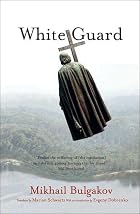
"Great was the year and terrible the Year of Our Lord 1918, the second since the revolution had begun." So begins Mikhail Bulgakov's tale of Kiev in the chaos of the Russian civil war. In the Ukraine, not only are Bolsheviks, the "Whites" (a loose conglomeration of anti-Bolsheviks of various stripes), and the Ukrainian nationalists under Petylura competing for control, but the Germans, who had put their puppet leader (the Hetman) in charge during the just ended World War I, are still hanging around. In the space of a few years, Kiev was to go back and forth among the warring factions at least eighteen times.
The story focuses on two brothers and a sister, Alexei, Elena, and Nikolai Turbin. Their mother has just died; Alexei, a doctor like Bulgakov, has recently returned from serving in the army; and Elena's new husband, Talberg, is on the verge of leaving to join a White general far away. The family lives in a large, cozy apartment, filled with books and memories; the beauty of the city of Kiev is lovingly described. But, as quoted in the introduction to the edition I read by Evgeny Dobrenko, Bulgakov wrote, in an essay on Kiev, "The legendary times came to an abrupt end, and history intruded, suddenly and menacingly."
In the novel, Bulgakov shows what happens when Petlyura's army of peasants from the countryside take over the city. In advance, the Germans and the Hetman flee, as do many of the army's officers and soldiers, leaving the city to scattered groups of eager but inexperienced and under-armed individual soldiers who are incapable of fighting the forces arrayed against them. Both Alexei and Nikolai become involved in the doomed fighting, along with some of their friends. The bulk of the novel covers just a few dramatic days. Throughout, we see not just the Turbins and their friends, but also the broader picture, the epic sweep of the nationalist forces (the countryside versus the city, the peasants versus the intelligentsia), the rumor-mongering within the city and the easy acceptance of the people of their new rulers, the antisemitism of the nationalists (heralding a pogrom under a later nationalist regime), and the abandonment of the city by the leaders and military. The courage and noble acts of the Turbins cannot stop the tide of history.
Bulgakov's writing is a delight. He paints a portrait of a beautiful, if legendary, city, and the stars and planets above, and displays deep familiarity with its streets and routes around and through it; he evokes the sounds of the phones and doorbells ringing, of cannons booming, of guns going off; he refers to Russian literature; he inserts a somewhat comic character in the form of a downstairs neighbor; he recounts his characters' dreams; and above all he brings to life the cold, the turmoil, the danger, the bravery and cowardice, the fear and love, of a confusing and frightening time. Like The Master and Margarita, it has religious references, in particular to the Book of Revelation (helpfully footnoted by the translator). This may be Bulgakov's first novel, but he is fully in control of the diverse techniques he uses to make this chaotic world real to the reader.
Although this novel could not be published in Russia until the 1960s, an adaptation of it became a play, "The Days of the Turbins," that became a Moscow hit and a favorite of Stalin's -- it must have been quite an adaptation, because there is no way that the book I read would have been acceptable to Stalin. I understand that this edition is the first complete translation into English of the novel.
And in the end?
"Great was the year and terrible the Year of Our Lord 1918, but more terrible still was 1919."
"What had it all been for? No one could say. And would anyone pay for the blood?
No. No one would.
The snow would melt, the green Ukrainian grass would come up and plait the earth, lush sprouts would emerge, the heat would shimmer above the fields, and no trace would remain of the blood. Blood is cheap in these dark red fields, and no one would ever redeem it.
No one."
"Great was the year and terrible the Year of Our Lord 1918, the second since the revolution had begun." So begins Mikhail Bulgakov's tale of Kiev in the chaos of the Russian civil war. In the Ukraine, not only are Bolsheviks, the "Whites" (a loose conglomeration of anti-Bolsheviks of various stripes), and the Ukrainian nationalists under Petylura competing for control, but the Germans, who had put their puppet leader (the Hetman) in charge during the just ended World War I, are still hanging around. In the space of a few years, Kiev was to go back and forth among the warring factions at least eighteen times.
The story focuses on two brothers and a sister, Alexei, Elena, and Nikolai Turbin. Their mother has just died; Alexei, a doctor like Bulgakov, has recently returned from serving in the army; and Elena's new husband, Talberg, is on the verge of leaving to join a White general far away. The family lives in a large, cozy apartment, filled with books and memories; the beauty of the city of Kiev is lovingly described. But, as quoted in the introduction to the edition I read by Evgeny Dobrenko, Bulgakov wrote, in an essay on Kiev, "The legendary times came to an abrupt end, and history intruded, suddenly and menacingly."
In the novel, Bulgakov shows what happens when Petlyura's army of peasants from the countryside take over the city. In advance, the Germans and the Hetman flee, as do many of the army's officers and soldiers, leaving the city to scattered groups of eager but inexperienced and under-armed individual soldiers who are incapable of fighting the forces arrayed against them. Both Alexei and Nikolai become involved in the doomed fighting, along with some of their friends. The bulk of the novel covers just a few dramatic days. Throughout, we see not just the Turbins and their friends, but also the broader picture, the epic sweep of the nationalist forces (the countryside versus the city, the peasants versus the intelligentsia), the rumor-mongering within the city and the easy acceptance of the people of their new rulers, the antisemitism of the nationalists (heralding a pogrom under a later nationalist regime), and the abandonment of the city by the leaders and military. The courage and noble acts of the Turbins cannot stop the tide of history.
Bulgakov's writing is a delight. He paints a portrait of a beautiful, if legendary, city, and the stars and planets above, and displays deep familiarity with its streets and routes around and through it; he evokes the sounds of the phones and doorbells ringing, of cannons booming, of guns going off; he refers to Russian literature; he inserts a somewhat comic character in the form of a downstairs neighbor; he recounts his characters' dreams; and above all he brings to life the cold, the turmoil, the danger, the bravery and cowardice, the fear and love, of a confusing and frightening time. Like The Master and Margarita, it has religious references, in particular to the Book of Revelation (helpfully footnoted by the translator). This may be Bulgakov's first novel, but he is fully in control of the diverse techniques he uses to make this chaotic world real to the reader.
Although this novel could not be published in Russia until the 1960s, an adaptation of it became a play, "The Days of the Turbins," that became a Moscow hit and a favorite of Stalin's -- it must have been quite an adaptation, because there is no way that the book I read would have been acceptable to Stalin. I understand that this edition is the first complete translation into English of the novel.
And in the end?
"Great was the year and terrible the Year of Our Lord 1918, but more terrible still was 1919."
"What had it all been for? No one could say. And would anyone pay for the blood?
No. No one would.
The snow would melt, the green Ukrainian grass would come up and plait the earth, lush sprouts would emerge, the heat would shimmer above the fields, and no trace would remain of the blood. Blood is cheap in these dark red fields, and no one would ever redeem it.
No one."
182Linda92007
Fabulous review of White Guard, Rebecca! I'm ready for some more Bulgakov. Is it the Yale University Press edition that you have?
183kidzdoc
Superb review of White Guard, Rebecca! If I can answer Linda's question, I would assume that yours is the Yale University Press edition; I have it, and the book's cover is identical to the one you posted.
I'll move this to a much higher position on my TBR list.
I'll move this to a much higher position on my TBR list.
184rebeccanyc
Yes, Linda, and right, Darryl. I'm leaning towards reading some of the other Bulgakov on my TBR; I have two collections of stories I haven't read yet, but there are so many other books calling to me . . .
185StevenTX
Mouthwatering review of The White Guard, Rebecca, a novel I'd never heard of. It's now on my wish list.
186avidmom
White Guard sounds wonderful. The Master and Margarita has been on my wish list for quite a while, I'll add White Guard to it. Fabulous review!
187rebeccanyc
Thanks, Steven, and avidmom too. Avidmom, White Guard is quite different from The Master and Margarita, although both are superbly written.
188rebeccanyc
63. Phantoms on the Bookshelves by Jacques Bonnet

This is a charming, slight book by a man who has a personal library of more than 40,000 books. At first, I was enchanted by it, as many fellow LT book lovers might be, as he discusses what other people ask people who have lots of books, accumulating books versus collecting them, finding kindred spirits, the comfort of having books we just might want to read someday, systems for arranging books on the shelves, and more, interspersing his own thoughts with quotations from other writers and references to books he has read, many of which sound intriguing (there's a bibliography at the end). I found too many wonderful comments to even think of picking ones to quote here. But as I read on, I felt he was trying to write enough to make it a book (it's only 123 small pages) and the topics he was discussing were less compelling. Still, it's a quick read, and there's a lot that's fun. The introduction by James Salter, one of my favorite writers, was enjoyable too.

This is a charming, slight book by a man who has a personal library of more than 40,000 books. At first, I was enchanted by it, as many fellow LT book lovers might be, as he discusses what other people ask people who have lots of books, accumulating books versus collecting them, finding kindred spirits, the comfort of having books we just might want to read someday, systems for arranging books on the shelves, and more, interspersing his own thoughts with quotations from other writers and references to books he has read, many of which sound intriguing (there's a bibliography at the end). I found too many wonderful comments to even think of picking ones to quote here. But as I read on, I felt he was trying to write enough to make it a book (it's only 123 small pages) and the topics he was discussing were less compelling. Still, it's a quick read, and there's a lot that's fun. The introduction by James Salter, one of my favorite writers, was enjoyable too.
189labfs39
Fantastic review! Fortunately White Guard was already on my wishlist. Unfortunately it wasn't at the last little bookshop I visited.
190pamelad
Rebecca, who translated your edition of White Guard? Since you describe the book as superbly written, the translation appeared to be seamless?
191rebeccanyc
Marian Schwartz, Pam, and she has an interesting tramslator's note at the beginning. It is said to be the only complete English translation; apparently, the earlier translation(s) left out some of the dream material. In the US, it's published by Yale University Press.
And thanks, Lisa.
And thanks, Lisa.
192baswood
Excellent review of White Guard, it sounds like a brilliant first novel. Jaques Bonnet must have nearly as many books as Darryl.
193JDHomrighausen
One of these days I'll get into my Russian literature pile. Until then I'll content myself with reading your superb reviews!
194rebeccanyc
Thanks, Lisa, Barry, and Jonathan. The more Russian literature I read, the more I appreciate it. And very funy, Barry, re Darryl. He only admits to about 2500.
195kidzdoc
>192 baswood: LOL! I missed that statement. I don't expect to read slanderous comments about my person in Club Read (as compared to the snarky 75ers). I'll bet that there are plenty of people in this group who have far more books than I do!
196rebeccanyc
Hmm. I was sure I posted a response earlier, but either I'm imagining it or it disappeared.
I am closing in on 3000, so I'm ahead of you, Darryl, but more importantly, I'm sure Barry was merely envious.
I am closing in on 3000, so I'm ahead of you, Darryl, but more importantly, I'm sure Barry was merely envious.
197Trifolia
Hi Rebecca, excellent review on Phantoms on the Bookshelves by Jacques Bonnet. I read it last year and I agree with you. I thought it was fun and enjoyable, but it didn't really stick. I think I prefer the Dutch cover though (http://www.librarything.com/topic/120927#2934864) :-)
198rebeccanyc
I agree with you, JustJoey, that cover is much better!
199rebeccanyc
64. Globalectics: Theory and the Politics of Knowing by Ngũgĩ wa Thiong'o

Globalectics is Ngũgĩ's combination of globalism and dialectics. In this book, a collection of the talks he gave for the Wellek Library Lectures at the University of California at Irvine, he discusses the fight to convert the English literature department at the University of Nairobi into a Literature department, and world literature generally, and the fight to give orature (a coinage to avoid the oxymoron of "oral literature") an equal place with the written word in the academic world. These are the interesting parts of the book. Unfortunately, at least for me, because perhaps I am theory-challenged, a lot of the book involves putting his theses into the theoretical formats of Hegelian dialectics and what he describes, in an introduction, as "poor theory," which seems to mean doing a lot with a little, or perhaps just using the simplest idea that will work. I found these sections added to the length of this slim volume, but didn't necessarily add to my appreciation of his ideas.
And his ideas are interesting, if not entirely novel. Initially, he focuses on the relationship between the "English master" and the "colonial bondsman," and makes the point that the "bondsman" always knows a lot about the "master," while the "master" knows next to nothing about the "bondsman." More interesting, perhaps, is his discussion of the education of the "bondsman" and how African and other writers educated in the European system have been able both to view some of the European classics in different ways (e.g., Shakespeare not just as an example of the height of English culture but also as a writer whose works depicted people in different relationships with power) and to take aspects of European literature and use them in their own works (e.g., titles of books such as Achebe's Things Fall Apart or his own Weep Not Child, or styles or themes; he cites Ousmane's God's Bits of Wood, which I've read, having "affinities" with Zola's Germinal, which I hope to read soon).
In the later lectures, he discusses how we define and understand the term "postcolonial" as different cultures can be postcolonial at different times and in different ways, and more generally how we can read literature from a variety of perspectives as well as from the perspective of the writer and his or her times, and he focuses on the vitality and significance of orature, which includes not just story-telling but song, and he adds in dance and music. In one section I found particularly interesting, he talks about how orature reflects a world view that "assumes the normality of the connection between nature, nurture, supernatural, and supernurtural" and that this derives in some cases from the language itself, giving the example of some words in Gĩkũyũ. I certainly felt when I read Matigari that Ngũgĩ was using the tradition of story-telling, with each version of the tale a little different, in this work.
All in all, I found some interesting ideas in this book, in between the theoretical parts. It was marred, shockingly for a book published by Columbia University Press, by some outrageous typos: "Virgina Wolfe," "As You Like" instead of "As You Like It" for the Shakespearean play, etc.).

Globalectics is Ngũgĩ's combination of globalism and dialectics. In this book, a collection of the talks he gave for the Wellek Library Lectures at the University of California at Irvine, he discusses the fight to convert the English literature department at the University of Nairobi into a Literature department, and world literature generally, and the fight to give orature (a coinage to avoid the oxymoron of "oral literature") an equal place with the written word in the academic world. These are the interesting parts of the book. Unfortunately, at least for me, because perhaps I am theory-challenged, a lot of the book involves putting his theses into the theoretical formats of Hegelian dialectics and what he describes, in an introduction, as "poor theory," which seems to mean doing a lot with a little, or perhaps just using the simplest idea that will work. I found these sections added to the length of this slim volume, but didn't necessarily add to my appreciation of his ideas.
And his ideas are interesting, if not entirely novel. Initially, he focuses on the relationship between the "English master" and the "colonial bondsman," and makes the point that the "bondsman" always knows a lot about the "master," while the "master" knows next to nothing about the "bondsman." More interesting, perhaps, is his discussion of the education of the "bondsman" and how African and other writers educated in the European system have been able both to view some of the European classics in different ways (e.g., Shakespeare not just as an example of the height of English culture but also as a writer whose works depicted people in different relationships with power) and to take aspects of European literature and use them in their own works (e.g., titles of books such as Achebe's Things Fall Apart or his own Weep Not Child, or styles or themes; he cites Ousmane's God's Bits of Wood, which I've read, having "affinities" with Zola's Germinal, which I hope to read soon).
In the later lectures, he discusses how we define and understand the term "postcolonial" as different cultures can be postcolonial at different times and in different ways, and more generally how we can read literature from a variety of perspectives as well as from the perspective of the writer and his or her times, and he focuses on the vitality and significance of orature, which includes not just story-telling but song, and he adds in dance and music. In one section I found particularly interesting, he talks about how orature reflects a world view that "assumes the normality of the connection between nature, nurture, supernatural, and supernurtural" and that this derives in some cases from the language itself, giving the example of some words in Gĩkũyũ. I certainly felt when I read Matigari that Ngũgĩ was using the tradition of story-telling, with each version of the tale a little different, in this work.
All in all, I found some interesting ideas in this book, in between the theoretical parts. It was marred, shockingly for a book published by Columbia University Press, by some outrageous typos: "Virgina Wolfe," "As You Like" instead of "As You Like It" for the Shakespearean play, etc.).
200SassyLassy
Very interesting review. This sounds like an excellent book on both the development of national literatures/oratures and the concurrent shift to postcolonialism. My political development professors (and yes some were Hegelians) always assigned national literature in their courses and this sounds like an excellent update.
Very distressing when a trusted publisher has those typos. I just finished an Oxford World Classics book that consistently used it's for its.
Very distressing when a trusted publisher has those typos. I just finished an Oxford World Classics book that consistently used it's for its.
201rebeccanyc
I must say I've never quite grasped why Hegelian (and Marxist) dialectics are so important, by which I mean not historically but as a way of understanding the world. This is probably because I've paid insufficient attention to this subject, but the little I understand of them leaves me in the dark about how they provide a new, and better, world view. If anyone would like to enlighten me, I'd be grateful.
How annoying about the it's for its! My first job out of college was as a proofreader, and even after many decades and moving up to copy editor and beyond, typos and mistakes still jump out at me. I tend to think these were errors introduced by the proofreader, because it's hard for me to imagine Ngũgĩ making these particular mistakes. I could get on my soapbox about the changes in the publishing world, but I'd sound like an old fogie talking about the good old days.
How annoying about the it's for its! My first job out of college was as a proofreader, and even after many decades and moving up to copy editor and beyond, typos and mistakes still jump out at me. I tend to think these were errors introduced by the proofreader, because it's hard for me to imagine Ngũgĩ making these particular mistakes. I could get on my soapbox about the changes in the publishing world, but I'd sound like an old fogie talking about the good old days.
202Linda92007
Excellent review of Globalectics: Theory and the Politics of Knowing, Rebecca. These essays seem like they would add another dimension to my understanding and appreciation of African literature. Since it is available in a Kindle edition, I am very tempted to purchase it.
203edwinbcn
Interesting reading, this Globalectics: Theory and the Politics of Knowing, Rebecca. I have a mind to read more about Africa. China is under way developing and intensifying its relations with the African continent. Each year, there is a half-year long seminar / class for leaders and high-level officials from African nations to learn about Agriculture in developing countries.
Unfortunately, Chinese students have little or no interest in Africa or individual African countries. In the study skills classes I teach, I let undergraduate students find information, make a bibliography and do a presentation on an African country. (This is an eye-opener to some students, at least).
Next year, I will be teaching a postgraduate level course about Archaeology and the way archaeology is presented in museums. One of my ideas is to include a seminar on the way "we" think about Africa / African countries, and the earliest history of Africa, using chapters from African civilizations. Precolonial cities and states in tropical Africa. An archaeological perspective. Interesting for me is that the the "white master" and the "colonial bondsman," is no part of Chinese discourse and their relation with the African continent. Nonetheless, is looks as if I will have to have a look at Globalectics: Theory and the Politics of Knowing.
Your story looks like my story. My first job out of college was lexicographer, followed by proofreader / copy editor (still at it). Last year a Chinese publisher put out a short series of Twentieth Century American best sellers. All Chinese publishers have books like that: public domain books to make money. Most are pretty nice editions, but the edition which I am currently reading of The Gambler by Katherine Cecil Thurston is full of typos and bad punctuation. I don't think it is the OCR scan, but a case of very bad and careless editing. Terrible!
Unfortunately, Chinese students have little or no interest in Africa or individual African countries. In the study skills classes I teach, I let undergraduate students find information, make a bibliography and do a presentation on an African country. (This is an eye-opener to some students, at least).
Next year, I will be teaching a postgraduate level course about Archaeology and the way archaeology is presented in museums. One of my ideas is to include a seminar on the way "we" think about Africa / African countries, and the earliest history of Africa, using chapters from African civilizations. Precolonial cities and states in tropical Africa. An archaeological perspective. Interesting for me is that the the "white master" and the "colonial bondsman," is no part of Chinese discourse and their relation with the African continent. Nonetheless, is looks as if I will have to have a look at Globalectics: Theory and the Politics of Knowing.
Your story looks like my story. My first job out of college was lexicographer, followed by proofreader / copy editor (still at it). Last year a Chinese publisher put out a short series of Twentieth Century American best sellers. All Chinese publishers have books like that: public domain books to make money. Most are pretty nice editions, but the edition which I am currently reading of The Gambler by Katherine Cecil Thurston is full of typos and bad punctuation. I don't think it is the OCR scan, but a case of very bad and careless editing. Terrible!
204rebeccanyc
Those are very interesting comments about the Chinese perspectives on Africa, Edwin. A few years ago, I read a book, Dead Aid, which talked a little about Chinese investment in Africa, in the context of what kinds of aid work and which don't, and that kind of put the Chinese activity in Africa on my radar screen, although I haven't really been following it.
As I said, Globalectics is quite theoretical in its use of the "white master" and "colonial bondsman" terminology, although there are definitely some interesting ideas in among the theory. However, I'm sure there are other books you could read that could give more of a perspective on African colonial and postcolonial history, including another collection of talks by Ngũgĩ, Something Torn and New, as well as some of his fiction, perhaps especially Matigari, which I mentioned in my review, and Petals of Blood. I know there are many many more, both fiction and nonfiction, but I am not familiar with them. Nor am I familiar with the archeological book you mention.
And, of course, the boundaries of many African countries are European constructs.
Interesting about your career path!
As I said, Globalectics is quite theoretical in its use of the "white master" and "colonial bondsman" terminology, although there are definitely some interesting ideas in among the theory. However, I'm sure there are other books you could read that could give more of a perspective on African colonial and postcolonial history, including another collection of talks by Ngũgĩ, Something Torn and New, as well as some of his fiction, perhaps especially Matigari, which I mentioned in my review, and Petals of Blood. I know there are many many more, both fiction and nonfiction, but I am not familiar with them. Nor am I familiar with the archeological book you mention.
And, of course, the boundaries of many African countries are European constructs.
Interesting about your career path!
205Jargoneer
>201 rebeccanyc: - I'm not sure if this will help you but here goes.
In Hegelian dialectics there is a three stage model - the thesis, the antitheses and the synthesis. The basic idea seems to be that the solution is stronger by passing the original idea through a 'negation' (as Hegel called it) - it is a form of testing the rigidity of the idea.
The difference between Hegelian and Marxist dialectics is that Hegel dealt with the abstract notion of ideas (i.e., the mind is at the centre of the philosophy, the real world was just a projection of the brain) while Marx dealt with primacy of the real world (so that any Marxist approach must always consider real world conditions).
In Hegelian dialectics there is a three stage model - the thesis, the antitheses and the synthesis. The basic idea seems to be that the solution is stronger by passing the original idea through a 'negation' (as Hegel called it) - it is a form of testing the rigidity of the idea.
The difference between Hegelian and Marxist dialectics is that Hegel dealt with the abstract notion of ideas (i.e., the mind is at the centre of the philosophy, the real world was just a projection of the brain) while Marx dealt with primacy of the real world (so that any Marxist approach must always consider real world conditions).
206rebeccanyc
Thanks, Jargoneer. I knew about the three stages, but didn't know that the synthesis is supposed to be stronger from having passed through the antithesis. But I'm still a little at a loss to understand why this is so important/useful as a way of looking at reality.
207Jargoneer
>206 rebeccanyc: - that's the same criticism of the method as Marx. He claimed that Hegel's approach ignored reality and was purely based on romantic idealism. His version of dialectical materialism focused on the real world, as he believed the real existed outwith us - in the end this usually means looking at things in terms of class struggle, which is possibly more useful for analysing the Victorian novel than the modern literary one, although I'm sure Marxists would claim that most modern literature is representative of the modern bourgeoisie.
208SassyLassy
Great synopsis of Marx and Hegel. I love your comment on their use for the Victorian novel as I always think of Marx as one of the pre eminent Victorians. I've always approached these novels in terms of class struggle and very few disappoint.
I think this construct as imposed on development theory (possibly a colonizing act in itself) is a natural translation from Marxist theories of class divisions to those of colonized and colonizers and enables the development of the rhetoric of national struggles against the oppressor nation.
Can't believe I just said all that, it's been a long time:)
I think this construct as imposed on development theory (possibly a colonizing act in itself) is a natural translation from Marxist theories of class divisions to those of colonized and colonizers and enables the development of the rhetoric of national struggles against the oppressor nation.
Can't believe I just said all that, it's been a long time:)
209rebeccanyc
Thanks for the additional explanations, Jargoneer and Sassy!
This topic was continued by Rebeccanyc Reads in 2012, Part 3.

