
Doris Lessing (1919–2013)
Author of The Golden Notebook
About the Author
Doris Lessing was born in Kermanshah, Persia (later Iran) on October 22, 1919 and grew up in Rhodesia (the present-day Zimbabwe). During her two marriages, she submitted short fiction and poetry for publication. After moving to London in 1949, she published her first novel, The Grass Is Singing, in show more 1950. She is best known for her 1954 Somerset Maugham Award-winning experimental novel The Golden Notebook. Her other works include This Was the Old Chief's Country, the Children of Violence series, the Canopus in Argos - Archives series, and Alfred and Emily. She has received numerous awards for her work including the 2001 Prince of Asturias Prize in Literature, the David Cohen British Literature Prize, and the 2007 Nobel Prize for Literature. She died on November 17, 2013 at the age of 94. (Bowker Author Biography) show less
Series
Works by Doris Lessing
Walking in the Shade: Volume Two of My Autobiography, 1949–1962 (1997) — Author — 398 copies, 7 reviews
Story of General Dann and Mara's Daughter, Griot and the Snow Dog: A Novel (2005) 311 copies, 9 reviews
The Wind Blows Away Our Words and Other Documents Relating to the Afghan Resistance (1987) 133 copies, 4 reviews
Cuentos europeos / To Room Nineteen / The Temptation of Jack Orkneys (Spanish Edition) (2008) 21 copies
Het zingende gras ; Martha Quest ; De zomer voor het donker ; Liefhebben uit gewoonte (1985) 8 copies
Vanaemad LRK 38/2012 3 copies
Children of Violence: Books 1-4 2 copies
Salmagundi: A Quarterly of the Humanities & Social Sciences Spring-Summer 2001 Nos. 130-131 (2001) 2 copies
Evlenmeyen Adamın Hikâyesi 2 copies
Three Plays: Each His Own Wilderness,The Long and the Short and the Tall,Yes, and After (1960) 2 copies
The Day Stalin Died {short fiction} 2 copies
A ciascuno il suo deserto 2 copies
Doris Lessing Three-Book Edition: The Golden Notebook, The Grass is Singing, The Good Terrorist (English Edition) (2013) 1 copy
The Antheap [short fiction] 1 copy
Veðraþytur 1 copy
Lessing, Doris Archive 1 copy
Me Set , Includes; a Ripple From the Storm, a Proper Marriage , Landlocked, a Four Gated City (1973) 1 copy
SËRISH DASHURI 1 copy
MË E ËMBLA ËNDËRR 1 copy
Collected africano stories 1 copy
[Title missing] 1 copy
Francois Mauriac 1 copy
Novellas, inclut Les Grand-mères ; Victoria et les Staveney ; Un enfant de l'amour (2016) 1 copy, 1 review
Karleksbarnet 1 copy
views quarterly summer 1963 1 copy
Non renseigné 1 copy
The reason for it 1 copy
A love child 1 copy
Liebhaber meiner Phantasie 1 copy
Mitra 1 copy
In pursuit of love 1 copy
Associated Works
Literature: An Introduction to Fiction, Poetry, and Drama (1995) — Contributor, some editions — 1,011 copies, 7 reviews
The Cambridge Guide to Literature in English (1988) — Foreword, some editions — 525 copies, 3 reviews
The World of the Short Story: A 20th Century Collection (1986) — Contributor — 510 copies, 4 reviews
For the Love of Books: 115 Celebrated Writers on the Books They Love Most (1999) — Contributor — 478 copies, 4 reviews
The Art of the Tale: An International Anthology of Short Stories (1986) — Contributor — 380 copies, 3 reviews
The Norton Anthology of English Literature, 4th Edition, Volume 2 (1979) — Contributor — 269 copies, 1 review
First Fiction: An Anthology of the First Published Stories by Famous Writers (1994) — Contributor — 194 copies, 1 review
This Is My Best: Great Writers Share Their Favorite Work (2004) — Contributor — 173 copies, 3 reviews
The Pleasure of Reading: 43 Writers on the Discovery of Reading and the Books That Inspired Them (2015) — Contributor — 103 copies, 2 reviews
Kalila and Dimna: Selected Fables of Bidpai (1980) — Introduction, some editions — 102 copies, 1 review
The Literary Lover: Great Stories of Passion and Romance (1993) — Contributor — 55 copies, 2 reviews
The Tale of the Four Dervishes and Other Sufi Tales (1976) — Introduction, some editions — 41 copies, 1 review
Sisters of Sorcery: Two Centuries of Witchcraft Stories by the Gentle Sex (1976) — Contributor — 38 copies, 1 review
Parabola: Myth and the Quest for Meaning, Vol. 7, No. 3: Ceremonies (1982) — Contributor — 14 copies
Die englische Literatur 10 in Text und Darstellung. 20. Jahrhundert 2. (2001) — Contributor — 6 copies
Sylvia Plath's Tomato Soup Cake: A Compendium of Classic Authors' Favourite Recipes (2024) — Contributor — 6 copies
Meesters der vertelkunst : zevenendertig verhalen uit de moderne wereldliteratuur (1975) — Contributor — 2 copies
Even op verhaal komen — Contributor — 1 copy
Tagged
Common Knowledge
- Canonical name
- Lessing, Doris
- Legal name
- Lessing, Doris May
- Other names
- Somers, Jane
Taylor, Doris May (birth name) - Birthdate
- 1919-10-22
- Date of death
- 2013-11-17
- Gender
- female
- Education
- Dominican Convent High School, Salisbury, Southern Rhodesia (now Harare ∙ Zimbabwe)
- Occupations
- novelist
short story writer
poet
playwright
librettist - Awards and honors
- American Academy of Arts and Letters (1974)
Austrian State Prize for European Literature (1981)
Shakespeare Prize (1982)
Trevipriset (1987)
Guest of Honor, World Science Fiction Convention (Conspiracy '87|Brighton|UK |1987)
Premio Grinzane Cavour (1989) (show all 16)
Order of the Companions of Honour (1999)
Premio Internacional, Cataluna (1999)
Royal Society of Literature (Companion of Literature, 2001)
Premio Príncipe de Asturias (2001)
David Cohen British Literature Prize (2001)
Golden PEN Award (2002)
Man Booker International Prize Finalist (2005)
Nobel Prize (Literature, 2007)
Man Booker International Prize Finalist (2007)
Order of Mapungubwe (2008) - Agent
- Jonathan Clowes Ltd.
- Nationality
- UK
- Birthplace
- Kermanshah, Iran (Persia)
- Places of residence
- England, UK
Kermanshah, Persia (now Iran)
Southern Rhodesia (Zimbabwe) - Place of death
- London, Middlesex, England, UK
- Burial location
- Royal Burial Ground, Frogmore, Windsor, Berkshire, England, UK (cremated)
- Map Location
- England, UK
Members
Discussions
Doris Lessing in Legacy Libraries (February 2017)
BRITISH AUTHOR CHALLENGE - SEPTEMBER 2016 - LESSING & LEE in 75 Books Challenge for 2016 (December 2016)
Doris Lessing (1919–2013) in Science Fiction Fans (November 2013)
1001 Group Read-July, 2012: The Golden Notebook in 1001 Books to read before you die (February 2013)
Reviews

Most people, when confronted with the problems of juvenile delinquency or generational chasms between parents and children, would try to understand where the youth, troubled as they may be, are coming from. Doris Lessing, on the other hand, writes a novel about a woman who gives birth to a neanderthal. I have to say I loved this bonkers novel, which starts out as a sly commentary on the changing sexual and gender norms of Britons in the 1960s and 1970s and turns into a bizarre science show more fiction novel. show less
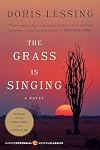
Published in 1950 and set in Southern Rhodesia (today’s Zimbabwe) in the 1940s, the book opens with a news announcement that Mary Turner, wife of struggling local British farmer Richard Turner, has been found murdered on her verandah. The couple’s house attendant, Moses, has been arrested. The neighboring successful farmer, Charlie Slatter, seems anxious to downplay the murder and move on. A young newcomer to the area, Tony Marston, wonders why the authorities do not want to find out show more what happened and why.
Though at first it appears to be a murder mystery, this story is so much more. It is an exploration of the racial divide in southern Africa between the white landowners and the native workers. It also portrays the role of women in society of the time and the expectation that they would marry. Mary is independent at the time but overhears gossip that causes her to make an unfortunate decision, which will drastically impact her life. Mary is a rather unlikeable character, but reasons behind her unpleasantness are gradually revealed.
I felt the underlying current of discord as I was reading. We know something bad will happen and the author does a great job of conveying the tensions to the reader, slowly building to the climax. I cannot say too much without spoiling, so suffice it to say that it is a complex multi-layered social commentary that induces a feeling of impending doom. Lessing spent her youth in this region of the world, so she was relying on first-hand experience. I can see why this book is considered a classic. show less
Though at first it appears to be a murder mystery, this story is so much more. It is an exploration of the racial divide in southern Africa between the white landowners and the native workers. It also portrays the role of women in society of the time and the expectation that they would marry. Mary is independent at the time but overhears gossip that causes her to make an unfortunate decision, which will drastically impact her life. Mary is a rather unlikeable character, but reasons behind her unpleasantness are gradually revealed.
I felt the underlying current of discord as I was reading. We know something bad will happen and the author does a great job of conveying the tensions to the reader, slowly building to the climax. I cannot say too much without spoiling, so suffice it to say that it is a complex multi-layered social commentary that induces a feeling of impending doom. Lessing spent her youth in this region of the world, so she was relying on first-hand experience. I can see why this book is considered a classic. show less
Re: Colonised Planet 5, Shikasta: Personal, Psychological, Historical Documents Relating to Visit by Johor (George Sherban), Emissary (Grade 9), 87th of the Period of the Last Days (Canopus in Argos: Archives 1) by Doris Lessing

The first volume of Canopus in Argos: Archives is presented in the form of a series of documents about the planet Shikasta, which is the Canopean name for "Earth," chronicling its development and abandonment by the agents of Canopus. Canopus is one of several empires in the galaxy, though it operates on a benevolent basis, coming off an awful lot like the Ekumen in Ursula Le Guin's novels, pushing potential planets to be "ready" for entrance into its alliance. Most of the documents are from show more the perspective of Johor, a Canopean assigned to Shikasta many times over the millennia under a number of different guises, as he works to battle the influence of the planet Shammat in the Empire of Puttiora. Put simply, Canopus is the source of all that is good on Earth, while Shammat promotes disharmony and ill-feeling. Sometimes this is interesting, but the secret history does go on rather a while-- reading government documents gets rather dry when there's no clear narrative. I did like the bits where Johor plants some ideas on Shikasta before he departs in a last-ditch effort to secure the planet. The best part of the novel was the last third or so, when Johor is incarnated in the late 20th century as George Sherban, a British youth leader. Much of this section is told from the perspective of Rachel Sherban, George's unknowing younger sister, and her tale is what kept me interested, as she tries to make sense of the increasingly distressed modern world. But she fades out of the story, and I found the end kind of dull, even in the midst of nuclear apocalypse.
Looking for information on the various "Zones" that surround Earth (Johor enters into Zone Six to be incarnated, where he sees the souls of the recently departed waiting for their chance to return to Earth; I didn't see how this fit into how the Zones are depicted in the second book, and in fact I still don't), I found an on-line book club's discussion of the novel, which made a point that had not occurred to me: the (villainous) Chinese actually don't come across a whole lot differently than the Canopeans, claiming that they are working for the benefit of the people they are manipulating. But if we are supposed to see the Canopeans as somewhat villainous themselves, the text is very good about never quite giving you a solid piece of evidence to hang that argument on. The whole thing could be written with no self-consciousness, no realization that the Canopeans are no different from the Chinese or Shammat just because they are ostensibly "right." What sealed it for me, though, was the the title: the (gloriously long) title calls direct attention to the fact that this is a collection of documents collected by a particular group for a particular purpose. Why would Lessing do that if she didn't want her readers pondering that fact all the way through? Were the Canopeans really no different from everyone else? It was something for me to ponder as I moved forward with the series. (I keep on meaning to look up reviews and academic criticism to see if anyone has taken up this idea, but I've never remembered.) show less
Looking for information on the various "Zones" that surround Earth (Johor enters into Zone Six to be incarnated, where he sees the souls of the recently departed waiting for their chance to return to Earth; I didn't see how this fit into how the Zones are depicted in the second book, and in fact I still don't), I found an on-line book club's discussion of the novel, which made a point that had not occurred to me: the (villainous) Chinese actually don't come across a whole lot differently than the Canopeans, claiming that they are working for the benefit of the people they are manipulating. But if we are supposed to see the Canopeans as somewhat villainous themselves, the text is very good about never quite giving you a solid piece of evidence to hang that argument on. The whole thing could be written with no self-consciousness, no realization that the Canopeans are no different from the Chinese or Shammat just because they are ostensibly "right." What sealed it for me, though, was the the title: the (gloriously long) title calls direct attention to the fact that this is a collection of documents collected by a particular group for a particular purpose. Why would Lessing do that if she didn't want her readers pondering that fact all the way through? Were the Canopeans really no different from everyone else? It was something for me to ponder as I moved forward with the series. (I keep on meaning to look up reviews and academic criticism to see if anyone has taken up this idea, but I've never remembered.) show less
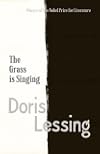
The Grass is Singing opens with the murder of Mary Turner, a white Southern Rhodesian's farmer's wife, by one of the farm's black workers. Whilst to the local police this is an open and shut case of simple "native" brutality, as we walk back through the years in Mary's life we discover that a long and complex road of disappointment and racial prejudice has ultimately laid the path to her murder.
I found this incredibly layered novel to be profoundly psychoanalytical and disturbing. In 200 show more short pages Lessing manages to convey the utter horror of a black/white segregated 1940s Southern Africa in a way that affected me much more than other books I've read with this setting. Mary's loathing of "the natives" runs much deeper than her husband's, manifesting itself in untempered disdain and a complete inability to consider the black workers on any human level. Her husband Dick tries to operate his farm workforce with a level of fairness, yet one doesn't have to peel back the layers of the onion too far to see that this "fairness" is based on the doctrine of keeping the coloured man down in his place under the total control of the the white man.
He was obeying the dictate of the first law of white South Africa, that is "Thou shalt not let your fellow whites sink lower than a certain point; because if you do, the nigger will see that he is as good as you are".
This is not only a novel about racial hatred, however. The Grass is Singing is an acutely observant look at the human psyche, of how life's twists and turns slowly but surely sour and disappoint a once vibrant and popular woman until she loses herself completely into that which she had always so defiantly tried to avoid becoming.
I've found this a very difficult book to review as there are so many facets to it, but what I think stands out most is it's starkly honest portrayal of how the white southern Africans consider their fellow black men to be entirely sub-human and requiring management in the same way as the beasts of the land.
4.5 stars - a darkly disturbing read in many ways, but a profound and important one that will leave me thinking about it for some time. show less
I found this incredibly layered novel to be profoundly psychoanalytical and disturbing. In 200 show more short pages Lessing manages to convey the utter horror of a black/white segregated 1940s Southern Africa in a way that affected me much more than other books I've read with this setting. Mary's loathing of "the natives" runs much deeper than her husband's, manifesting itself in untempered disdain and a complete inability to consider the black workers on any human level. Her husband Dick tries to operate his farm workforce with a level of fairness, yet one doesn't have to peel back the layers of the onion too far to see that this "fairness" is based on the doctrine of keeping the coloured man down in his place under the total control of the the white man.
He was obeying the dictate of the first law of white South Africa, that is "Thou shalt not let your fellow whites sink lower than a certain point; because if you do, the nigger will see that he is as good as you are".
This is not only a novel about racial hatred, however. The Grass is Singing is an acutely observant look at the human psyche, of how life's twists and turns slowly but surely sour and disappoint a once vibrant and popular woman until she loses herself completely into that which she had always so defiantly tried to avoid becoming.
I've found this a very difficult book to review as there are so many facets to it, but what I think stands out most is it's starkly honest portrayal of how the white southern Africans consider their fellow black men to be entirely sub-human and requiring management in the same way as the beasts of the land.
4.5 stars - a darkly disturbing read in many ways, but a profound and important one that will leave me thinking about it for some time. show less
Lists
el (1)
Favourite Books (1)
1980s (1)
Unmarried women (1)
. (1)
Obama Reads (1)
Cats in Fiction (1)
Best Dystopias (1)
Metafiction (1)
Five star books (1)
First Novels (1)
Nifty Fifties (1)
Florida (1)
Read This Next (2)
Africa (1)
Elegant Prose (1)
Female Author (2)
Gen X Library (2)
Booker Prize (3)
1950s (2)
A Novel Cure (2)
Women's Stories (2)
My TBR list (1)
Country Life (1)
Unread books (1)
Awards


You May Also Like


Associated Authors
Statistics
- Works
- 258
- Also by
- 88
- Members
- 36,984
- Popularity
- #494
- Rating
- 4.2
- Reviews
- 758
- ISBNs
- 1,647
- Languages
- 31
- Favorited
- 128


