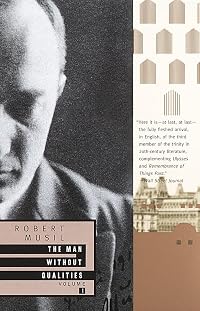
The Man Without Qualities: A Sort of Introduction; Pseudo Reality Prevails {Vol. 1 of 2}
by Robert Musil
The Man Without Qualities (1)
On This Page
Description
Robert Musil (1880 - 1942) was an Austro-Hungarian novelist and essayist, known for his masterpiece "The Man Without Qualities." He was born on November 6, 1880, in Klagenfurt, Austria, during the era of the Austro-Hungarian monarchy. Musil, influenced by the philosophical and cultural currents of his time, stood out for his keen observation of society and his profound psychological analysis. His most famous work, "The Man Without Qualities," is a monumental novel that examines the decadence show more of European society on the eve of World War I. Musil addressed themes such as alienation, the search for meaning, and the crisis of traditional values, establishing himself as a precursor of existentialism. show lessTags
Recommendations
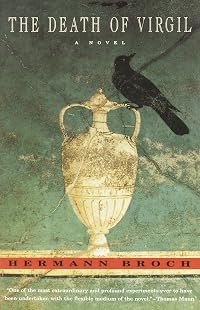
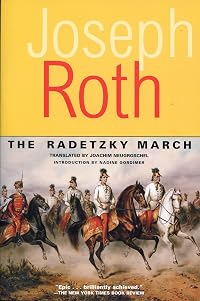
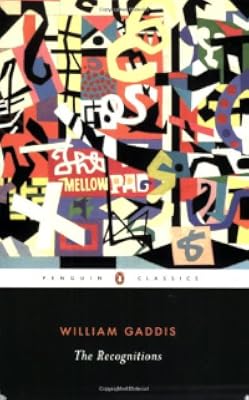
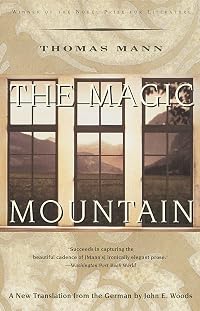





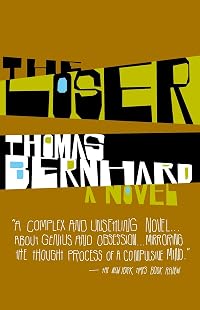

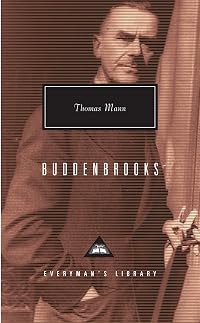
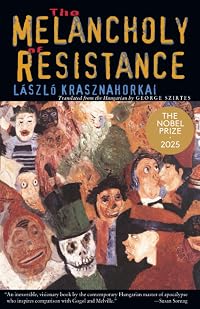
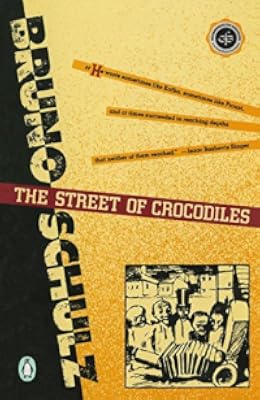
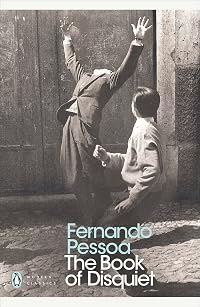
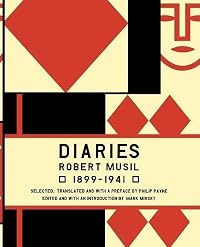



Member Recommendations

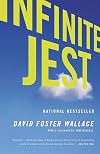
JuliaMaria Die Frankfurter Allgemeine Zeitung meint, dass 'Unendlicher Spass' von Foster Wallace für den Beginn des einundzwanzigsten Jahrhunderts das sei, was Musils 'Mann ohne Eigenschaften' für das vergangene Jahrhundert war.
Member Reviews
I have read some comments to the effect that Musil is not comparable to either Proust or Joyce. This is true. But only to the extent that Joyce and Proust are not comparable to each other either. Their common bond though is of course their incredible perspicacity and insight into the consequences of the modern age before anyone really knew what to make of it. Joyce gives us a perspective from the bottom of society, Proust from the bourgeoisie/middle class, and Musil from the upper (or at least what could be conceivabley called an upper class in early twentieth century Austria, the Germanic/Eastern European countries were still very ill constituted at the time, as the narrator Ulrich and Hans with his Pan-Germanic idealism depict rather show more well, particularly in regards to their ambivalence due to the international pressures of the rest of Europe).
I would dare say that Musil here predicts latter developments in philosophy towards post-modern thought (even more so than Joyce despite latter writer's indebtedness to his style). The concept of the Parallel Campaigne reminds me of David Foster Wallace and his use of subsidizing the years to economic factors. He exposes the loftiness of the "revolutionary" convictions that led up to the first and second world wars as being ill-thought and self deceptive; the very things that led to the opposite of what they had originally wanted - an Aristotelian irony played on a world stage. His primary link to such forward thinking philosophy though is in Ulrich with his detachment from reality, into an irreality, backed by the materialistic diasopora that rather than systematizing the human condition opens up the social milieu as a series of indeterminate relations, general rules that possess zero bearing on individual existence, and speaking towards the linguistic and cultural construction of reality that will result in the gap between analytic and synthetic thought.
Above all, it is in Musil's ability to give credence to and disparage, be inconsistent in his "Man Without Qualities," with all persepctives on what is essentially the same issue throughout the whole novel, without casting any judgement (mark this those who construe Ulrich as Musil's attempt to be didactic, Ulrich is extremely mercurial in his talking, to the extent that the reader is always left to question, at every point, whether or not the narrator is being honest to us, to himself, or to neither).
I look forward to diving into the second volume! show less
I would dare say that Musil here predicts latter developments in philosophy towards post-modern thought (even more so than Joyce despite latter writer's indebtedness to his style). The concept of the Parallel Campaigne reminds me of David Foster Wallace and his use of subsidizing the years to economic factors. He exposes the loftiness of the "revolutionary" convictions that led up to the first and second world wars as being ill-thought and self deceptive; the very things that led to the opposite of what they had originally wanted - an Aristotelian irony played on a world stage. His primary link to such forward thinking philosophy though is in Ulrich with his detachment from reality, into an irreality, backed by the materialistic diasopora that rather than systematizing the human condition opens up the social milieu as a series of indeterminate relations, general rules that possess zero bearing on individual existence, and speaking towards the linguistic and cultural construction of reality that will result in the gap between analytic and synthetic thought.
Above all, it is in Musil's ability to give credence to and disparage, be inconsistent in his "Man Without Qualities," with all persepctives on what is essentially the same issue throughout the whole novel, without casting any judgement (mark this those who construe Ulrich as Musil's attempt to be didactic, Ulrich is extremely mercurial in his talking, to the extent that the reader is always left to question, at every point, whether or not the narrator is being honest to us, to himself, or to neither).
I look forward to diving into the second volume! show less
The Man Without Qualities is a Modernist masterpiece. An expansive book of ideas yet an intimate view into Austrian society, circa 1913. The writing (in translation from German) is erudite and sophisticated. The view into the psychology of the numerous characters is rich and insightful. The overall critique of both Austrian and human civilization is profound and sharp. There are intimations of Proust here but the language less elaborate. I'm also reminded of Fernando Passoa and The Book of Disquiet , and, strangely—it took me a while to recognize the similarity—but the ironic tone that pervaded many sections of this novel brought to mind Gilbert Sorrentino who came much later, of course. But they share a certain sensibility that you show more will find exemplified in his book [b:Imaginative Qualities of Actual Things|647354|Imaginative Qualities of Actual Things|Gilbert Sorrentino|http://d202m5krfqbpi5.cloudfront.net/books/1266606862s/647354.jpg|2351226] of shining a light into the minds of elite artists or thinkers and showing how there isn't much in there.
The Man Without Qualities challenges our ability to summarize and critique. For Musil even says on page 626, "There is no detaching an idea in a book from its context on the page. It catches our eye like the face of a person looming up in a crowd as it is being swept past us." And this is a book of many ideas. And through those ideas, he captures the zeitgeist of an era.
If ever there was a book about which one might properly use the word "zeitgeist," this is it.
Its manner fluctuates between profound observation and ironic satire. Many of the ideas seem to come from the authorial voice, but many more come from the characters, which puts those ideas into a questionable light. They often sound like quite a lot of blather about nothing. We hear their minds churning on thoughts upon thoughts. Abstract thinking about abstract generalities. In other words, a great deal of sound and fury signifying nothing. There is a subtlety of tone involved that makes it challenging at times to distinguish when Musil is presenting a thought-stream as a viable critique of society and when he is presenting it ironically. At other times, the irony is screamingly obvious. As I interpret it, Musil's ironic critiques of the "thinkers" in the The Man Without Qualities casts into question even the validity of the more compelling critiques because it has this halo of Wittgensteinian challenge...all philosophy is just a debate over linguistics...all philosophy is a struggle over worldviews and opinions; philosophy is not an analysis or contemplation of "the real" or any other such nonsense. Words have socially agreed upon meanings, they don't in any absolute sense "mean" anything. And here we see in The Man Without Qualities, an upper class society of Austrian "thinkers" debating the most important "ideas" of their century and getting nowhere. Not only getting nowhere, but we as the reader are aware that very soon their polite society will be thrown at the wall by the advent of World War I. Musil even manages to achieve intimations of World War II in the "polite" antisemitism espoused by a group of the young Austrian "idealists" who are featured in this book. He was an incredibly insightful writer, predicting the course of economics and Capitalism, politics, and even art in many subtle ways.
Within The Man Without Qualities we are rewarded with internal portraits of numerous characters. Internal, as in: what is going on in their minds. The bulk of the book is taken up with thoughts not plot. The majority of the characters are upper-class, but the view here is much broader. We get: an aristocratic politician, the richest and most elite industrialist in the world, an elevated "woman of society," a woman of slightly lesser upper-class society who can't seem to stop herself from having affairs, a tormented and failed artist (but with upper class family), his seemingly insane and vivacious young wife, a general in the army who would rather deal with civilian matters than military ones, a teenage girl of a middle-bourgeoisie family and her (sort-of) boyfriend who is a poor but idealistic student (idealistic in the sense of leading a group of Germanic nationalists who believe in the purity of spiritual community, abstract "love," and the Jew as metaphorically representing the enemy--finance, Capitalism and cold mathematics) and the main character, our "man without qualities," a somewhat spoiled (supported by his father's highly successful law practice) career dabbler with an academic mindset who is more intent on thinking his way through life than actually accomplishing anything. Yet Musil extends his view of society beyond the privileged and also presents a lower class crew: a maid who works for the elevated woman of society, a prostitute-murdering schizophrenic itinerant carpenter, and a black slave/servant who was bought by the industrialist from a traveling circus and then raised with a confusion of upper-class pretensions and arrogance as a curiosity. By traveling from perspective to perspective, Musil manages to conjure up a global sensibility yet one that is unique to Austria at the time. Certain universal themes arise from all these competing perspectives, and in all likelihood a graduate thesis could be written about any one individually. In other words, this book is a PhD student's wet dream.
What follows are some of the themes I observed on my way through the book and some of the insights that demonstrate Musil's vast erudition.
Here is a sequence where Ulrich is thinking about himself (something he often does and projects what he discovers as being a universal truth) and from it arises a theme: that all things are transformation:
There are passages that reflect in varied ways what it means to call the main character, Ulrich, a "man without qualities." His friend calls him this out of jealousy and yet there is quite a bit of accuracy in the claim. Here is one reflection on it: "Ulrich always puts tremendous energy into doing only whatever he considers unnecessary. [...] The same thing could be said about all of us nowadays." That is, to varying degrees, we're all striving toward things that are unnecessary in life. Think of Facebook. Or Goodreads. Think of 99.9% of the jobs most of us have. Think of Entertainment. This particular man without qualities expresses his lack of concrete effect on the world by being a man who is caught up in intellectual analysis to no effect. All he does is think and debate, he never acts in any meaningful way. In fact, he essentially rejects there being anything meaningful to do. Life is better suited to figuring out how best to live rather than actually live, he would say Because, after all, what could the right choice possibly be?
I haven't mentioned to this point anything about the plot of the Man Without Qualities. Frankly, it is of secondary importance, however the premise of the story expresses such profound irony that it is persistently a shadow behind all that is said or done. The core story: Ulrich is rather involuntarily dragged into being a political emissary or liaison between the aristocratic politician Count Leinsdorf and his cousin Diotoma's intellectual salon. The Count has determined to make the coming year, 1914, a "Year of Austria" to celebrate the 70th anniversary of the Emperor Franz Josef. And he is determined to create a year that elevates Austria intellectually and spiritually above Germany (with whom there is a political rivalry) and that raises Austria's standing among the nations of the world. Diotoma is hosting several gatherings a week of intellectuals, artists, politicians, and academics in order to come up with a core premise for this "Year of Austria." What exactly should they do? Suggestions are also pouring into Count Leinsdorf's office from the general public (huddled masses) as to what should occur in this "Year of Austria," and he and Ulrich must manage the ideas and determine what should be done. Not only is the effort rather farcical and hopeless, but World War I is set to hit in the middle of the following year after Archduke Franz Ferdinand is assassinated. This scenario perfectly exemplifies the absurdity of the intellectual chattering class. While trying to solve the "meaning of life," actually life is going on behind them and about to swamp them all. And it's triply ironic because this book is highly intellectual in its own right.
Another theme that often arises is the value of science, religion and business. There are so many examples one could touch on here, and my impression is that Musil finds no value in any of them. Business is about exploitation; science is partly about "Truth" but it is also about ruthlessness, domination and mastery, which no more leads to happiness than business does. And religion is seemingly a tool (Marx would have appreciated this) to calm the masses and give them an illusion of meaning based on ceasing to think about life.
In fact, the illusion of all "Ideas" is another great theme. Here he talks of love: "...we talk ourselves into love as we talk ourselves into a rage, by making the proper gestures." Here he lectures about the absurdity of that which is abstract and how it relates to the Self:
Musil has many razor sharp insights about wealth, as well. Here is a wonderful passage beginning chapter 92, which is entitled "SOME OF THE RULES GOVERNING THE LIVES OF THE RICH."
The Man Without Qualities challenges our ability to summarize and critique. For Musil even says on page 626, "There is no detaching an idea in a book from its context on the page. It catches our eye like the face of a person looming up in a crowd as it is being swept past us." And this is a book of many ideas. And through those ideas, he captures the zeitgeist of an era.
If ever there was a book about which one might properly use the word "zeitgeist," this is it.
Its manner fluctuates between profound observation and ironic satire. Many of the ideas seem to come from the authorial voice, but many more come from the characters, which puts those ideas into a questionable light. They often sound like quite a lot of blather about nothing. We hear their minds churning on thoughts upon thoughts. Abstract thinking about abstract generalities. In other words, a great deal of sound and fury signifying nothing. There is a subtlety of tone involved that makes it challenging at times to distinguish when Musil is presenting a thought-stream as a viable critique of society and when he is presenting it ironically. At other times, the irony is screamingly obvious. As I interpret it, Musil's ironic critiques of the "thinkers" in the The Man Without Qualities casts into question even the validity of the more compelling critiques because it has this halo of Wittgensteinian challenge...all philosophy is just a debate over linguistics...all philosophy is a struggle over worldviews and opinions; philosophy is not an analysis or contemplation of "the real" or any other such nonsense. Words have socially agreed upon meanings, they don't in any absolute sense "mean" anything. And here we see in The Man Without Qualities, an upper class society of Austrian "thinkers" debating the most important "ideas" of their century and getting nowhere. Not only getting nowhere, but we as the reader are aware that very soon their polite society will be thrown at the wall by the advent of World War I. Musil even manages to achieve intimations of World War II in the "polite" antisemitism espoused by a group of the young Austrian "idealists" who are featured in this book. He was an incredibly insightful writer, predicting the course of economics and Capitalism, politics, and even art in many subtle ways.
Within The Man Without Qualities we are rewarded with internal portraits of numerous characters. Internal, as in: what is going on in their minds. The bulk of the book is taken up with thoughts not plot. The majority of the characters are upper-class, but the view here is much broader. We get: an aristocratic politician, the richest and most elite industrialist in the world, an elevated "woman of society," a woman of slightly lesser upper-class society who can't seem to stop herself from having affairs, a tormented and failed artist (but with upper class family), his seemingly insane and vivacious young wife, a general in the army who would rather deal with civilian matters than military ones, a teenage girl of a middle-bourgeoisie family and her (sort-of) boyfriend who is a poor but idealistic student (idealistic in the sense of leading a group of Germanic nationalists who believe in the purity of spiritual community, abstract "love," and the Jew as metaphorically representing the enemy--finance, Capitalism and cold mathematics) and the main character, our "man without qualities," a somewhat spoiled (supported by his father's highly successful law practice) career dabbler with an academic mindset who is more intent on thinking his way through life than actually accomplishing anything. Yet Musil extends his view of society beyond the privileged and also presents a lower class crew: a maid who works for the elevated woman of society, a prostitute-murdering schizophrenic itinerant carpenter, and a black slave/servant who was bought by the industrialist from a traveling circus and then raised with a confusion of upper-class pretensions and arrogance as a curiosity. By traveling from perspective to perspective, Musil manages to conjure up a global sensibility yet one that is unique to Austria at the time. Certain universal themes arise from all these competing perspectives, and in all likelihood a graduate thesis could be written about any one individually. In other words, this book is a PhD student's wet dream.
What follows are some of the themes I observed on my way through the book and some of the insights that demonstrate Musil's vast erudition.
Here is a sequence where Ulrich is thinking about himself (something he often does and projects what he discovers as being a universal truth) and from it arises a theme: that all things are transformation:
If he monitors his feelings, he finds nothing he can accept without reservation. He seeks a possible beloved but can't tell whether it's the right one; he is capable of killing without being sure that he will have to. The drive of his own nature to keep developing prevents him from believing that anything is final and complete. He suspects that the given order of things is not as solid as it pretends to be; no thing, no self, no form, no principle, is safe, everything is undergoing an invisible but ceaseless transformation, the unsettled holds more of the future than the settled, and the present is nothing but a hypothesis that has not yet been surmounted. (P. 269)What is the meaning and purpose of culture? How do the different aspects of culture relate to each other? Musil often reflects on culture as an artificial game without substance. "All enforced sociability...beyond a certain naive and crude level, springs basically from the need to simulate a unity that could govern all of humanity's highly varied activities and that is never there. This stimulation was what Diotoma called culture..." (P. 104, emphasis mine). In other words, human gatherings whether they be parties or sporting events or music concerts, art openings, and so on, all cultural events are contrived efforts to create a unity between humans that doesn't exist. Musil goes on to question the validity of literature and writing itself. Through the modest sprinkling of words by the narrator such as "probably" and phrases such as "one could say" and "must have been" regarding certain character's motives or thoughts, Musil creates a sense of the limitations of the author as "knowing" anything and of the story as an infallible artifact. All art is a failed attempt to present something that is already a failed thing. Life, existence, language...nothing is grounded in the Real, so how could "Art" ever hope to portray Reality? On page 115, he writes, "Unfortunately, nothing is so hard to achieve as a literary representation of a man thinking." ...just before he begins relating the main character's thinking. There are these tidbits of hilarious irony, and in this case it does double duty as noting the impossibility of Art. Musil often muses on the purpose and value of art, and frankly, finds Art lacking. At one point, he hits literature with a devastating blow:
This era worships money, order, knowledge, calculation, measures and weights--the spirit of money and everything related to it, in short--but also deplores all that. [...] It deals with this conflict by division of labor, assigning to certain [...] literary Savonarolas and evangelists, whose presence is the most reassuring to those not personally in a position to live up to their precepts, the task of recording all such premonitions and lamentations.(p. 555)That is to say, writers make the world feel less guilty and accept the fact that we are living empty lives by writing about it. Oh, global warming may be destroying our species, but at least there's David Foster Wallace! Or Jonathan Franzen! Or Margaret Atwood!
There are passages that reflect in varied ways what it means to call the main character, Ulrich, a "man without qualities." His friend calls him this out of jealousy and yet there is quite a bit of accuracy in the claim. Here is one reflection on it: "Ulrich always puts tremendous energy into doing only whatever he considers unnecessary. [...] The same thing could be said about all of us nowadays." That is, to varying degrees, we're all striving toward things that are unnecessary in life. Think of Facebook. Or Goodreads. Think of 99.9% of the jobs most of us have. Think of Entertainment. This particular man without qualities expresses his lack of concrete effect on the world by being a man who is caught up in intellectual analysis to no effect. All he does is think and debate, he never acts in any meaningful way. In fact, he essentially rejects there being anything meaningful to do. Life is better suited to figuring out how best to live rather than actually live, he would say Because, after all, what could the right choice possibly be?
I haven't mentioned to this point anything about the plot of the Man Without Qualities. Frankly, it is of secondary importance, however the premise of the story expresses such profound irony that it is persistently a shadow behind all that is said or done. The core story: Ulrich is rather involuntarily dragged into being a political emissary or liaison between the aristocratic politician Count Leinsdorf and his cousin Diotoma's intellectual salon. The Count has determined to make the coming year, 1914, a "Year of Austria" to celebrate the 70th anniversary of the Emperor Franz Josef. And he is determined to create a year that elevates Austria intellectually and spiritually above Germany (with whom there is a political rivalry) and that raises Austria's standing among the nations of the world. Diotoma is hosting several gatherings a week of intellectuals, artists, politicians, and academics in order to come up with a core premise for this "Year of Austria." What exactly should they do? Suggestions are also pouring into Count Leinsdorf's office from the general public (huddled masses) as to what should occur in this "Year of Austria," and he and Ulrich must manage the ideas and determine what should be done. Not only is the effort rather farcical and hopeless, but World War I is set to hit in the middle of the following year after Archduke Franz Ferdinand is assassinated. This scenario perfectly exemplifies the absurdity of the intellectual chattering class. While trying to solve the "meaning of life," actually life is going on behind them and about to swamp them all. And it's triply ironic because this book is highly intellectual in its own right.
Another theme that often arises is the value of science, religion and business. There are so many examples one could touch on here, and my impression is that Musil finds no value in any of them. Business is about exploitation; science is partly about "Truth" but it is also about ruthlessness, domination and mastery, which no more leads to happiness than business does. And religion is seemingly a tool (Marx would have appreciated this) to calm the masses and give them an illusion of meaning based on ceasing to think about life.
In fact, the illusion of all "Ideas" is another great theme. Here he talks of love: "...we talk ourselves into love as we talk ourselves into a rage, by making the proper gestures." Here he lectures about the absurdity of that which is abstract and how it relates to the Self:
...an idea is the most paradoxical thing in the world. The flesh in the grip of an idea is like a fetish. Bonded to an idea, it becomes magical. An ordinary slap in the face, bound up with ideas of honor, or of punishment and the like, can kill a man. And yet ideas can never maintain themselves in the state in which they are most powerful; they're like the kind of substance that, exposed to the air, instantly changes into some other, more lasting, but corrupted form. You've been through this often yourself. Because an ideas is what you are: an idea in a particular state.How breathtaking, the way Musil tosses off in one sentence of a book of 700 odd pages what the Self is. "An idea in a particular state." Stunning. Later he refers to "...the paradoxes inherent in the poem called man." Here he waxes Wittgensteinian about the nature of Ideas:
The talkers in Diotima's salon were never entirely wrong about anything, for their concepts were as misty as the outlines of bodies in the steambath. 'These ideas, on which life hangs as the eagle hangs on his wings,' Ulrich thought, 'our countless moral and artistic notions of life, by nature are as delicate as mountain ranges of granite blurred by distance.'"In several scenes, Musil reflects on ethnic hatred. In one sentence he explains, "Now, ethnic prejudice is usually nothing more than self-hatred, dredged up from the murky depths of one's own conflicts and projected onto some convenient victim, a traditional practice from time immemorial when the shaman used a stick, said to be the repository of the demon's power, to draw the sickness out of the afflicted." (p. 461) It's insights like these that make this book such a masterpiece and a joy.
Musil has many razor sharp insights about wealth, as well. Here is a wonderful passage beginning chapter 92, which is entitled "SOME OF THE RULES GOVERNING THE LIVES OF THE RICH."
Having so much attention and admiration lavished on him might have made any man other than Arnheim suspicious and unsure of himself, on the assumption that he owed it all to his money. But Arnheim regarded suspicion as the mark of an ignoble character, permissible to a man in his position only on the basis of unequivocal financial reports, and anyway he was convinced that being rich was a personal quality. Every rich man regards being rich as a personal quality. So does every poor man. There is a universal tacit understanding on the point.This general accord is troubled only slightly by the claims of logic that having money, while capable of conferring certain traits or character on whoever has it, is not in itself a human quality. Such an academic quibble need not detain us. (P. 455)And in another scene, Musil has the wealthy industrialist Arnheim thinking out loud in a manner that would make Ayn Rand proud:
To do away with force is to weaken the world order. Our task is to make man capable of greatness, although he is a mongrel cur! [...] But money is surely just as safe a means of managing human relationships as physical force, the crude uses of which it allows us to discontinue. Money is power in the abstract, a pliant, highly developed, and creative form, a unique form, of power. Isn't business really based on cunning and force, on outwitting and exploiting others, except that in business, cunning and force have become wholly civilized, internalized in fact, so that they are actually clothed in the guise of man's liberty? Capitalism, as the organization of egotism based on a hierarchy in which one's rank depends on one's capacity for getting money, is simply the greatest and yet the most humane order we have been able to devise... (p 554)Here Musil reflects on the nature of civilization itself, another frequent subject of analysis:
To begin briefly with the ecclesiastical aspect of things, as long as one believed in religion, one could defenestrate a good Christian or a pious Jew from any story in the castle of hope or prosperity, and he would always land on his spiritual feet, as it were, because all religions included in their view of life an irrational, incalculable element they called God's inscrutable will. Whenever a man could not make sense of things, he merely had to remember this rogue element in the equation, and his spirit could rub its hands with satisfaction, as it were. This falling on one's feet and rubbing one's hands is called having a working philosophy of life, and this is what modern man has lost. He must either give up thinking about life altogether, which is what many people are quite content to do, or else he finds himself strangely torn between having to think and yet never quite seeming to arrive at a satisfactory resolution of his problems. This conflict has in the course of history taken on the form of a total skepticism as often as it has that of a renewed subjection to faith, and its most prevalent form today is probably the conviction that without a spiritual dimension there can be no human life worthy of the name, but with too much of it there can be none either. It is on this conviction that our civilization as a whole is based. It takes great care to provide for education and research, but never too well, only enough money to keep education and research properly subordinated to the great sums expended on entertainment, cars, and guns.I could go on rather endlessly about this book, but I will conclude here. In the end, Musil himself notes that a book cannot have its ideas torn out, it's themes laid to view, and it's meaning understood because everything is affected by the context around it, and as such has inherent ambiguity. So I will leave by saying: beautiful, complex, deep, challenging. show less
Robert Musil’s two-volume unfinished novel published in 1952 and 1978 is remarkably relevant to the current Zeitgeist in the United States. The central character Ulrich is a man without qualities, a person indifferent to his middle class position and abilities. But he is described by a friend as consisting of qualities without a man, a cynical poser hiding behind general intellectual and social skills. Ulrich is afforded prescience from beyond “the break” as Musil’s contemporary Thomas Mann described the Great War. He realizes the traditional world of art and culture in kingly and bureaucratic Austria (fictional Kakania) is on the brink of destruction due to advances of the middle class in commerce and science. All that is show more needed for the old world to be tipped into the abyss is the identification of a scapegoat by intellectually deficient but charismatic leaders and the mobilization of diverse and self-interested ethnic and national subgroups. This seems to be our ‘ghost of the time’ in America in 2008.
Ulrich’s indifference is made possible by the lifelong efforts of the careful work of his middle class social diplomat father. The family’s financial advantages allow him to begin a career in science, specifically mathematics, with theoretical rather than applied goals. Ulrich has some success as a mathematician, but sees no future in what is nothing more than a social group of like-minded theorists. As a result of his father’s connections and his own personal charisma, Ulrich is recognized for general intellect and charm by the monarchy and upper middle class in Austria. He is appointed to a leadership position on a national committee charged with the task of developing a theme, a slogan that will unite Austria in pride during the seventieth jubilee of the Emperor Franz Joseph I. Because of his prescience and cynicism, he realizes that the group has an impossible task. The future of Austria does not involve celebration of the old, but rather radical social change targeting the Jews as scapegoats and the empowering of special interest groups within the Austro-Hungarian Empire.
We can see the parallels between the setting of the novel, Ulrich’s fictional Austrian city-state Kakania, and the United States as we face an economic meltdown and a change of leadership in the White House. We can anticipate the inevitable cycle of change, but who will benefit? What leaders will gain support in the new era of our undercivilized culture: the proponents of humanity and tradition or those of Realpolitic based on practicality and power? Musil’s novel puts the reader in the unique position of identifying with Ulrich, a self made person without intrinsically valuable qualities, living in a disintegrating nation. If we, like Ulrich, possess superficial and limiting personal qualities and are indifferent to them, we will be reliant on the intervention and restriction of government in our daily lives. The result may be that we have no enduring and free culture to help us understand and maintain the values of the human person. show less
Ulrich’s indifference is made possible by the lifelong efforts of the careful work of his middle class social diplomat father. The family’s financial advantages allow him to begin a career in science, specifically mathematics, with theoretical rather than applied goals. Ulrich has some success as a mathematician, but sees no future in what is nothing more than a social group of like-minded theorists. As a result of his father’s connections and his own personal charisma, Ulrich is recognized for general intellect and charm by the monarchy and upper middle class in Austria. He is appointed to a leadership position on a national committee charged with the task of developing a theme, a slogan that will unite Austria in pride during the seventieth jubilee of the Emperor Franz Joseph I. Because of his prescience and cynicism, he realizes that the group has an impossible task. The future of Austria does not involve celebration of the old, but rather radical social change targeting the Jews as scapegoats and the empowering of special interest groups within the Austro-Hungarian Empire.
We can see the parallels between the setting of the novel, Ulrich’s fictional Austrian city-state Kakania, and the United States as we face an economic meltdown and a change of leadership in the White House. We can anticipate the inevitable cycle of change, but who will benefit? What leaders will gain support in the new era of our undercivilized culture: the proponents of humanity and tradition or those of Realpolitic based on practicality and power? Musil’s novel puts the reader in the unique position of identifying with Ulrich, a self made person without intrinsically valuable qualities, living in a disintegrating nation. If we, like Ulrich, possess superficial and limiting personal qualities and are indifferent to them, we will be reliant on the intervention and restriction of government in our daily lives. The result may be that we have no enduring and free culture to help us understand and maintain the values of the human person. show less
I hated this book. Tedious and hopelessly intellectual without any sympathetic characters (I know, that's the point). It was as though the author never edited it. Like a crappy Swann's Way. Kindle readers can eat me! I couldn't stand to think of wasting my life on (the unfinished!) volume 2.
This unfinished tome of a book is an extremely strange one to experience. Written in a very Magic-Mountain-like way, we find ourselves party to the life of Ulrich, a minor official in the vast machine of empire that is the Austro-Hungarian empire in the early 20th century.
Ulrich finds himself involved in various projects of state that consume the lives and ambitions of those in government around him. There are relations with various women and other officials and there are long discussions of how things ought to be done and plans carried out.
No clear conclusions are ever reached and, as a result, nothing ever seems to get done however. In this, Musil has composed a dense satire not only of his day, but rather prophetically pretty much show more every major infrastructure project attempted by the British government of the early 21st century. Quite an achievement.
It is testimony to the quality of the immense work that Musil put into this in the 20 years leading up to his death that I find myself at a loss to describe what it’s actually about other than a satire on the pointlessness of ‘civilised society’. You can pick that up (and write it down) in 150 pages. You don’t need 1,500 at 300 pages a year.
This however, is not a novel without qualities. Its prose is readable and the characters are memorable characatures. Satire, however, is subtle humour at best, and German humour is subtler still. Once you’ve got the gist, the whole thing becomes very boring. You’ll need to be really keen to get to one of the many endings.
You’d have to have something of a death wish to read all of those many endings. The novel disintegrates like it was fed into a shredder and has been reassembled by zealous Iranian hostage takers. It’s a mess best left for specialists of 20th century German literature to pore over.
Most of the world can leave this work calmly gathering dust on the shelf as I did when I put it back in the library in Saudi Arabia pretty confident that I was the only one who had ever read it and the only who ever would read it. There are better satires of government out there. Just dial up some back episodes of Yes Minister on YouTube. They’re a lot easier to consume and you’ll come away with the same conviction that, however we vote, the government always gets in. show less
Ulrich finds himself involved in various projects of state that consume the lives and ambitions of those in government around him. There are relations with various women and other officials and there are long discussions of how things ought to be done and plans carried out.
No clear conclusions are ever reached and, as a result, nothing ever seems to get done however. In this, Musil has composed a dense satire not only of his day, but rather prophetically pretty much show more every major infrastructure project attempted by the British government of the early 21st century. Quite an achievement.
It is testimony to the quality of the immense work that Musil put into this in the 20 years leading up to his death that I find myself at a loss to describe what it’s actually about other than a satire on the pointlessness of ‘civilised society’. You can pick that up (and write it down) in 150 pages. You don’t need 1,500 at 300 pages a year.
This however, is not a novel without qualities. Its prose is readable and the characters are memorable characatures. Satire, however, is subtle humour at best, and German humour is subtler still. Once you’ve got the gist, the whole thing becomes very boring. You’ll need to be really keen to get to one of the many endings.
You’d have to have something of a death wish to read all of those many endings. The novel disintegrates like it was fed into a shredder and has been reassembled by zealous Iranian hostage takers. It’s a mess best left for specialists of 20th century German literature to pore over.
Most of the world can leave this work calmly gathering dust on the shelf as I did when I put it back in the library in Saudi Arabia pretty confident that I was the only one who had ever read it and the only who ever would read it. There are better satires of government out there. Just dial up some back episodes of Yes Minister on YouTube. They’re a lot easier to consume and you’ll come away with the same conviction that, however we vote, the government always gets in. show less
This book was aptly described as one of the best three books of the last century. It took me almost a year to read, about an hour a day, the two volumes and posthumous papers, copious note-taking and ample reflecting. Of course a breezier approach is possible, but if one tries to read it as slowly as the author has wrote it, the paragraphs release the bouquet of a Mouton Rotschild 82.
I would say energetically that this masterpiece builds character... Literature at its most educative and thought-provoking. Its ambitious scope spans from politics to economics, science to art, morality to justice. Musil was probably too much a philosopher to decide on writing and too much of a writer to decide on philosophy. The architecture of his show more project would probably have reached the dimensions of a modern operating system, like the 45 million lines of code in Windows XP if death had not stopped him in 1942. The posthumous papers are also interesting and would have made for more distilled Kant-Clausewitz-Mill sagesse if cocooned in another volume.
There is no facil classification of the book, as his experience as scholar, his science background, military experience-first as decorated officer then as military advisor-all catalyze the whole and then there are the synergy benefits of the combined ensemble. There is no apology for complexity.
The style is of a teutonic Socrates who approaches topics and sends his Mann ohne Eigenschaften, Ulrich, to relativize their moral basis, to criticize the diaphanously shallow bourgeoisie, the decadent empire, the sclerotic monarchy, the empirically stultified military, the epistemiologically cavalier scientists, the "precieuses" ladies of the Viennese salons. Ulrich is probably actually the man who is so acutely aware of the bias and corruption in the proclaimed morality that he is resigned to the stronghold of his own power, intellectual integrity.
His author nominated for a Nobel, the book remains a monolithical foundation for any durable library and will give perenially its reader that sensation of elegant joy that time and age are powerless to take away. show less
I would say energetically that this masterpiece builds character... Literature at its most educative and thought-provoking. Its ambitious scope spans from politics to economics, science to art, morality to justice. Musil was probably too much a philosopher to decide on writing and too much of a writer to decide on philosophy. The architecture of his show more project would probably have reached the dimensions of a modern operating system, like the 45 million lines of code in Windows XP if death had not stopped him in 1942. The posthumous papers are also interesting and would have made for more distilled Kant-Clausewitz-Mill sagesse if cocooned in another volume.
There is no facil classification of the book, as his experience as scholar, his science background, military experience-first as decorated officer then as military advisor-all catalyze the whole and then there are the synergy benefits of the combined ensemble. There is no apology for complexity.
The style is of a teutonic Socrates who approaches topics and sends his Mann ohne Eigenschaften, Ulrich, to relativize their moral basis, to criticize the diaphanously shallow bourgeoisie, the decadent empire, the sclerotic monarchy, the empirically stultified military, the epistemiologically cavalier scientists, the "precieuses" ladies of the Viennese salons. Ulrich is probably actually the man who is so acutely aware of the bias and corruption in the proclaimed morality that he is resigned to the stronghold of his own power, intellectual integrity.
His author nominated for a Nobel, the book remains a monolithical foundation for any durable library and will give perenially its reader that sensation of elegant joy that time and age are powerless to take away. show less
Not for the faint of heart, long winded and this is just volume one; and considering this a translation. the prose is excellent. Set in 1913 Vienna follows the story of Ulrich, the man without qualities, and his involvement in the Parallel Campaign. Exposes the depths of the rifts of society of that era, and by doing so echoes the rifts of our own.
Members
- Recently Added By
Lists

Philip Ward's Lifetime Reading Plan
592 works; 22 members

Recommend the 20 best books you've read in the last five years
2,168 works; 608 members

Widely acclaimed, one book per year
105 works; 3 members

.
396 works; 1 member
Author Information

347+ Works 11,524 Members
Robert Musil (November 6, 1880 - April 15, 1942) was an Austrian writer. Musil's Young Torless is a novel of troubled adolescence set in a military school, modeled on the one attended by both Musil and Rainer Maria Rilke. It was his first book and was immediately successful. He then abandoned his studies in engineering, logic, and experimental show more psychology and turned to writing. He was an officer in the Austrian army in World War I, lived in Berlin until the Nazis came to power, and finally settled in Geneva. He also wrote plays, essays, and short stories. The Man without Qualities, Musil's magnum opus, is a novel about the life and history of prewar Austria. It was unfinished when Musil died, though he had labored over the three-volume work for ten years. Encyclopedic in the manner of Proust and Dostoevsky, "it is a wonderful and prolonged fireworks display, a well-peopled comedy of ideas" (V. S. Pritchett)---and a critique of contemporary life. It made Musil's largely posthumous reputation. "Musil's whole scheme prophetically describes the bureaucratic condition of our world, and what can only be called the awful, deadly serious, and self-deceptive love affair of one committee for another" (Pritchett). (Bowker Author Biography) show less
Some Editions
Awards and Honors
Series

Belongs to Publisher Series
Work Relationships
Common Knowledge
- Canonical title
- The Man Without Qualities: A Sort of Introduction; Pseudo Reality Prevails {Vol. 1 of 2}
- Original title
- Der Mann ohne Eigenschaften (1) (1)
- Original publication date
- 1930
- People/Characters
- Ulrich; Diotima; Moosbrugger
- Important places
- Vienna, Austria
- First words
- A barometric low hung over the Atlantic.
- Last words
- (Click to show. Warning: May contain spoilers.)He took a bath, rapidly did a few vigorous exercises, and left for the railroad station.
- Blurbers
- Mann, Thomas
- Original language
- German
Classifications
Statistics
- Members
- 1,460
- Popularity
- 16,099
- Reviews
- 17
- Rating
- (4.31)
- Languages
- 9 — Catalan, English, Finnish, French, German, Italian, Norwegian, Croatian, Spanish
- Media
- Paper, Ebook
- ISBNs
- 22
- ASINs
- 9