
Robert Musil (1880–1942)
Author of The Confusions of Young Törless
About the Author
Robert Musil (November 6, 1880 - April 15, 1942) was an Austrian writer. Musil's Young Torless is a novel of troubled adolescence set in a military school, modeled on the one attended by both Musil and Rainer Maria Rilke. It was his first book and was immediately successful. He then abandoned his show more studies in engineering, logic, and experimental psychology and turned to writing. He was an officer in the Austrian army in World War I, lived in Berlin until the Nazis came to power, and finally settled in Geneva. He also wrote plays, essays, and short stories. The Man without Qualities, Musil's magnum opus, is a novel about the life and history of prewar Austria. It was unfinished when Musil died, though he had labored over the three-volume work for ten years. Encyclopedic in the manner of Proust and Dostoevsky, "it is a wonderful and prolonged fireworks display, a well-peopled comedy of ideas" (V. S. Pritchett)---and a critique of contemporary life. It made Musil's largely posthumous reputation. "Musil's whole scheme prophetically describes the bureaucratic condition of our world, and what can only be called the awful, deadly serious, and self-deceptive love affair of one committee for another" (Pritchett). (Bowker Author Biography) show less
Disambiguation Notice:
Division of 'Man Without Qualities' into volumes has created confusion about combining works.
(ger) Division of 'Man Without Qualities' into volumes has created confusion about combining works.
Image credit: Photo © ÖNB/Wien
Series
Works by Robert Musil
The Man Without Qualities: A Sort of Introduction; Pseudo Reality Prevails {Vol. 1 of 2} (1930) 1,458 copies, 17 reviews
The Man Without Qualities: Into the Millennium; From the Posthumous Papers {Vol. 2 of 2} (1933) 819 copies, 14 reviews
The Man Without Qualities: A Sort of Introduction; Pseudo Reality Prevails; Into the Millennium; From the Posthumous Papers {Vols. 1-2} (1995) 530 copies, 14 reviews
The Man without Qualities: A Sort of Introduction; The Like of It Now Happens I {Vol. 1 of 3} (1965) 319 copies, 4 reviews
The Man Without Qualities: Into the Millennium (The Criminals) {Vol. 3 of 3} (1933) 167 copies, 1 review
Gesammelte Werke: Band 2: Prosa und Stücke - Kleine Prosa - Aphorismen - Autobiographisches - Essays und Reden - Kritik (1978) 25 copies
Racconti e teatro 6 copies
Die Verwirrungen des Zöglings Törleß. Textausgabe mit Kommentar und Materialien: Reclam XL – Text und Kontext (2016) — Author — 5 copies
Der Mann ohne Eigenschaften 4: Fortsetzung aus dem Nachlass 1937-1942 (Musil Gesamtausgabe) (2017) 5 copies
La conoscenza del poeta: saggi 5 copies
Człowiek bez właściwości. 4 4 copies
On Stupidity 4 copies
Prosa temprana y obras postumas publicadas en vida / Prose early and posthumous works published in Life (Spanish Edition) (2007) 4 copies
Tagebücher, Aphprosmen, Essays und Reden {Gesammelte Werke in Einzelbänden, Band II; Adolf Frisé} 4 copies
Als Papa Tennis lernte, Der Inbegriff des Erfolgs, Kreuzfahrt (3 TB) — Contributor — 4 copies
Der Mann ohne Eigenschaften 5: Zweites Buch, Fortsetzung aus dem Nachlass 1933-1936 (Musil Gesamtausgabe) (2018) 3 copies
Człowiek bez właściwości. 2 3 copies
In Zeitungen und Zeitschriften II (Musil Gesamtausgabe): Unselbstständige Veröffentlichungen 1922–1924 (2020) 3 copies
Il redentore: "L'uomo senza qualità" in una versione preliminare (Letteratura universale. Gli Anemoni) (Italian Edition) (2013) 3 copies
El hombre sin atributos vol.2 2 copies
Diari, 1899-1941 2 copies
Sämtliche Erzählungen 2 copies
Der deutsche Mensch als Symptom. Aus dem Nachlaß hrsg. von der Vereinigung Robert-Musil-Archiv Klagenfurt. (1967) 2 copies
L' uomo senza qualita: 1 2 copies
Der Mann ohne Eigenschaften. Remix. 20 CDs und Buch: Lesung mit Kommentaren und Begleitbuch (698 S.) (2004) 2 copies
Diari: 1899-1941 2 copies
Gesamtausgabe 2 copies
L'homme sans qualités 1 1 copy
PËSHTJELLIMET E TËRLESIT 1 copy
L'homme sans qualités 2 1 copy
Aus den Tagenbücher 1 copy
Sjedinjavanja 1 copy
L'uomo Senza Qualità 1 copy
Espólio em Vida 1 copy
Journaux, tome 1 1 copy
Tre donne. Novelle 1 copy
Trois Femmes, Noces 1 copy
Ostavština za života 1 copy
Diari 1899-1941, I 1 copy
L' homme sans qualites 1 copy
Incontri. Due racconti (1911). Il compimento dell'amore. La tentazione della silenziosa Veronika 1 copy
From the Posthumous Papers 1 copy
Into the Millennium 1 copy
Tagebücher [I] 1 copy
Niteliksiz Adam Cilt 1 1 copy
XXXVI Biennale Venezia 1972 1 copy
Zgodbe ki to niso 1 copy
The Man without Qualities: A Sort of Introduction; The Like of It Now Happens I & II; Into the Millennium (The Criminals) {Vols. 1-3} (1961) — Author — 1 copy
Pseudoreality 1 copy
Der Mann ohne Eigenschaften . Roman ; Band II : Erstes Buch , Kap 87-123 , Zweites Buch , Kap 1-12 1 copy
Der Mann ohne Eigenschaften . Roman ; Band III : Zweites Buch, Kap 13-38, Aus dem Nachlaß, Kap 39-66 1 copy
Romanzi, vol.1 1 copy
Günlükler 1 copy
Romanzi (2 volumi) 1 copy
Fanatici, I 1 copy
Romanzi, vol.2 1 copy
Musil Robert 1 copy
Tri žene / Jabuka 1 copy
Omadusteta mees : romaan. Kolmanda osa lp ja neljas osa : autori eluajal ilmumata janud kirjanduslikust pandist (2006) 1 copy
Los Alucinados 1 copy
Journaux (2 tomes) 1 copy
Mož brez posebnosti 1 copy
Associated Works
The Assassin's Cloak: An Anthology of the World's Greatest Diarists (2000) — Contributor, some editions — 623 copies, 9 reviews
Tales of the German Imagination from the Brothers Grimm to Ingeborg Bachmann (Penguin Classics) (2012) — Contributor — 78 copies, 2 reviews
Oskar Kokoschka, Städteportraits: [Ausstellung "Oskar Kokoschka - Städteportraits", Österreichisches Museum für Angewandte Kunst, Wien, 4. März - 6. April 1986] (1986) — Contributor — 3 copies
Hoog zomerboek : dertien romans, novellen en lange verhalen van Gabriel García Márquez, Roald Dahl, Herman Koch, David (1994) — Contributor — 3 copies
Meesters der vertelkunst : zevenendertig verhalen uit de moderne wereldliteratuur (1975) — Contributor — 2 copies
Moderne Erzähler 18: Mit Beiträgen von: Hermann Broch, Franz Kafka, Robert Musil. Mit einem Nachwort versehen von Dr. Paul Dormagen (1962) — Author — 2 copies
Die Einsamen. Kindheitsnovellen von O. Dymow, A.v. Hatzfeld, H. Hesse, J. Mühlberger, R. Musil, F. Ssologub und St. Zweig. (1947) — Contributor — 2 copies
Money. Exhibition catalog — Designer — 1 copy
Tagged
Common Knowledge
- Legal name
- Musil, Robert Rudolf Matthias Edler von
- Other names
- Musil, Robert Matthias
- Birthdate
- 1880-11-06
- Date of death
- 1942-04-15
- Gender
- male
- Education
- military boarding school (Eisenstadt)
Mährisch Weißkirchen (Hranice)
military college (Vienna , Austria)
Deutsche Technische Hochschule Brünn (Engineering)
University of Berlin (Dr. phil|1908) - Occupations
- librarian
editor
novelist
playwright
writer
theatre critic - Organizations
- Austro-Hungarian army (officer)
- Awards and honors
- Kleist-Preis (1923)
Kunstpreis der Stadt Wien (1924)
Gerhart-Hauptmann-Preis (1929) - Cause of death
- stroke
- Nationality
- Austria
- Birthplace
- Klagenfurt, Austria-Hungary
- Places of residence
- Vienna, Austria
Stuttgart, Germany
Berlin, Germany
Geneva, Switzerland (death)
Klagenfurt, Austria (birth) - Place of death
- Geneva, Switzerland
- Burial location
- Mont Salève, Haute-Savoie, Auvergne-Rhône-Alpes, France (ashes cast)
- Map Location
- Austria
- Disambiguation notice
- Division of 'Man Without Qualities' into volumes has created confusion about combining works.
Members
Reviews

Robert Musil is one of my favorite authors and his story of Young Torless, published in 1906, is one reason. The novel reflects an obsession in this period with educational institutions and the oppressive impact they exert on personal development. While it is in the tradition of the German Bildungsroman, the novel of education, it is critical of educational system and the institutionalized coercion portrayed in the novel. In my reading experience I compared it with the experience of Philip show more Carey in Maugham's Of Human Bondage or other traditional British school novels (see Tom Brown). In the American tradition, one thinks of J. D. Salinger's Catcher in the Rye as representing a protest against a social disciplining that is also a disciplining of sexuality. Sexual disciplining can often become the standard for other forms of discipline.
The novel tells the story of three students at an Austrian boarding school, Reiting, Beineberg and the titular young Törless. The three catch their classmate Basini stealing money from one of them and decide to punish him themselves instead of turning him in to the school authorities. They start an abusive process, first physically and then psychologically and sexually, while also blackmailing him by threatening to denounce him. While the treatment of Basini becomes openly sexual and increasingly sadistic, he nevertheless masochistically endures it all.
It is the moral and sexual confusion of young Torless that leads him to join Beineberg's and Reiting's degradation of Basini; he is both sexually attracted to Basini and Beineberg and repelled by them. Even though he is a willing participant he tells himself that he is merely trying to understand the gap between his rational self and his obscure irrational self. In a modern way he is both a disturbed and despairing observer of his own states of consciousness. Basini professes love for Törless and Törless begins to reciprocate, but he is ultimately repelled by Basini's unwillingness to stand up for himself. His disgust with Basini's passivity ultimately leads him in a curious way to stand up to Beineberg and Reiting. When the torment becomes unbearable, Törless secretly advises Basini alleviate his situation by confessing to the headmaster.
While an investigation is made, the only party to be found guilty is Basini. Törless makes a strange existential speech to the school authorities about the gap between the rational and irrational: "I said it seemed to me that at these points we couldn't get across merely by the aid of thought, and we needed another and more inward sort of certainty to get us to the other side, as you might say. We can't manage solely by means of thinking, I felt that in the case of Basini too." (p 208)
After he had finished, "When he had left the room, the masters looked at each other with baffled expressions." (p 212)
They decide he is of too refined an intellect for the institute, and suggest to his parents that he be privately educated, a conclusion that he comes to on his own.
Other subplots include Törless's experience with the local prostitute Božena, his encounter with his mathematics teacher, and his analysis of his parents' attitudes toward the world. The severity of the conditions makes one wonder about Musil's own experience. One important theme Musil also takes up is the Nietzschean idea of the dichotomy between Apollo and Dionysus. This can be seen in the "two worlds" (p 45) in which light is contrasted with dark, the controlled and disciplined intellect with more spontaneous sensuality.
Young Torless is an impressive short novel with a depth of meaning and character that often is not achieved in much longer works. It is a show less
The novel tells the story of three students at an Austrian boarding school, Reiting, Beineberg and the titular young Törless. The three catch their classmate Basini stealing money from one of them and decide to punish him themselves instead of turning him in to the school authorities. They start an abusive process, first physically and then psychologically and sexually, while also blackmailing him by threatening to denounce him. While the treatment of Basini becomes openly sexual and increasingly sadistic, he nevertheless masochistically endures it all.
It is the moral and sexual confusion of young Torless that leads him to join Beineberg's and Reiting's degradation of Basini; he is both sexually attracted to Basini and Beineberg and repelled by them. Even though he is a willing participant he tells himself that he is merely trying to understand the gap between his rational self and his obscure irrational self. In a modern way he is both a disturbed and despairing observer of his own states of consciousness. Basini professes love for Törless and Törless begins to reciprocate, but he is ultimately repelled by Basini's unwillingness to stand up for himself. His disgust with Basini's passivity ultimately leads him in a curious way to stand up to Beineberg and Reiting. When the torment becomes unbearable, Törless secretly advises Basini alleviate his situation by confessing to the headmaster.
While an investigation is made, the only party to be found guilty is Basini. Törless makes a strange existential speech to the school authorities about the gap between the rational and irrational: "I said it seemed to me that at these points we couldn't get across merely by the aid of thought, and we needed another and more inward sort of certainty to get us to the other side, as you might say. We can't manage solely by means of thinking, I felt that in the case of Basini too." (p 208)
After he had finished, "When he had left the room, the masters looked at each other with baffled expressions." (p 212)
They decide he is of too refined an intellect for the institute, and suggest to his parents that he be privately educated, a conclusion that he comes to on his own.
Other subplots include Törless's experience with the local prostitute Božena, his encounter with his mathematics teacher, and his analysis of his parents' attitudes toward the world. The severity of the conditions makes one wonder about Musil's own experience. One important theme Musil also takes up is the Nietzschean idea of the dichotomy between Apollo and Dionysus. This can be seen in the "two worlds" (p 45) in which light is contrasted with dark, the controlled and disciplined intellect with more spontaneous sensuality.
Young Torless is an impressive short novel with a depth of meaning and character that often is not achieved in much longer works. It is a show less
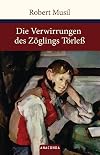
Als ich als Jugendliche nach grenzüberschreitenden Büchern gesucht habe, hab ich Sachen wie Edward Lee entdeckt, aber eigentlich hätte ich gerne etwas gefunden wie das hier (oder meine geliebte Sarah Kane).
Tatsächlich hab ich nicht mit etwas derartigem gerechnet, eher mit einem relativ harmlosen Entwicklungsroman in Richtung von Hermann Hesses "Unterm Rad".
"Entwicklungsroman" möglicherweise, "harmlos" sicherlich nicht. Die Hauptthematik ist schließlich, wie drei Jungen einen show more Mitschüler emotional und körperlich missbrauchen und wie die Hauptfigur, Törleß, innerlich mit sich kämpft. Törleß ist eine sehr sonderbare Figur, mein erster Eindruck war, dass er zwar innerlich sehr schwankt (zwischen Ekel und Erregung gegenüber dem sadistischen Hadeln ), aber nach außen hin immer seltsam passiv ist, ein totaler Mitläufer. Er entwickelt sich davon weg, aber so richtig klar wird nicht, warum: Liebe? Kant? Insgesamt Philosophie?
Vielleicht hängt es an diesem Detail, dass es für mich ein Vier-Sterne und kein Fünf-Sterne-Buch ist. Es hat aber auf jeden Fall eine Menge interessantere Aspekte und Gedanken (und eine weitere Figur, die Nietzsche falsch verstanden hat). Ich glaube nicht, dass ich mich beim Lesen eines Buches schon einmal so geekelt habe. show less
Tatsächlich hab ich nicht mit etwas derartigem gerechnet, eher mit einem relativ harmlosen Entwicklungsroman in Richtung von Hermann Hesses "Unterm Rad".
"Entwicklungsroman" möglicherweise, "harmlos" sicherlich nicht. Die Hauptthematik ist schließlich,
Vielleicht hängt es an diesem Detail, dass es für mich ein Vier-Sterne und kein Fünf-Sterne-Buch ist. Es hat aber auf jeden Fall eine Menge interessantere Aspekte und Gedanken (und eine weitere Figur, die Nietzsche falsch verstanden hat). Ich glaube nicht, dass ich mich beim Lesen eines Buches schon einmal so geekelt habe. show less
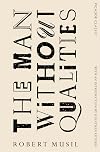
This is a book of ideas, underpinned with the lives and social conditions of a corrupt and decaying empire – Austria-Hungary in 1915. It’s a wonderful satire, quite comical in many places, although it does tend to get bogged down in all the ideas that Musil wants to feature.
Ulrich is the man who has studied everything, criticizes everything and believes in nothing. He would be a cynical anti-hero if he were not so charming and entertaining. The other characters are foils of various show more kinds – Walter is a creative genius, but cannot commit to anything so he ends up taking a boring bureaucratic job that frustrates his wife, Clarisse. She is a woman of deep feeling, who despises narrow thinking, but still loves the Ulrich in spite of his lack of genuine feeling. Ulrich’s cousin Diotima is another woman of inspiring spiritual feeling, who looks to Ulrich to understand how to connect to the modern world. Arnheim is the Prussian man of practical knowledge who gets rich by getting things done while those around him talk. Diotima and Arnheim are naturally drawn to each other in spite of their opposite beliefs. Meanwhile, Moosbrugger is a violent, delusional criminal who lives in his own reality that makes perfect sense to him, although it lands him in an asylum and probably in an execution.
These, and many more, characters are drawn to the wonderful project of memorializing the reign of the king and emperor of Austria-Hungary in a “Parallel Campaign” and a Year of Austria (a land known to Ulrich as Kakania, the place of the Konig und Kaiser). Ulrich of course wants to have nothing to do with the Parallel Campaign. However, after an embarrassing police incident he uses a connection to the campaign to get out of jail and then has to follow up by acting as an assistant to the royal count who is tasked with leading it. The campaign expands and considers all manner of important ideas, finally adopting the theme of “Action!” although what action is never determined. Ulrich’s job is to help bring everything together, but he can’t stop himself from undermining every approach by raising countervailing ideas (even contradictory but nevertheless valid thoughts).
I love the picture of General Stumm von Bordwehr (a cavalry officer who doesn’t like horses and so is given the army’s social responsibilities), who joins the Parallel Campaign because the military cannot be left out. As a man of action, he says, he does not relate to the big ideas, and orders his assistant to summarize all the world’s great ideas so that he will understand what is going on. He complains that the world of ideas is full of conflict, while Ulrich points out that the military world is forced to be systematic and consistent, while the civilian world is a war of feelings and experiences.
In this curious and multi-layered setting, Musil raises many of the most profound questions of modern philosophical life – the nature of good and evil; of belief and questioning; of reality, intuition and faith; of creative life and limited vision; of working or of drifting toward a new vision of the future; of sex, desire, companionship and love. Musil does not resolve any of them – they are irresolvable but they are at the centre of modern life. As Musil describes it, “… it may be said that our world, regardless of all its intellectual riches, is in a mental condition akin to idiocy; indeed, there is no avoiding this conclusion if one tries to grasp the totality of what is going on in the world.”
I think that this is why the book ends as it does, with people at a party arguing whether the “War” faction or the “Love” faction has things right. How can the book come to a conclusion when Musil’s 1100 pages have shown that no single line of thought can be conclusive? In the end, Ulrich’s sister Agathe leaves the party early, feeling drawn to a man she had met earlier whom she felt was simply a good man, while Ulrich continues talking.
This is a book that should not be rushed – the pleasure comes from the complexity of every idea as it is developed, the foolishness of its proponents and seriousness with which they must be taken. show less
Ulrich is the man who has studied everything, criticizes everything and believes in nothing. He would be a cynical anti-hero if he were not so charming and entertaining. The other characters are foils of various show more kinds – Walter is a creative genius, but cannot commit to anything so he ends up taking a boring bureaucratic job that frustrates his wife, Clarisse. She is a woman of deep feeling, who despises narrow thinking, but still loves the Ulrich in spite of his lack of genuine feeling. Ulrich’s cousin Diotima is another woman of inspiring spiritual feeling, who looks to Ulrich to understand how to connect to the modern world. Arnheim is the Prussian man of practical knowledge who gets rich by getting things done while those around him talk. Diotima and Arnheim are naturally drawn to each other in spite of their opposite beliefs. Meanwhile, Moosbrugger is a violent, delusional criminal who lives in his own reality that makes perfect sense to him, although it lands him in an asylum and probably in an execution.
These, and many more, characters are drawn to the wonderful project of memorializing the reign of the king and emperor of Austria-Hungary in a “Parallel Campaign” and a Year of Austria (a land known to Ulrich as Kakania, the place of the Konig und Kaiser). Ulrich of course wants to have nothing to do with the Parallel Campaign. However, after an embarrassing police incident he uses a connection to the campaign to get out of jail and then has to follow up by acting as an assistant to the royal count who is tasked with leading it. The campaign expands and considers all manner of important ideas, finally adopting the theme of “Action!” although what action is never determined. Ulrich’s job is to help bring everything together, but he can’t stop himself from undermining every approach by raising countervailing ideas (even contradictory but nevertheless valid thoughts).
I love the picture of General Stumm von Bordwehr (a cavalry officer who doesn’t like horses and so is given the army’s social responsibilities), who joins the Parallel Campaign because the military cannot be left out. As a man of action, he says, he does not relate to the big ideas, and orders his assistant to summarize all the world’s great ideas so that he will understand what is going on. He complains that the world of ideas is full of conflict, while Ulrich points out that the military world is forced to be systematic and consistent, while the civilian world is a war of feelings and experiences.
In this curious and multi-layered setting, Musil raises many of the most profound questions of modern philosophical life – the nature of good and evil; of belief and questioning; of reality, intuition and faith; of creative life and limited vision; of working or of drifting toward a new vision of the future; of sex, desire, companionship and love. Musil does not resolve any of them – they are irresolvable but they are at the centre of modern life. As Musil describes it, “… it may be said that our world, regardless of all its intellectual riches, is in a mental condition akin to idiocy; indeed, there is no avoiding this conclusion if one tries to grasp the totality of what is going on in the world.”
I think that this is why the book ends as it does, with people at a party arguing whether the “War” faction or the “Love” faction has things right. How can the book come to a conclusion when Musil’s 1100 pages have shown that no single line of thought can be conclusive? In the end, Ulrich’s sister Agathe leaves the party early, feeling drawn to a man she had met earlier whom she felt was simply a good man, while Ulrich continues talking.
This is a book that should not be rushed – the pleasure comes from the complexity of every idea as it is developed, the foolishness of its proponents and seriousness with which they must be taken. show less
I still stand by my initial thoughts 1700 pages ago—this is indeed, Notes From the Underground (Long Version), but I feel it’s much more than that as well. For those unaware, this is an open-ended, unfinished, high modernist novel that essentially has no plot and if that is unappealing to you, then I suggest you avoid this novel at all costs, because it is a work of literature about philosophical ideas and the overall mindset, leading up to the events of World War I. You can think of it show more as the calm before the storm because as we all know, WW1 shaped our modern life like no other war in human history, so it’s very interesting seeing the different perspectives and ideas leading up to this historic conflict that changed our life. It also operates as a satire on proto-war government bureaucracy and it’s hilarious from that standpoint alone, but it’s so nuanced and complex that gets meta with the text, too. I found the characters of this novel most fascinating and relatable, especially Ulrich, the main character, who is a mathematician like myself, even if we belong to different fields of the subject. I will legitimately miss all of the characters and they all feel like family at this point—I guess that’s the product of such a lengthy novel.
Despite its length, maximalist approach, and inconclusive nature, I’ll be returning to this one again, because it’s one of the greatest works of literature I’ve ever read and laid the foundations for maximalist and postmodernist authors like Thomas Pynchon, David Foster Wallace, William T. Vollman and others—and stands as one of the genres of literature that I live for, so this book naturally will fall into my favorites. show less
Despite its length, maximalist approach, and inconclusive nature, I’ll be returning to this one again, because it’s one of the greatest works of literature I’ve ever read and laid the foundations for maximalist and postmodernist authors like Thomas Pynchon, David Foster Wallace, William T. Vollman and others—and stands as one of the genres of literature that I live for, so this book naturally will fall into my favorites. show less
Lists
1930s (1)
Scolaire (1)
Favourite Books (1)
Five star books (1)
. (2)
Metafiction (1)
Schwob Nederland (1)
Modernism (1)
Elegant Prose (1)
A Novel Cure (1)
Awards


You May Also Like


Associated Authors
Statistics
- Works
- 347
- Also by
- 19
- Members
- 11,506
- Popularity
- #2,042
- Rating
- 4.0
- Reviews
- 147
- ISBNs
- 606
- Languages
- 24
- Favorited
- 88