
Travels with a Donkey in the Cevennes
by Robert Louis Stevenson
On This Page
Description
Travels with a Donkey in the Cévennes recounts Robert Louis Stevenson's 120 mile, 12 day hike, accompanied only by his stubborn and unwieldy donkey, through the Cévennes of south-central France. A pioneering piece of outdoor literature, it is one of Stevenson's earliest works, and one of the earliest accounts of hiking and camping for recreation rather than necessity. Stevenson's route is still popular today; recently when asked why the Scotsman still informs the identity of the Cevennes, show more a politician and historian of the area remarked "Because he showed us the landscape that makes us who we are.". show less
Tags
Recommendations












Member Recommendations

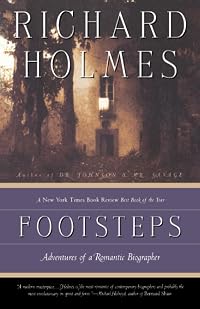
John_Vaughan RLS's book is a lighter read with more general details. HJ relies heavily on churches and castles.


Member Reviews
Stevenson doesn't merely relate the story of his travel through the Cevennes of lower France, he also entertains us with the foibles of himself and his costar, the erstwhile donkey Modestine. I was going to tag this as "humour" after the funny opening chapters, but unfortunately it isn't a steady element as he settles into his journey and reaches a better understanding with his travel companion. Other than a bad sense of direction where his route isn't clearly marked, there's little thereafter to trouble him and the focus turns to his surroundings.
I do envy his easy ability to sleep out in the open air wherever he happens to find himself - try that today in inhabited regions! He is predictably good with descriptions of the landscape and show more its people. The final third or so I found least interesting as became bogged down with a lot of contrast and compare exercises between the Catholic and Protestant populations, tied to history of the area that featured conflict between them dating back to the Edict of Nantes's revocation by Louis XVI and the subsequent uprising of the Camisards (Huguenots). He could find few remaining scars from that time in his day, impressed by the people's steadfastness in their faith and general tolerance.
The short journey ends with an inevitable parting between Stevenson and his donkey, which at first he's cavalier about but then feels his loss. Modestine is what I'll remember most. show less
I do envy his easy ability to sleep out in the open air wherever he happens to find himself - try that today in inhabited regions! He is predictably good with descriptions of the landscape and show more its people. The final third or so I found least interesting as became bogged down with a lot of contrast and compare exercises between the Catholic and Protestant populations, tied to history of the area that featured conflict between them dating back to the Edict of Nantes's revocation by Louis XVI and the subsequent uprising of the Camisards (Huguenots). He could find few remaining scars from that time in his day, impressed by the people's steadfastness in their faith and general tolerance.
The short journey ends with an inevitable parting between Stevenson and his donkey, which at first he's cavalier about but then feels his loss. Modestine is what I'll remember most. show less
This was a short travelogue memoir of the author's trip through the Cevennes Mountains in France in 1878. This was a 12 day trek undertaken only by Stevenson and his donkey, Modestine. The reader gets descriptions of the landscapes and the people, oftentimes with humor. 82 pages
It would be difficult to find a travel writer who surpasses Stevenson's skill in describing landscape. You will want to dwell over certain passages. I was unhappy over his treatment of the donkey and his many complaints in the first half of the book, but both improve over time.
Adventure in the mountains of central east France in a time when the was still the odd wolf, no cars on the roads, and when a dark night meant stumbling in the blackness. Stevenson's usual weightless and yet dignified prose style leads the way.
The title gives you a pretty good idea of what goes on in the book. If it was called Travels with a Donkey in the Cévennes While Hating Catholics, it would give you an even better idea. I picked it up because the first chapter/essay in [b:Footsteps: Adventures of a Romantic Biographer|992809|Footsteps Adventures of a Romantic Biographer|Richard Holmes|https://i.gr-assets.com/images/S/compressed.photo.goodreads.com/books/1403183687l/992809._SY75_.jpg|978304] is about Stevenson's adventure and I thought that it would be fun to read the original before I read the response. It was fun! This is a short, briskly-paced account of a kind of leisure travel which was quite new at the time. It's clearly written and Stevenson isn't afraid to laugh show more at himself, so there is some humour to be had. The religious/political bits are short and easily bearable. If you can get through the animal mistreatment toward the beginning, it's a rewarding light read. show less
Short, scenic account of a mountainous journey in the 1870’s with the help of a donkey named Modestine. Also a reminder of all the things we can do with our time when we don’t obsess over who’s Catholic and who’s Protestant.
Fairly early in his career, Robert Louis Stevenson published a travel narrative about a two-week hiking trip through the mountains in central France. I love animals, so I was disappointed that the donkey wasn't featured as prominently as the title led me to believe. In fact, Stevenson only reluctantly accepted the need for a donkey to carry the equipment he thought was necessary for his journey. Stevenson's writing didn't persuade me to plan a trip to the Cevennes. I was most interested in the history of the religious wars in this region between Protestants and Catholics.
Members
- Recently Added By
Lists

Best of Travel Narratives
142 works; 28 members

501 Must-Read Books
529 works; 72 members

Adventure Travel & Exploration In Europe
18 works; 3 members

Best 19th and 20th Century Travel
22 works; 4 members

Folio Society
831 works; 49 members

Best Literary Walks
35 works; 7 members

Trinity College Booklist (1951): Class Five, Travel and Geography
52 works; 2 members

Books Read in 2017
4,249 works; 130 members

Best of Scottish Literature
35 works; 6 members
Author Information

2,801+ Works 139,356 Members
Novelist, poet, and essayist Robert Louis Stevenson was born in Edinburgh, Scotland. A sickly child, Stevenson was an invalid for part of his childhood and remained in ill health throughout his life. He began studying engineering at Edinburgh University but soon switched to law. His true inclination, however, was for writing. For several years show more after completing his studies, Stevenson traveled on the Continent, gathering ideas for his writing. His Inland Voyage (1878) and Travels with a Donkey (1878) describe some of his experiences there. A variety of essays and short stories followed, most of which were published in magazines. It was with the publication of Treasure Island in 1883, however, that Stevenson achieved wide recognition and fame. This was followed by his most successful adventure story, Kidnapped, which appeared in 1886. With stories such as Treasure Island and Kidnapped, Stevenson revived Daniel Defoe's novel of romantic adventure, adding to it psychological analysis. While these stories and others, such as David Balfour and The Master of Ballantrae (1889), are stories of adventure, they are at the same time fine studies of character. The Master of Ballantrae, in particular, is a study of evil character, and this study is taken even further in The Strange Case of Dr. Jekyll and Mr. Hyde (1886). In 1887 Stevenson and his wife, Fanny, went to the United States, first to the health spas of Saranac Lake, New York, and then on to the West Coast. From there they set out for the South Seas in 1889. Except for one trip to Sidney, Australia, Stevenson spent the remainder of his life on the island of Samoa with his devoted wife and stepson. While there he wrote The Wrecker (1892), Island Nights Entertainments (1893), and Catriona (1893), a sequel to Kidnapped. He also worked on St. Ives and The Weir of Hermiston, which many consider to be his masterpiece. He died suddenly of apoplexy, leaving both of these works unfinished. Both were published posthumously; St. Ives was completed by Sir Arthur Quiller-Couch, and The Weir of Hermiston was published unfinished. Stevenson was buried on Samoa, an island he had come to love very much. Although Stevenson's novels are perhaps more accomplished, his short stories are also vivid and memorable. All show his power of invention, his command of the macabre and the eerie, and the psychological depth of his characterization. (Bowker Author Biography) show less
Some Editions
Awards and Honors
Series
Belongs to Publisher Series
Work Relationships
Is contained in
Common Knowledge
- Canonical title*
- Voyage avec un âne dans les Cévennes
- Original title
- Travels with a Donkey in the Cévennes
- Alternate titles*
- Viaje con una burra por los montes de Cévennes
- Original publication date
- 1879
- People/Characters
- Robert Louis Stevenson; Modestine
- Important places
- Cévennes, France
- Related movies*
- Travels with a Donkey in the Cevennes (2019 | IMDb)
- Epigraph*
- Il y a beaucoup d'êtres puissants et rien n'est plus puissant que l'homme. Il surpasse, par ses ruses, le monde rural.
Sophocle
Qui a jamais perdu les fers d'un âne sauvage ?
Job
Le chemin était fort fatiguant parmi la poussière et les éclats de pierre ; il n'y avait pas dans toute la contrée une seule auberge ni une boutique de victuailles où se restaurer un peu.
Voyage du Pélerin
J'aperçois la maison, l'austère communauté - et que suis-je pour que je sois ici ?
Mathew Arnold
Le lit était fait, la chambre prête.
Pour leur veillée personnelle, les étoiles étaient allumées,
L'air était calme, l'eau coulait ;
Il n'était besoin de servante ni de domestique
Quand nous nous levâmes,... (show all) baudet et moi,
Au vert caravansérail du bon Dieu.
Pièce ancienne
Nous marchions dans le sillage des guerriers d'autrefois,
Pourtant la contrée entière était verdoyante ;
Et trouvions amour et paix
Où avaient sévi fer et feu.
Ils passent et sourient les fils de l'épée.
Oh ! qu'il a de profondes racines le blé
Qui pousse sur le champs de bataille !
W.P. Bannatyne - Dedication
- My dear Sidney Colvin,
The journey which this little book is to describe was very agreeable and fortunate for me. After an uncouth beginning, I had the best of luck to the end. [...] Of what shall a man be proud, if he is ... (show all)not proud of his friends? And so, my dear Sidney Colvin, it is with pride that I sign myself affectionately yours,
R. L. S. - First words
- In a little place called Le Monastier, in a pleasant highland valley fifteen miles from Le Puy, I spent about a month of fine days.
- Last words
- (Click to show. Warning: May contain spoilers.)Father Adam wept when he sold her to me; after I had sold her in my turn, I was tempted to follow his example; and being alone with a stage-driver and four or five agreeable young men, I did not hesitate to yield to my emotion.
- Original language*
- Engels
*Some information comes from Common Knowledge in other languages. Click "Edit" for more information.
Classifications
Statistics
- Members
- 1,271
- Popularity
- 19,229
- Reviews
- 26
- Rating
- (3.67)
- Languages
- 13 — Danish, Dutch, English, Estonian, Finnish, French, German, Irish, Italian, Norwegian, Portuguese, Spanish, Swedish
- Media
- Paper, Audiobook, Ebook
- ISBNs
- 127
- UPCs
- 3
- ASINs
- 110