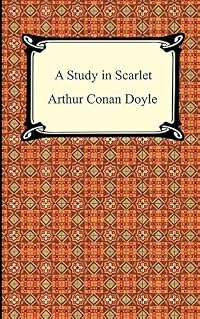
A Study in Scarlet
by Arthur Conan Doyle 
Sherlock Holmes Original Novels {Conan Doyle} (1), Sherlock Holmes canon (1 (novel))
On This Page
Description
A Study in Scarlet is the first of the Sherlock Holmes stories. Watson narrates his first meeting with the eccentric Holmes, who appears almost genius in some fields of study and completely ignorant in others. This, as Holmes explains, is because he believes that brain space is limited, and one must be careful what one puts in. He gradually reveals his method and thinking to an astonished Watson. We see Holmes languishing at home, scratching at the violin he can play to perfection. We see show more the erratic way he conducts business, and finally, after a trip across half the world into a completely different landscape and story, we see him unravel the mystery at the heart of the novel in an apparently effortless manner.. show less
Tags
Recommendations


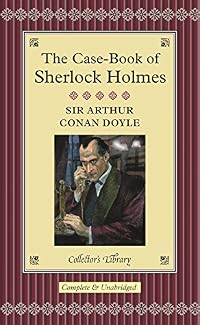
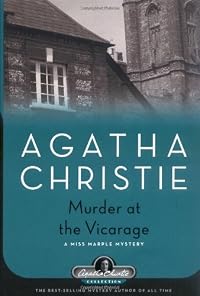
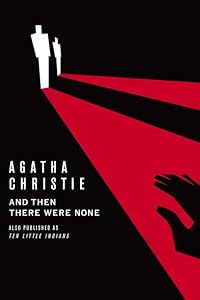
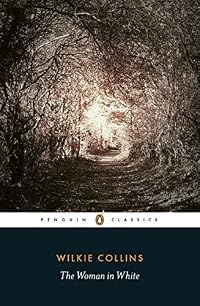
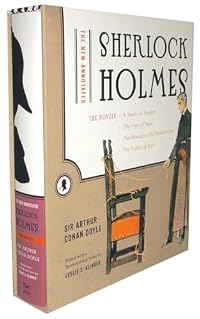

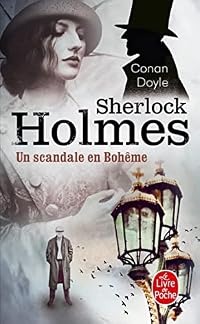

Member Recommendations
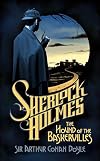
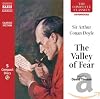

TineOliver Both books deal with views on Mormonism by outsiders at the beginning of the 20th Century. This recommendation is only for those who are interested in this aspect as the novels cover different genres.
20
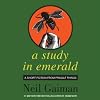
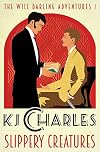
mysimas Vaguely Holmes/Watson dynamics but gay and somewhat more action-y. Also has bookshops instead of mormons
01
Member Reviews
'Dr Watson, Mr Sherlock Holmes,' said Stamford, introducing us." (pg. 8)
A great little page-turner, there is a certain thrill in reading A Study in Scarlet knowing that this was where it all started. The line I've quoted above must have seemed rather innocuous in 1887 but, like so many other similar instances in this short novel, it now carries the weight of literary history.
The book, like a lot of the Sherlock Holmes originals, has its fair share of silly moments and coincidences in the criminal cases, which can be jarring to an incredulous modern reader. However, one benefit of reading these stories nowadays is that we can compare them to the excellent television adaptation Sherlock, starring Benedict Cumberbatch (particularly this show more book, which served as inspiration for the first episode). Whilst I enjoy Conan Doyle's books on their own terms, it is this new angle which – for all my bookworm tendencies – interests me the most. Even without this there is still a lot to recommend in A Study in Scarlet, which retains in modern times a readability, a joy and a relevance quite unlike a lot of 'classics' of Victorian literature." show less
A great little page-turner, there is a certain thrill in reading A Study in Scarlet knowing that this was where it all started. The line I've quoted above must have seemed rather innocuous in 1887 but, like so many other similar instances in this short novel, it now carries the weight of literary history.
The book, like a lot of the Sherlock Holmes originals, has its fair share of silly moments and coincidences in the criminal cases, which can be jarring to an incredulous modern reader. However, one benefit of reading these stories nowadays is that we can compare them to the excellent television adaptation Sherlock, starring Benedict Cumberbatch (particularly this show more book, which served as inspiration for the first episode). Whilst I enjoy Conan Doyle's books on their own terms, it is this new angle which – for all my bookworm tendencies – interests me the most. Even without this there is still a lot to recommend in A Study in Scarlet, which retains in modern times a readability, a joy and a relevance quite unlike a lot of 'classics' of Victorian literature." show less
I devoured the Complete Sherlock Holmes one summer while in junior high school and, for some reason, haven’t reread the stories. But I watched Basil Rathbone, Ronald Howard, Jeremy Brett, and Benedict Cumberbatch bring them to screen. But now I decided to start again from the beginning, with Study in Scarlet.
It was interesting to see how the characters are first introduced. Given the rivalry with Scotland Yard, I was surprised that Holmes invented his self-designation “consulting detective” precisely because Gregson and Lestrade (“the best of a bad lot”) came to him whenever they were stuck. He’s usually able to unravel the tangle without leaving his sitting room.
There wouldn’t be a lot of fun reading about him doing that, show more so it’s just as well that a murder just off Brixton Road is mysterious enough to rouse him from his chair and take Watson, the convalescent military doctor with whom he shares the rent of the flat at 221B Baker Street, in tow.
Doyle has Holmes later relativize the word “mysterious,” drawing a distinction between that and “strange.”
Strange describes Holmes as well, and this fascinates Watson. He records Holmes’s unusual conception of brain capacity, consciously refusing to admit any knowledge that might not be useful for his investigations, as Watson learns when discovering that Holmes knew nothing of the Copernican system. Oddly, Holmes shares this conviction with Homer Simpson (“Every time I learn something new, it pushes out something old; remember that time I took a home wine-making course and forgot how to drive?”).
I loved the description of Holmes crawling on the floor of the crime scene: “he chattered away to himself under his breath the whole time, keeping up a running fire of exclamations, groans, whistles, and little cries suggestive of encouragement and of hope.”
Holmes is proud of his skill and disdainful of the professional detectives (who no doubt sense this). He knows they will get the credit for each solved crime; he’s ambitious and would like to be famous. Let’s see how he likes it in subsequent tales when he becomes as renowned as he yearns to be.
Something else I’ll be on the watch for: In this story, neither the victims nor the murderer are English. This allows Doyle to bring outlandish (literally, too) elements into his plots. In this case, the Mormons and their infamous Danite Band. Perhaps I’ll keep count of how many subsequent evil-doers and their victims are non-British.
Doyle also presents us with a crime for which the murderer had very good reason, perhaps even justifiable. Although he is captured and jailed, he doesn’t come to trial, and in that sense “escapes” by dying happily. Is that also a recurrent feature of a Doyle plot?
Two interesting technical features (since I’m not only curious about Holmes and the who-dun-it, but also Doyle, the writer, and how he did it): One is that the background of the crime receives its own lengthy treatment, a story within the story. The other is that we are only told, not shown, how Holmes solves the crime and apprehends the perpetrator. Much of the unraveling comes in the form of a lengthy confession. Despite being so far from perfect, I can't resist awarding it five starts for the pleasure of reading it.
One final thought: how would it have affected the balance of the story if the doomed maiden in Utah had not been named Lucy, but Rachel? show less
It was interesting to see how the characters are first introduced. Given the rivalry with Scotland Yard, I was surprised that Holmes invented his self-designation “consulting detective” precisely because Gregson and Lestrade (“the best of a bad lot”) came to him whenever they were stuck. He’s usually able to unravel the tangle without leaving his sitting room.
There wouldn’t be a lot of fun reading about him doing that, show more so it’s just as well that a murder just off Brixton Road is mysterious enough to rouse him from his chair and take Watson, the convalescent military doctor with whom he shares the rent of the flat at 221B Baker Street, in tow.
Doyle has Holmes later relativize the word “mysterious,” drawing a distinction between that and “strange.”
Strange describes Holmes as well, and this fascinates Watson. He records Holmes’s unusual conception of brain capacity, consciously refusing to admit any knowledge that might not be useful for his investigations, as Watson learns when discovering that Holmes knew nothing of the Copernican system. Oddly, Holmes shares this conviction with Homer Simpson (“Every time I learn something new, it pushes out something old; remember that time I took a home wine-making course and forgot how to drive?”).
I loved the description of Holmes crawling on the floor of the crime scene: “he chattered away to himself under his breath the whole time, keeping up a running fire of exclamations, groans, whistles, and little cries suggestive of encouragement and of hope.”
Holmes is proud of his skill and disdainful of the professional detectives (who no doubt sense this). He knows they will get the credit for each solved crime; he’s ambitious and would like to be famous. Let’s see how he likes it in subsequent tales when he becomes as renowned as he yearns to be.
Something else I’ll be on the watch for: In this story, neither the victims nor the murderer are English. This allows Doyle to bring outlandish (literally, too) elements into his plots. In this case, the Mormons and their infamous Danite Band. Perhaps I’ll keep count of how many subsequent evil-doers and their victims are non-British.
Doyle also presents us with a crime for which the murderer had very good reason, perhaps even justifiable. Although he is captured and jailed, he doesn’t come to trial, and in that sense “escapes” by dying happily. Is that also a recurrent feature of a Doyle plot?
Two interesting technical features (since I’m not only curious about Holmes and the who-dun-it, but also Doyle, the writer, and how he did it): One is that the background of the crime receives its own lengthy treatment, a story within the story. The other is that we are only told, not shown, how Holmes solves the crime and apprehends the perpetrator. Much of the unraveling comes in the form of a lengthy confession. Despite being so far from perfect, I can't resist awarding it five starts for the pleasure of reading it.
One final thought: how would it have affected the balance of the story if the doomed maiden in Utah had not been named Lucy, but Rachel? show less
Sir Arthur Conan Doyle has produced a very good tale that kept me interested enough to finish this book within a single day. One of the most surprising things was the author's ability to make me side with the villain. The first half of the story is all about Holmes's tracking down of the man who committed a murder. It abruptly ends with his capturing the man - someone whom no one suspected. The next part of the novel then starts in on a lovely narrative about the Latter-day Saints arriving in Utah, saving in the process the life of a man and young girl on the brink of death. The man joins the Saints in order to survive the harshness of the desert, but refuses to become polygamous - which leads to some problems:
"He had always determined, show more deep down in his resolute heart, that nothing would ever induce him to allow his daughter to wed a Mormon. Such a marriage he regarded as no marriage at all, but as a shame and a disgrace. Whatever he might think of the Mormon doctrines, upon that one point he was inflexible. He had to seal his mouth on the subject, however, for to express an unorthodox opinion was a dangerous matter in those days in the Land of the Saints."
While it is true that the Mormon leadership is made out to be a secretive society bent on incorporating as many young girls as possible into their polygamous harems, the novel, I feel, does a good job of describing the difficulties of having unorthodox opinions in a society where being a 'true believer' is highly valued. This ended up being the most interesting part of the novel for me (although I was anxious to see how this would all tie in Sherlock Holmes). Sir Arthur Conan Doyle is a terrific writer, I must say. Instead of writing the straightforward crime/mystery novel that I anticipated, he made me not only understand the motivations of the villain, but actually feel some sense of accomplishment on the villain's part. At the same time, I equally wanted to see Holmes track the man down and show that his superior use of deduction can solve a mystery that to others seems quite puzzling. However, in none of this was there a need to see justice done to the criminal. It would have been just as satisfying, perhaps more so, if the criminal had gotten away at the end (and in a way he does, dying of a heart condition before the trial is held).
The book was immensely enjoyable and I highly recommend it. The Mormon section of the book gets a bad rap for painting Mormons in a negative light and for being a too extended digression from the main plot. I would argue otherwise. The Mormon section contains some of the best narrative exposition, and the departure from the Holmes plot helps to put the motivations of the crime into a much-needed perspective. show less
"He had always determined, show more deep down in his resolute heart, that nothing would ever induce him to allow his daughter to wed a Mormon. Such a marriage he regarded as no marriage at all, but as a shame and a disgrace. Whatever he might think of the Mormon doctrines, upon that one point he was inflexible. He had to seal his mouth on the subject, however, for to express an unorthodox opinion was a dangerous matter in those days in the Land of the Saints."
While it is true that the Mormon leadership is made out to be a secretive society bent on incorporating as many young girls as possible into their polygamous harems, the novel, I feel, does a good job of describing the difficulties of having unorthodox opinions in a society where being a 'true believer' is highly valued. This ended up being the most interesting part of the novel for me (although I was anxious to see how this would all tie in Sherlock Holmes). Sir Arthur Conan Doyle is a terrific writer, I must say. Instead of writing the straightforward crime/mystery novel that I anticipated, he made me not only understand the motivations of the villain, but actually feel some sense of accomplishment on the villain's part. At the same time, I equally wanted to see Holmes track the man down and show that his superior use of deduction can solve a mystery that to others seems quite puzzling. However, in none of this was there a need to see justice done to the criminal. It would have been just as satisfying, perhaps more so, if the criminal had gotten away at the end (and in a way he does, dying of a heart condition before the trial is held).
The book was immensely enjoyable and I highly recommend it. The Mormon section of the book gets a bad rap for painting Mormons in a negative light and for being a too extended digression from the main plot. I would argue otherwise. The Mormon section contains some of the best narrative exposition, and the departure from the Holmes plot helps to put the motivations of the crime into a much-needed perspective. show less
I should start by saying that I’ve read a bunch of the short stories in The Adventures of Sherlock Holmes, and seen a decent number of film adaptations, but this is the first Sherlock Holmes novel I’ve read. I always saw him as much more of a static character, but he seems much different in this novel than I remember him being in the short stories. So I’m glad I’m reading these in order so I can see if there’s deliberate character development on Doyle’s part or if he just gradually learns how to write him, finds the formula as it were.
I feel like most depictions I’ve seen of Holmes have shown him as more of an… all-encompassing genius of sorts? Or maybe that was a misreading on my part. But I just distinctly remember show more having him slotted in that category of characters’ whose main personality trait was “smart,” like Spock or Beast or Doc Brown.
In any case, the idea that he would, as he does in this book, not know something as basic as the fact that the earth revolves around the sun is just stunning to me. And his entire argument about avoiding “useless facts elbowing out the useful ones” is just… not how brains work, my dude. Though I do find it hilarious that when he says, “Depend upon it there comes a time when for every addition of knowledge you forget something that you knew before,” he is basically asserting that the human brain works on the same principle as a Pokémon having to forget one of their four moves to learn another one. (“HOLMES wants to learn EARTH GO ROUND SUN… …However, HOLMES already knows four things…”)
I’m not going to dwell on it too much considering this was literally written in the 1800s, but it nevertheless bears mentioning that this text is riddled with racist language. What seems to get talked about a heck of a lot more is the controversy about the depictions of Mormons, but I mean… it’s sensationalized, to be sure, but it’s not totally ahistorical by any stretch of the imagination. And given the church’s continued persecution of racial minorities and queer people, I’m not exactly losing sleep over it.
This is also one of the first actual “communism is just a red herring” stories I’ve ever read, so that’s fun. It’s also apparently the originator of the trope of detectives using a magnifying glass, though I can’t say that really particularly jumped out at me while I was reading?
The story itself is pretty fun, though definitely not what I was expecting. The prolonged flashback in Utah was actually a lot more compelling than it had any right to be, and I was not expecting it to get as pulpy as it did. I especially loved the bits where the Mormons are literally painting the number of days Ferrier has left to agree to their demands somewhere he will see it.
So, yeah! I definitely enjoyed this one, and I’m gonna keep Holmes on my itinerary as I continue trying to get more into the mystery genre. show less
I feel like most depictions I’ve seen of Holmes have shown him as more of an… all-encompassing genius of sorts? Or maybe that was a misreading on my part. But I just distinctly remember show more having him slotted in that category of characters’ whose main personality trait was “smart,” like Spock or Beast or Doc Brown.
In any case, the idea that he would, as he does in this book, not know something as basic as the fact that the earth revolves around the sun is just stunning to me. And his entire argument about avoiding “useless facts elbowing out the useful ones” is just… not how brains work, my dude. Though I do find it hilarious that when he says, “Depend upon it there comes a time when for every addition of knowledge you forget something that you knew before,” he is basically asserting that the human brain works on the same principle as a Pokémon having to forget one of their four moves to learn another one. (“HOLMES wants to learn EARTH GO ROUND SUN… …However, HOLMES already knows four things…”)
I’m not going to dwell on it too much considering this was literally written in the 1800s, but it nevertheless bears mentioning that this text is riddled with racist language. What seems to get talked about a heck of a lot more is the controversy about the depictions of Mormons, but I mean… it’s sensationalized, to be sure, but it’s not totally ahistorical by any stretch of the imagination. And given the church’s continued persecution of racial minorities and queer people, I’m not exactly losing sleep over it.
This is also one of the first actual “communism is just a red herring” stories I’ve ever read, so that’s fun. It’s also apparently the originator of the trope of detectives using a magnifying glass, though I can’t say that really particularly jumped out at me while I was reading?
The story itself is pretty fun, though definitely not what I was expecting. The prolonged flashback in Utah was actually a lot more compelling than it had any right to be, and I was not expecting it to get as pulpy as it did. I especially loved the bits where the Mormons are literally painting the number of days Ferrier has left to agree to their demands somewhere he will see it.
So, yeah! I definitely enjoyed this one, and I’m gonna keep Holmes on my itinerary as I continue trying to get more into the mystery genre. show less
What a great introduction to the characters! Sherlock has a strong mind, but I was just as impressed by his equally strong personality. In this book, Sherlock is a young man in his 20s, carving out a position for himself as the world’s only consulting detective. This ability to support himself by being self-employed in a never-before-seen job, to build up enough of a reputation to continue receiving clients, to carve out a niche where one had never existed—all of this seems amazing to me. I was prepared for the idea of Sherlock being a great detective, of course, but to dedicate himself to this sort of career would take not just intellect, but courage and self-confidence, attributes that Holmes has in spades. I also like that show more Sherlock isn’t perfect. Sometimes he misses things, and his personality isn’t always the kindest. I like that his flaws are present but not excused. And I really love Watson: a doctor, a war vet, a quiet man who is happy to be included in the adventure.
The story itself is a little awkward in places; Doyle’s craft certainly gets better as the series goes on. The lengthy flashback sequence seems a little out of place, although the tension continues to build. I liked the way that Doyle took his time with the story; he builds Holmes’ and Watson’s relationship slowly, and he really gives the readers time to enjoy the characters and their quirks. The early parts of the book are warm, humorous, and charming. These are some well-developed characters, right from the start, and this sets the tone for every Holmes book that follows. I also thought it was nice that Doyle gave a shout-out to Poe, who pioneered the genre, but it’s a bit unfair (and slightly ironic) that Sherlock Holmes felt the need to complain about him: “Dupin was a very inferior fellow. That trick of his of breaking in on his friends’ thoughts with an apropos remark after a quarter of an hour’s silence is really very showy and superficial.” Showy? Superficial? Has Sherlock looked in a mirror lately? :P Not to mention the fact that he’ll pull the same stunt on Watson in a later story.
All in all, this book is delightful. show less
The story itself is a little awkward in places; Doyle’s craft certainly gets better as the series goes on. The lengthy flashback sequence seems a little out of place, although the tension continues to build. I liked the way that Doyle took his time with the story; he builds Holmes’ and Watson’s relationship slowly, and he really gives the readers time to enjoy the characters and their quirks. The early parts of the book are warm, humorous, and charming. These are some well-developed characters, right from the start, and this sets the tone for every Holmes book that follows. I also thought it was nice that Doyle gave a shout-out to Poe, who pioneered the genre, but it’s a bit unfair (and slightly ironic) that Sherlock Holmes felt the need to complain about him: “Dupin was a very inferior fellow. That trick of his of breaking in on his friends’ thoughts with an apropos remark after a quarter of an hour’s silence is really very showy and superficial.” Showy? Superficial? Has Sherlock looked in a mirror lately? :P Not to mention the fact that he’ll pull the same stunt on Watson in a later story.
All in all, this book is delightful. show less
People forget how strange the start of Holmes' adventures really are. A Study in Scarlet is split into two narratives; the introduction of Holmes with the murder mystery, and the western story about mormons that people tend to forget entirely. Indeed the book as a whole was forgotten by the reading public when it was first published and it's easy to see why - the split narrative format is clunky, the way Holmes is introduced makes a point to cast shade on Poe's popular detective; while there's a lot of bragging about the science of deduction few deductions are actually made. It's a good thing this attempt and its reception didn't end him trying to make it work.
I haven't read anything by Sir Arthur Conan Doyle in a long time but my vague recollection was that I enjoyed the Sherlock Holmes series more than I did this one — the very first. Let's just say that it was long and drawn out. Also, if you are a Mormon or even just a "regular" American, you might feel somewhat negative about this tale. I did like Dr. Watson though. I admit this a bit unfair, as Holmes really was a master of deduction in this story but so be it.
Members
- Recently Added By
Lists

The Guardian's 1000 Novels Everyone Must Read
1,005 works; 549 members

Best Private Eye stories
28 works; 7 members

Best of British Literature
226 works; 41 members

British Mystery
469 works; 14 members

Favourite 19th century fiction
257 works; 62 members

Best Revenge Stories
69 works; 9 members

Global Reads: Books Set in the United Kingdom and Ireland
109 works; 5 members

Books Read in 2012 (Numbered)
168 works; 6 members

Books About Murder
313 works; 7 members

Detective Stories
343 works; 5 members

Books mentioned in Julian Symons’ Bloody Murder
438 works; 6 members

READ in 2023
244 works; 1 member

Books Read in 2020
4,379 works; 124 members

Ambleside Books
459 works; 18 members

Tagged 19th Century
104 works; 7 members

Novels/Poems/Short Stories/Anything Storytelling Related
112 works; 2 members

Favourite Books
1,817 works; 308 members

Greatest Books, allegedly
484 works; 9 members

Mind Expanding Books by hackerkid
581 works; 8 members

Out of Copyright
244 works; 14 members

Victorian Period
113 works; 10 members
First Novels
373 works; 17 members

Books You Read For University
184 works; 3 members

Books I recommend to everyone
29 works; 1 member

Books Read in 2010
631 works; 11 members

Recommended Reading : 600 Classics Reviewed, Editors of Salem Press, 2015
634 works; 6 members

Maybe This Year? Books to Look Forward To
405 works; 9 members

Books Read in 2008
335 works; 8 members

Kids' Tour of the US in Books
50 works; 5 members

1880s
14 works; 2 members

A Rainbow of Books: Colors in the Title
570 works; 24 members
19th Century
190 works; 16 members

Books Read in 2012
815 works; 34 members

Best of World Literature
431 works; 51 members

Best books I read in 2013
152 works; 3 members

Books Set in Utah
34 works; 5 members

A Novel Cure
742 works; 23 members

Books to Read in 2015
13 works; 1 member

al.vick-series
381 works; 2 members
Books Read in 2015
3,298 works; 129 members
Books on my Kindle
162 works; 3 members

Books with Colourful Titles
171 works; 8 members

Books Read in 2018
4,360 works; 110 members

Europe
205 works; 6 members

Books Read in 2019
4,052 works; 110 members

Biggest Disappointments
606 works; 163 members

Read in 2010
48 works; 1 member
Talk Discussions
Past Discussions
Group Readings of Various Stories Involving Sherlock Holmes, with a Bit of BBC Sherlock Thrown in fo in The Green Dragon (June 2018)
MARCH READ - SPOILERS - A Study in Scarlet in The Green Dragon (March 2015)
MARCH READ - NO SPOILERS - A Study in Scarlet in The Green Dragon (March 2015)
Author Information

3,979+ Works 168,757 Members
The most famous fictional detective in the world is Arthur Conan Doyle's Sherlock Holmes. However, Doyle was, at best, ambivalent about his immensely successful literary creation and, at worst, resentful that his more "serious" fiction was relatively ignored. Born in Edinburgh, Doyle studied medicine from 1876 to 1881 and received his M.D. in show more 1885. He worked as a military physician in South Africa during the Boer War and was knighted in 1902 for his exceptional service. Doyle was drawn to writing at an early age. Although he attempted to enter private practice in Southsea, Portsmouth, in 1882, he soon turned to writing in his spare time; it eventually became his profession. As a Liberal Unionist, Doyle ran, unsuccessfully, for Parliament in 1903. During his later years, Doyle became an avowed spiritualist. Doyle sold his first story, "The Mystery of the Sasassa Valley," to Chambers' Journal in 1879. When Doyle published the novel, A Study in Scarlet in 1887, Sherlock Holmes was introduced to an avid public. Doyle is reputed to have used one of his medical professors, Dr. Joseph Bell, as a model for Holmes's character. Eventually, Doyle wrote three additional Holmes novels and five collections of Holmes short stories. A brilliant, though somewhat eccentric, detective, Holmes employs scientific methods of observation and deduction to solve the mysteries that he investigates. Although an "amateur" private detective, he is frequently called upon by Scotland Yard for assistance. Holmes's assistant, the faithful Dr. Watson, provides a striking contrast to Holmes's brilliant intellect and, in Doyle's day at least, serves as a character with whom the reader can readily identify. Having tired of Holmes's popularity, Doyle even tried to kill the great detective in "The Final Problem" but was forced by an outraged public to resurrect him in 1903. Although Holmes remained Doyle's most popular literary creation, Doyle wrote prolifically in other genres, including historical adventure, science fiction, and supernatural fiction. Despite Doyle's sometimes careless writing, he was a superb storyteller. His great skill as a popular author lay in his technique of involving readers in his highly entertaining adventures. (Bowker Author Biography) show less
Arthur Conan Doyle has a Legacy Library. Legacy libraries are the personal libraries of famous readers, entered by LibraryThing members from the Legacy Libraries group.
Some Editions
Awards and Honors
Distinctions
Series

Sherlock Holmes canon (1 (novel))
Belongs to Publisher Series
Kaiser Krimi (008)
Tus libros (14)
Newton Compton Live (15)
El País Aventuras (34)
Penguin English Library, 2012 series (2014-09)
Work Relationships
Is contained in
The Sherlock Holmes Novels: A Study in Scarlet / The Sign of the Four / The Hound of the Baskervilles / The Valley of Fear by Arthur Conan Doyle
A Study in Scarlet / The Sign of Four / The Adventures of Sherlock Holmes / The Memoirs of Sherlock Holmes / The Hound of the Baskervilles (B&N Classics 1/2) by Arthur Conan Doyle (indirect)
Sherlock Holmes omnibus - Een studie in rood, Het teken van de vier, Sherlock Holmes verhalen by Arthur Conan Doyle (indirect)
Treasury of World Masterpieces "The Celebrated Cases of Sherlock Holmes" & "H.G. Wells (Treasury of World Masterpieces) by Sir Arthur Conan Doyle (indirect)
Sherlock Holmes: The Complete Novels and Stories, Vol. 1 (Bantam Classics 1/2) by Arthur Conan Doyle
Sherlock Holmes: The Complete Novels and Stories, Vol. 1 and 2 (Bantam) by Arthur Conan Doyle (indirect)
Conan Doyle's Best Books in Three Volumes, Vol. 1: A Study in Scarlet and Other Stories by Arthur Conan Doyle
Conan Doyle's Best Books in Three Volumes: A Study in Scarlet and Other Stories; The Sign of the Four and Other Stories; The White Company and Beyond the City by Arthur Conan Doyle (indirect)
British Mystery Megapack Volume 5 - The Sherlock Holmes Collection: 4 Novels and 43 Short Stories + Extras by Arthur Conan Doyle
Oeuvres completes -tome 1 -etude en rouge , le signe des quatre , les aventures de sherlok holmes by Arthur Conan Doyle
90 Masterpieces You Must Read (Vol.1): Novels, Poetry, Plays, Short Stories, Essays, Psychology & Philosophy by Various
The Adventures of Sherlock Holmes / The Memoirs of Sherlock Holmes / The Return of Sherlock Holmes / A Study in Scarlet by Sir Arthur Conan Doyle
A Study in Scarlet / The Sign of Four / The Valley of Fear / The Hound of the Baskervilles / The Adventures of Sherlock Holmes by Arthur Conan Doyle
Sherlock Holmes: A Study in Scarlet and A Scandal in Bohemia: Official Edition by Arthur Conan Doyle
A Study in Scarlet / The Adventures of Sherlock Holmes / The Hound of the Baskervilles / Sign of Four by Arthur Conan Doyle
Estudio en Escarlata, Sherlock Holmes sigue en pie, el archivo de Sherlock Holmes by Arthur Conan Doyle
A Study In Scarlet, The Sign of the Four, The Adventures of Sherlock Holmes, The Memoirs of Sherlock Holmes, The Return of Sherlock Holmes (Sherlock Holmes - Bouquin Complete works - volume 1/2) by Arthur Conan Doyle
The Hound of the Baskervilles, A Study in Scarlet, The Sign of Four (Everyman's Library) by Sir Arthur Conan Doyle
The adventures of Sherlock Holmes ; The memoirs of Sherlock Holmes ; The return of Sherlock Holmes ; The hound of the Baskervilles ; A study in ... the Bruce-Partington plans (Masters Library) by Arthur Conan Doyle (indirect)
Is retold in
Has the adaptation
Is expanded in
Is parodied in
Inspired
Has as a study
Has as a student's study guide
Common Knowledge
- Canonical title
- A Study in Scarlet
- Original title
- A Study in Scarlet
- Original publication date
- 1887
- People/Characters
- Sherlock Holmes; John H. Watson; Inspector G. Lestrade; Inspector Tobias Gregson; Enoch J. Drebber; Joseph Stangerson (show all 15); John Rance; John Ferrier; Lucy Ferrier; Jefferson Hope; Brigham Young; Arthur Charpentier; Stamford (A Study in Scarlet); Wiggins (Baker Street Irregulars); Baker Street Irregulars
- Important places
- London, England, UK; 221B Baker Street, London, England, UK; Salt Lake City, Utah, USA
- Related movies
- Sherlock (2010 | IMDb); A Study in Scarlet (1933 | IMDb)
- Epigraph
- [None]
- Dedication
- [None]
- First words
- In the year 1878 I took my degree of Doctor of Medicine of the University of London, and proceeded to Netley to go through the course prescribed for surgeons in the Army.
- Quotations
- There is no satisfaction in vengeance unless the offender has time to realize who it is that strikes him, and why retribution has come upon him.
"What you do in this world is a matter of no consequence," returned my companion, bitterly. "The question is, what can you make people believe that you have done. Never mind," he continued, more brightly, after a pause.
“You see,” he explained, “I consider that a man's brain originally is like a little empty attic, and you have to stock it with such furniture as you choose. A fool takes in all the lumber of every sort that he comes acr... (show all)oss, so that the knowledge which might be useful to him gets crowded out, or at best is jumbled up with a lot of other things so that he has a difficulty in laying his hands upon it. Now the skillful workman is very careful indeed as to what he takes into his brain-attic. He will have nothing but the tools which may help him in doing his work, but of these he has a large assortment, and all in the most perfect order. It is a mistake to think that that little room has elastic walls and can distend to any extent. Depend upon it there comes a time when for every addition of knowledge you forget something that you knew before. It is of the highest importance, therefore, not to have useless facts elbowing out the useful ones.” - Last words
- (Click to show. Warning: May contain spoilers.)"I have all the facts in my journal, and the public shall know them. In the meantime you must make yourself contented by the consciousness of success, like the Roman miser-- 'Populus me sibilat, at mihi plaudo Ipse domi simul ac nummos contemplor in arca.'"
- Original language
- English
- Disambiguation notice
- This is the complete original work A Study in Scarlet by Arthur Conan Doyle, and should not be combined with collections, adaptations, abridgements, etc.
Classifications
Statistics
- Members
- 9,209
- Popularity
- 1,143
- Reviews
- 354
- Rating
- (3.88)
- Languages
- 27 — Catalan, Chinese, Czech, Danish, Dutch, English, Finnish, French, German, Galician, Greek, Hebrew, Hungarian, Italian, Japanese, Norwegian (Bokmål), Norwegian, Polish, Russian, Slovenian, Spanish, Swedish, Thai, Turkish, Yiddish, Portuguese (Portugal), Portuguese (Brazil)
- Media
- Paper, Audiobook, Ebook
- ISBNs
- 808
- UPCs
- 4
- ASINs
- 213